
Rwanda vs Uganda Gorilla Permit: Complete Guide to Permit Costs, Value and Trekking Experience
Rwanda vs Uganda Gorilla Permit is one of the most important comparisons for travellers planning a mountain gorilla safari in East Africa. Both Rwanda and Uganda provide extraordinary opportunities to encounter endangered mountain gorillas in their natural habitats, but the cost of obtaining a gorilla trekking permit differs significantly between the two destinations. For many travellers, the permit price is the first major consideration when deciding whether to trek in Rwanda’s Volcanoes National Park or Uganda’s Bwindi Impenetrable National Park and Mgahinga Gorilla National Park.
However, the price of the permit should not be viewed in isolation. A gorilla permit is one component of a much larger safari experience that can include accommodation, private transportation, meals, professional guiding, park-related services, airport transfers, and additional wildlife or cultural experiences. The overall cost of a safari can therefore vary considerably depending on how the journey is designed.
The permit itself is essentially the official authorisation that allows a traveller to participate in a regulated gorilla trekking experience on a particular date. Because mountain gorillas are endangered and live within carefully protected habitats, access is controlled rather than being available in the same way as ordinary park entry.
This controlled system is important for conservation. Limiting the number of people visiting gorilla families helps reduce unnecessary disturbance while allowing travellers to experience the animals responsibly. It also creates a structured system through which tourism revenue can contribute to conservation and community-related initiatives.
For international visitors, Rwanda currently charges USD 1,500 per person for standard gorilla trekking in Volcanoes National Park. Uganda’s standard gorilla trekking permit for foreign non-residents is currently USD 800 per person in Bwindi Impenetrable National Park and Mgahinga Gorilla National Park. These rates create a considerable difference in the initial cost of experiencing mountain gorillas.
The difference becomes particularly significant when several people are travelling together. For a couple, the difference between two Rwanda permits and two Uganda permits is USD 1,400. For a family of four who are all eligible to participate, the difference can reach USD 2,800. This is enough money to influence the choice of accommodation, transportation, safari duration, or additional activities.
A traveller comparing only the permit price may therefore immediately conclude that Uganda is the cheaper destination. In terms of the standard international permit itself, that conclusion is correct. Uganda’s permit is considerably less expensive than Rwanda’s.
However, a cheaper permit does not automatically mean that the complete safari will be cheaper by exactly the same amount. The total price of a gorilla safari depends on numerous factors surrounding the permit.
The distance travelled to reach the trekking destination is one of those factors. Rwanda’s Volcanoes National Park is relatively close to Kigali, making it possible for international visitors to arrive in the capital and travel to the gorilla trekking region within a comparatively short period.
Uganda’s principal gorilla trekking destination, Bwindi Impenetrable National Park, is considerably farther from Entebbe and Kampala by road. Depending on the chosen sector and itinerary, the journey can take many hours. Travellers who prefer to reduce road travel may choose a domestic flight, but this introduces an additional cost.

Consequently, a traveller needs to compare the complete journey rather than simply placing USD 1,500 against USD 800.
The accommodation standard can also change the final price substantially. Rwanda has developed a strong luxury tourism sector around Volcanoes National Park, with a range of properties suitable for travellers seeking premium accommodation, private services, romantic experiences, and personalised itineraries.
Uganda also has excellent accommodation around Bwindi, ranging from practical budget options to high-end luxury lodges. Because the gorilla permit is cheaper, travellers may decide to redirect some of their savings towards better accommodation or additional safari experiences.
This creates an interesting difference in the way travellers can use their budgets.
A traveller choosing Rwanda may pay more for the permit but benefit from relatively convenient access to Volcanoes National Park and a highly developed premium tourism environment.
A traveller choosing Uganda may pay substantially less for the standard permit and use the difference to enhance other parts of the safari.
Neither approach is automatically better. The right decision depends on what the traveller values most.
The permit should also be understood as part of the conservation model supporting mountain gorilla tourism. Travellers are not simply paying for the privilege of seeing an animal. Their fees contribute to the wider system that allows gorilla tourism and conservation to continue.
Mountain gorillas require protected habitat, continuous monitoring, scientific research, professional guides and trackers, and careful management of visitor encounters. The forests in which they live must also remain protected.
Tourism provides an economic reason to maintain this protection.
In Rwanda, gorilla tourism has become a significant part of the country’s conservation and tourism identity. Volcanoes National Park is internationally recognised for its mountain gorillas, and the surrounding tourism industry has developed around the demand for this extraordinary wildlife experience.
Uganda has a similarly important relationship between gorilla tourism and conservation. Bwindi Impenetrable National Park is one of the world’s most important mountain gorilla habitats, while Mgahinga Gorilla National Park forms part of the wider Virunga mountain ecosystem.
The permit therefore has significance beyond the traveller’s individual trekking day.
When visitors enter the forest, they are participating in a carefully controlled system designed to balance tourism with wildlife protection.
This is particularly important because mountain gorillas are highly social animals. Their families have complex relationships, and their behaviour should not be unnecessarily disturbed by human visitors.
The controlled trekking system helps ensure that encounters remain limited and managed.
The experience itself is extraordinary in both countries.
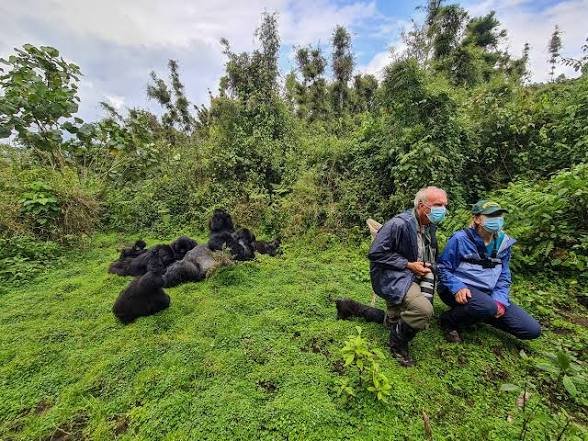
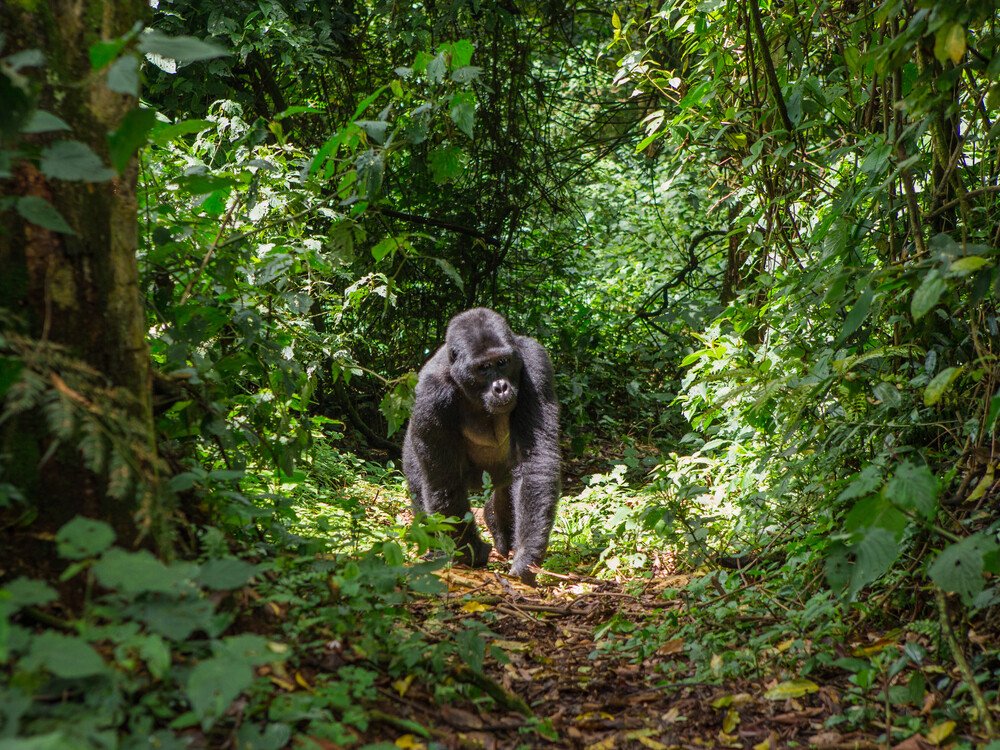
In Rwanda, visitors enter Volcanoes National Park with experienced guides and trackers in search of an assigned gorilla family. The forest environment can be steep, muddy, dense, and physically demanding, depending on the location of the group.
In Uganda, travellers enter the forests of Bwindi or Mgahinga under a similar principle of controlled wildlife observation. The trekking environment can also be physically demanding, particularly in Bwindi, where steep slopes and dense vegetation contribute to the character of the forest.

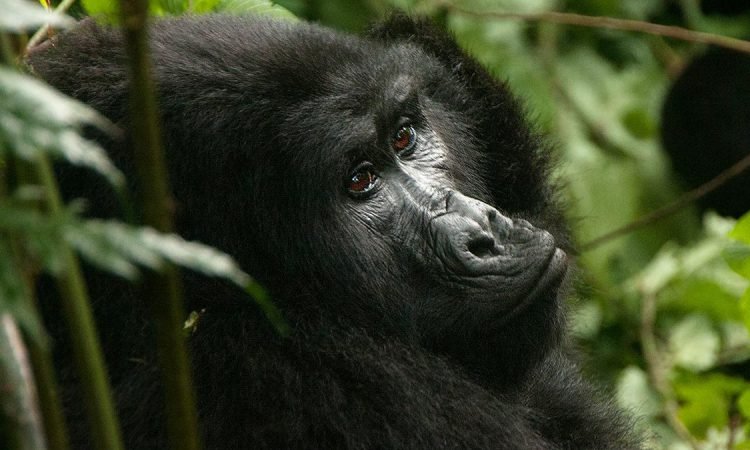
The exact difficulty of either trek cannot always be predicted.
Mountain gorillas move naturally through their habitat, and their location changes according to feeding, resting, social behaviour, and environmental conditions.
A family that was relatively close to a trekking starting point one day may be farther away on another day.
This is an important part of the experience because visitors are not following a fixed wildlife exhibition. They are searching for animals that continue to live according to their natural routines.
The moment the gorilla family is located can therefore feel particularly rewarding.
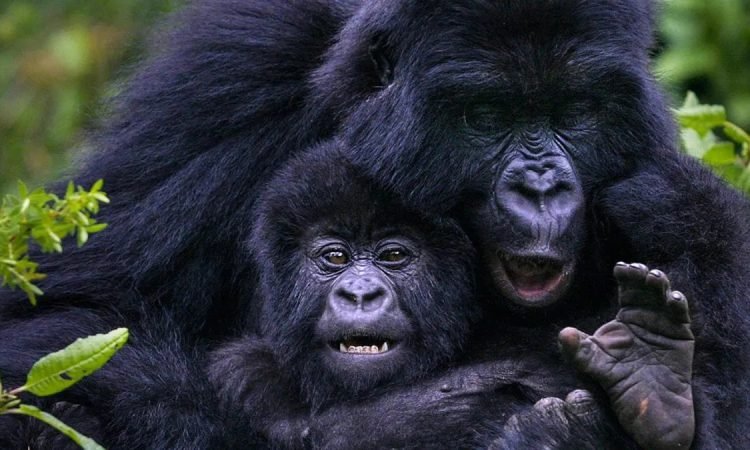
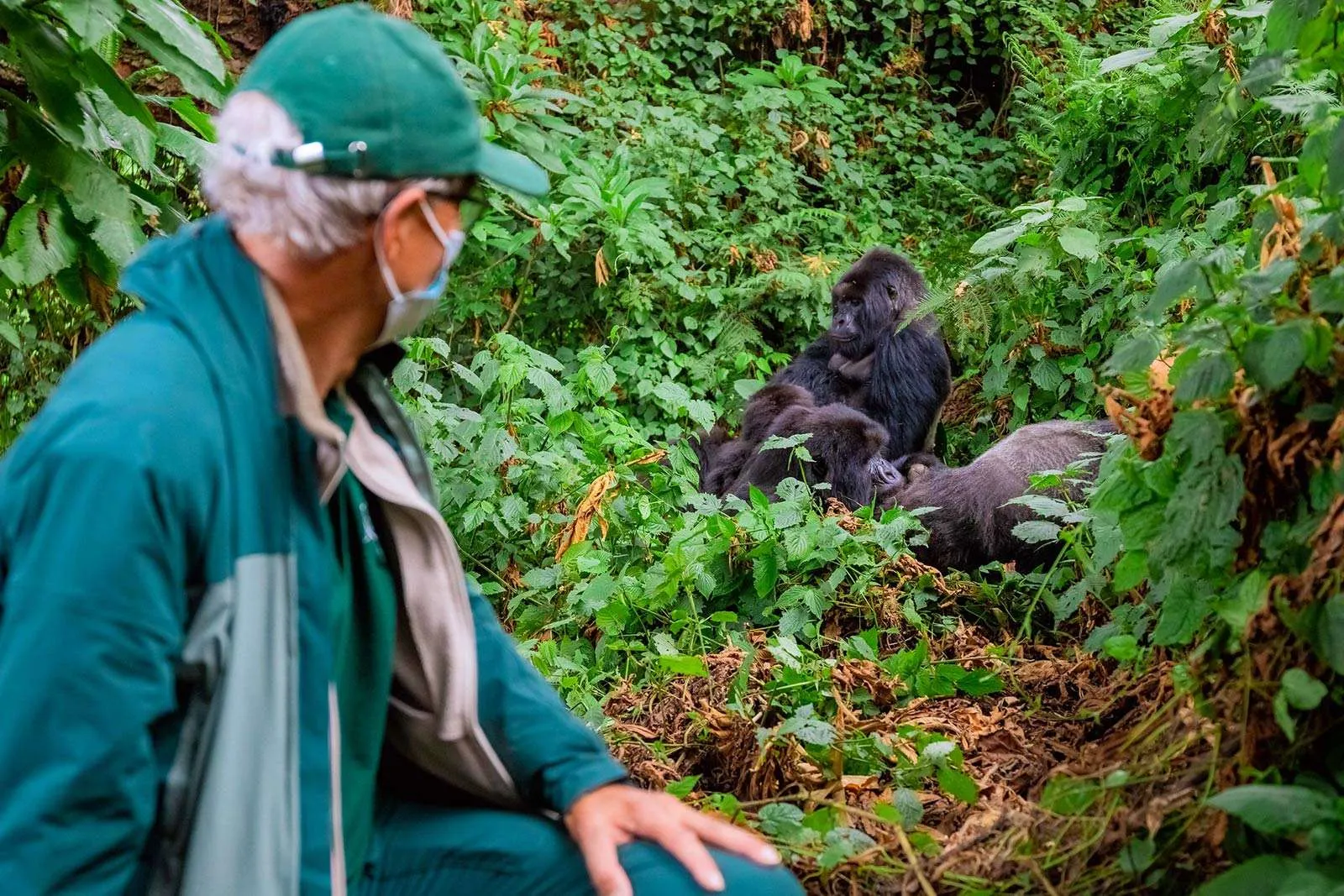
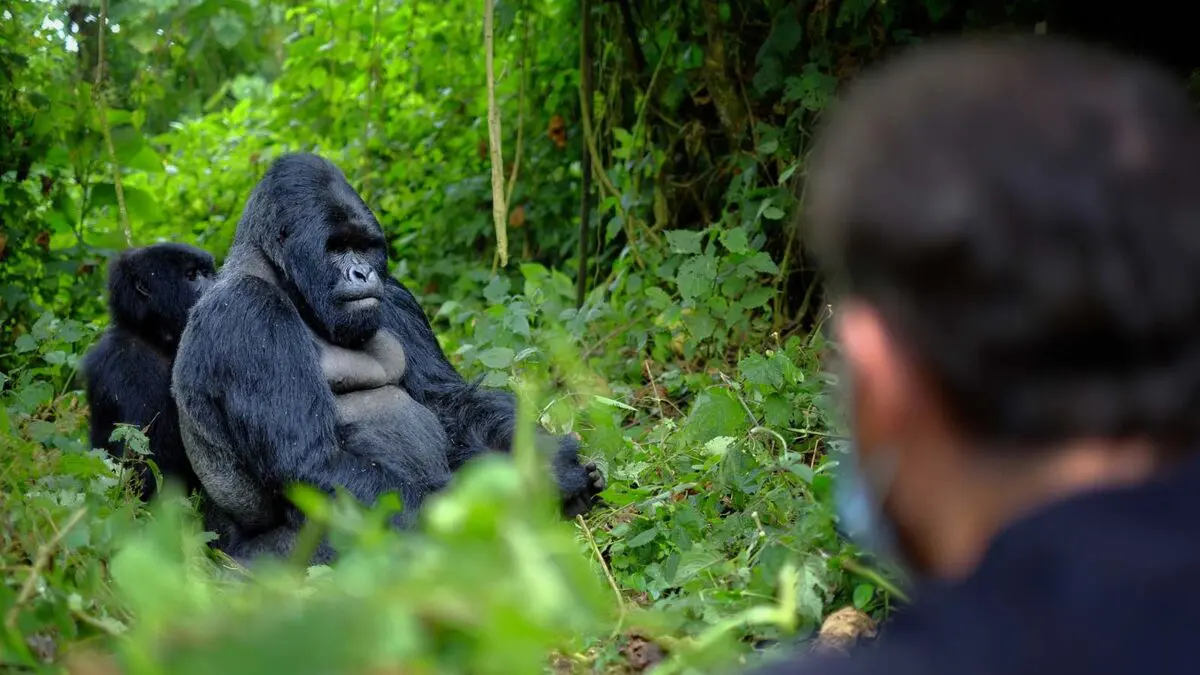
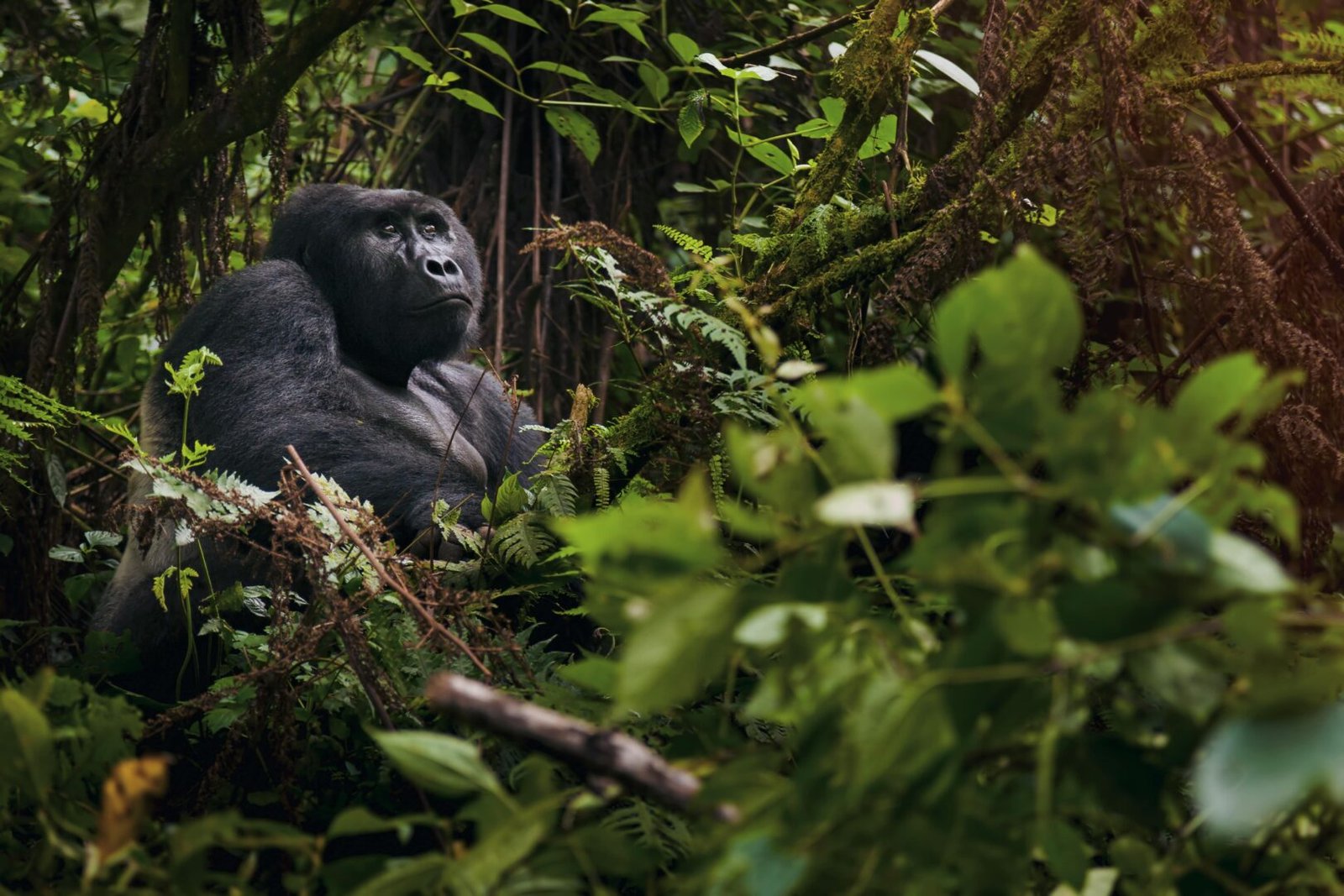
Travellers may encounter a powerful silverback resting among the vegetation, adult females feeding, mothers caring for infants, or juveniles playing around the group.
The encounter is often emotional because visitors are seeing the animals in the environment where they naturally live.
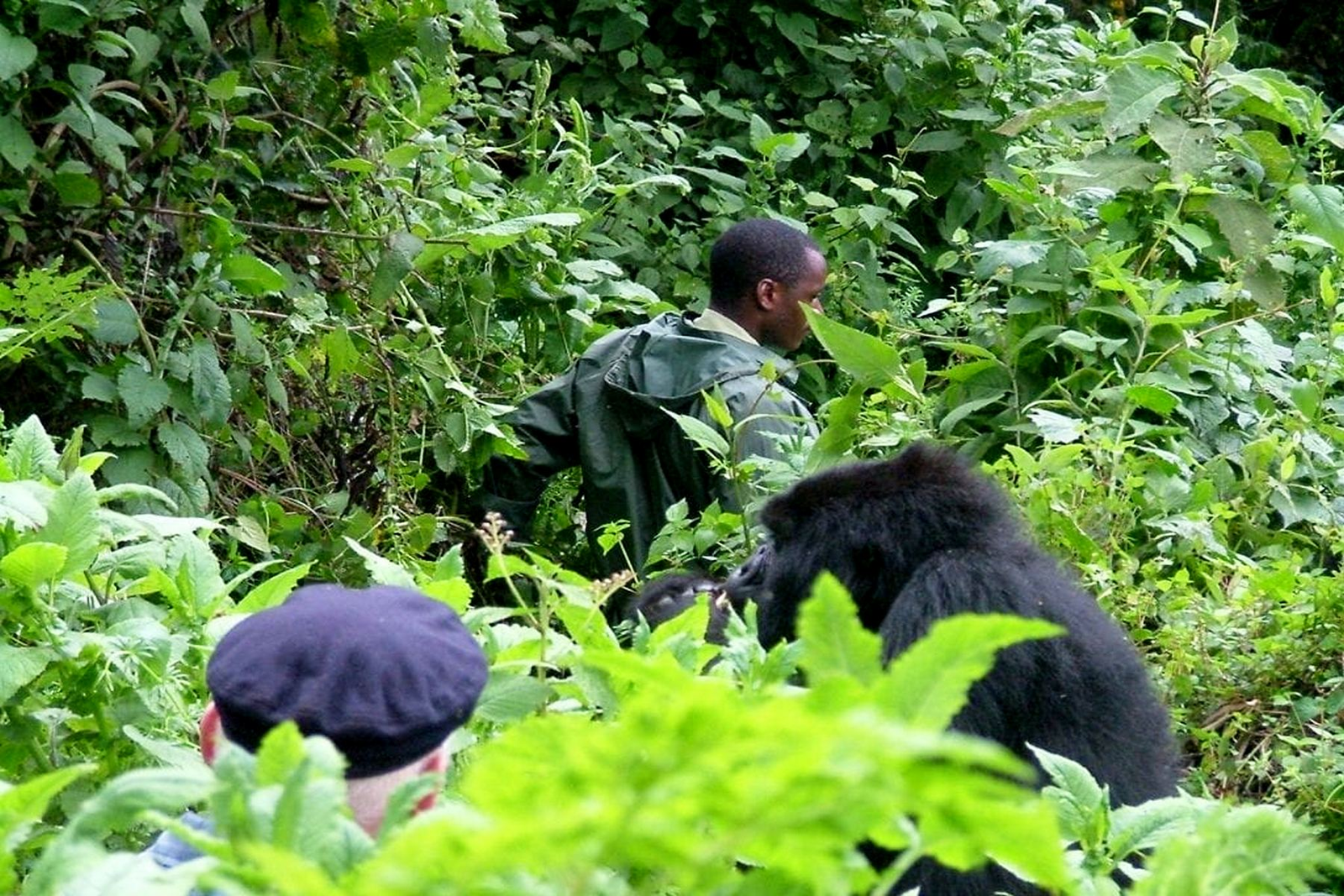
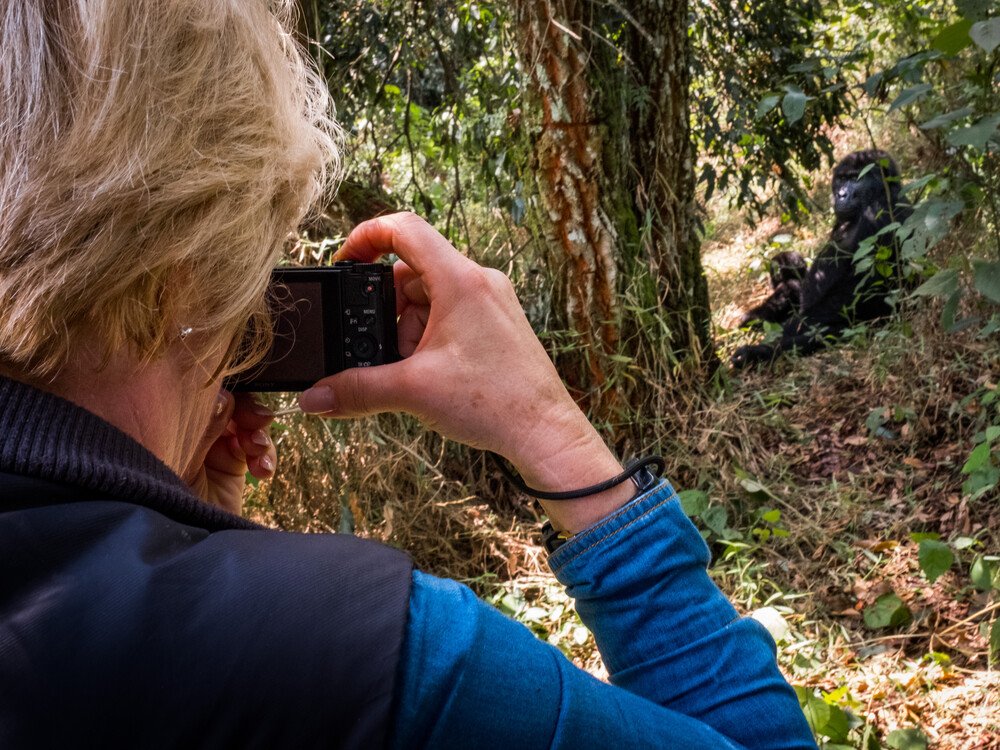
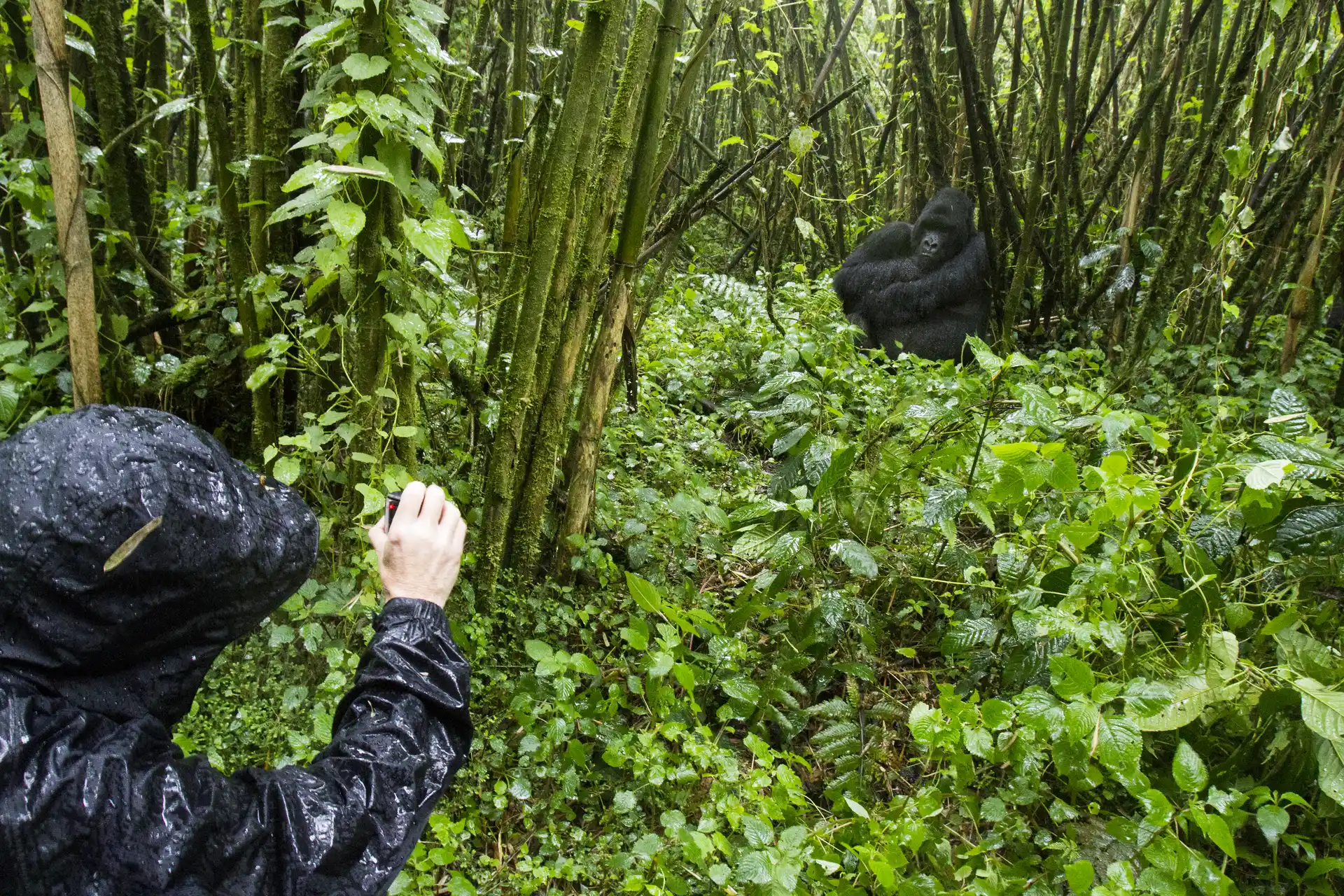
The similarities between gorilla families and human families also contribute to the experience. Mothers show strong care towards their young, juveniles learn through interaction and play, and mature males can play important roles in maintaining the stability of the group.
These behaviours make the experience about more than simply seeing a rare animal.
They create an opportunity to understand the social lives of mountain gorillas and appreciate why their protection matters.
The higher Rwanda permit does not guarantee that visitors will have a more emotional or memorable encounter than visitors trekking in Uganda.
Wildlife does not operate according to price.
A traveller paying USD 1,500 in Rwanda may experience a peaceful family feeding in the forest, while another traveller paying USD 800 in Uganda may witness juveniles playing energetically around a silverback.
Another traveller may have the opposite experience.
The behaviour of the gorillas is unpredictable, and that unpredictability is part of what makes the experience authentic.
This is why comparing the two destinations solely according to the permit price can provide an incomplete picture.
Rwanda’s higher permit price is closely connected to its premium tourism positioning and the overall experience surrounding the trek.
The country has invested heavily in tourism infrastructure, luxury accommodation, accessibility, destination management, and high-end safari experiences.
For travellers who want a short and highly organised gorilla holiday, these advantages can be particularly valuable.
A traveller can arrive in Kigali, spend time exploring the city, transfer north towards Volcanoes National Park, stay close to the trekking area, complete the gorilla experience, and continue to another destination.
The relatively short transfer from Kigali is especially useful for people with limited time.
For example, someone with only three or four days may prefer Rwanda because less of the holiday is consumed by long internal transfers.
Uganda becomes particularly attractive when travellers have more time.
The country provides an enormous range of wildlife and landscapes, allowing gorilla trekking to be incorporated into a longer safari.
A visitor can combine Bwindi with other destinations and experiences, creating a journey that includes primates, savannah wildlife, forests, lakes, and cultural encounters.
The lower gorilla permit can also help make this longer itinerary more affordable.
This is one of the major reasons why Uganda remains highly attractive to travellers who want a broad African safari rather than a short gorilla-focused trip.
The difference is also relevant to travellers travelling on a budget.
A USD 700 saving per person can be significant.
For an individual traveller, it could contribute towards several nights of accommodation or transportation.
For a couple, it could help fund additional activities.
For a family, the savings can become large enough to influence the entire structure of the trip.
However, budget travellers should also consider transportation carefully.
A long road journey can increase the overall cost through additional travel days, meals, accommodation, and vehicle requirements.
Domestic flights can reduce travel time but add another expense.
Rwanda’s shorter access route can therefore make the overall cost difference smaller than the permit difference might initially suggest.
This is why a professional safari quotation should be compared on a like-for-like basis.
The most meaningful comparison is between two complete itineraries offering similar accommodation standards, transportation arrangements, number of travellers, number of trekking days, and additional activities.
Only then can the traveller understand the actual difference in total cost.
The permit price also becomes particularly important for private safaris.
A private safari allows travellers to design the journey around their own schedule and preferences.
In Rwanda, this can work particularly well for couples, honeymooners, families, photographers, and luxury travellers.
A private vehicle can collect guests from Kigali, transport them to the northern region, remain available during the safari, and return them after the trek.
In Uganda, private safaris can provide the same flexibility while allowing travellers to take advantage of the lower standard gorilla permit.
The savings can be particularly useful for travellers who want premium accommodation without paying Rwanda’s higher permit rate.
The choice therefore becomes a question of where the traveller wants to spend the budget.
Someone may prefer to spend more on the permit and less on other services.
Another traveller may prefer to save on the permit and invest more in accommodation, private transportation, photography equipment, additional activities, or extending the safari.
Neither strategy is wrong.
Another important consideration is the type of gorilla experience the traveller wants.
Standard gorilla trekking is designed to provide a relatively short, regulated encounter with a habituated gorilla family.
Uganda also offers a gorilla habituation experience in Bwindi, which is different from ordinary trekking.
The habituation experience provides a longer period around gorillas undergoing habituation and can appeal strongly to travellers who want a more immersive experience.
This is particularly relevant to serious wildlife enthusiasts and photographers.
The habituation experience should not be confused with the standard gorilla permit, however.
When comparing Rwanda and Uganda prices, travellers should ensure they are comparing equivalent experiences.
A standard Rwanda trek should be compared with a standard Uganda trek.
A gorilla habituation experience should be compared separately because it involves a different type of activity and different permit arrangements.
Age requirements are another important consideration, particularly for families.
Gorilla trekking is physically demanding and operates under strict wildlife management rules. Rwanda currently sets the minimum age for gorilla trekking at 15 years, and families should confirm the current requirements before making arrangements.
This means that a family considering Rwanda or Uganda should not assume that every child can participate simply because the family is travelling together.
Families with younger children can still enjoy a broader wildlife and cultural safari while planning age-appropriate experiences around the gorilla trek.
For couples, the permit difference can also influence the decision.
Two Rwanda permits currently total USD 3,000.
Two Uganda foreign non-resident standard permits total USD 1,600.
The USD 1,400 difference is considerable.
A couple celebrating a honeymoon may decide that Rwanda’s convenience and luxury infrastructure justify the higher cost.
Another couple may prefer Uganda because the saving can be used to upgrade accommodation or add additional wildlife experiences.
The same principle applies to solo travellers.
A solo traveller pays the full individual permit rate, so the USD 700 difference is immediately visible.
For solo travellers, Rwanda’s short transfer from Kigali can be particularly attractive because the logistics are relatively simple.
Uganda can be more attractive to solo travellers who want a longer adventure and are comfortable with the additional transportation required to reach Bwindi or Mgahinga.
Photography is another factor worth considering.
Both Rwanda and Uganda offer extraordinary photographic opportunities, but photography should always be approached responsibly.
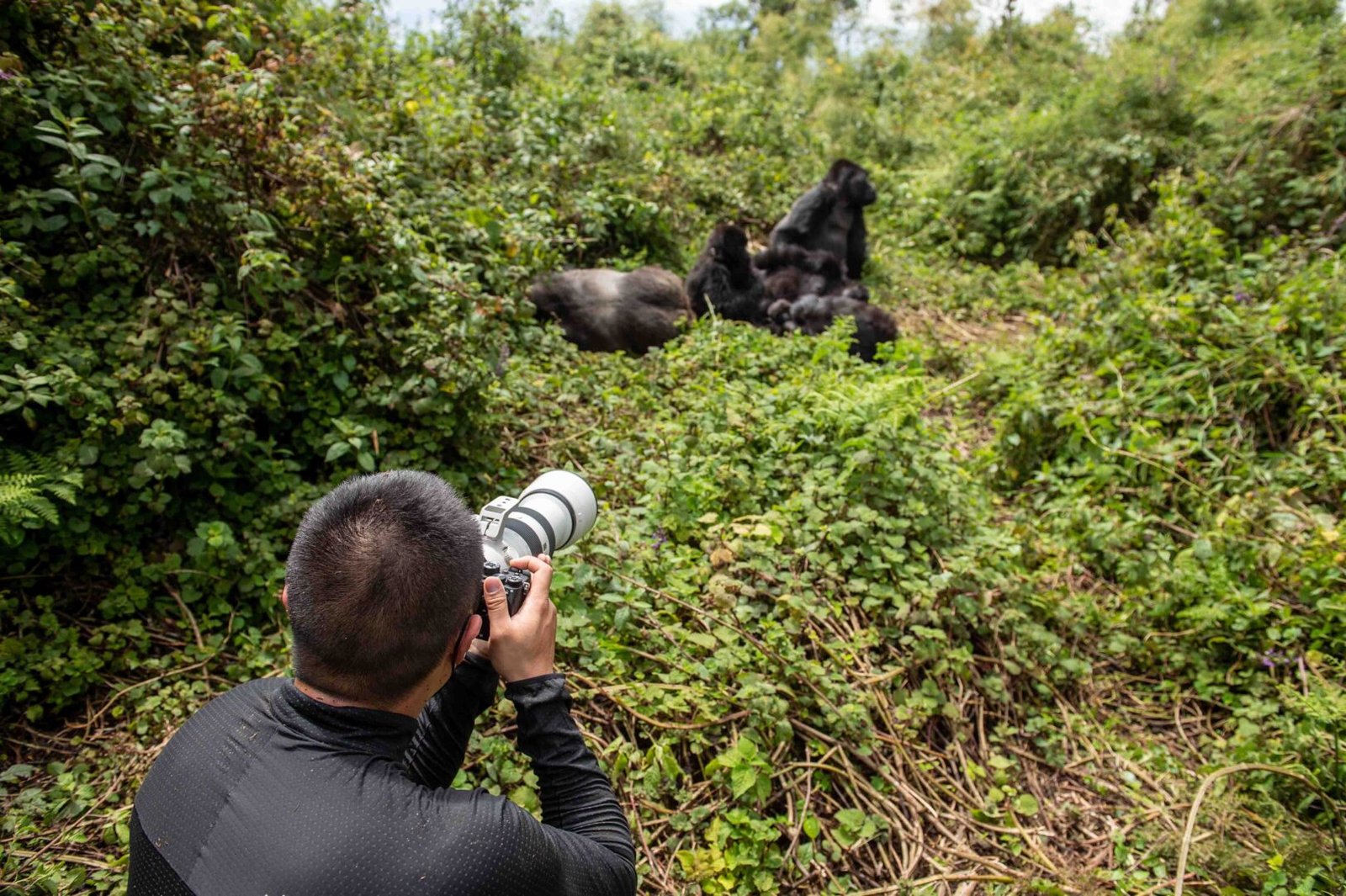
Visitors should never move closer to gorillas simply to obtain a better photograph.
The wellbeing of the animals must remain the priority.
The most valuable photographs often come from observing patiently and allowing natural behaviour to unfold.
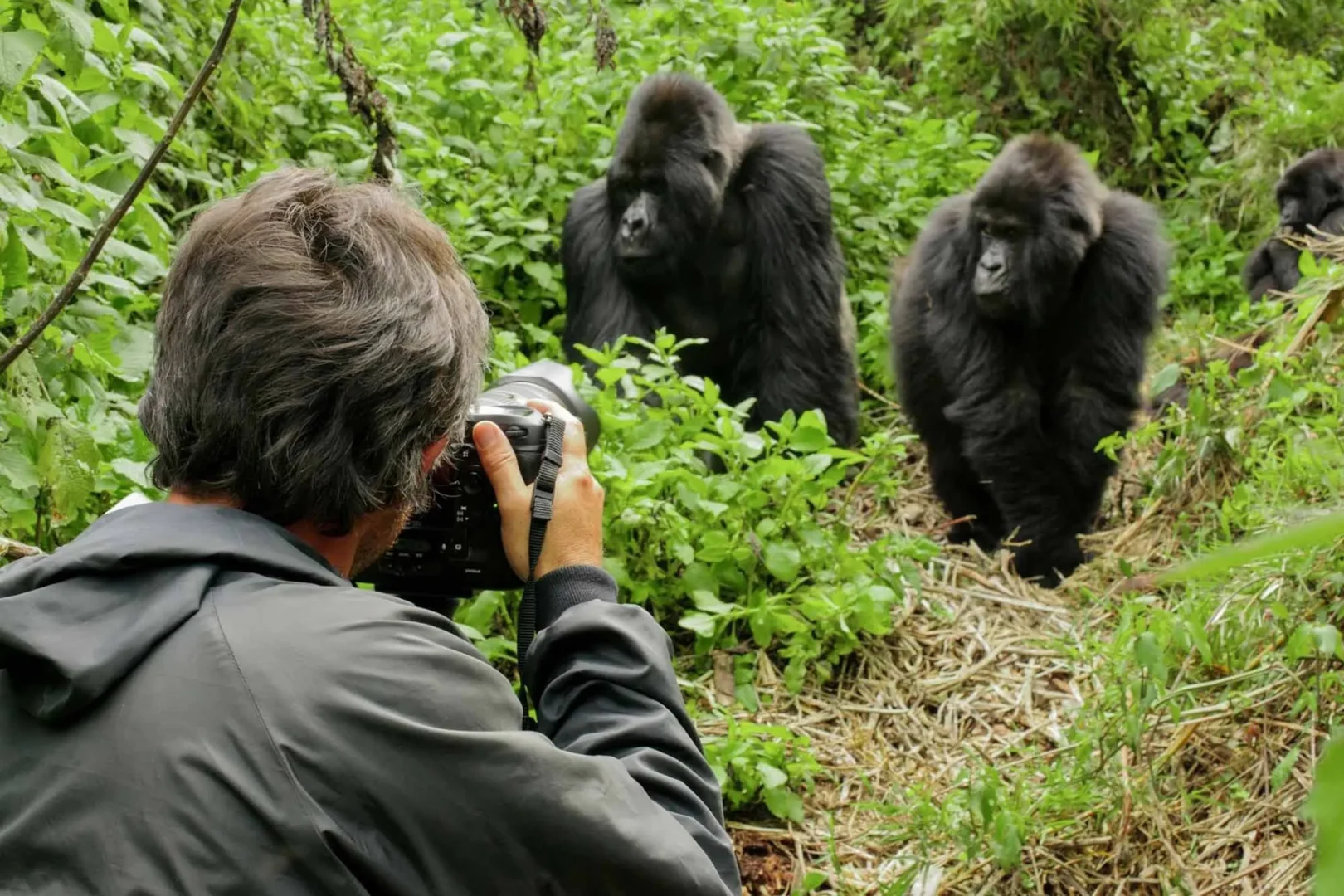
A photographer may capture a silverback looking directly towards the trekking group, a mother with her infant, or juveniles interacting naturally.
These moments are valuable because they document the real behaviour of the animals rather than staged encounters.
For luxury travellers, Rwanda remains particularly compelling.
The country’s northern tourism region has developed around premium gorilla experiences, and travellers can choose from high-end accommodation and private safari arrangements.
This makes Rwanda particularly attractive for honeymooners and travellers celebrating anniversaries or significant occasions.
However, Uganda should not be dismissed as a luxury destination.
High-end lodges around Bwindi can provide exceptional accommodation and personalised service.
The lower permit price can actually create an opportunity for travellers to allocate more of their budget towards accommodation.
This means that a traveller can potentially enjoy a very luxurious Ugandan safari while spending less on the fixed cost of the gorilla trek.
For adventure travellers, Uganda also offers considerable appeal because the gorilla trek can form part of a much broader journey.
The country has a rich combination of forests, lakes, rivers, wetlands, savannah landscapes, and primate habitats.
A longer itinerary can therefore provide a diverse wildlife experience before and after the gorilla trek.
Rwanda can also provide a diverse safari, but its strength is particularly evident in the convenience of combining several attractions within a relatively compact country.
The two destinations therefore complement different travel styles.
Rwanda can be particularly attractive to travellers who value convenience, premium services, short transfers, and luxury.
Uganda can be particularly attractive to travellers who value affordability, longer safaris, diverse wildlife, and the opportunity to maximise their travel budget.
Ultimately, the Rwanda vs Uganda Gorilla Permit comparison should not be treated as a simple contest in which one country wins because its permit is cheaper.
Uganda clearly has the lower standard international permit price.
Rwanda offers a higher-priced permit within a tourism environment that places strong emphasis on accessibility and premium experiences.
The most important question is therefore what the traveller receives from the complete journey.
A traveller who has only a few days may find Rwanda’s accessibility extremely valuable.
A traveller who has a week or more may find Uganda’s lower permit and broader safari opportunities particularly attractive.
A honeymooner may prioritise Rwanda’s luxury accommodation.
A wildlife enthusiast may choose Uganda for a longer safari combining gorillas with other wildlife experiences.
A family may compare the total cost of multiple permits and choose according to its available budget.
In every case, the permit is only the beginning of the calculation.
The real value of a gorilla safari comes from the complete experience: reaching the forest, walking through the habitat, learning from experienced guides, finding the gorilla family, observing its behaviour, and understanding the conservation work that makes the encounter possible.
Both Rwanda and Uganda provide an extraordinary opportunity to experience mountain gorillas responsibly.
The price difference is important, but it should be evaluated alongside accessibility, accommodation, transportation, itinerary length, and personal travel priorities.
For travellers focused strictly on the lowest standard international permit price, Uganda is the clear choice.
For travellers seeking a convenient, premium, and highly organised gorilla holiday, Rwanda can justify its higher permit cost.
For travellers wanting to combine gorilla trekking with a longer and more varied wildlife safari, Uganda can provide exceptional value.
The best decision is therefore not simply the country with the cheaper permit. It is the destination that provides the right combination of price, convenience, comfort, wildlife, conservation, and overall experience for the individual traveller.
Understanding What a Gorilla Permit Means
A gorilla permit is an official authorisation allowing a visitor to participate in a guided mountain gorilla trekking experience. It is connected to a particular date and protected area and forms the foundation of the gorilla encounter.
The permit should not be confused with a general park entrance ticket. Gorilla trekking is a specialised tourism activity involving habituated mountain gorilla families, professional guides, trackers, conservation procedures, and controlled visitor access.
The permit system exists partly to regulate the number of people visiting gorilla families. Mountain gorillas are sensitive wild animals, and uncontrolled tourism could create unnecessary pressure on their behaviour and habitat.
By limiting the number of visitors and controlling how encounters take place, conservation authorities can create a more responsible relationship between tourism and wildlife protection.
The permit also gives the visitor access to an experience that cannot be replicated through ordinary wildlife viewing. Instead of watching animals from a vehicle at a distance, travellers walk through the forest in search of a gorilla family.
The journey can involve steep slopes, dense vegetation, muddy trails, and changing weather. Once the family is located, visitors spend a regulated period observing the animals.
The permit therefore represents much more than a ticket. It is the gateway to one of Africa’s most closely managed wildlife encounters.
Rwanda Gorilla Permit Cost
Rwanda’s international gorilla trekking permit is currently priced at USD 1,500 per person for one day of gorilla trekking. The official Visit Rwanda booking information confirms the foreign visitor rate of USD 1,500 and also identifies different rates for certain resident and regional categories. (Visit Rwanda)
For international travellers, this makes Rwanda one of the most expensive destinations in the world for a standard mountain gorilla trekking permit.
The higher price reflects Rwanda’s positioning within the international luxury and premium wildlife tourism market. Volcanoes National Park is supported by an established tourism infrastructure, and the gorilla experience can be incorporated into highly personalised private safaris.
The permit price, however, should not be interpreted as meaning that travellers are purchasing a more exclusive gorilla encounter in which the conservation rules are relaxed. The rules surrounding the animals remain important regardless of how much a visitor pays.
A traveller staying in an ultra-luxury lodge and a traveller staying in a modest guesthouse still participate in a controlled gorilla encounter governed by conservation requirements.
What the higher overall price can provide is greater choice around the experience. Rwanda has a strong selection of accommodation, private vehicles, professional guides, luxury lodges, boutique properties, and additional experiences that can be incorporated into a tailored itinerary.
The premium permit is therefore one component of Rwanda’s broader tourism positioning.
Uganda Gorilla Permit Cost
Uganda provides a substantially lower standard gorilla trekking permit price for international visitors. The current foreign non-resident rate is USD 800 per person for gorilla tracking in Bwindi Impenetrable National Park and Mgahinga Gorilla National Park. Uganda Wildlife Authority’s published tariff confirms this rate.
The difference between USD 800 and Rwanda’s USD 1,500 is significant.
A traveller booking one standard trek saves USD 700 per person on the permit by choosing Uganda instead of Rwanda.
For two travellers, that represents a USD 1,400 difference in permit costs.
For a family or larger private group, the difference becomes even more noticeable.
This is one of the strongest reasons Uganda attracts travellers who want a mountain gorilla experience while keeping the fixed permit cost lower.
However, the lower permit does not mean that Uganda offers a lower-quality gorilla encounter. Uganda’s Bwindi Impenetrable National Park is one of the world’s most important mountain gorilla habitats, and travellers can experience extraordinary encounters with habituated gorilla families.
The difference is primarily one of pricing, destination structure, and the wider safari experience.
Rwanda vs Uganda Gorilla Permit Price Difference
The price difference is easiest to understand by looking at the two standard international rates.
Rwanda currently charges USD 1,500 per person, while Uganda charges USD 800 per person for foreign non-residents. (Visit Rwanda Bookings)
That means Uganda’s standard permit is USD 700 cheaper per traveller.
This is a substantial difference, particularly for travellers travelling as couples or families.
For a couple, Rwanda’s two permits would cost USD 3,000, while Uganda’s two permits would cost USD 1,600. The permit difference alone would therefore be USD 1,400.
For four travellers, Rwanda’s permits would total USD 6,000, while Uganda’s would total USD 3,200, creating a USD 2,800 difference.
These figures demonstrate why Uganda is frequently selected by travellers who want to allocate more of their safari budget to accommodation, additional wildlife experiences, longer itineraries, or transportation.
However, travellers should avoid assuming that the USD 700 difference automatically represents the final saving on the complete safari.
The overall cost must still be calculated.
Why Is the Rwanda Gorilla Permit More Expensive?
The difference in the Rwanda vs Uganda Gorilla Permit price is closely connected to the different tourism strategies, conservation approaches, destination positioning, and visitor experiences developed by the two countries. Rwanda has deliberately positioned mountain gorilla trekking as a premium wildlife experience, while Uganda has maintained a lower standard international permit price that makes gorilla trekking more accessible to a wider range of travellers.
Rwanda’s decision to charge a higher permit price should therefore not be interpreted simply as meaning that the gorillas in Rwanda are better than those in Uganda. The mountain gorillas found in the Virunga region are part of the same broader population, and both countries provide extraordinary opportunities to observe them in protected natural environments. The difference is primarily found in the wider tourism experience surrounding the gorilla encounter.
Rwanda has developed a strong reputation as a premium African tourism destination. Gorilla trekking in Volcanoes National Park is at the centre of this positioning, supported by high-quality accommodation, professional guiding services, private transportation, excellent tourism infrastructure, and carefully designed luxury safari experiences. The country has successfully attracted travellers who are prepared to pay a premium for convenience, comfort, exclusivity, and personalised service.
The location of Volcanoes National Park also contributes to the attractiveness of the Rwandan experience. The park is relatively close to Kigali, the country’s main international gateway. Travellers can arrive in Kigali and continue towards the northern part of the country without spending several days travelling by road. For visitors with limited time, this accessibility can have considerable value.
A traveller planning a short gorilla safari may therefore be willing to pay more for the permit because the overall journey can be relatively efficient. Instead of spending a large portion of the holiday travelling between the international airport and the gorilla destination, visitors can reach the Volcanoes National Park region comparatively quickly and dedicate more of their available time to the actual safari.
This is particularly attractive to travellers who are combining Rwanda with another destination or who have only a few days available. A couple may arrive in Kigali, spend time exploring the capital, continue to Volcanoes National Park, enjoy a gorilla trekking experience, and then continue with their holiday. The compact nature of the journey can make the higher permit cost easier to accept.
Rwanda has also invested significantly in the development of luxury accommodation around Volcanoes National Park. The region includes properties designed for travellers seeking high levels of comfort, personalised service, fine dining, private experiences, and romantic surroundings. These accommodation options have helped establish gorilla trekking as a premium African travel experience rather than simply a low-cost wildlife activity.
This premium positioning influences the way travellers perceive the permit.
For a luxury traveller, the permit is only one part of the overall holiday budget. The traveller may already be prepared to spend significantly on accommodation, private transportation, meals, guiding, and additional experiences. In that context, paying more for the gorilla permit may be considered worthwhile if the destination provides the convenience and quality of service the traveller expects.
Rwanda’s tourism strategy also places considerable emphasis on conservation. Mountain gorilla tourism generates important revenue that supports the broader system required to protect the animals and their habitat. The forest around Volcanoes National Park requires continuous management, monitoring, research, and protection, and tourism provides an important economic mechanism supporting these efforts.
The permit price therefore has a conservation dimension as well as a tourism dimension. Travellers are contributing to an organised system that allows people to experience mountain gorillas while maintaining controls designed to protect the animals.
The relationship between tourism and conservation is particularly important because mountain gorillas cannot survive without their natural habitat. Protecting the animals means protecting the forests, vegetation, water systems, and wider mountain ecosystem in which they live.
Rwanda’s higher permit price can therefore be understood as part of a broader model in which a limited number of visitors pay a premium for access to a highly protected wildlife experience.
Another factor is the international reputation Rwanda has built around gorilla trekking. Volcanoes National Park is closely associated with the history of mountain gorilla research and conservation, including the legacy of Dian Fossey and the work carried out in the Virunga Mountains. This history has helped establish Rwanda as one of the world’s best-known destinations for mountain gorilla experiences.
The destination’s reputation creates strong international demand, particularly among luxury travellers, honeymooners, wildlife enthusiasts, photographers, families, and visitors seeking once-in-a-lifetime experiences.
High demand combined with controlled visitor numbers allows Rwanda to maintain a premium pricing structure.
This does not mean that every traveller will consider the higher price good value. Value depends on individual priorities.
Someone travelling on a strict budget may look at the permit difference and immediately favour Uganda. Someone with limited time may consider Rwanda’s accessibility more important than the difference in permit cost.
Uganda has taken a different approach to pricing.
Uganda’s standard gorilla trekking permit for foreign non-residents is significantly lower than Rwanda’s. This makes the country particularly attractive to travellers who want to experience mountain gorillas while keeping the fixed cost of the trek under control.
The lower permit price also creates opportunities for travellers to spend more of their safari budget elsewhere.
For example, a couple could use the savings on accommodation, private transportation, additional activities, or extending the length of their safari. A family could potentially redirect a considerable portion of its budget towards other wildlife experiences.
This affordability is one of Uganda’s strongest advantages.
Uganda’s gorilla tourism is centred primarily around Bwindi Impenetrable National Park, with additional gorilla trekking opportunities in Mgahinga Gorilla National Park. These protected areas form part of the wider habitat of mountain gorillas and provide extraordinary opportunities to encounter habituated gorilla families.
The lower permit does not mean that the gorilla encounter itself is inferior.
A visitor trekking in Bwindi can experience the same sense of anticipation as someone trekking in Volcanoes National Park. The traveller walks through a natural forest, follows experienced guides and trackers, and eventually discovers a gorilla family living according to its own natural routines.
The encounter can be just as emotional.
A mother may be caring for her infant, juveniles may be playing together, adult females may be feeding, and a silverback may be calmly watching over the group. These behaviours are what make gorilla trekking special, and their value cannot be measured simply by comparing permit prices.
Uganda’s lower price is therefore better understood as a different tourism pricing strategy rather than evidence of a lower-quality wildlife experience.
Another reason Uganda can be attractive is the country’s broader safari potential. Travellers can combine gorilla trekking with chimpanzee trekking, savannah wildlife, cultural experiences, forest exploration, and other destinations.
This makes Uganda particularly appealing to visitors who want a comprehensive African safari rather than a short gorilla-focused holiday.
A traveller might spend several days exploring Uganda’s wildlife destinations before continuing to Bwindi for the gorilla trek. The gorilla experience becomes one important component of a much larger journey.
Rwanda can also offer a broader safari experience, but its particular strength is the ability to create relatively compact itineraries combining gorillas with other attractions.
This distinction helps explain why the permit prices should not be considered independently from the overall travel experience.
Rwanda’s higher permit price can make sense for someone who values time, convenience, premium accommodation, and personalised service.
Uganda’s lower permit can make more sense for someone who values affordability, longer journeys, broader wildlife experiences, and the ability to allocate more of their budget to other parts of the safari.
The difference also becomes especially noticeable for larger groups.
A solo traveller will notice a USD 700 difference between the two standard international permit prices.
For a couple, the difference becomes USD 1,400.
For four travellers, it becomes USD 2,800.
As the number of travellers increases, the financial advantage of Uganda becomes increasingly significant.
This is why families and private groups often pay particularly close attention to the permit comparison.
However, the final safari quotation can still narrow the difference because transportation and accommodation costs are different between destinations.
A long transfer to Bwindi can require more time and vehicle resources than a comparatively short transfer from Kigali to Volcanoes National Park.
Travellers who choose domestic flights to reduce the journey to southwestern Uganda may also incur additional costs.
This means that the USD 700 permit difference should not be treated as a guaranteed USD 700 saving on the complete safari.
The correct way to compare Rwanda and Uganda is to request equivalent itineraries.
If both itineraries use similar accommodation standards, private transportation, comparable meals, professional guiding, and the same number of trekking days, the traveller can then see how much the final cost actually differs.
Another consideration is the type of accommodation available.
Rwanda has developed a particularly strong concentration of luxury lodges near Volcanoes National Park. This makes the destination highly attractive to travellers who want a premium experience from the moment they arrive.
Uganda also has excellent luxury lodges around Bwindi, but the surrounding travel experience is generally more varied and can be designed for different budget levels.
This gives Uganda considerable flexibility.
A traveller can choose a modest lodge and benefit from the lower permit price, or choose a premium property and use the permit savings to offset some of the accommodation cost.
Rwanda’s premium positioning means that many travellers naturally build their trip around a higher level of service.
The difference is therefore not simply about what the permit includes.
It is about the entire destination experience.
Another important point is that gorilla permits help control visitor numbers.
Mountain gorillas are highly social animals, and excessive human presence could potentially disturb their behaviour and increase health risks. Controlled access helps ensure that encounters remain carefully managed.
The higher Rwanda permit can therefore contribute to a model in which a limited number of visitors generate substantial tourism revenue while visitor numbers remain controlled.
Uganda’s lower permit follows the same broad principle of controlled gorilla tourism while making access more affordable.
Both approaches demonstrate that conservation and tourism can work together when carefully managed.
For travellers, understanding this relationship can make the permit price feel more meaningful.
The money paid is not simply a fee for a few hours in the forest. It contributes to maintaining a conservation system that makes the experience possible.
The forests must be protected.
Gorilla families must be monitored.
Guides and trackers must be trained.
Tourism infrastructure must be maintained.
Communities surrounding protected areas need opportunities to benefit from conservation.
All of these elements form part of the wider gorilla tourism economy.
This is why the Rwanda permit should not be described simply as “expensive” without considering what surrounds it.
At the same time, Uganda’s lower permit should not be described as “cheap” in a way that suggests the experience has little value.
The better interpretation is that the two countries have chosen different ways to price access to an extremely valuable conservation and tourism experience.
Rwanda has created a premium model based strongly on exclusivity, convenience, accessibility, and luxury tourism.
Uganda provides a more accessible permit price while offering a broader destination where travellers can build a varied safari around their gorilla experience.
Both models have their own strengths.
For honeymooners, Rwanda may be especially attractive because couples can combine gorilla trekking with luxury accommodation and romantic experiences without spending large amounts of time travelling between destinations.
For families, Uganda’s lower permit price can be especially valuable because multiple permits can represent a significant proportion of the total safari budget.
For photographers and serious wildlife enthusiasts, the decision may depend more on the preferred forest environment, itinerary, and whether standard trekking or a longer habituation experience is desired.
For travellers with limited time, Rwanda’s accessibility can be one of its greatest advantages.
For travellers with more time, Uganda’s broader safari possibilities can become increasingly attractive.
The most important point is that the higher Rwanda permit does not purchase “better gorillas.”
It provides access to an extraordinary gorilla experience within a destination that has chosen a premium tourism model.
Likewise, Uganda’s lower permit does not mean that travellers receive a lesser encounter.
The animals remain wild, the forests remain extraordinary, and the emotional impact of seeing a mountain gorilla family can be profound in either destination.
Ultimately, the reason the Rwanda Gorilla Permit is more expensive than Uganda’s standard permit is best understood through the combination of premium destination positioning, controlled visitor access, conservation financing, tourism infrastructure, accessibility, and the wider luxury travel environment Rwanda has developed around Volcanoes National Park.
Uganda’s lower permit reflects a different strategy designed to make standard gorilla trekking more accessible while maintaining the conservation value of tourism.
For travellers choosing between the two, the most sensible approach is therefore to look beyond the permit price.
Rwanda may be worth the additional cost for someone seeking convenience, luxury, short travel times, and a highly personalised experience.
Uganda may provide stronger financial value for someone who wants a lower permit cost and a longer, broader African safari.
In both cases, the ultimate reward remains the same: the opportunity to enter a protected mountain forest, encounter one of the world’s most remarkable primates, and witness the complex family life of mountain gorillas in their natural environment.
What Is Included in the Uganda Gorilla Permit?
The Uganda permit is not simply permission to enter the forest.
Uganda Wildlife Authority’s tariff information indicates that the gorilla tracking fee includes the guide fee, park entrance for the day, and a community development contribution.
This is important when comparing prices because the permit already incorporates several components of the trekking experience.
The traveller does not separately purchase a basic park entry ticket simply to participate in the gorilla trek.
The permit supports the organised trekking system and contributes to the broader conservation and community framework around the protected area.
However, the permit does not cover every expense associated with a safari.
Accommodation, transportation to and from the gorilla destination, meals outside the specified arrangements, porter services, personal expenses, international flights, visas, travel insurance, and other safari services may still apply depending on the itinerary.
This distinction is important when preparing a realistic budget.
What Is Included in the Rwanda Gorilla Permit?
Rwanda’s gorilla permit similarly provides access to the regulated gorilla trekking experience in Volcanoes National Park.
The permit allows the visitor to participate in the official gorilla tracking activity and forms part of the conservation and tourism management system.
Rwanda’s official tourism information also explains that revenue from gorilla permits supports conservation and community projects, including initiatives connected to forest and gorilla habitat expansion.
This means that the permit is contributing to more than the individual traveller’s experience.
The money generated through gorilla tourism helps support the wider system required to protect mountain gorillas and their habitat.
Travellers should therefore view the permit as part of their contribution to conservation rather than simply as an expensive entrance ticket.
Rwanda vs Uganda Gorilla Permit and Conservation
One of the most important aspects of the comparison is conservation.
Mountain gorillas are highly protected animals, and their survival depends on suitable habitat, careful monitoring, responsible tourism, scientific research, and strong conservation management.
Gorilla permits help create an economic system in which the continued protection of the animals has significant value.
In Rwanda, official tourism information directly links permit revenue to conservation and community projects.
Uganda’s tariff structure also includes a community development contribution within the gorilla tracking permit.
This means that travellers in both countries are participating in a conservation-based tourism system.
The value of a permit therefore extends beyond the few hours spent inside the forest.
The money contributes to maintaining protected areas, supporting tourism management, creating economic opportunities, and helping maintain the broader conservation framework.
This is one reason why comparing permits purely by price can be misleading.
A lower permit does not necessarily mean that the destination places less value on conservation. It means that the tourism authority has chosen a different pricing strategy.
Rwanda vs Uganda Gorilla Trekking Experience
The actual gorilla trekking experience can be extraordinary in both countries.
In Rwanda, travellers enter Volcanoes National Park and search for one of the habituated gorilla families living within the Virunga Mountains.
In Uganda, travellers enter Bwindi Impenetrable National Park or Mgahinga Gorilla National Park depending on the permit and itinerary.
The forests are different in character, and the trekking environments can feel different.
Rwanda’s Volcanoes National Park is dominated by the spectacular volcanic landscape of the Virunga Mountains. The scenery can include mist-covered peaks, bamboo forests, montane vegetation, and dramatic mountain slopes.
Uganda’s Bwindi Impenetrable National Park has a dense, ancient rainforest environment with steep terrain and thick vegetation. The forest often feels more enclosed and wild, creating a distinctly different atmosphere.
Mgahinga Gorilla National Park provides another Ugandan experience within the Virunga landscape, combining mountain gorillas with volcanic scenery.
The animals themselves remain the central attraction.
A traveller may encounter a silverback resting among the vegetation, a mother caring for her infant, or juveniles playing around the family.
These moments cannot easily be compared using price.
The emotional quality of the encounter comes from observing the animals behaving naturally.
Does a More Expensive Permit Mean Better Gorilla Trekking?
Not necessarily.
The Rwanda permit is more expensive, but that does not mean the gorillas are inherently better than those in Uganda.
Mountain gorillas are the same species, and both countries provide protected habitats where travellers can experience habituated families.
The differences are more closely connected to the destination and the surrounding tourism environment.
Rwanda is particularly attractive for travellers who want accessibility, premium accommodation, private travel, and a compact itinerary.
Uganda is particularly attractive for travellers who want a lower permit price, a broader safari experience, and the opportunity to explore Bwindi and other Ugandan wildlife destinations.
The quality of the wildlife encounter depends on many factors, including the behaviour of the family, the location of the animals, the weather, the trekking conditions, and the traveller’s expectations.
A USD 1,500 permit cannot guarantee a more dramatic encounter than an USD 800 permit.
The gorillas decide what happens in the forest.
Rwanda vs Uganda for Luxury Gorilla Safaris
Luxury travellers often lean towards Rwanda because of the country’s strong premium tourism infrastructure.
The Volcanoes National Park region has developed a reputation for high-end accommodation and personalised safari experiences.
A luxury Rwanda gorilla safari can include private transportation, premium accommodation, personalised guiding, carefully selected meals, cultural experiences, and additional activities.
This makes Rwanda particularly appealing to honeymooners, couples, high-end travellers, and visitors celebrating special occasions.
The higher permit becomes part of a larger luxury travel budget.
Uganda can also provide exceptional luxury gorilla safaris.
Travellers can stay at high-quality lodges around Bwindi and combine gorilla trekking with private transportation and other Ugandan wildlife experiences.
The major advantage is that the lower permit price can leave more money available for premium accommodation or extending the safari.
A traveller could therefore choose Uganda and spend the permit saving on a more luxurious lodge or additional days exploring Uganda.
This is one of the most interesting aspects of the Rwanda versus Uganda comparison.
Rwanda offers premium destination positioning, while Uganda can allow travellers to build luxury around a lower fixed permit cost.
Rwanda vs Uganda for Budget Travellers
For budget-conscious international travellers, Uganda has an obvious advantage at the permit level.
An USD 800 permit is significantly easier to accommodate within a limited safari budget than an USD 1,500 permit.
The USD 700 saving can be used towards accommodation, transportation, meals, additional activities, or extending the duration of the trip.
Uganda also provides opportunities to combine gorilla trekking with chimpanzee trekking and traditional wildlife safaris, creating a broader wildlife journey.
However, the final cost still depends on the route.
Bwindi is located in southwestern Uganda, and travellers need to consider the transportation required to reach the park.
A road safari from Entebbe or Kampala can take considerable time, although domestic flights can reduce travel time at additional cost.
Rwanda’s shorter transfer from Kigali can partially offset the higher permit price for travellers who have very limited time.
Therefore, budget travellers should compare the entire package rather than the permit alone.
Rwanda vs Uganda for Short Gorilla Safaris
Travellers with only two or three days available often find Rwanda particularly convenient.
The relatively short journey between Kigali and Volcanoes National Park makes it possible to construct a compact itinerary around the gorilla trek.
A traveller can arrive in Kigali, transfer to the northern region, stay near the park, complete the trek, and return to Kigali.
This efficiency can be valuable for business travellers, short-break travellers, and people combining Rwanda with another East African destination.
Uganda requires more consideration when time is limited.
Bwindi is farther from Uganda’s main international gateway, and road transfers can be long depending on the starting point and trekking sector.
Domestic flights can make the journey faster, but they increase the overall cost.
Therefore, Rwanda’s higher permit price may sometimes be justified by the value of saving travel time.
For a traveller who has only a few days, time itself becomes an important part of the safari budget.
Rwanda vs Uganda for Longer Safaris
For travellers with one or two weeks available, Uganda becomes particularly attractive.
A longer Uganda safari can combine gorilla trekking with chimpanzee trekking, savannah wildlife, cultural experiences, scenic landscapes, and other primate encounters.
The gorilla trek can become one component of a broader wildlife journey.
This is a major advantage for travellers who want to see more than gorillas.
Rwanda can also support longer itineraries, particularly when gorilla trekking is combined with Akagera National Park, Nyungwe National Park, Lake Kivu, Kigali, and other destinations.
However, Uganda’s geographic diversity and wildlife offerings can make it particularly rewarding for travellers who want a traditional extended safari combined with primate experiences.
Rwanda vs Uganda Gorilla Permit for Couples
For two travellers, the permit difference is substantial.
Two Rwanda permits currently cost USD 3,000, while two Uganda foreign non-resident permits cost USD 1,600.
The USD 1,400 difference can be significant for honeymooners and couples.
In Uganda, the saving could be redirected towards luxury accommodation, private transportation, additional safari activities, or an extended stay.
In Rwanda, the couple may decide that the higher permit is worthwhile because of the convenience and premium experience available around Volcanoes National Park.
There is therefore no universal answer.
A couple prioritising convenience and luxury may prefer Rwanda.
A couple wanting to maximise the overall safari experience while keeping the permit cost lower may prefer Uganda.
Rwanda vs Uganda Gorilla Permit for Families
The difference becomes even more noticeable for families because each participating traveller generally requires an individual gorilla permit.
A family of four would currently spend USD 6,000 on Rwanda’s international permits compared with USD 3,200 for Uganda’s foreign non-resident permits.
That is a USD 2,800 difference before considering any other safari costs.
This can significantly influence the family’s choice.
Families with a larger travel budget may prefer Rwanda because of the shorter transfers and established tourism environment.
Families seeking better overall value may find Uganda more attractive because the permit saving can be substantial.
Age requirements must also be considered separately from price. Rwanda’s official tourism information currently states that the minimum age for gorilla trekking is 15 years.
Families should therefore confirm the current rules applicable to their children before booking.
Rwanda vs Uganda Gorilla Permit and Habituation
Gorilla trekking should not be confused with gorilla habituation.
A standard gorilla trek involves spending a regulated period with a habituated gorilla family.
Gorilla habituation is a different experience designed around gorilla groups undergoing the habituation process, and it provides a longer period of observation.
Uganda offers a gorilla habituation experience in Bwindi at a significantly different permit price. Uganda Wildlife Authority’s published tariff lists the foreign non-resident habituation permit at USD 1,500.
This creates an interesting comparison.
A traveller interested in spending more time observing gorillas may consider Uganda’s habituation experience instead of comparing only standard trekking permits.
The habituation experience is particularly attractive to photographers, researchers, wildlife enthusiasts, and travellers who want a more immersive forest experience.
However, it is important to distinguish this from standard trekking when comparing prices.
A USD 1,500 Uganda habituation permit does not mean Uganda’s ordinary gorilla trek costs USD 1,500. The standard Ugandan permit remains considerably lower.
Why Travellers Choose Rwanda Despite the Higher Permit
The higher cost of the Rwanda gorilla permit does not discourage every traveller because many visitors evaluate the entire safari rather than looking at the permit price alone. For travellers planning a once-in-a-lifetime wildlife journey, the overall quality, convenience, accessibility, accommodation, guiding, transportation, and ability to personalise the itinerary can be just as important as the amount paid for the gorilla permit. Rwanda has developed its gorilla tourism around this broader premium experience, making it particularly attractive to visitors who are willing to pay more for convenience and a well-organised journey.
One of Rwanda’s greatest advantages is its proximity to Kigali. Volcanoes National Park is located in the northern part of the country, and the journey from Kigali to the gorilla trekking region is relatively straightforward. This makes it possible for travellers to arrive in Rwanda and reach the Volcanoes region without spending several days on long internal transfers. For visitors with limited holiday time, this can be extremely valuable. Rather than spending a large proportion of a short safari travelling between destinations, they can dedicate more of their available time to experiencing Rwanda.
This accessibility is particularly important for international travellers who may be combining Rwanda with another destination. A traveller might arrive in Kigali, spend time experiencing the capital, continue to Volcanoes National Park for gorilla trekking, and then proceed to another part of Rwanda or connect with another East African destination. The relatively compact nature of the country makes these combinations practical and can reduce the logistical complexity of the holiday.
Rwanda’s tourism infrastructure is another major reason why travellers are prepared to pay the higher permit price. The country has invested heavily in developing services around its major tourism destinations, particularly in the areas surrounding Volcanoes National Park. Travellers can find accommodation ranging from comfortable properties to sophisticated luxury lodges, allowing the gorilla experience to be incorporated into different styles of travel.
For luxury travellers, this is especially significant. A gorilla safari is rarely just about the few hours spent in the forest. The accommodation before and after the trek, the quality of transportation, meals, guiding, personal service, and additional experiences all contribute to the feeling of the journey. Rwanda has positioned itself strongly within this premium market, allowing travellers to create an experience where the gorilla trek becomes the centrepiece of a wider luxury holiday.
Private transportation also adds considerable convenience. Travellers who choose a private safari can have their itinerary arranged around their own schedule rather than following a fixed group programme. This can be particularly useful for couples, families, honeymooners, photographers, and travellers celebrating special occasions. The vehicle can remain dedicated to the guests, allowing transfers, sightseeing stops, and daily arrangements to be organised with greater flexibility.
For couples, Rwanda can be particularly appealing because the gorilla trek can be incorporated into a romantic journey. Instead of treating the gorilla experience as a standalone activity, couples can combine it with comfortable accommodation, private transfers, scenic drives, cultural experiences, and time to relax together. The combination of adventure and comfort is one of the strongest characteristics of a Rwandan gorilla holiday.
The physical adventure of entering the forest can be balanced with the comfort of a high-quality lodge afterwards. After spending hours walking through mountainous terrain and searching for a gorilla family, returning to a comfortable room, enjoying a carefully prepared meal, and having time to relax can make the overall experience feel particularly rewarding.
Rwanda is also attractive to travellers who value personalised service. A private safari can be designed around individual interests rather than simply following a standard itinerary. A traveller interested in photography may want additional time for wildlife observation and photography. A couple may prefer a slower pace with more time for relaxation. A family may require a carefully structured itinerary that balances activities with rest. A luxury traveller may want premium accommodation and private experiences throughout the journey.
This flexibility helps explain why the permit price cannot be viewed independently from the rest of the safari.
The higher permit becomes one part of a larger travel investment. For someone who has travelled a long distance to experience mountain gorillas, saving several hundred dollars on the permit may not be the most important consideration if the alternative destination requires substantially more travel time or does not provide the same combination of services that the traveller wants.
Time is particularly valuable for travellers on short holidays. A person with only three or four days available may place a high value on reaching the gorilla trekking region quickly. Rwanda’s geographical accessibility can make it possible to create a short but meaningful gorilla safari without dedicating excessive time to transportation.
This is one of the strongest arguments in favour of Rwanda for short gorilla holidays.
The country’s compact nature also makes it easier to combine gorilla trekking with other experiences. Travellers can explore Kigali before or after their trek, experience Rwanda’s countryside, spend time around the volcanic region, or extend their journey towards other destinations depending on their interests and available time. This gives the gorilla experience a wider context and allows visitors to understand more of the country rather than travelling only for the trek.
Another important factor is the reputation of Volcanoes National Park. The area has a long association with mountain gorilla research and conservation, giving the destination an important place in the history of gorilla tourism. Travellers interested in wildlife and conservation may therefore appreciate not only the opportunity to see the animals but also the wider story surrounding their protection.
The experience of entering the forest is also highly distinctive. Travellers move through the Virunga landscape, surrounded by mountainous terrain and forest vegetation, before eventually locating a habituated gorilla family. The encounter is not guaranteed to follow a predictable script because the animals move naturally through their habitat.
This unpredictability makes the experience feel authentic.
A traveller may spend time watching a silverback resting peacefully, a mother caring for her infant, or young gorillas playing around the family. These moments cannot be purchased through a higher permit price. They depend on the natural behaviour of the animals. What the premium Rwandan experience provides is the infrastructure and service surrounding the opportunity to encounter them.
For high-end travellers, this distinction is important. They are not necessarily paying more because they expect the gorillas to behave differently. They are paying for a destination experience that can be organised to a high standard from arrival to departure.
Accommodation is an especially important part of this equation. After an early morning start and a physically demanding trek, having a comfortable place to rest can significantly influence how a traveller remembers the safari. Rwanda’s luxury accommodation options around the Volcanoes region allow visitors to build this comfort into their experience.
The lodge itself can become part of the holiday rather than simply a place to sleep.
Travellers can enjoy views of the volcanic landscape, quiet surroundings, comfortable rooms, dining experiences, and personalised hospitality. For honeymooners and couples, the accommodation can provide an intimate environment in which to relax after the excitement of the trek.
For families, comfortable accommodation can provide a valuable opportunity for children and parents to rest between activities.
For older travellers, the availability of suitable accommodation and private transportation can make it easier to design a journey that does not feel unnecessarily rushed.
Rwanda’s premium positioning also appeals to travellers who prefer a highly organised holiday. Some visitors do not want to manage individual transfers, accommodation bookings, permit arrangements, and activity schedules themselves. They prefer having the journey coordinated so that each part connects smoothly with the next.
This can be particularly valuable when travelling internationally for a once-in-a-lifetime experience.
A well-organised private safari can coordinate airport arrival, transportation, accommodation, gorilla permit arrangements, trekking preparation, and departure logistics. The traveller can therefore concentrate on enjoying the journey rather than managing each individual component.
Another reason travellers choose Rwanda is the ability to combine adventure with sophistication. Gorilla trekking is physically adventurous, but the rest of the holiday does not have to be uncomfortable. Travellers can experience the challenge of the forest while maintaining a high level of comfort throughout the rest of the itinerary.
This balance is particularly attractive to honeymooners.
A couple may want an authentic wildlife adventure but may not want their entire honeymoon to consist of strenuous activities and long transfers. Rwanda allows them to place the gorilla trek within a more relaxed and comfortable itinerary.
The same applies to anniversary trips and milestone celebrations.
Travellers marking an important personal occasion may be more willing to spend additional money to ensure that the journey feels special, private, and carefully arranged.
For these visitors, the question is not necessarily whether Rwanda has the cheapest gorilla permit. The question is whether Rwanda provides the type of experience they want.
In many cases, the answer can be yes.
The higher permit can also be viewed from the perspective of exclusivity and controlled tourism. Gorilla trekking cannot simply be opened to unlimited numbers of visitors because mountain gorillas require careful protection. A controlled tourism model allows visitors to experience the animals while limiting human pressure on their habitat.
This creates a very different experience from mass tourism attractions where thousands of people can visit a single location simultaneously.
The limited nature of the gorilla encounter is part of its value.
Travellers are entering a protected environment where access is carefully managed and where the welfare of the animals takes priority.
This also means that paying a higher permit price does not mean receiving permission to behave differently around the gorillas. Whether travelling on a luxury safari or a more modest trip, visitors must respect the same conservation principles and follow the instructions of their guides.
The gorillas remain wild animals, and their wellbeing comes first.
Rwanda’s premium tourism model therefore works alongside responsible wildlife management rather than replacing it.
The country’s strong reputation among luxury safari travellers also contributes to its appeal. Many travellers who choose Rwanda are not simply looking for the cheapest possible gorilla experience. They are looking for a complete journey that combines wildlife, scenery, culture, hospitality, and comfort.
For this type of traveller, the permit represents only one part of the total expenditure.
The decision becomes similar to choosing a premium hotel or private safari vehicle. The traveller understands that a lower-cost alternative exists but decides that the additional investment provides benefits that are personally valuable.
For some visitors, those benefits are time and convenience.
For others, they are luxury accommodation and personalised service.
For others, they are the ability to create a private itinerary around their own interests.
For many, it is the combination of all three.
This is why Rwanda continues to appeal to travellers despite its higher gorilla permit price.
The country has created a destination where the gorilla experience can be integrated into a sophisticated and carefully planned holiday. The convenience of travelling from Kigali to Volcanoes National Park, the availability of quality accommodation, the possibility of private transportation, and the ability to personalise the itinerary all contribute to the overall value.
Ultimately, travellers choose Rwanda because they are often purchasing more than access to a gorilla trek. They are choosing a complete travel experience built around one of Africa’s most extraordinary wildlife encounters.
The higher permit is therefore best understood within the context of Rwanda’s broader tourism model. It reflects a destination that has positioned gorilla trekking as a premium experience while investing in conservation, infrastructure, accommodation, guiding, accessibility, and personalised tourism services.
For travellers who prioritise affordability above everything else, Uganda’s lower permit can be extremely attractive. But for travellers who prioritise convenience, time, comfort, luxury, private travel, and a carefully coordinated itinerary, Rwanda can provide compelling value despite the higher initial permit cost.
The decision ultimately comes down to what matters most to the individual traveller. A gorilla safari is a significant investment regardless of the destination, and the best choice is the one that delivers the right balance of wildlife, comfort, accessibility, conservation, and personal experience.
Why Travellers Choose Uganda Despite the Longer Journey
Uganda’s lower permit price is a major attraction, but it is not the only reason people choose the country.
Uganda offers a broader safari environment.
Travellers can combine gorilla trekking with chimpanzee experiences, savannah wildlife, tree-climbing lions, elephants, hippos, and numerous other African wildlife experiences depending on their itinerary.
The country’s landscapes are also extremely diverse.
Bwindi provides a spectacular rainforest experience, while Queen Elizabeth National Park provides savannah and wetland environments, Kibale offers exceptional primate experiences, and other destinations can add further variety.
For travellers with enough time, Uganda can therefore provide a more extensive wildlife holiday around the gorilla trek.
The lower permit price makes it possible to allocate more of the travel budget towards these additional experiences.
Permit Availability and Advance Booking
The price of a gorilla permit is only useful if the permit is available for the date you want.
This is why advance planning is important.
Gorilla trekking operates under controlled visitor numbers, and specific dates can become unavailable during popular travel periods.
Rwanda’s official tourism information recommends booking in advance and provides direct booking options for gorilla tracking.
Uganda also operates a controlled permit system through Uganda Wildlife Authority.
Travellers planning a safari around a specific date should therefore secure the permit before finalising the rest of the itinerary.
This is especially important for private safaris where accommodation and transportation have already been arranged.
A traveller should not assume that because a gorilla permit is available in general, a permit will automatically be available on the exact date required.
Can the Permit Price Change?
Gorilla permit prices are set by the relevant tourism authorities and can change.
This is particularly important when planning a safari several months or years in advance.
Travellers should therefore distinguish between the current published rate and the rate that may eventually apply to a future travel date.
Rwanda’s official booking platform currently lists the international gorilla tracking permit at USD 1,500. (Visit Rwanda Bookings) Uganda’s published conservation tariff has established the standard foreign non-resident gorilla tracking rate at USD 800.
A professional safari operator should confirm the applicable rate when securing the permit.
This is particularly important for travellers booking far ahead because tourism authorities can revise prices, introduce promotional rates, or adjust eligibility categories.
The Permit Is Not the Safari Price
One of the most important things to understand when comparing Rwanda vs Uganda Gorilla Permit costs is that the gorilla permit represents only one part of the complete safari. The permit gives a traveller access to the regulated gorilla trekking experience, but it does not automatically cover every expense required to reach the gorilla destination, stay there, and enjoy the wider journey. Looking only at the permit price can therefore create an inaccurate impression of how much the entire safari will actually cost.
For example, Uganda’s standard gorilla permit is significantly less expensive than Rwanda’s. At first glance, this may make Uganda appear to be exactly USD 700 cheaper per traveller. However, the traveller still needs to reach Bwindi Impenetrable National Park or Mgahinga Gorilla National Park, arrange accommodation, organise transportation, and cover the other services required for the safari. Depending on the itinerary, these additional costs can influence the final difference between the two destinations.
Transportation is particularly important. Rwanda’s Volcanoes National Park is relatively accessible from Kigali, making it possible to reach the gorilla trekking region within a comparatively short road transfer. This can be particularly valuable for travellers who have only a few days available. They may spend less time travelling and more time enjoying the destination.
Uganda’s Bwindi Impenetrable National Park is farther from the country’s main international gateway. A traveller arriving through Entebbe may need a considerably longer road journey to reach the appropriate trekking sector. The exact travel time depends on the route and location of the gorilla family, but the journey can form a significant part of the overall safari.
Travellers who prefer to avoid a long road transfer can consider domestic flights towards the southwestern region. However, flights introduce an additional expense that must be included when calculating the total safari cost. This is why comparing the permit alone does not provide a complete financial picture.
Accommodation creates another important difference. Both Rwanda and Uganda offer accommodation at different levels, but travellers may choose different standards depending on their budget and expectations. A traveller comparing a budget lodge in Uganda with a luxury lodge in Rwanda is not making a like-for-like comparison, even if both itineraries include a single gorilla trek.
A meaningful comparison should consider equivalent accommodation standards. If a traveller wants luxury accommodation, private transportation, comfortable transfers, quality meals, and personalised guiding in both countries, those elements should be included in both quotations before deciding which destination provides better value.
The number of nights also affects the total cost. A short Rwanda gorilla safari may require only a few nights because of the country’s relatively compact geography and the accessibility of Volcanoes National Park from Kigali. A longer Uganda itinerary may require additional nights because travellers often combine the gorilla experience with other wildlife destinations.
This can be an advantage rather than a disadvantage. Uganda’s longer journey can become part of a much broader safari, allowing travellers to experience other landscapes and wildlife destinations rather than simply travelling to Bwindi for the gorillas and returning immediately.
Meals, airport transfers, private vehicles, professional drivers, guiding, additional activities, and other services can also influence the final price. A safari quotation that appears more expensive may include significantly more services than a cheaper quotation.
For this reason, travellers should always examine what is included in a complete safari package before deciding that one destination is more expensive.
Another important consideration is the number of travellers. The permit difference becomes increasingly significant as the group becomes larger. A difference of USD 700 may be manageable for a solo traveller, but for a couple the difference becomes USD 1,400, while a group of four could see a difference of USD 2,800 in standard international permit costs.
However, the other components of the safari also change with group size. A private vehicle may be shared among several travellers, potentially making transportation more economical per person. Accommodation may also be priced differently depending on room arrangements and occupancy.
This means that a family or group should compare the complete cost per person rather than simply multiplying the permit price difference.
The timing of the safari can also influence the overall cost. Accommodation prices, transportation arrangements, availability, and other travel services can vary depending on demand. A traveller should therefore avoid assuming that the same itinerary will cost exactly the same amount throughout the year.
The most accurate way to compare Rwanda and Uganda is to request two complete quotations based on the same requirements. The number of travellers, number of gorilla trekking days, accommodation category, transportation type, meals, itinerary length, and additional activities should be kept as similar as possible.
Only after these elements have been considered can the traveller determine the actual financial difference.
This is particularly important for luxury travellers. Someone may look at Rwanda’s higher permit and conclude that Uganda is automatically the better option. However, if the traveller values a short transfer, luxury accommodation, private services, and a compact itinerary, Rwanda may provide greater practical value despite the higher permit.
The opposite can also be true. A traveller who is comfortable with longer road transfers and wants a broader wildlife safari may find Uganda considerably more attractive because the lower permit price leaves more of the budget available for additional experiences.
This brings us to the difference between price and value.
Price is the amount a traveller pays.
Value is what the traveller receives in return for that expenditure.
The cheapest option is not necessarily the best value if it does not provide the experience the traveller wants. Likewise, the most expensive option is not necessarily the best value simply because it offers premium services.
A traveller who wants an affordable gorilla trek may consider Uganda excellent value because of its lower standard permit.
A traveller who wants convenience and a short luxury experience may consider Rwanda excellent value because of its accessibility and premium tourism infrastructure.
Neither traveller is necessarily making the wrong decision.
Rwanda vs Uganda Gorilla Permit and Overall Value
When considering the overall value of Rwanda vs Uganda Gorilla Permit, Uganda has a clear advantage when the comparison is limited specifically to the standard international gorilla permit. Its lower permit price allows travellers to reduce one of the largest fixed costs associated with a gorilla safari.
That saving can be particularly valuable for travellers who are building a longer safari. Instead of spending the difference on the permit, they can allocate part of the budget towards additional wildlife experiences, accommodation upgrades, domestic flights, private transportation, or extending their stay.
Uganda can therefore provide excellent value for travellers who want to experience gorillas as part of a broader African adventure.
The country offers opportunities to combine gorilla trekking with other wildlife experiences, making it possible to create an itinerary that extends well beyond the forest encounter.
For travellers who have enough time, this can be a major advantage.
Rwanda offers a different form of value.
The country is particularly attractive to travellers who want convenience and efficiency. The relatively short journey from Kigali to Volcanoes National Park makes it possible to organise a compact gorilla safari without spending excessive time travelling between the airport and the trekking destination.
For a traveller with only a few days, this can be extremely valuable.
Time is an important part of any holiday.
A traveller who has taken limited annual leave may prefer to spend those days experiencing Rwanda rather than spending long hours travelling between destinations.
This is particularly relevant for business travellers, honeymooners, couples, and visitors combining Rwanda with another country.
Rwanda also offers strong opportunities for premium and personalised travel. A private safari can be arranged around the traveller’s preferred pace, accommodation style, activities, and transportation requirements.
This creates a different type of value that cannot be measured simply by comparing permit prices.
For a honeymoon couple, for example, the ability to combine gorilla trekking with comfortable accommodation, private transportation, romantic experiences, and relaxation may be more important than saving several hundred dollars on the permit.
For a family, the calculation may be different. The difference between several permits can become substantial, making Uganda’s lower price particularly attractive.
Families may then use the savings to enhance other parts of their holiday.
For solo travellers, the decision can depend heavily on time and personal travel style. A solo traveller who wants a short, straightforward gorilla experience may find Rwanda convenient, while an adventurous solo traveller with more time may prefer Uganda’s broader safari possibilities.
For photographers and wildlife enthusiasts, the decision may depend more on the desired experience than the standard permit price. A traveller interested in spending more time observing gorillas may consider Uganda’s gorilla habituation experience, which is different from standard gorilla trekking and should therefore be evaluated separately.
This demonstrates why a simple price comparison is insufficient.
The traveller’s objectives matter.
The same destination can provide excellent value to one person and poor value to another.
A budget traveller may prioritise the lowest possible permit and accommodation costs.
A luxury traveller may prioritise service, comfort, accessibility, and personalised arrangements.
An adventure traveller may prioritise wilderness and a broader itinerary.
A honeymooner may prioritise privacy and romantic accommodation.
A family may prioritise manageable travel times and overall affordability.
The ideal destination changes according to those priorities.
It is also important to remember that the actual gorilla encounter cannot be guaranteed to be “better” simply because a traveller pays more.
Mountain gorillas are wild animals.
Their behaviour, location, social interactions, feeding patterns, and movements vary naturally.
A traveller paying USD 1,500 for a Rwanda permit may experience a quiet encounter with a family feeding peacefully, while another traveller paying USD 800 in Uganda may witness fascinating interactions between juveniles, mothers, and silverbacks.
The value of the encounter therefore cannot be measured entirely through the permit price.
Both destinations provide the opportunity to witness mountain gorillas in their natural environment, and the emotional impact can be extraordinary in either country.
Ultimately, the best comparison is not “Which permit is cheaper?” but “Which complete safari gives me the experience I want at a price I am comfortable paying?”
If the priority is the lowest standard international permit cost, Uganda has the advantage.
If the priority is accessibility, convenience, and a premium short gorilla holiday, Rwanda can be worth the additional investment.
If the priority is a longer and more diverse wildlife safari, Uganda can offer outstanding value.
If the priority is a highly personalised luxury journey with minimal internal travel, Rwanda may be the stronger choice.
The permit is therefore the beginning of the financial calculation, not the end.
A thoughtful comparison considers transportation, accommodation, safari duration, guiding, meals, additional activities, travel style, and the amount of time available.
Once those factors are considered together, travellers can make a much more informed decision about whether Rwanda or Uganda provides the right balance between cost and experience.
Which Country Is Better for Gorilla Trekking?
There is no universal answer.
If the question is specifically about the cheaper standard international gorilla permit, Uganda is the clear winner. Its current USD 800 permit is substantially lower than Rwanda’s USD 1,500 permit. (Visit Rwanda Bookings)
If the question is about convenience and a compact luxury experience, Rwanda can be particularly attractive.
If the question is about building a longer wildlife safari around the gorilla trek, Uganda can offer excellent value because travellers can combine the gorilla experience with several other wildlife destinations.
If the question is about the quality of the gorilla encounter itself, neither permit price should be interpreted as proof that one country has better gorillas.
Both destinations provide extraordinary opportunities to observe mountain gorillas in protected natural environments.
Final Thoughts on Rwanda vs Uganda Gorilla Permit
Rwanda vs Uganda Gorilla Permit is ultimately a comparison between two different approaches to experiencing one of Africa’s most extraordinary wildlife encounters.
Rwanda currently charges USD 1,500 for an international visitor’s standard gorilla trekking permit, while Uganda charges USD 800 for a foreign non-resident standard gorilla trekking permit. (Visit Rwanda Bookings) The USD 700 difference is substantial and can become especially important for couples, families, and larger private groups.
Uganda is therefore the more affordable destination when comparing the standard permit alone.
However, the permit price should never be the only factor used to select a gorilla destination.
Rwanda provides the advantage of accessibility, a highly developed tourism environment, premium accommodation, private safari services, and the ability to reach Volcanoes National Park relatively easily from Kigali. For travellers seeking a short, comfortable, luxury-oriented gorilla holiday, these advantages can justify the higher permit price.
Uganda provides a lower standard permit cost and an opportunity to combine gorilla trekking with a much broader safari experience. Travellers can explore Bwindi and continue to other Ugandan destinations, creating a longer and more varied wildlife journey.
The choice is therefore ultimately about priorities.
A traveller focused on reducing the fixed cost of the gorilla experience will find Uganda highly attractive.
A traveller focused on convenience, premium services, and a compact luxury experience may prefer Rwanda.
A traveller seeking a broader wildlife adventure may find Uganda particularly rewarding.
A traveller celebrating a honeymoon or special occasion may appreciate Rwanda’s established luxury tourism environment.
Most importantly, neither country should be selected solely because its permit is cheaper or more expensive. The mountain gorilla encounter is a rare privilege in either destination, and the value of the experience comes from the opportunity to enter the forest, observe a gorilla family behaving naturally, and understand the importance of protecting these remarkable animals.
The permit is the gateway to that experience, but the true value lies in the conservation, wildlife, landscapes, people, and memories that surround it.
For travellers planning a gorilla safari today, Uganda offers the stronger advantage on permit price, while Rwanda offers a compelling advantage in accessibility, premium tourism infrastructure, and convenience. The right choice depends on whether the priority is saving on the permit, maximising the wider safari, enjoying luxury and convenience, or creating a carefully personalised journey around the gorilla encounter.