Best Gorilla Family Trek in Rwanda – Ultimate Volcanoes National Park Experience
The Best Gorilla Family Trek in Rwanda represents one of the most extraordinary wildlife experiences available in Africa, offering travellers the rare opportunity to enter the natural habitat of mountain gorillas and observe their complex family lives at close range. However, identifying the “best” gorilla family is not as simple as choosing the largest group, the family with the most famous silverback, or the one that appears most frequently in travel stories. The true value of a gorilla trek comes from the quality of the encounter, the behaviour displayed by the gorillas, the emotional connection created during the observation period, and the unique story behind the family that a traveller meets.
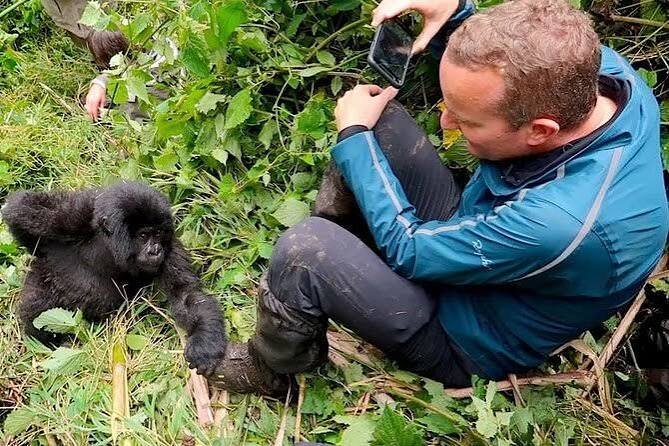
Rwanda’s Volcanoes National Park is home to several habituated mountain gorilla families, each with its own identity, history, leadership structure, and social relationships. Every family has developed through years of natural changes involving births, deaths, transfers, leadership transitions, and interactions between neighbouring groups. Some families are recognised because of their historical importance in conservation research, while others are admired because of their impressive silverbacks, playful juveniles, large family size, or interesting social dynamics.
A gorilla trekking experience in Rwanda is therefore not simply about finding an animal and taking photographs. It is about entering a living society where every individual has a role. The dominant silverback provides leadership and protection, adult females raise the next generation, juveniles learn social behaviour through play, and infants represent the continuation of the family line. Understanding this structure allows travellers to appreciate the encounter on a much deeper level.
For many visitors, gorilla trekking becomes the defining moment of their Rwanda safari. The journey begins before reaching the forest, as travellers leave behind the modern surroundings of Kigali and travel toward the volcanic landscapes of northern Rwanda. The dramatic Virunga Mountains rise above the countryside, creating a unique environment of mist-covered peaks, fertile volcanic soils, bamboo forests, and dense vegetation. This protected landscape provides the ideal habitat where mountain gorillas can feed, reproduce, and move freely.
On the morning of the trek, visitors gather for a briefing before entering Volcanoes National Park. Experienced guides explain the behaviour expected around the gorillas, conservation guidelines, safety procedures, and what travellers should anticipate during the search. Behind the scenes, trackers are already following the movements of the gorilla families. They use years of knowledge, observation, and understanding of individual groups to locate where the gorillas spent the previous night and the direction they may have travelled.


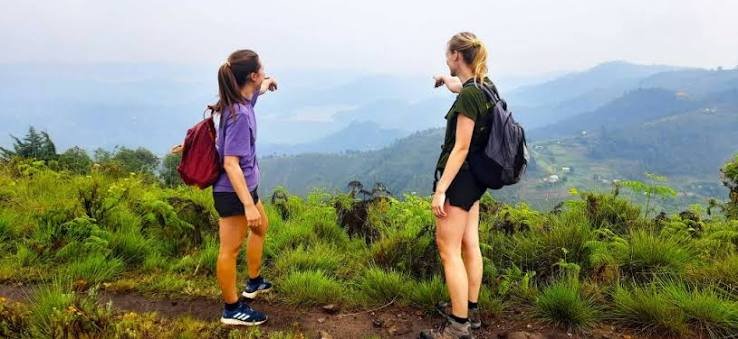
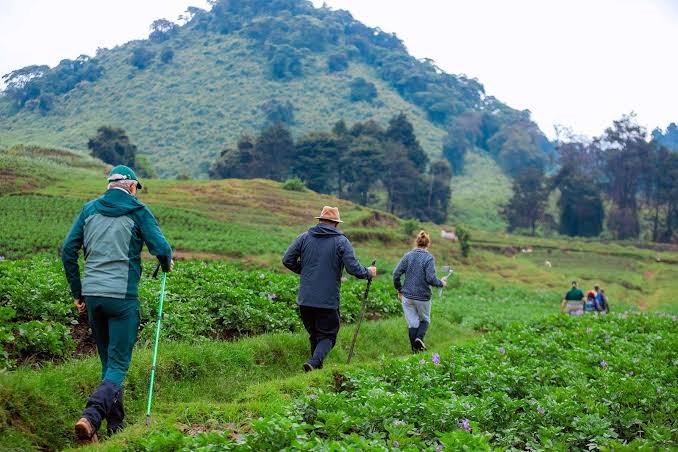
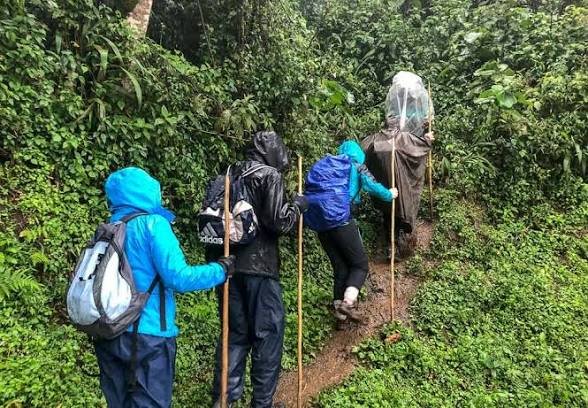
The trek itself is part of the adventure. Unlike a traditional safari where visitors remain inside a vehicle, gorilla trekking requires walking through the forest landscape where the animals live. The journey can involve gentle walks through vegetation or more demanding hikes depending on the location of the assigned family. The terrain may include muddy trails, steep slopes, thick vegetation, and changing weather conditions, making every trek different.
As visitors move deeper into the forest, anticipation continues to build. Small signs begin revealing that gorillas are nearby. Broken vegetation, feeding areas, footprints, and freshly constructed sleeping nests may indicate that the family passed through the area. Trackers communicate with guides, carefully following evidence left behind by the gorillas until the family is located.
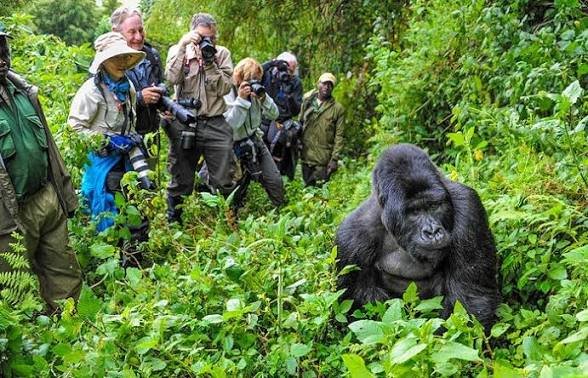
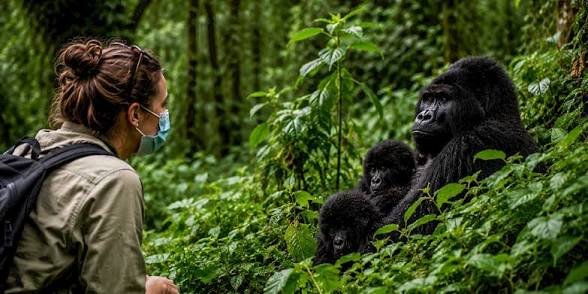
The first sighting of a mountain gorilla is often an unforgettable moment. A visitor may initially notice only movement within the vegetation before gradually recognising the shape of a gorilla. A massive silverback may be resting beneath trees, a female may be feeding quietly nearby, or a juvenile may suddenly appear while moving through the forest. These first moments often create a powerful emotional response because the traveller is not viewing an animal from a distance but observing a wild family in its natural environment.
One of the reasons the Best Gorilla Family Trek in Rwanda is so special is because the gorillas are not trained, controlled, or performing for visitors. The animals continue their normal daily activities regardless of human presence. They feed, rest, groom, communicate, move, and interact according to their own natural routines. Visitors are simply given a rare opportunity to observe these behaviours.
A silverback may spend several minutes calmly feeding on vegetation while appearing completely relaxed. A mother may adjust her position to protect her infant. Young gorillas may wrestle, chase each other, and practise social skills. Another adult may sit quietly nearby, observing the group. These ordinary moments often become the most memorable because they reveal the true character of mountain gorilla society.
Every gorilla family tells a different story. Some groups have experienced several generations of births and leadership changes. Others were created when a mature male separated from an existing family and established his own group. Some families have grown larger over time, while others have divided naturally as younger males matured and social relationships changed.
This constant evolution means that gorilla trekking remains a genuine wildlife experience rather than a predictable attraction. A family that provides an incredible encounter for one visitor may behave differently for another traveller months later. The location of the group, weather conditions, food availability, and social interactions all influence what happens during the trek.
For this reason, the idea of the “best” gorilla family should be approached from different perspectives. Some travellers may consider the best family to be the one with a powerful and impressive silverback. Others may value a family with playful juveniles, several infants, or a fascinating conservation history. Photographers may prefer a group that spends time in open vegetation, while experienced hikers may enjoy the challenge of reaching a family located deeper in the forest.
The best family is ultimately the one that provides the experience most meaningful to the traveller.
Understanding What Makes a Gorilla Family Special
A mountain gorilla family is much more than a collection of individual animals travelling together. It is a highly organised social structure built around relationships, trust, protection, and cooperation. The strength of these relationships is one of the reasons gorilla trekking creates such a powerful connection between humans and wildlife.
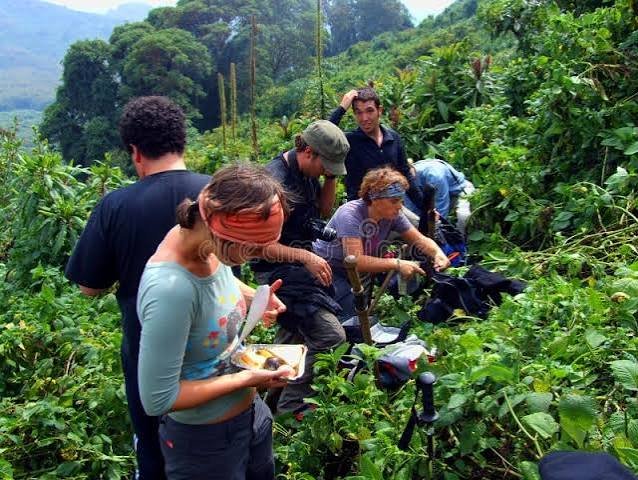
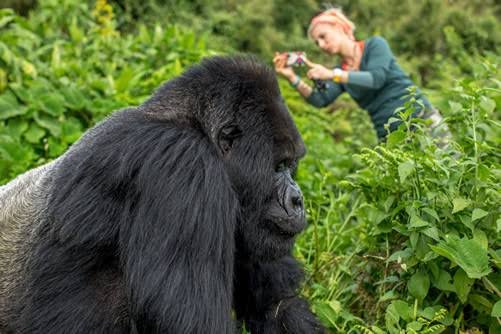
The dominant silverback is usually the central figure within the family. His role involves much more than physical dominance. He provides protection, maintains order, guides movement, and helps create stability within the group. Although his size and strength are immediately impressive, many travellers are surprised by how calm and gentle a silverback can appear.
A mature silverback can spend much of the day quietly feeding, resting, or observing other members of the family. His leadership is often demonstrated through confidence rather than aggression. By maintaining a strong presence, he reduces unnecessary conflict and provides security for females and younger gorillas.
Adult females are equally important because they ensure the continuation of the family. Mothers develop extremely strong bonds with their infants and provide protection, transportation, and guidance during the earliest stages of life. Young gorillas depend heavily on their mothers before gradually becoming more independent.
Juveniles contribute another fascinating dimension to the family. Their playful behaviour reveals the intelligence and emotional complexity of mountain gorillas. They climb, wrestle, chase one another, and imitate adults as they learn how to behave within the group. These activities are essential for developing physical skills and understanding social relationships.
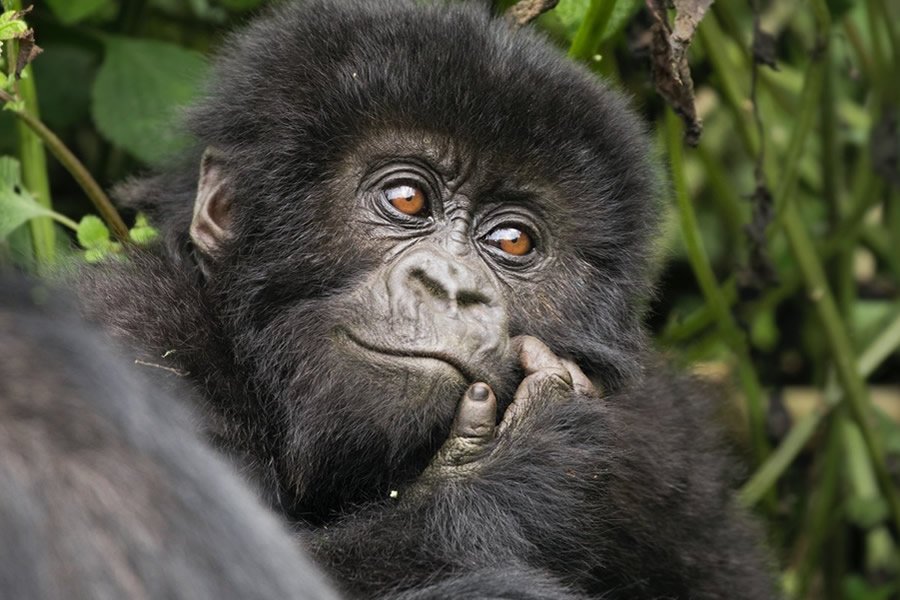
Infants often become the emotional highlight of a gorilla trek. Watching a tiny gorilla hold onto its mother, explore the forest for the first time, or interact with older family members provides a rare insight into the early stages of gorilla development.
The presence of different generations within a family is what makes the experience so special. Visitors are not only seeing individual gorillas but witnessing a complete social system operating in the forest.
Why Every Gorilla Family Trek in Rwanda Is Different
No two Gorilla Family Trek in Rwanda experiences are ever exactly the same because mountain gorillas are wild animals living according to their own natural behaviours, movements, relationships, and daily routines. Although the gorilla families in Volcanoes National Park have undergone habituation to allow carefully managed human observation, they remain completely independent animals that decide where they move, where they feed, when they rest, and how they interact with one another. This natural freedom is one of the most important reasons why every trek creates a unique and unforgettable experience.
Unlike visiting a zoo or a controlled wildlife enclosure where animals remain in predictable locations, gorilla trekking requires travellers to enter the forest and search for the gorilla family assigned to them that day. The experience is shaped by the decisions of the gorillas themselves. A family that was resting in a particular area the previous afternoon may have moved several hundred metres or even several kilometres by the following morning in search of fresh vegetation or because of normal social movements.
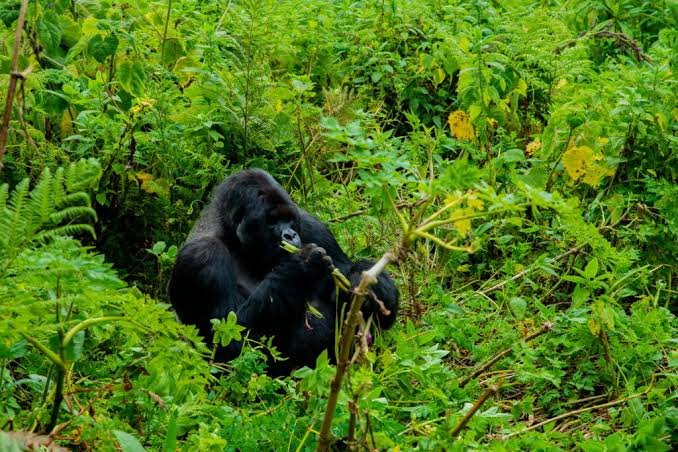
The changing nature of gorilla movements means that every trek contains an element of adventure. Visitors begin their journey without knowing exactly where the family will be located, what behaviour they will witness, or how the interaction will unfold. Experienced trackers use their knowledge of the gorillas, previous locations, feeding patterns, and signs left in the forest to locate the groups, but the final encounter always belongs to the animals.
One day, a gorilla family may provide a relatively relaxed and open encounter. The group may be resting in a clearing where visitors can clearly observe different individuals. The dominant silverback may be sitting calmly while monitoring the family, adult females may be feeding nearby, and juveniles may be playing around the vegetation. These moments allow travellers to appreciate the complete social structure of the family and observe how different members interact.
On another day, the same family may behave completely differently. The gorillas may choose to move through dense vegetation, feeding as they travel and stopping frequently along the way. Visitors may see individual gorillas briefly before they disappear behind leaves and branches. Although this can make photography more challenging, it provides a more authentic understanding of how gorillas live in their natural environment.
The forest itself plays an important role in shaping each encounter. Volcanoes National Park is not a uniform landscape. It contains bamboo forests, thick montane vegetation, open forest areas, steep volcanic slopes, and sections where plants grow densely around the trails. Depending on where a gorilla family chooses to spend the day, visitors may experience completely different surroundings even when trekking the same park.
The distance covered during a trek can also vary significantly. Some families may occasionally be located relatively close to the starting point, creating a shorter walking experience. Others may move deeper into the forest or higher along the volcanic slopes, requiring more time and physical effort. The difficulty is not necessarily connected to whether a family is famous or less known. It simply depends on where the gorillas decide to spend their time.
This unpredictability is part of what makes the Best Gorilla Family Trek in Rwanda so rewarding. The physical journey through the forest creates a sense of discovery because travellers are not simply following a predetermined route to a guaranteed viewing point. They are entering a living ecosystem and searching for a wild family within its natural habitat.
The behaviour of the gorillas themselves is another major reason why every trek feels different. Mountain gorillas have individual personalities, and different families develop their own social atmosphere. Some groups may appear very calm and relaxed, with members spending long periods feeding and resting. Others may be more energetic, with juveniles constantly moving, playing, and exploring their surroundings.
Young gorillas are particularly unpredictable and often create some of the most memorable moments during a trek. A juvenile may suddenly begin wrestling with another young gorilla, climb onto vegetation, approach an older family member, or imitate the behaviour of adults. These playful activities are important because they help young gorillas develop strength, confidence, coordination, and social skills.
Infants can also completely change the atmosphere of an encounter. A family with a very young gorilla may provide visitors with the opportunity to observe strong maternal bonds. Mothers carefully protect their infants, carry them through the forest, and gradually introduce them to the wider family environment. Watching this relationship develop provides a deeper understanding of the similarities between human and gorilla family structures.


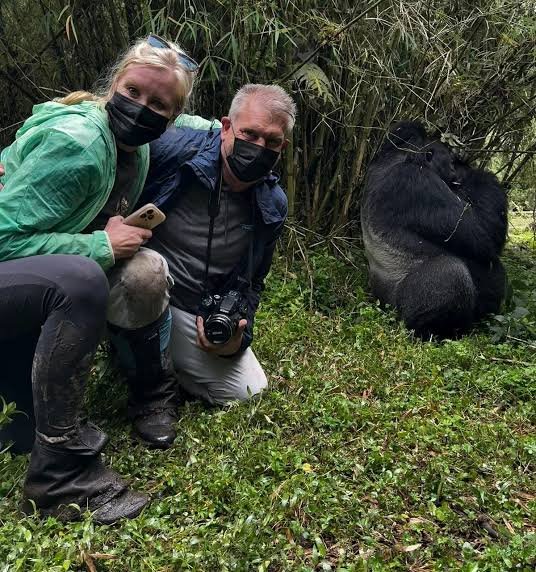
Adult females also contribute to the uniqueness of every encounter. Some females may spend much of their time feeding quietly, while others may be more socially active, interacting with juveniles or moving between different members of the family. Their behaviour is influenced by their age, reproductive status, relationships, and position within the group.
The silverback’s behaviour can also determine the mood of a gorilla trek. Some dominant males are highly relaxed and spend much of the observation period resting or feeding. Others may be more active, moving around the family, checking their surroundings, or responding to nearby sounds. A silverback does not need to display aggression to demonstrate leadership. Often, his calm presence alone maintains order within the group.
Weather conditions add another layer of uniqueness to every gorilla trekking experience. Volcanoes National Park is located within a high-altitude tropical mountain environment where conditions can change quickly. Rainfall, mist, cloud cover, and sunshine can all occur within a single day.
Rain is common in the Virunga Mountains, but many travellers consider it part of the beauty of the experience rather than a disadvantage. A mist-covered forest creates a dramatic atmosphere that feels ancient and untouched. Water droplets on vegetation, clouds surrounding volcanic peaks, and the sounds of a wet forest can make the journey feel like entering another world.
Different weather conditions can also influence gorilla behaviour. During cooler periods, gorillas may spend more time resting together. During warmer conditions, they may move between feeding areas more actively. Vegetation conditions also change throughout the year, influencing where families spend their time.
The changing seasons contribute to different trekking experiences as well. During periods when certain plants are abundant, gorillas may remain in particular areas longer because food resources are available. When vegetation patterns change, families may travel farther in search of preferred feeding locations.
This connection between gorilla movement and the environment demonstrates how closely mountain gorillas depend on their habitat. They are not simply living inside a forest; they are constantly responding to the conditions around them.
The human element also influences how visitors experience each trek. Every traveller arrives with different expectations, interests, and levels of preparation. A wildlife photographer may focus on capturing expressions, family interactions, and unique behaviours. A conservation enthusiast may be fascinated by the history of individual gorillas and the work involved in protecting them. A first-time visitor may simply be overwhelmed by the emotional experience of seeing a mountain gorilla for the first time.
Because every person notices different details, the same gorilla family encounter can create completely different memories for different visitors.
The role of guides and trackers is another reason each trek becomes unique. Experienced trackers spend years learning the habits of individual gorilla families. They understand the signs that indicate recent movement, recognise individuals by appearance and behaviour, and provide valuable information about the group being observed.
During the trek, guides help visitors understand what they are seeing. A traveller may initially focus only on a large silverback, but a guide can explain the relationships within the family, identify younger gorillas, describe previous events involving specific individuals, and provide context about conservation efforts.
This interpretation transforms the experience from simply observing animals into understanding a complex society.
The unpredictability of gorilla trekking is also what creates the strongest emotional moments. A traveller may spend hours walking through the forest wondering when the gorillas will appear. Then suddenly, a tracker signals that the family is nearby. The excitement builds as visitors approach carefully, and the first sighting creates a moment that is difficult to replicate.
Sometimes the most memorable encounter is not the moment when the largest silverback appears. It may be a small interaction that happens unexpectedly. An infant reaching toward its mother, a juvenile playing beside a tree, a female gently grooming another family member, or a silverback quietly watching over the group can become the defining memory of the entire journey.
These moments cannot be planned because they depend entirely on the natural behaviour of the gorillas.

Another factor that makes every trek different is the changing composition of gorilla families over time. Gorilla groups are not permanent. Births add new members, young males mature, females transfer between families, and leadership changes occur when silverbacks age or new males establish themselves.
A traveller who visits Volcanoes National Park several years apart may encounter a completely different family structure. A young gorilla seen during an earlier visit may now be an adult. A dominant silverback may have changed. A family may have grown larger or divided into separate groups.
This constant evolution means that every visit captures a specific moment in the continuing story of Rwanda’s mountain gorillas.
The conservation significance of this unpredictability is also important. Because gorilla families continue to behave naturally, conservation teams can study their true social systems and population development. Researchers gain valuable information about reproduction, health, movement, and family relationships by observing how groups change over time.
For travellers, this means that a gorilla trek is not only an adventure but also a connection to a much larger conservation story.
The unpredictability of the experience is what separates the Best Gorilla Family Trek in Rwanda from ordinary wildlife viewing. A safari vehicle can sometimes take visitors directly to a known wildlife location, but gorilla trekking requires patience, effort, and respect for nature’s decisions.
The forest does not reveal its secrets immediately. Visitors must walk, search, observe, and wait. When the gorillas finally appear, the experience feels earned because it results from a genuine journey into their world.
Ultimately, every gorilla family trek in Rwanda is different because every gorilla family is different. Each group has its own personalities, history, relationships, challenges, and daily patterns. Each forest journey has different conditions. Each traveller experiences the encounter through their own emotions and expectations.
This combination of wild behaviour, changing environments, individual personalities, and unpredictable moments is what makes Rwanda’s gorilla trekking experience so extraordinary. The best trek is not necessarily the one with the most famous family or the easiest route. It is the one where a traveller has the privilege of quietly observing mountain gorillas living naturally within the forests of Volcanoes National Park.
Choosing the Best Gorilla Family Trek Experience
Travellers planning the Best Gorilla Family Trek in Rwanda should focus less on selecting a specific gorilla family name and more on preparing themselves for the complete experience of entering the natural world of mountain gorillas. While many visitors become interested in famous groups because of their history, size, or well-known silverbacks, the reality is that every habituated gorilla family in Volcanoes National Park offers a unique opportunity to observe one of the world’s most fascinating social animals.

A successful gorilla trekking experience is created by many different elements coming together. Physical preparation, appropriate clothing, choosing suitable travel dates, understanding the trekking process, respecting conservation guidelines, and maintaining realistic expectations all contribute to making the journey more enjoyable. Travellers who prepare properly are often able to appreciate the experience more deeply because they are not focused only on reaching the gorillas but also on understanding the environment, the journey, and the behaviour they encounter.
Many first-time visitors arrive with the expectation that there is one “perfect” gorilla family that will guarantee the greatest experience. However, mountain gorillas do not operate according to tourism expectations. They are wild animals with their own movements, relationships, and daily routines. A family that provides an extraordinary encounter for one group of visitors may behave differently when another group arrives days or weeks later.
The true value of a gorilla family trek is not only found in the name of the group encountered. It is found in the opportunity to observe authentic behaviour. Watching a silverback protect his family, seeing a mother care for her infant, observing juveniles develop social skills through play, and witnessing the peaceful interactions between family members are experiences that cannot be measured by popularity or reputation.
A famous gorilla family may have an impressive history, but a lesser-known group can create equally unforgettable memories. A traveller may enter the forest expecting to see a particular silverback but instead discover that the most meaningful moment comes from watching a young gorilla interact with its mother or seeing several family members quietly feeding together.
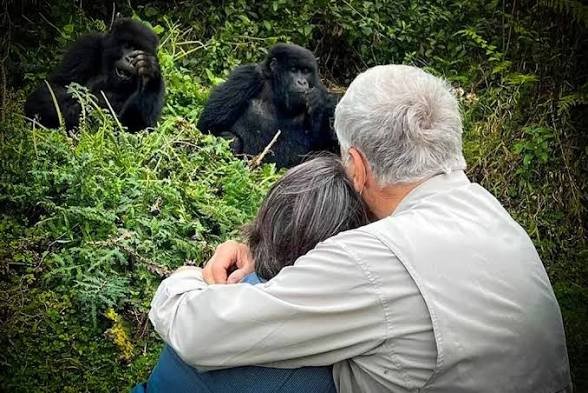
The emotional connection created during the encounter is often what defines the quality of the experience. Sitting quietly in Rwanda’s volcanic forest while surrounded by mountain gorillas creates a rare opportunity to observe wildlife without barriers. The sound of vegetation moving as gorillas feed, the sight of a silverback resting nearby, and the feeling of being present within their natural habitat are moments that remain powerful long after leaving the forest.
The Best Gorilla Family Trek in Rwanda is therefore not determined only by the reputation of a particular group. It is defined by the traveller’s ability to appreciate the encounter as a complete conservation experience. The trek, the forest, the trackers, the guides, the family behaviour, and the understanding of gorilla life all contribute to the memory.
What Makes the Best Gorilla Family Trek in Rwanda?
The best gorilla trek combines adventure, discovery, and a meaningful wildlife encounter. It begins with the excitement of entering the mountain forest and searching for a family that moves freely within its natural environment. Unlike traditional wildlife viewing where animals may often be observed from a vehicle, gorilla trekking requires travellers to become part of the landscape where the animals live.
The journey through Volcanoes National Park is an important part of the experience. Before meeting the gorillas, visitors pass through a unique ecosystem shaped by volcanic mountains, high rainfall, fertile soils, bamboo forests, and dense vegetation. The forest itself creates anticipation because every step brings travellers closer to one of Africa’s most remarkable wildlife encounters.
Different travellers have different ideas about what makes a trek exceptional. Some visitors dream of seeing a massive dominant silverback because of the incredible strength and presence these animals represent. A fully mature silverback can be one of the most impressive sights in the natural world, with his enormous size, muscular body, and calm authority within the family.
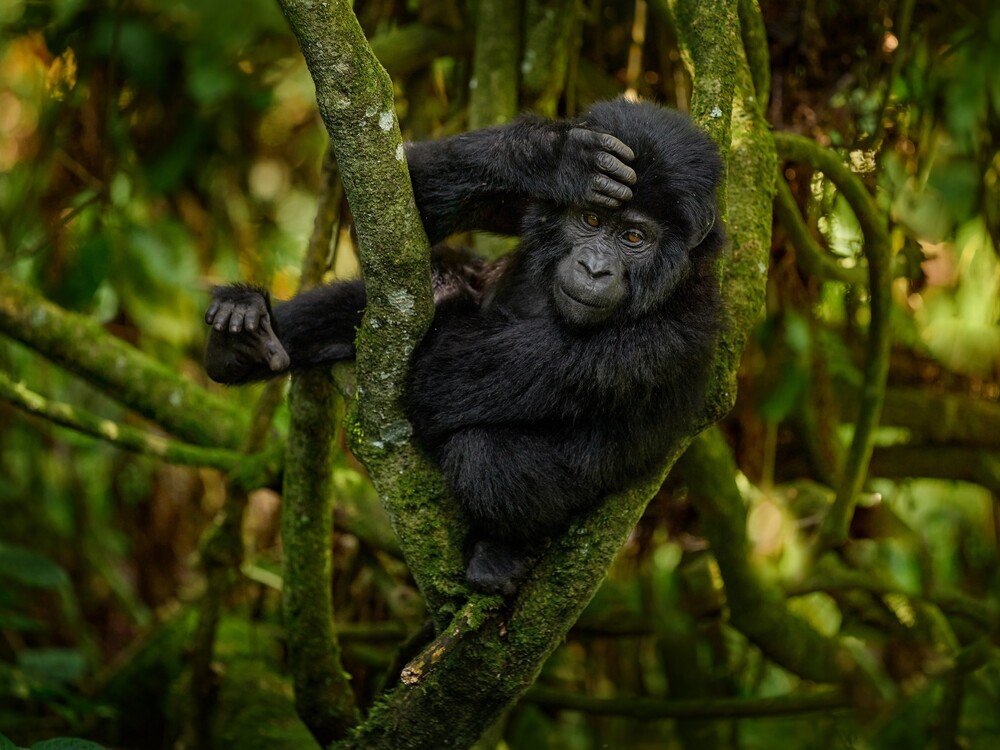
For others, the highlight may be observing the younger members of the group. Juvenile gorillas often bring energy and personality to the encounter. Their playful behaviour, curiosity, and constant movement reveal the intelligence and social complexity of mountain gorillas. Watching young gorillas wrestle, climb vegetation, and interact with older family members can be just as memorable as seeing the dominant male.
Some travellers are especially interested in mothers and infants. A newborn gorilla represents the continuation of the family and the future of the species. The close relationship between mother and infant provides one of the most emotional aspects of gorilla trekking because it demonstrates the strong family bonds that exist within these groups.
Photographers may have different priorities when choosing what makes a trek special. Some may prefer a family that spends time in more open vegetation where individuals are easier to observe. Others may appreciate the challenge of photographing gorillas moving naturally through dense forest because it captures a more authentic wilderness atmosphere.

Adventure-focused travellers may enjoy the physical challenge of reaching families that have moved farther into the forest or higher along the volcanic slopes. The effort required to reach such groups can make the final encounter feel even more rewarding because the journey itself becomes part of the story.
However, no visitor should assume that a more difficult trek automatically creates a better experience. A family located close to the trailhead can provide an extraordinary encounter, while a group requiring several hours of hiking may offer a quieter interaction. The behaviour of the gorillas remains the most important factor.
No park authority or guide can guarantee exactly what the gorillas will be doing when visitors arrive. A family may be resting peacefully after feeding, travelling through vegetation, grooming one another, playing, or responding to interactions within the group.
This unpredictability is one of the greatest strengths of gorilla trekking. The experience remains genuine because the animals are not controlled. Visitors are entering their world and observing whatever natural behaviour occurs at that moment.
A gorilla family that appears calm and relaxed one day may be more active the next. The same group may spend one encounter feeding in an open area and another encounter moving through thick vegetation. These differences are not disadvantages; they are evidence that the animals are living according to their own natural patterns.
The physical aspect of trekking also contributes to the overall experience. Mountain gorillas live within a challenging environment, and reaching them requires visitors to enter that environment themselves. The terrain can include steep sections, muddy paths, dense plants, and changing weather conditions.
Some families may occasionally remain within areas that are relatively accessible, while others may travel farther into the forest. However, these patterns are never permanent. A family that was close to the starting point recently may move deeper into the mountains depending on food availability, social interactions, and normal daily movement.
This is why flexibility is one of the most important qualities a traveller can bring to a gorilla trek. Visitors who accept that nature determines the experience are usually able to appreciate every moment more fully.
The Best Gorilla Family Trek in Rwanda is therefore a balance between preparation and openness. Travellers should prepare carefully by choosing appropriate clothing, maintaining reasonable fitness, understanding the trekking rules, and selecting an itinerary that allows enough time. At the same time, they should remain open to the unexpected moments that make wildlife experiences special.
Preparing Mentally for the Best Gorilla Family Trek in Rwanda
Mental preparation is just as important as physical preparation when planning a gorilla trek. Many visitors imagine a specific scene before arriving, perhaps picturing a silverback sitting in perfect view or a family gathered in an open clearing. While such moments can happen, the forest does not follow a script.
Approaching the experience with curiosity rather than strict expectations creates a much more rewarding journey. Every sighting, whether dramatic or quiet, provides insight into the natural lives of mountain gorillas.
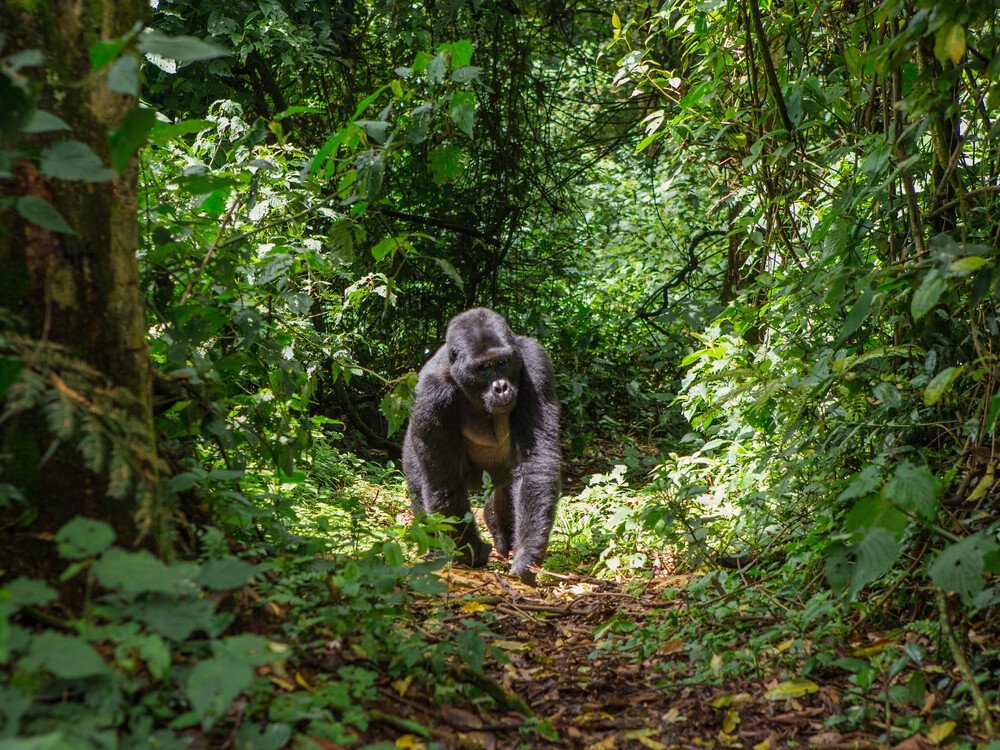
A family feeding silently may appear less exciting than juveniles playing, but these calm moments often reveal the true nature of gorilla society. The ability to sit peacefully with wild animals that share many similarities with humans can create a powerful emotional connection.
Visitors should also understand that the gorillas decide the distance and visibility of the encounter. Sometimes individuals may remain partially hidden by vegetation. This does not reduce the quality of the experience. In fact, it reminds travellers that they are observing wild animals in a real forest rather than visiting a controlled attraction.
The most memorable treks are often those where travellers allow themselves to experience the entire journey, from walking through the forest to finally discovering the gorilla family.
The Importance of Respecting Every Gorilla Family
Every habituated gorilla family in Rwanda plays an important role in conservation. Some families may be famous internationally, while others may receive less attention, but every group contributes to the survival and understanding of mountain gorillas.
Respecting every family means recognising that each group has its own story. A family with fewer members is not less valuable. A group without a famous silverback is not less important. Every birth, every social relationship, and every successful generation contributes to the future of the population.
Visitors who understand this approach often discover that the family they encounter becomes the most meaningful one because it represents their own personal connection with Rwanda’s mountain gorilla conservation story.
The best trek is ultimately not about finding the most famous gorilla family. It is about experiencing a genuine moment with a wild family and understanding the importance of protecting these extraordinary animals for future generations.
Gorilla Families in Volcanoes National Park
Volcanoes National Park is the heart of Rwanda’s mountain gorilla trekking experience and one of the most important protected areas for the conservation of endangered mountain gorillas. Located in the northwestern part of Rwanda, the park forms part of the larger Virunga Massif, a remarkable volcanic ecosystem shared by Rwanda, Uganda, and the Democratic Republic of Congo. This interconnected landscape provides one of the last remaining habitats for mountain gorillas and supports a population that has become one of the greatest conservation success stories in Africa.
The landscape of Volcanoes National Park is unlike any other wildlife destination. Rising volcanic peaks dominate the horizon, while dense forests, bamboo zones, and high-altitude vegetation create a unique environment where mountain gorillas have adapted to survive. The combination of fertile volcanic soils, abundant plant life, and protected forest areas provides the resources needed for gorilla families to feed, reproduce, and establish social groups.
For travellers searching for the Best Gorilla Family Trek in Rwanda, understanding the different gorilla families in Volcanoes National Park is an important part of preparing for the experience. Each family has its own history, leadership structure, social relationships, and behavioural patterns. Although all mountain gorillas share similar characteristics, every group develops its own identity based on the individuals that form it.
Mountain gorillas are highly social animals that live in organised family groups rather than independently. The typical gorilla family is centred around a dominant silverback, a mature male responsible for much of the group’s leadership and protection. His role extends far beyond physical strength. A silverback helps maintain social stability, determines movement patterns, responds to threats, and protects younger and more vulnerable members of the group.
The presence of a dominant silverback provides structure within the family. His experience allows him to make decisions about where the group travels, where it feeds, and where it rests. Although visitors often focus immediately on the size and appearance of a silverback, his most important contribution is maintaining harmony and security among family members.
A gorilla family may also include additional mature males, known as blackbacks or subordinate silverbacks depending on their stage of development, adult females, juveniles, and infants. Each individual has a different role within the group, and relationships between members help create the strong social bonds that define mountain gorilla societies.
Adult females form the foundation of the family’s future. They give birth, raise infants, and pass important social knowledge to younger generations. Female gorillas may also transfer between families during their lifetime, which contributes to genetic diversity and influences the development of different groups within the wider population.
Infants represent the continuation of each gorilla family. Their early years are spent closely connected to their mothers, who provide protection, transportation, and guidance. As they grow older, young gorillas become more independent and begin exploring their environment while learning from other members of the group.
Juveniles are often among the most active members of a gorilla family. Their playful behaviour is not simply entertainment; it is an essential part of development. Through wrestling, climbing, chasing, and social interaction, young gorillas develop physical abilities and learn the rules of communication and behaviour within their family.
The exact composition of gorilla families in Volcanoes National Park changes naturally over time. Unlike human-created groups that remain fixed, gorilla families are constantly evolving. Births increase the number of individuals, while deaths, transfers, leadership changes, and family divisions reshape the structure of each group.
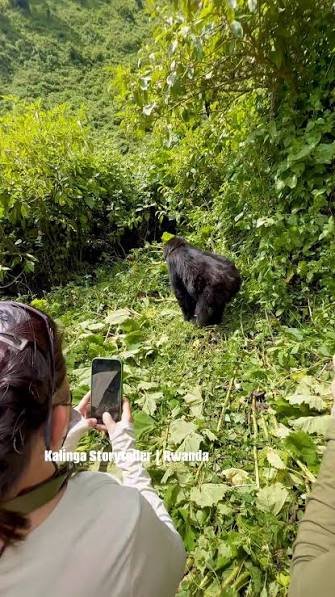
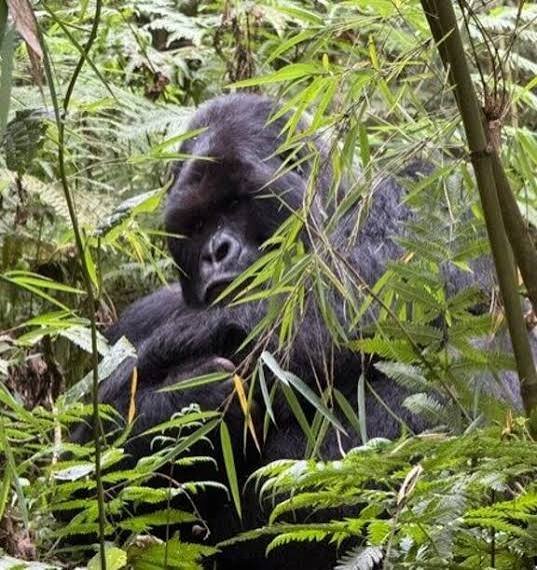
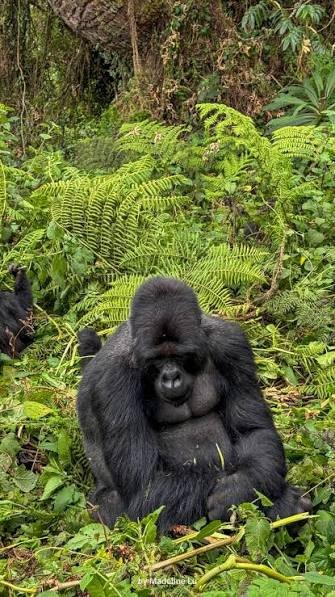
This dynamic nature is one of the reasons why the Gorilla Families in Volcanoes National Park are so fascinating. A family observed during one visit may look completely different several years later. A juvenile seen playing in the forest may eventually become a mature silverback. An infant may grow into an adult that contributes to the next generation. A dominant male may eventually be replaced by another leader.
The changing nature of these groups also demonstrates that gorilla trekking is a genuine wildlife experience. Visitors are not entering a place where animals follow predictable routines. Instead, they are observing living societies that continue to develop according to natural biological and social processes.
The Unique Identity of Every Gorilla Family
Although all mountain gorilla families share common characteristics, each group develops its own personality and history. This individuality is one of the most remarkable aspects of gorilla trekking in Rwanda.
Some families become internationally recognised because of their connection to important conservation research, famous silverbacks, large populations, unusual social events, or memorable individuals. Other groups may become important because of recent developments, such as the birth of infants, the creation of a new family, or changes in leadership.
The reputation of a gorilla family is often influenced by its history rather than simply its current size. A smaller family with an interesting conservation story may be just as significant as a larger group with many members.
Researchers and trackers spend years observing these families, allowing them to understand the personalities and relationships of individual gorillas. They learn to recognise animals through physical characteristics such as facial features, nose patterns, scars, body size, and behaviour.
This detailed knowledge allows conservation teams to follow the development of individual gorillas throughout their lives. They can record births, monitor health, understand family relationships, and observe how groups change over generations.
For travellers, this means that a gorilla trek is not simply about seeing an endangered animal. It is an opportunity to encounter individuals with their own histories and personalities.
Famous Gorilla Families in Volcanoes National Park
Several gorilla families in Volcanoes National Park have become well known among travellers and conservationists because of their unique stories.
The Susa family is one of the most historically recognised groups in Rwanda. Its importance is connected with early mountain gorilla research and the development of conservation awareness. The family has experienced many natural changes over time, including births, leadership transitions, and changes in group size.
The Sabyinyo family is another famous group associated with Volcanoes National Park. Named after Mount Sabyinyo, one of the volcanic peaks in the Virunga range, the family has attracted attention because of its history and impressive silverbacks.
The Amahoro family is also widely recognised among visitors. The name reflects the idea of peace, and the group has become one of the families that travellers often learn about before beginning their trekking experience.
The Umubano family provides an interesting example of how gorilla groups develop through natural social changes. Its history demonstrates how new families can emerge when younger males become independent and establish their own groups.
Other families, including Agashya, Kwitonda, Hirwa, Karisimbi, and Muhoza, have also contributed to Rwanda’s mountain gorilla conservation story. Each group represents a different chapter in the ongoing development of the population.
However, travellers should understand that famous does not always mean best. A less internationally recognised family may provide an equally powerful experience depending on what happens during the encounter.
How Gorilla Families Are Formed
The formation of gorilla families is a natural process influenced by maturity, reproduction, competition, and social relationships.
Young male gorillas eventually reach an age where they may leave their birth family. Some spend time living independently before attempting to establish their own group. Others may challenge existing males for leadership opportunities.
When a male successfully attracts females and establishes social relationships, a new family can develop. Over time, births increase the group size, creating a new generation of gorillas.
Family divisions can also occur when large groups become socially complex. A younger silverback may separate from the dominant male, taking some females with him and forming an independent family.
These processes are important because they help maintain genetic diversity and allow the population to continue developing naturally.
The creation of new families is also valuable for conservation because it demonstrates successful reproduction and population growth.
Why Gorilla Family Names Matter
Gorilla family names help researchers, guides, and visitors identify different groups and understand their histories. These names allow conservation teams to maintain detailed records about each family and its members.
However, the names should not create the impression that these are permanent tourism attractions. A gorilla family is not defined only by the name given to it. It is defined by the individuals, relationships, and events that shape its existence.
A family name may remain the same while the individuals within the group gradually change. The dominant silverback may be replaced, young gorillas may mature, and new infants may be born.
The true value of a family lies in its living story.
The Role of Trackers in Understanding Gorilla Families
Experienced trackers are essential to the success of gorilla trekking in Volcanoes National Park. Their knowledge allows visitors to locate families while also providing valuable information about their behaviour and history.
Trackers begin following the gorillas before visitors enter the forest. They study signs such as feeding remains, broken vegetation, footprints, and nesting sites to determine where the family has moved.
Many trackers know individual gorillas personally because they have followed the same families for years. They can often recognise a gorilla from a brief glimpse and understand its position within the family.
During the encounter, trackers help visitors understand what they are seeing. They can explain relationships between individuals, identify important members of the group, and provide context about the family’s history.
This interpretation transforms the trek from a simple wildlife sighting into an educational experience.
Gorilla Families and Conservation Success
The survival of gorilla families in Volcanoes National Park represents decades of conservation work. Mountain gorillas have faced historical threats including habitat loss, human pressure, disease risks, and illegal activities.
Today, the continued protection of these families depends on scientific monitoring, veterinary care, habitat protection, responsible tourism, and cooperation between conservation organisations and surrounding communities.
Each family contributes to this success story. Every surviving infant, every healthy adult, and every stable social group represents progress in protecting this endangered species.
Gorilla tourism plays an important role because it creates economic value connected with conservation. Visitors who trek responsibly contribute to a system that supports protecting the forest and the communities around it.
The Importance of Understanding Gorilla Families Before Trekking
Learning about gorilla families before visiting Volcanoes National Park allows travellers to appreciate the experience on a deeper level.
Without understanding gorilla society, a visitor may simply see a large animal sitting in the forest. With knowledge of family structure, the same moment becomes much more meaningful.
A silverback is no longer just a large gorilla; he is a leader protecting his family. A female is not simply another animal; she is raising the next generation. A juvenile is not just playing; it is developing the skills needed to survive within the group.
This understanding creates a stronger connection between the traveller and the conservation story.
The Ever-Changing Story of Gorilla Families in Volcanoes National Park
The most important thing to remember about gorilla families in Volcanoes National Park is that their story is never finished.
New infants are born. Young gorillas mature. Families divide. Leaders change. Relationships develop.
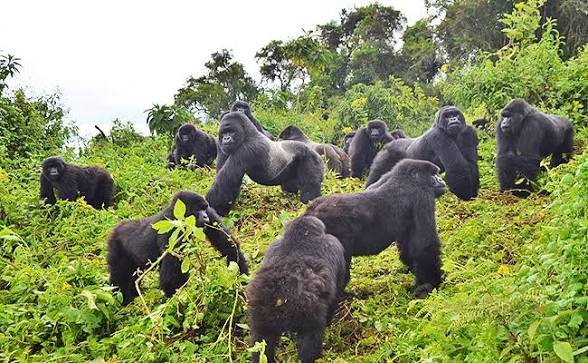
Every visit captures only one moment in this ongoing story.
This is why the Best Gorilla Family Trek in Rwanda is not about finding one perfect group. It is about entering a protected ecosystem and experiencing the natural life of mountain gorillas as it exists at that particular moment.
The family encountered during a trek may become memorable not because it was the largest or most famous, but because of the emotions and discoveries created during the experience.
For many travellers, the greatest reward is simply sitting quietly in Rwanda’s volcanic forest and witnessing a mountain gorilla family living naturally in the environment where it belongs.
Is There Really One Best Gorilla Family in Rwanda?
There is no single gorilla family that can permanently be declared the best for every visitor.
The Susa family might appeal strongly to travellers interested in gorilla conservation history. Sabyinyo may appeal to visitors fascinated by famous silverbacks and long-established family stories. Amahoro may attract travellers interested in social relationships and the history of family formation. Kwitonda carries an interesting story connected with movements within the wider Virunga ecosystem.
Other groups may become particularly interesting because of recent births, young juveniles, new leadership, or changing family dynamics.
The best family depends on what is happening within each group at the time of the trek. A lesser-known family containing several young gorillas may provide an exceptionally active encounter. A famous group could spend much of the observation period resting quietly.
Neither experience is better in an absolute sense. Watching a silverback resting only metres away can be just as powerful as observing juveniles tumbling through bamboo.
The real value lies in being present within the natural environment of wild mountain gorillas.
Susa Gorilla Family and Its Historic Importance
The Susa family is one of the most recognised names associated with mountain gorillas in Rwanda. Its historical importance is closely connected with the development of mountain gorilla research and conservation in the Virunga Mountains.
For travellers who want their trek to carry a strong historical dimension, Susa is often one of the families that attracts considerable interest. The group has long been associated with areas of significant mountain gorilla research, and its family story has changed repeatedly as individuals matured and social structures evolved.
Susa has historically been associated with higher sections of the park. This has contributed to its reputation for potentially demanding trekking. However, mountain gorillas move according to their own needs, which means no trekking distance can be guaranteed in advance.
The challenge can actually increase the emotional impact of the encounter. After walking through mountain vegetation, negotiating uneven terrain, and climbing through misty forest, finally discovering the family can create an extraordinary sense of achievement.
Visitors interested in the Best Gorilla Family Trek in Rwanda because they value conservation history may find the Susa story particularly fascinating.
Sabyinyo Gorilla Family
The Sabyinyo gorilla family is another famous group within Volcanoes National Park. Its name is connected with Mount Sabyinyo, one of the impressive volcanoes forming part of the Virunga landscape.
Sabyinyo has historically been associated with some of Rwanda’s most memorable silverbacks. This has made the family especially appealing to travellers who dream of seeing the extraordinary physical presence of a mature male mountain gorilla.
A fully mature silverback is an unforgettable animal. His broad shoulders, enormous arms, muscular body, and distinctive silver saddle immediately demonstrate why he occupies such an important position within gorilla society.
Yet the most interesting aspect is often the contrast between physical strength and calm behaviour. Silverbacks can spend long periods feeding quietly, resting among family members, tolerating playful juveniles, and monitoring the surroundings without aggression.
For many visitors, observing this combination of strength and gentleness becomes one of the defining moments of a Rwanda gorilla trek.
Amahoro Gorilla Family
Amahoro is another well-known name within Rwanda’s mountain gorilla story. The name is closely associated with the idea of peace, making it particularly memorable for visitors.
The family has long been discussed in connection with relatively calm group behaviour, although travellers should never assume that the behaviour of wild animals will remain permanently predictable.
Every gorilla family experiences moments of feeding, resting, travelling, play, competition, and social interaction.
Amahoro is especially interesting because the history of gorilla families often demonstrates how groups divide and new families emerge. Such divisions provide researchers with valuable information about male competition, female choice, reproductive relationships, and the formation of new social groups.
Travellers encountering Amahoro are therefore observing more than individual gorillas. They are seeing one part of a complex social system that has developed through years of natural family change.
Umubano Gorilla Family
The Umubano family provides an excellent example of how new gorilla families can develop from existing groups.
Mountain gorilla families are not permanent structures. As younger males mature, their position within a group can become increasingly complicated. A male may eventually challenge an existing leader or separate and establish an independent family.
Female gorillas may also transfer between groups, influencing the size and composition of newly formed families.
These processes help shape the population across Volcanoes National Park.
For travellers, Umubano represents one of the most interesting aspects of gorilla trekking: every family has a history.
When visitors encounter a silverback surrounded by females and younger gorillas, they are seeing the result of previous relationships, competition, movement, and reproduction extending across many years.
Agashya Gorilla Family
Agashya has become another recognised name associated with gorilla trekking in Volcanoes National Park.
The family’s story demonstrates how gorilla groups can develop significantly over time. Changes in membership may occur as females join or leave, infants are born, juveniles mature, and males compete for social position.
A successful silverback must do more than demonstrate physical power. He needs to maintain a stable relationship with females, protect vulnerable members, and respond effectively when neighbouring males or families approach.
Watching these relationships during a trek can be fascinating.
Visitors may initially focus almost entirely on the silverback, but careful observation soon reveals that every family member contributes to the atmosphere of the group.
Adult females feed while monitoring infants, juveniles play nearby, and blackbacks gradually develop the strength and confidence associated with adulthood.
Kwitonda Gorilla Family
Kwitonda is one of the most interesting gorilla family names associated with Rwanda because its history reflects the wider ecological connection of the Virunga Massif.
Mountain gorillas do not recognise international borders. The volcanic forest habitat extends across several countries, and gorillas can move according to natural ecological and social conditions.
Family movements may be influenced by food availability, interaction with neighbouring groups, reproductive opportunities, and habitat use.
The history associated with Kwitonda demonstrates why mountain gorilla protection requires a regional conservation perspective rather than focusing only on one national park.
For travellers, encountering a family with such a story creates a deeper appreciation of the landscape surrounding the gorillas.
The forest is not simply a location where tourists come to see animals. It is part of a connected ecosystem that allows mountain gorilla families to survive, reproduce, and adapt.
Hirwa Gorilla Family
Hirwa is another family with a particularly interesting history of movement within the Virunga landscape.
Gorilla families can shift their home ranges considerably, and some movements can take them across political boundaries. These events remind travellers that mountain gorillas remain completely wild even when they are habituated to controlled human observation.
Habituation does not restrict their movement or turn them into animals that remain in a designated tourism zone.
The family decides where to travel based on natural conditions.
This independence is fundamental to the authenticity of the Best Gorilla Family Trek in Rwanda. Trackers must find the gorillas rather than the gorillas being brought toward visitors.
The search is part of the experience.
Muhoza Gorilla Family
Muhoza is another family name that has become increasingly familiar within the story of Volcanoes National Park.
Like other groups, its significance lies in the relationships between individual gorillas rather than simply the family name itself.
Births are particularly important because mountain gorillas reproduce relatively slowly. Every successful infant therefore contributes to the future of the wider population.
When visitors encounter a family containing a young baby, the experience can become especially emotional.
Infants remain closely dependent on their mothers during their early development. They are carried during movement, protected during potential danger, and gradually introduced to the surrounding environment.
As they grow stronger, curiosity begins to increase, and young gorillas start exploring while remaining close to maternal protection.
New Gorilla Families and Changing Group Structures
One of the most important things to understand when searching for the best gorilla family is that Rwanda’s gorilla groups continue to change.
New families can develop when mature males become independent. Existing families may divide. Females may transfer between groups. Dominant males eventually age, creating opportunities for younger males to assume leadership.

These changes mean that travellers should not depend entirely on articles written many years earlier when deciding which family they hope to visit.
A family once described as very large may later divide. A group previously associated with a particular silverback may experience a leadership change. A family that once lived relatively close to common trekking routes may move higher into the mountains.
The dynamic character of mountain gorilla society is exactly why ongoing monitoring is so important.
It is also why the Best Gorilla Family Trek in Rwanda should be approached as a natural wildlife experience rather than a guaranteed encounter with a specific type of group.
The Role of the Silverback During a Gorilla Trek
The silverback is normally the individual that attracts immediate attention when visitors reach a gorilla family.
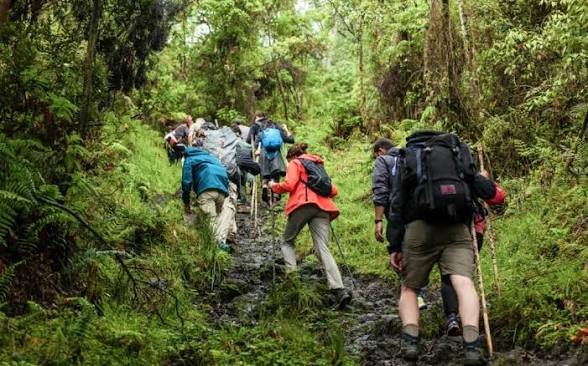
Fully mature males are exceptionally powerful. Their body size, muscular shoulders, long arms, and distinctive silver-coloured hair create an imposing appearance.
However, silverback leadership is much more complex than physical dominance.
A dominant male can influence movement, feeding areas, resting locations, and responses to danger. He may intervene in disputes and position himself strategically when another gorilla group approaches.
His relationship with females also influences family stability.
Watching a silverback during a gorilla trek can reveal surprising behaviour. Instead of dramatic charging or chest beating, visitors often find him sitting peacefully while stripping vegetation, resting on the forest floor, or allowing juveniles to remain close.
These quiet moments can provide a more accurate understanding of gorilla society than the aggressive image historically associated with gorillas.
Mothers and Infants During the Best Gorilla Family Trek in Rwanda
A mother with an infant can completely transform the emotional character of a gorilla encounter.
Newborn mountain gorillas are highly dependent on their mothers. They remain physically close, holding onto the mother’s body as she travels through vegetation and changes feeding locations.
As the infant becomes older, it gradually begins exploring.
It may climb a small branch, move a short distance away, or attempt to join juvenile play before quickly returning to its mother.
These moments reveal extraordinary patience and maternal attention.
For photographers, infants can also produce some of the most memorable images of the trek. However, visitors should avoid concentrating so heavily on cameras that they miss the behaviour unfolding in front of them.
Seeing an infant interact naturally with its mother is one of the experiences that can make any family feel like the best gorilla family encountered in Rwanda.
Juvenile Gorillas and Playful Family Behaviour
Travellers hoping for an energetic encounter often become fascinated by juvenile gorillas.
Young mountain gorillas use play as an important part of social and physical development.
They wrestle, chase each other, climb branches, roll across vegetation, and imitate behaviours seen in older gorillas.
These interactions help them develop strength, coordination, confidence, and social awareness.
Juvenile play can also create unexpected moments during a gorilla trek. A young gorilla may suddenly move through vegetation close to visitors or climb overhead before returning toward the family.
Visitors must always allow the gorilla to control the movement and follow instructions from guides.
It is this unpredictability that makes young gorillas particularly entertaining to observe.
How Gorilla Family Allocation Works
Travellers frequently ask whether they can choose exactly which gorilla family they will trek.
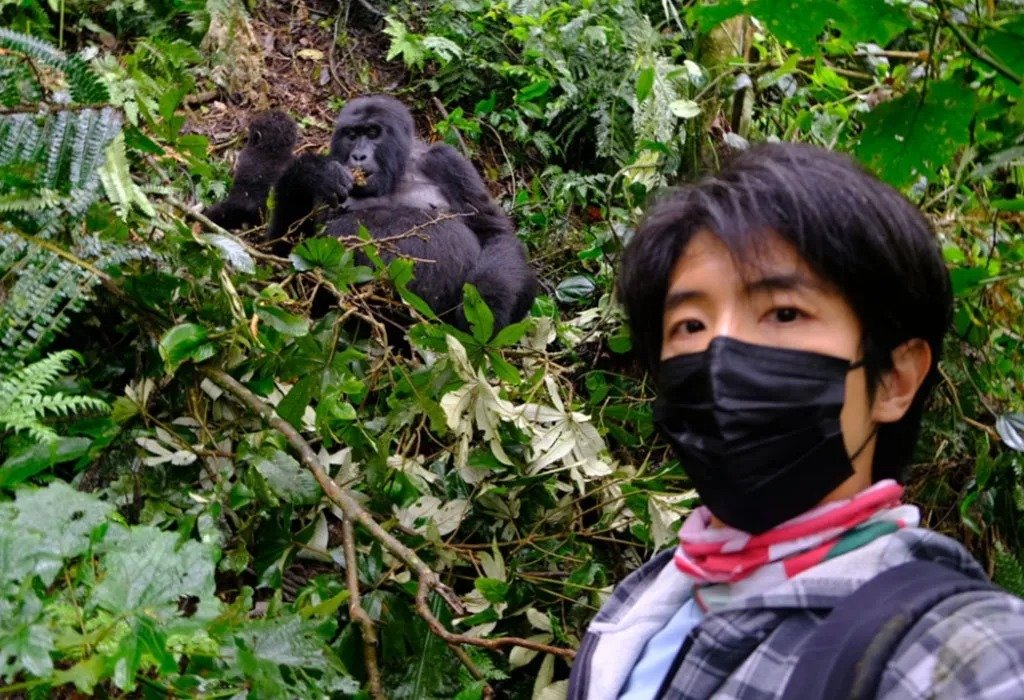

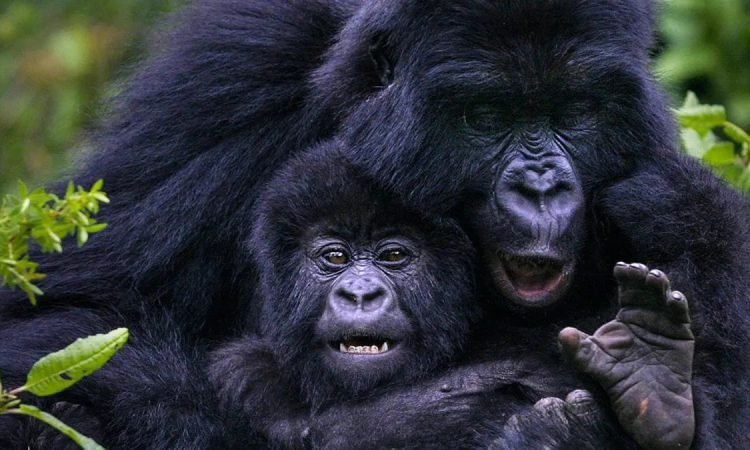
In practice, allocation involves several considerations.
The location of gorilla groups that morning is important. Visitor fitness may also be considered, particularly when some families are believed to be farther into the forest or positioned in more demanding terrain.
Age, mobility concerns, operational conditions, and group organisation can also influence allocation.
Visitors may express preferences, but a particular family should never be treated as guaranteed.
The gorillas can move overnight, changing the expected trekking difficulty before visitors even enter the forest.
For this reason, flexibility is essential.
A traveller who arrives determined to see only one famous family could overlook the fact that another group may provide an equally impressive or even more memorable encounter.
The Trekking Experience Before Reaching the Gorillas
The walk through Volcanoes National Park is an important part of the gorilla experience.
Trekkers move through a landscape shaped by volcanic mountains, high rainfall, fertile soils, bamboo zones, dense vegetation, and dramatic elevation.
Depending on the family location, the route may cross cultivated areas near the park boundary before entering thick forest.
Inside the park, the terrain can become uneven, muddy, steep, and covered with tangled plants.
Guides and trackers help interpret the environment while searching for signs of gorilla movement.
Broken stems, feeding remains, footprints, dung, flattened vegetation, and previous nesting sites can indicate that a family has moved through the area.
As the group approaches the gorillas, anticipation builds.
Guides normally prepare visitors before the final approach so unnecessary equipment can be organised and behaviour becomes quieter.
The moment trackers signal that the gorillas are close often becomes one of the most exciting moments of the entire safari.
The First Moment With a Gorilla Family
The first gorilla may not be the silverback.
Visitors might initially see a dark shape moving between leaves or a female feeding behind thick vegetation.
A juvenile may suddenly appear higher in the vegetation.
Then, as the eyes adjust to the forest, additional family members become visible.
The experience can feel almost unreal because mountain gorillas blend remarkably well into their environment despite their size.
A silverback sitting silently in dark vegetation can remain difficult to see until movement reveals his position.
Once visitors settle into the encounter, attention begins shifting from simply seeing gorillas toward observing their behaviour.
That transition is what makes gorilla trekking different from simply checking an animal from a wildlife list.
Why One Hour With Mountain Gorillas Feels So Significant
Direct observation time during a standard gorilla trek is controlled to reduce unnecessary disturbance to the family.
Although the period can pass surprisingly quickly, one hour provides an opportunity to observe many aspects of natural gorilla behaviour.
Visitors may watch feeding, movement, interaction between mothers and infants, juvenile play, resting, communication, and silverback leadership.
Some minutes can be filled with activity while others are remarkably quiet.
Those quiet periods often become particularly powerful.
Hearing vegetation move as a gorilla feeds, watching the silverback breathe while resting, or seeing an infant examine its surroundings creates a sense of closeness that does not require dramatic action.
The objective is not constant entertainment.
It is access to the normal life of a wild gorilla family.
Best Gorilla Family Trek in Rwanda for Photography
Photographers sometimes ask which gorilla family offers the best photographic opportunities.
No family can guarantee ideal conditions.
Photography depends heavily on vegetation, light, weather, group positioning, and behaviour during the encounter.
A relatively small group sitting in open vegetation may produce better photographic opportunities than a larger family hidden in thick bamboo.
Rain can create challenging lighting but may also produce atmospheric images.
Cloud cover can soften harsh contrast, while wet vegetation adds depth to the mountain forest environment.
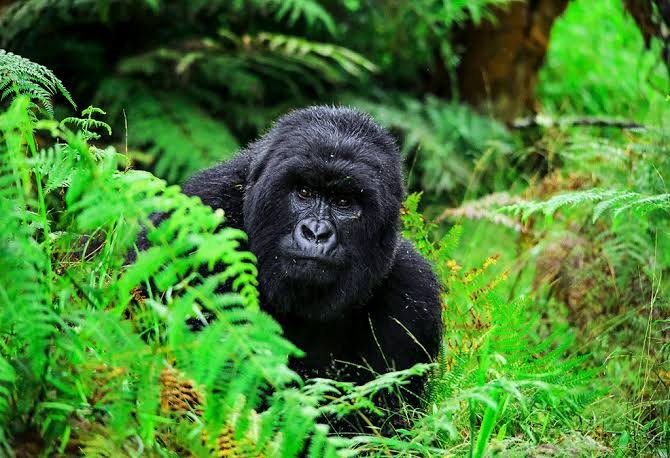
The key is preparation.
Photographers should understand their equipment before entering the forest because precious observation time should not be consumed by changing unfamiliar camera settings.
Flash should not be used.
The best photographs usually come from patience and observation rather than constantly moving in search of another angle.
Best Gorilla Family Trek for Active Travellers
Travellers who enjoy challenging hiking may find a longer trek particularly rewarding.
Mountain gorillas can move toward higher elevations or farther from common access points.
Reaching such groups can involve extended climbing through wet vegetation and uneven volcanic terrain.
For physically fit travellers, the demanding journey can add to the sense of adventure.
The forest becomes part of the story rather than simply an obstacle between the visitor and the gorillas.
Longer trekking does not necessarily produce a better gorilla encounter, however.
The observation experience depends on the family’s behaviour once it is reached.
Travellers should therefore choose physical challenge because they enjoy hiking, not because a difficult family is automatically more impressive.
Best Gorilla Family Trek for Older Travellers
Older travellers can also enjoy gorilla trekking successfully with suitable preparation.
Age alone does not determine trekking ability.
General fitness, balance, walking experience, altitude tolerance, and medical considerations are more important.
Travellers concerned about demanding terrain should communicate their situation before family allocation.
Where operationally possible, guides can take physical capacity into consideration.
Porters can also make a substantial difference by carrying bags and providing assistance on slippery or steep sections.
The goal should be to create a manageable experience that allows the traveller to arrive at the gorillas with enough energy to enjoy the encounter.
Gorilla Trekking During Rwanda’s Drier Seasons
Drier periods are popular for gorilla trekking because trails can sometimes be easier to navigate.
Reduced rainfall may mean less mud in some areas, although Volcanoes National Park remains a mountain rainforest environment where showers can occur unexpectedly.
The vegetation stays lush, and changing weather should always be expected.
High demand during popular travel months means advance planning becomes particularly important.
Travellers should avoid assuming that a dry-season trek will be completely dry or easy.
The family may still be located high on a steep slope, and previous rain can leave sections of the forest slippery.
Gorilla Trekking During Rwanda’s Wetter Seasons
The wetter periods can provide a different but equally compelling gorilla trekking atmosphere.
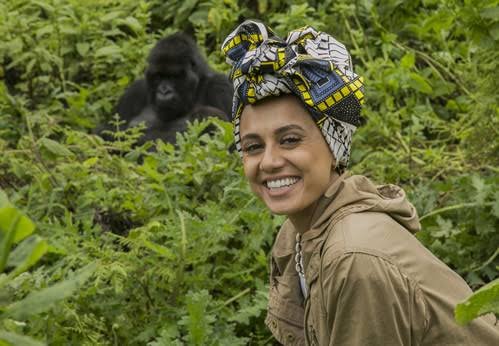
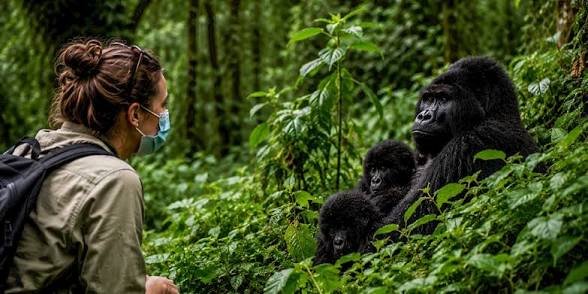

Mist moving across volcanic slopes and moisture covering the forest can create exceptionally dramatic scenery.
Trails may become muddier, making good footwear and careful movement important.
Vegetation can also be thick.
For visitors comfortable with wet conditions, the experience remains highly rewarding.
Mountain gorillas continue their daily lives regardless of tourism seasons.
Rain does not remove the possibility of meaningful sightings.
The most important factor is arriving properly prepared.
What to Wear for the Best Gorilla Family Trek in Rwanda
Clothing should be selected for protection and comfort rather than appearance.
Long trousers help protect the legs from vegetation while long sleeves reduce exposure to scratches and stinging plants.
Strong hiking boots with suitable grip are particularly useful on muddy or uneven terrain.
Rain protection should remain accessible because mountain weather can change rapidly.
Gloves can be useful when trekkers need to hold vegetation for balance.
A small daypack can carry drinking water, necessary equipment, rainwear, and personal essentials.
Visitors should avoid carrying unnecessary weight, particularly if the family is located far into the forest.
Why Using a Porter Can Improve Your Trek
Hiring a porter can improve the overall gorilla trekking experience considerably.
Even a light backpack can become uncomfortable during several hours of climbing at altitude.
A porter can carry equipment and also provide useful support when navigating difficult sections of trail.
The benefit becomes particularly noticeable on steep slopes or muddy ground.
Using porter services also adds a community dimension to the experience because tourism provides direct employment opportunities around Volcanoes National Park.
Visitors sometimes decline porter assistance because they feel physically fit, only to discover that the forest is more demanding than expected.
Accepting support allows trekkers to preserve energy for the gorilla encounter itself.
Gorilla Trekking Rules and Respect for the Families
Rules surrounding mountain gorilla trekking are designed primarily to protect the animals.
Mountain gorillas are biologically close enough to humans that disease transmission represents an important conservation concern.
Visitors should therefore take health guidance seriously and avoid trekking when suffering from contagious illness.
Once near the gorillas, behaviour should remain calm.
Visitors should avoid sudden movements, unnecessary noise, touching gorillas, flash photography, or attempts to attract their attention.
If a gorilla moves closer, the visitor should remain calm and follow the guide’s instructions.
The privilege of close observation depends on keeping human disturbance as low as possible.
Gorilla Habituation and Why Families Tolerate Visitors
The gorillas encountered during standard trekking have undergone habituation.
This does not mean they are domesticated or trained.
Habituation is a gradual process during which wild gorillas become familiar with controlled human presence.
The animals continue feeding, breeding, travelling, forming social relationships, and choosing where they move.
They are not fed to encourage them toward tourists.
The result is an unusual wildlife encounter in which people can observe gorillas relatively closely without turning the animals into captive attractions.
Maintaining that balance is one of the most important responsibilities of gorilla tourism.
Gorilla Family Tracking and Conservation Monitoring
Trackers play an extraordinary role in the protection of mountain gorillas.
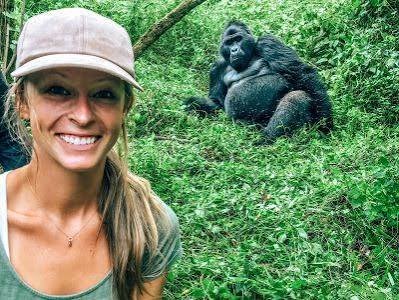
Their knowledge extends far beyond simply finding animals for tourists.
Regular monitoring helps conservation teams understand where families move, which gorillas remain present, whether births have occurred, whether individuals have transferred between groups, and whether an animal appears injured or unwell.
Experienced trackers learn to recognise individuals through physical features, nose patterns, scars, size, behaviour, and family relationships.
This detailed knowledge means individual gorillas can be followed across long periods of their lives.
For visitors, meeting a gorilla is an extraordinary experience.
For conservation teams, the same gorilla may be an individual whose life history has been documented since infancy.
Why Family Births Matter
Mountain gorillas reproduce slowly.
This makes every successful birth important.
A newborn represents not only a new family member but also another contribution to the future of the population.
Infant survival depends heavily on maternal care, family stability, habitat quality, and wider conservation conditions.
Watching an infant during a trek therefore carries greater meaning when visitors understand the broader conservation story.
That small gorilla may eventually grow into a breeding female, a blackback, or a dominant silverback responsible for an entirely new family.
Why Gorilla Families Sometimes Split
Family division is a natural part of mountain gorilla society.
As males mature, competition for leadership and reproductive opportunities can increase.
A younger male may separate from an established family and eventually form a new group.
Females may choose to follow or later transfer.
Sometimes a large family divides into smaller social units.
For tourism, these divisions can result in new family names becoming familiar over time.
For conservation science, they provide valuable information about social organisation, reproduction, leadership, and population development.
A family split should therefore not automatically be understood as something negative.
It can be part of the natural evolution of a growing gorilla population.
Best Gorilla Family Trek and Gorilla Conservation in Rwanda
The success of gorilla tourism is closely connected with conservation.
Protecting mountain gorillas requires habitat protection, daily monitoring, veterinary expertise, anti-poaching work, scientific research, responsible visitor management, and cooperation with communities living around the park.
Tourism helps create economic value around conserving the forest and its wildlife.
The experience therefore carries a responsibility.
Visitors are not simply purchasing access to an unusual animal encounter.
They are entering a highly controlled conservation environment where wildlife welfare must remain the priority.
The future of the Best Gorilla Family Trek in Rwanda depends on keeping the mountain gorillas wild, healthy, and protected.
Volcanoes National Park as the Setting for the Trek
The physical setting is one of the reasons Rwanda’s gorilla experience feels so extraordinary.
The Virunga volcanoes rise dramatically above the surrounding countryside, creating a landscape of forest-covered slopes, mist, bamboo, volcanic soils, and changing vegetation zones.
The trek gradually brings visitors from cultivated areas toward dense protected forest.
Once inside the park, the outside world can feel surprisingly distant.
Vegetation surrounds the trail, bird calls emerge from the forest, and visibility can become limited.
This environment makes the eventual discovery of a gorilla family especially powerful.
Visitors understand immediately why the gorillas depend on the protection of this mountain habitat.
Combining Gorilla Trekking With Golden Monkeys
Travellers spending additional time around Volcanoes National Park can experience another side of the forest through golden monkey tracking.
Golden monkeys behave very differently from mountain gorillas.
They are smaller, faster, and often highly active within bamboo vegetation.
Experiencing both primates highlights the ecological diversity of the park.
A gorilla encounter tends to feel slow, powerful, and deeply emotional, while golden monkey tracking can feel energetic and playful.
Together, the experiences provide a broader appreciation of Rwanda’s volcanic forests.
Combining Gorilla Trekking With Lake Kivu
Lake Kivu can provide an excellent contrast after the physical intensity of gorilla trekking.
The mountain environment gives way to expansive water, lakeside scenery, and a slower atmosphere.
Travellers can use this period to relax after hiking while reflecting on the gorilla encounter.
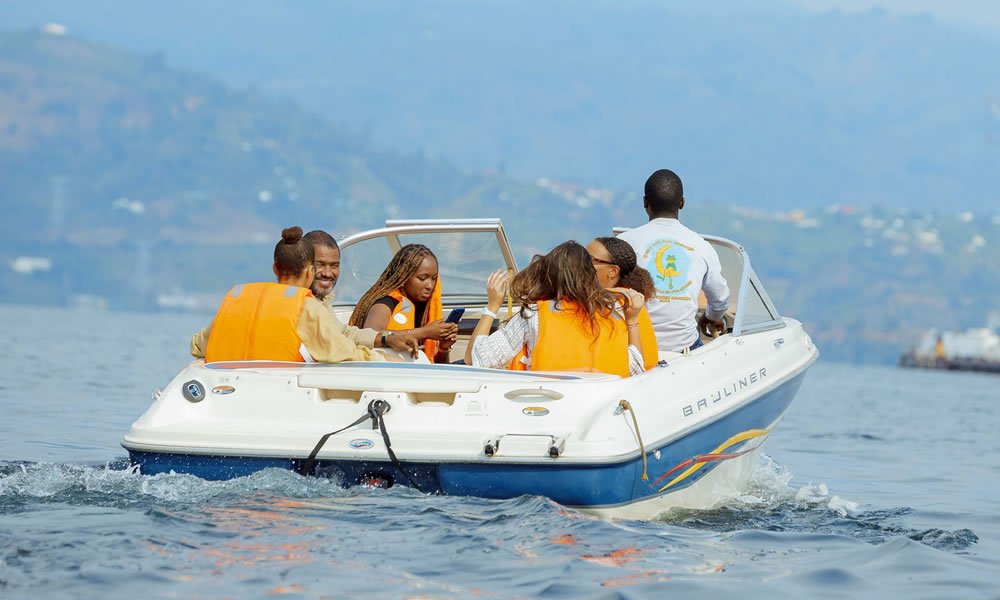
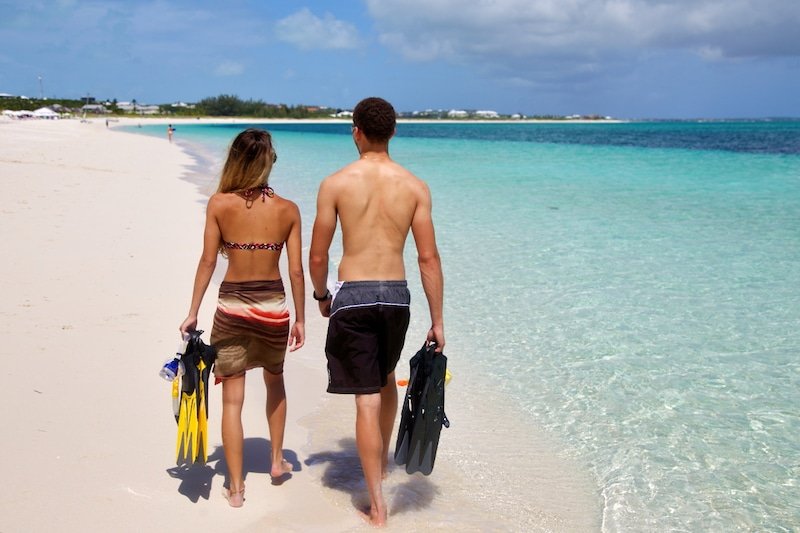
The combination works particularly well for visitors who do not want every day of their Rwanda journey to involve demanding activities.
A balanced itinerary allows the gorilla trek to remain the central wildlife highlight while introducing different landscapes.
Combining Gorilla Trekking With Akagera National Park
Travellers seeking a broader wildlife safari can combine Volcanoes National Park with Akagera National Park.
The contrast demonstrates Rwanda’s ecological diversity.
Volcanoes National Park is associated with high-altitude forest and primates, while Akagera introduces savannah, wetlands, lakes, and traditional game-viewing environments.
A journey combining both destinations allows visitors to experience mountain gorillas alongside a more conventional African wildlife safari.
This is particularly attractive to first-time visitors who want Rwanda to provide more than a single primate encounter.
How Many Days Are Ideal for a Rwanda Gorilla Trek?
A Rwanda gorilla experience can fit into a relatively short journey, but additional time usually creates a more relaxed safari.
Travellers arriving internationally should consider allowing enough time to reach the Volcanoes National Park area comfortably before trekking.
Staying near the park before the trek avoids beginning the day with a long transfer.
Additional nights also create opportunities for another forest activity, local cultural experiences, relaxation, or continuation toward Lake Kivu.
Travellers combining gorillas with Akagera or other destinations naturally require more time.
The best itinerary should match the traveller rather than forcing every visitor into the same number of days.
Can You Trek Gorillas Twice in Rwanda?
Travellers wanting a deeper understanding of gorilla behaviour may choose to participate in more than one trek on separate days.
A second encounter can feel completely different from the first.
The visitor may be allocated another family, encounter different terrain, and observe entirely different behaviour.
One trek might focus heavily on a silverback while another provides prolonged interaction between mothers and juveniles.
For photographers and serious primate enthusiasts, multiple encounters can significantly increase the depth of the experience.
It also reinforces the fact that no single family represents the entirety of mountain gorilla society.
Is Gorilla Trekking in Rwanda Worth It?
For travellers fascinated by wildlife, primates, conservation, photography, or rare natural experiences, gorilla trekking can become one of the highlights of an African journey.
The value lies in more than proximity to an endangered animal.

Visitors walk through the gorillas’ natural environment, witness family relationships directly, and observe behaviour that cannot be recreated authentically in captivity.
The experience can also change how travellers understand conservation.
A population statistic can feel distant.
A mother carrying an infant, a juvenile playing beside a silverback, or a mature male sitting quietly in the forest makes the importance of protection immediate and personal.
Which Gorilla Family Is Best for First-Time Visitors?
First-time visitors do not need to target a specific family to have an extraordinary experience.
The strongest approach is to arrive with realistic expectations and allow the allocation process to determine the family.
Every habituated group offers the possibility of observing silverbacks, females, younger gorillas, and natural social behaviour.
The exact combination will vary.
Rather than measuring success by whether a particular family name was assigned, visitors should judge the experience by the quality of the encounter itself.
For many people, the family they actually trek becomes their favourite simply because those are the gorillas with whom they formed a personal memory.
Which Gorilla Family Has the Best Silverback?
Silverback leadership changes throughout the life of gorilla families.
For this reason, declaring one family permanently best for seeing a powerful silverback is difficult.
Several Rwanda gorilla groups have historically been associated with famous dominant males whose size, longevity, leadership, or family histories made them particularly well known.
However, every mature silverback is impressive.
Visitors should also remember that the most memorable silverback encounter may involve very little dramatic behaviour.
A giant male sitting peacefully only a short distance away can be far more striking than a chest-beating display.
Which Gorilla Family Has the Most Babies?
The number of infants within each family changes whenever births occur, young gorillas mature, or females transfer between groups.
A family described as having several babies in one year may have a completely different age structure several years later.
Travellers particularly interested in infants can express that interest, but no specific encounter should be guaranteed.
Even when a family contains young babies, the infants may spend much of the observation period close to their mothers or partially hidden by vegetation.
Wildlife experiences operate on the animals’ terms.
Which Gorilla Family Is Easiest to Trek?
There is no permanently easiest family.
Certain groups may establish home ranges that frequently place them closer to common access routes, but mountain gorillas can change location overnight.
Rainfall, food availability, family encounters, and normal daily movement all influence where trackers eventually find them.
Travellers with mobility concerns should communicate them before allocation rather than depending on a particular family name.
The best trek is one that matches the visitor’s physical capacity while still preserving the authenticity of the gorilla encounter.
Which Gorilla Family Is Hardest to Trek?
Families that move into higher or more distant sections of Volcanoes National Park can create more demanding trekking experiences.
Historically, some groups have developed reputations for difficult hikes because of the terrain they commonly use.
These descriptions should never be treated as permanent guarantees.
A normally demanding group could occasionally be found relatively close, while another family may unexpectedly move much farther away.
The uncertainty is part of mountain gorilla trekking.
Can Gorilla Families Approach Visitors?
Yes, a gorilla may occasionally move closer than the recommended visitor distance.
Juveniles can be particularly curious.
The correct response is not to reach toward the animal, attempt physical contact, or move closer for a photograph.
Visitors should remain calm and follow guide instructions.
The gorilla must always control the interaction.
These unexpected close approaches can become unforgettable moments precisely because they happen naturally.
Do Gorilla Families Fight?
Mountain gorilla groups can encounter one another, and competition between mature males can sometimes create displays or confrontation.
Silverbacks may use chest beating, vocalisation, charging, vegetation throwing, and body posture to communicate strength.
Physical conflict is possible, particularly when reproductive competition is involved.
Within established families, disagreements can also occur.
However, much of daily gorilla life is peaceful.
Feeding, resting, parenting, travelling, and social interaction occupy far more time than dramatic conflict.
Are Mountain Gorillas Dangerous?
Mountain gorillas possess enormous physical strength and should always be treated as powerful wild animals.
Habituated families have gradually become familiar with carefully controlled human observation, which allows trekking to operate safely when established rules are followed.
Visitors should never interpret habituation as domestication.
A silverback does not exist for entertainment and should never be deliberately provoked.
Guides understand gorilla body language and provide instructions if an animal displays, approaches, or changes behaviour.
Calm obedience to those instructions is essential.
Best Time for the Best Gorilla Family Trek in Rwanda
Gorilla trekking operates throughout the year, which means the best time depends largely on personal travel preferences.
Visitors prioritising potentially firmer trekking conditions may favour drier periods.
Travellers comfortable with rain and interested in particularly lush forest scenery may enjoy wetter months.
Mountain weather remains unpredictable in every season.
Rain can fall during traditionally drier periods, and clear weather can occur during wetter months.
The gorillas remain present throughout the year.
Therefore, the best month is often the month that works well with the traveller’s wider itinerary, accommodation preferences, and desired safari combination.
The Real Best Gorilla Family Trek in Rwanda
After comparing famous families, trekking difficulty, silverbacks, infants, photography, history, and accessibility, the most important conclusion is surprisingly simple.
The Best Gorilla Family Trek in Rwanda is the family encounter that allows a traveller to observe mountain gorillas naturally, respectfully, and with enough understanding to appreciate what is happening.
Susa may provide extraordinary historical significance. Sabyinyo may capture attention through the legacy of impressive silverbacks. Amahoro and Umubano reveal the complexity of family relationships and group formation. Kwitonda demonstrates the wider connection of the Virunga ecosystem. Hirwa highlights how freely gorillas can move across their mountain landscape. Newer families continue adding fresh chapters to Rwanda’s conservation story.
Yet no name guarantees the most emotional experience.
The family assigned on the morning of the trek might contain a mother whose infant spends the hour learning to climb. A juvenile may repeatedly attempt to play with an older sibling. A silverback may sit quietly watching the group while mist moves through the forest. Another trek could involve long periods of feeding followed by sudden movement through dense vegetation.
These spontaneous moments are what make gorilla trekking exceptional.
Travellers should therefore arrive prepared physically, emotionally, and practically, but they should leave rigid expectations behind.
Book the Best Gorilla Family Trek in Rwanda
Planning the Best Gorilla Family Trek in Rwanda begins with choosing suitable travel dates and allowing enough time for a comfortable journey to Volcanoes National Park.
A well-designed gorilla safari should consider permit arrangements, accommodation near the park, private transportation, trekking preparation, appropriate clothing, physical ability, and any additional destinations the traveller wishes to include.
Some visitors may want a short Rwanda gorilla experience focused almost entirely on Volcanoes National Park. Others may prefer a longer journey incorporating golden monkeys, Lake Kivu, Akagera National Park, cultural experiences, or additional destinations elsewhere in East Africa.
Luxury travellers may prioritise exceptional accommodation, private services, fine dining, spa experiences, and highly personalised logistics around the trek.
Adventure-focused visitors may place greater value on hiking, multiple gorilla encounters, volcanic landscapes, and additional primate activities.
The itinerary should reflect the traveller rather than forcing every visitor into the same programme.
Most importantly, gorilla trekking should be approached with respect for the animals and appreciation for the conservation work that makes the encounter possible.
The forest is their home.
Visitors are temporary guests.
Final Thoughts on the Best Gorilla Family Trek in Rwanda
Choosing the Best Gorilla Family Trek in Rwanda becomes easier once travellers understand that the family name is only one part of the experience.
Mountain gorillas live within complex, changing societies where leadership, motherhood, play, competition, reproduction, movement, and survival continuously reshape every group.
A famous family can provide an extraordinary encounter, but so can a newer or less internationally recognised group.
The greatest experiences often come from unexpected behaviour.
A powerful silverback may suddenly emerge from vegetation. A mother may reposition her infant where visitors can see it clearly. Juveniles may begin wrestling only metres away. A blackback may climb through dense foliage before settling beside the dominant male.
None of these moments can be scheduled.
That is exactly why they matter.
Volcanoes National Park provides travellers with the privilege of entering one of the world’s most significant mountain gorilla habitats and observing these animals in the environment where they belong.
The trekking effort, changing weather, volcanic slopes, dense vegetation, skilled trackers, anticipation, and eventual gorilla encounter combine to create an experience far greater than simply seeing a rare species.
The best family is ultimately not the group with the biggest reputation.
It is the family encountered on the day, in its natural habitat, behaving according to its own social relationships while visitors are privileged to observe quietly.
That combination of wilderness, conservation, family behaviour, and genuine unpredictability is what makes the Best Gorilla Family Trek in Rwanda one of the most extraordinary wildlife experiences available in Africa.