How Many Mountain Gorillas Are in Rwanda? A Complete Guide to Rwanda’s Mountain Gorilla Population
Rwanda is one of Africa’s most extraordinary wildlife destinations, attracting travellers from across the world who dream of encountering endangered mountain gorillas in their natural habitat. The country has gained international recognition because of its remarkable success in protecting mountain gorillas in Volcanoes National Park, where visitors can experience close encounters with these intelligent and peaceful primates surrounded by the beautiful volcanic forests of northern Rwanda.
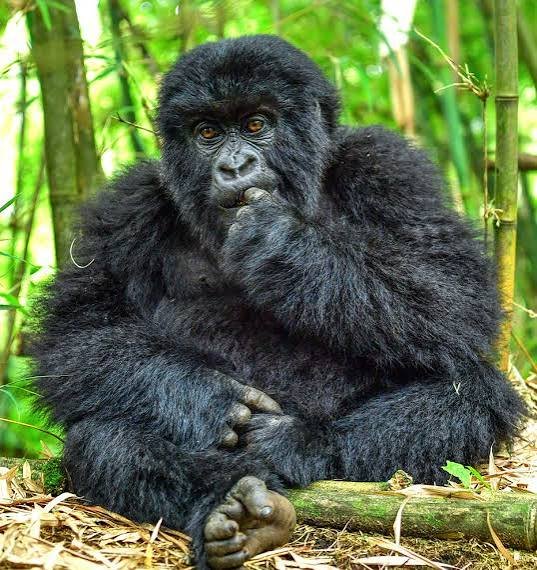
One of the most common questions asked by travellers planning a gorilla trekking safari in Rwanda is: How many mountain gorillas are in Rwanda? The answer reflects not only the number of gorillas found within Rwanda’s borders but also the wider conservation story of the Virunga Mountains, one of the last remaining habitats of mountain gorillas in the world.
Rwanda is home to a significant population of mountain gorillas living within Volcanoes National Park, which protects the Rwandan section of the Virunga Massif. The Virunga Massif is a vast mountain ecosystem extending across Rwanda, Uganda, and the Democratic Republic of Congo. Because mountain gorillas naturally move through forest habitats without recognizing international borders, Rwanda’s gorilla population forms part of this larger shared ecosystem rather than existing as a completely separate population.
Current conservation estimates indicate that Rwanda protects around 400 mountain gorillas within Volcanoes National Park, although the exact number changes over time because gorillas are constantly reproducing, forming new groups, transferring between families, and naturally experiencing population changes. These gorillas contribute significantly to the survival of the species globally and represent one of the strongest examples of successful endangered species conservation.
The wider Virunga Massif mountain gorilla population contains more than 600 individuals, while the total wild mountain gorilla population, including those found in Uganda’s Bwindi Impenetrable Forest, has grown to slightly above 1,000 individuals. This recovery represents one of the most positive conservation achievements in the world because mountain gorillas were once facing a serious risk of extinction.
The increase in mountain gorilla numbers has not happened by chance. It is the result of decades of conservation work involving wildlife authorities, researchers, veterinarians, local communities, and international conservation organizations. Rwanda’s commitment to protecting Volcanoes National Park has played a major role in allowing mountain gorilla populations to recover and become more stable.
Understanding Rwanda’s Mountain Gorilla Population
When discussing how many mountain gorillas are in Rwanda, it is important to understand that these animals belong to the Virunga Massif population rather than a completely isolated Rwandan population. The Virunga Mountains provide one continuous ecosystem where gorilla families historically move between different areas depending on food availability, territory, and environmental conditions.
The Rwandan side of this ecosystem is protected through Volcanoes National Park, which covers approximately 160 square kilometres of mountainous rainforest and bamboo forests. Despite being one of Rwanda’s smaller national parks, it is one of the most important protected areas in Africa because it safeguards one of the last remaining habitats of mountain gorillas.
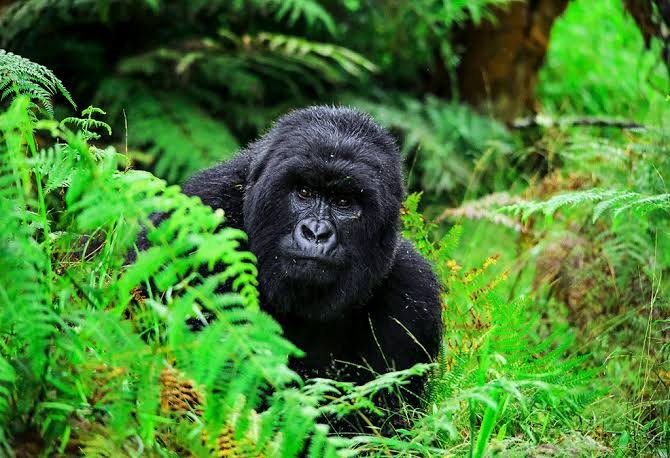
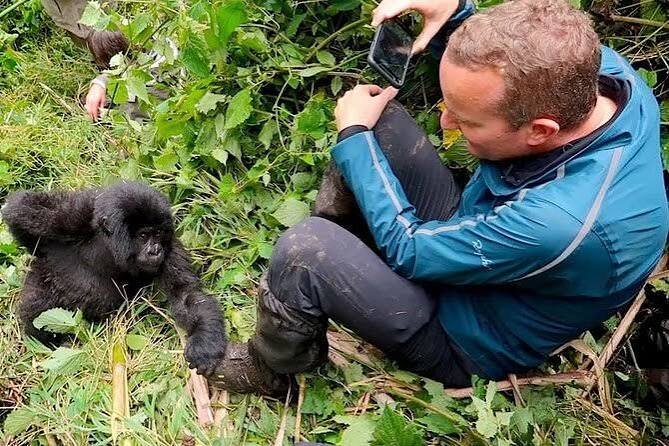
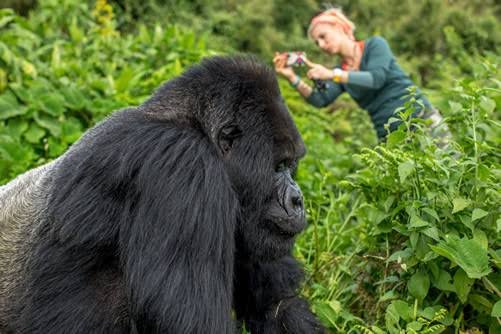
The forests of Volcanoes National Park provide an ideal environment for gorillas. They contain abundant vegetation, including bamboo shoots, leaves, roots, and other plant materials that form the main part of the gorillas’ diet. The high-altitude environment also provides shelter and protection for gorilla families living on the slopes of the Virunga volcanoes.
Rwanda has become one of the leading destinations for mountain gorilla conservation because of its ability to combine strict protection with carefully managed tourism. The country has developed a system where visitors can observe habituated gorilla families while ensuring that human activities do not negatively affect their natural behaviour.
The Global Mountain Gorilla Population and Rwanda’s Contribution
Mountain gorillas are classified as endangered because they exist in only a few locations in Central and East Africa. Unlike other large mammals that occupy wide areas across the continent, mountain gorillas have a very limited range, making habitat protection extremely important.
The global mountain gorilla population is divided into two main groups. The first is the Virunga Massif population, which includes Rwanda’s Volcanoes National Park, Uganda’s Mgahinga Gorilla National Park, and the Democratic Republic of Congo’s Virunga National Park. The second population is located in Uganda’s Bwindi Impenetrable Forest.

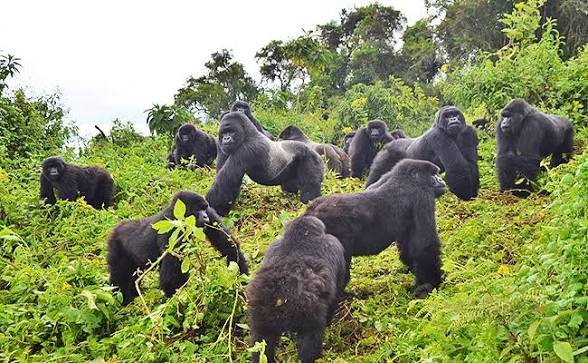

For many years, mountain gorilla numbers were declining because of habitat destruction, illegal hunting, disease, and human pressure. During the 20th century, conservationists feared that these animals could disappear completely. However, strong protection measures and international conservation efforts changed their future.
Rwanda’s contribution to mountain gorilla conservation is especially significant because Volcanoes National Park supports one of the highest concentrations of habituated gorilla groups available for tourism and research. The country’s conservation model has demonstrated how protecting wildlife can succeed when governments, communities, and tourism stakeholders work together.
The fact that mountain gorilla numbers have increased from critically low levels to more than 1,000 individuals worldwide is considered a conservation milestone. Rwanda has been an important part of this achievement through its protection of the Virunga ecosystem.
Why Mountain Gorilla Numbers in Rwanda Continue to Grow
The growth of Rwanda’s mountain gorilla population is the result of long-term conservation strategies focused on protecting both the animals and their habitat. Mountain gorillas require constant monitoring because they face unique challenges due to their close relationship with humans and their restricted habitat.
One of the most important reasons for Rwanda’s success is the daily monitoring of gorilla families. Experienced trackers enter the forest every day to locate gorilla groups, observe their behaviour, record their health conditions, and identify any changes within their social structures.
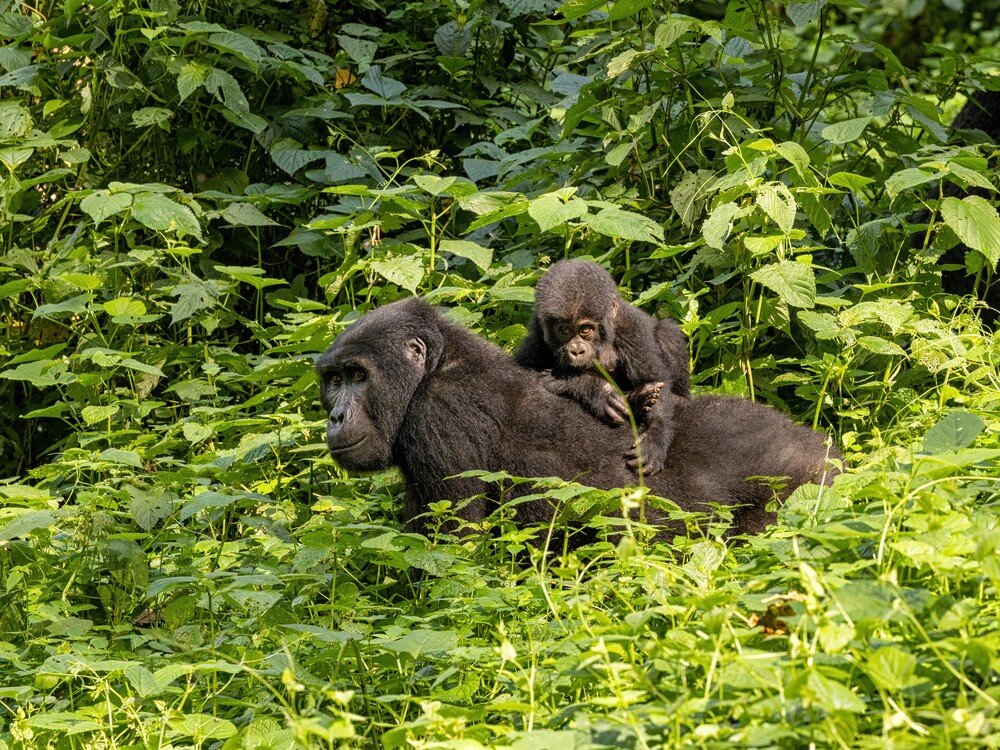
Each gorilla can be individually identified through unique physical characteristics. Researchers study features such as facial patterns, nose shapes, scars, and body markings to maintain detailed records of individual gorillas. This allows conservation teams to accurately monitor births, deaths, family movements, and population changes.
Veterinary support has also played an essential role in protecting Rwanda’s mountain gorillas. Because gorillas share many similarities with humans, they can be affected by certain diseases. Wildlife veterinarians regularly monitor the health of gorilla groups and provide medical assistance when necessary.
Another major factor behind the increase in mountain gorilla numbers is the involvement of local communities. Conservation cannot succeed if people living near protected areas do not benefit from protecting wildlife. Rwanda has developed programs that allow communities to gain economic opportunities from tourism and conservation initiatives.
Rwanda’s Role in Mountain Gorilla Conservation
Rwanda’s success in increasing mountain gorilla numbers is closely connected to the protection of Volcanoes National Park. The park is not only a tourism destination but also a critical sanctuary that protects one of the world’s most endangered species.
Conservation efforts within the park include ranger patrols, scientific research, habitat protection, veterinary monitoring, and controlled tourism activities. Rangers play an important role in protecting gorillas from threats and ensuring that the forest remains safe for wildlife.
Gorilla trekking tourism has become one of the strongest tools supporting conservation in Rwanda. Every visitor who travels to Volcanoes National Park contributes to the protection of mountain gorillas through permit fees and tourism-related activities.
The income generated from gorilla tourism supports conservation programs, park management, ranger operations, and community development projects. This creates a situation where protecting gorillas provides benefits not only for wildlife but also for people living around the park.
The Importance of Protecting Rwanda’s Remaining Mountain Gorillas
Although mountain gorilla numbers have improved significantly, these animals remain vulnerable. Their population is still small compared with many other wildlife species, and continued protection is necessary to ensure their survival.
The biggest challenge facing mountain gorillas is habitat pressure. Rwanda has a high human population density, and land around protected areas is extremely valuable for agriculture and settlement. Maintaining a balance between human needs and wildlife conservation remains an ongoing challenge.
Disease prevention is another important concern. Since mountain gorillas are genetically similar to humans, they can become infected with illnesses carried by people. This is why visitors following strict trekking rules, including maintaining distance from gorillas and avoiding visits when sick, is essential.
Climate change may also influence mountain gorilla habitats by affecting vegetation, rainfall patterns, and forest conditions. Conservation researchers continue studying how environmental changes could impact gorilla populations in the future.
Despite these challenges, Rwanda’s mountain gorilla population provides hope. The continued survival and growth of these animals show that conservation efforts can reverse the decline of endangered species when they are properly managed.
A Conservation Success Story Beyond Numbers
The question of how many mountain gorillas are in Rwanda is more than just a population statistic. Behind every number is a story of survival, protection, and international cooperation.
Every mountain gorilla living in Volcanoes National Park represents decades of dedication from conservationists, park rangers, researchers, veterinarians, and local communities. The recovery of these animals demonstrates that endangered species can recover when strong conservation systems are established.
For travellers visiting Rwanda, a gorilla trekking experience is not simply about seeing a rare animal. It is an opportunity to witness one of the greatest conservation achievements in the world. Observing a gorilla family feeding, playing, and interacting in the forest provides a powerful reminder of why protecting nature matters.
Rwanda’s mountain gorillas remain a symbol of hope. Their increasing numbers demonstrate that even species facing severe threats can recover through commitment, collaboration, and responsible tourism.
Today, Rwanda stands among the world’s most important mountain gorilla destinations, offering visitors the opportunity to experience these magnificent animals while supporting the continued conservation of one of Earth’s most treasured species.
Rwanda’s Mountain Gorilla Population in Volcanoes National Park
The mountain gorillas found in Rwanda live exclusively within Volcanoes National Park, a protected area located in the northern part of the country in the Musanze district, close to the borders of Uganda and the Democratic Republic of Congo. This remarkable park protects the Rwandan section of the Virunga Mountains, a chain of ancient volcanic peaks covered with some of the most important remaining montane forests in Africa.
Volcanoes National Park forms part of the larger Virunga Massif ecosystem, which is one of only two places in the world where mountain gorillas still survive in the wild. The other population is found in Uganda’s Bwindi Impenetrable Forest. The Virunga Massif stretches across three countries: Rwanda, Uganda, and the Democratic Republic of Congo, creating a connected forest landscape that has supported mountain gorilla populations for thousands of years.

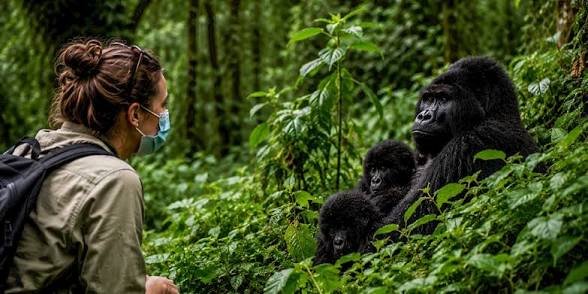

The park is named after the chain of volcanoes that dominate the landscape, including Mount Karisimbi, Mount Bisoke, Mount Muhabura, Mount Gahinga, and Mount Sabyinyo. These volcanic mountains create a unique high-altitude environment with fertile volcanic soils, dense vegetation, bamboo forests, and cool temperatures that provide ideal conditions for mountain gorillas.
Although Volcanoes National Park covers a relatively small area compared with many African national parks, its importance for conservation is enormous. The forests within the park provide essential habitat for mountain gorilla families, offering abundant food resources, safe areas for nesting, and protection from many of the threats that historically affected their survival.
Mountain gorillas are highly dependent on forest ecosystems because their daily lives revolve around finding vegetation, maintaining family bonds, raising young ones, and moving through different areas of their territory. The forests of Volcanoes National Park support this natural behaviour by providing a stable environment where gorilla groups can feed, rest, and reproduce.
The Importance of Volcanoes National Park for Mountain Gorilla Conservation
Volcanoes National Park is considered one of the most important mountain gorilla conservation areas in the world because it protects a significant portion of the remaining wild mountain gorilla population. The park has become internationally recognized for its successful approach to combining wildlife protection, scientific research, and carefully managed tourism.
The mountain gorillas living in Volcanoes National Park are part of a population that has experienced dramatic changes throughout history. Several decades ago, mountain gorillas faced serious threats caused by habitat destruction, illegal hunting, political instability, and human expansion into forest areas.
However, through decades of conservation efforts, Rwanda has created a stronger protection system around Volcanoes National Park. Rangers, researchers, veterinarians, and conservation organizations work together to monitor gorilla families and ensure their continued survival.
One of the most important aspects of conservation in Volcanoes National Park is the daily monitoring of gorilla groups. Experienced trackers enter the forest every morning to locate habituated gorilla families, record their movements, observe their behaviour, and monitor their health.
This close monitoring allows conservation teams to identify changes within gorilla groups. They can document births, track the development of young gorillas, monitor silverback behaviour, and respond quickly if an individual requires veterinary attention.
Because mountain gorillas are closely related to humans, they are vulnerable to some human diseases. Careful monitoring and strict visitor regulations help reduce the risk of disease transmission and ensure that tourism activities remain safe for both gorillas and visitors.
The Virunga Massif: A Shared Home for Mountain Gorillas
The mountain gorillas of Rwanda cannot be understood separately from the wider Virunga Massif ecosystem. Unlike national borders created by humans, gorillas naturally move through forests according to their ecological needs.
The Virunga Massif is shared between Rwanda’s Volcanoes National Park, Uganda’s Mgahinga Gorilla National Park, and the Democratic Republic of Congo’s Virunga National Park. Together, these protected areas create one of the most important conservation landscapes in Africa.
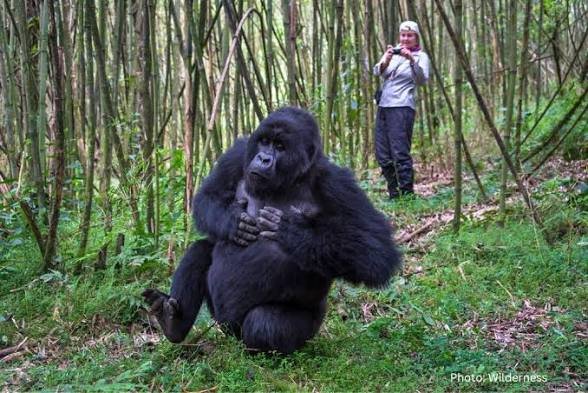
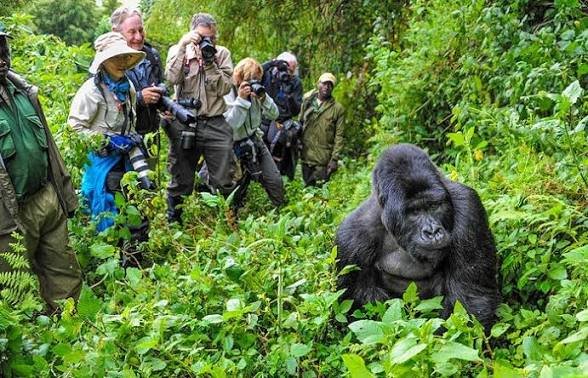
Historically, mountain gorilla families moved across this region depending on food availability, seasonal changes, territory, and social dynamics. Although conservation boundaries now exist between countries, the gorillas themselves continue to represent a connected population.
This is why cooperation between Rwanda, Uganda, and the Democratic Republic of Congo is essential. Conservation programs, scientific research, and population monitoring require collaboration because protecting mountain gorillas involves safeguarding an entire ecosystem rather than a single national park.
The shared nature of the Virunga ecosystem also explains why mountain gorilla population estimates are often discussed at the regional level. Scientists study the entire population to understand trends, threats, and conservation needs rather than focusing only on individual countries.
Gorilla Families Living in Volcanoes National Park
The mountain gorillas in Volcanoes National Park live in organized social groups known as gorilla families. Each family has its own unique history, social structure, and behaviour patterns.
A typical gorilla family is led by a dominant silverback, a mature male gorilla recognized by the silver hair that develops across his back as he ages. The silverback provides protection, leadership, and stability for the group.
Within these families are adult females, young gorillas, juveniles, and sometimes additional males. Female gorillas play an important role in raising infants and maintaining social relationships within the group.
The size of gorilla families changes naturally over time. New babies are born, young males eventually leave their birth groups, and some individuals transfer between families. Because of this natural movement, the number of gorillas in Rwanda is continuously monitored rather than considered a fixed figure.
Rwanda has several habituated gorilla families that visitors can trek to see. Habituation is a careful process that takes several years, allowing gorillas to gradually become comfortable with the presence of researchers, trackers, and limited groups of visitors while maintaining their natural behaviour.
The habituation process is essential because it allows tourism to support conservation without turning gorillas into domesticated animals. The goal is not to change their behaviour but to allow safe observation while preserving their wild instincts.
Volcanoes National Park as a Destination for Gorilla Trekking
Today, Volcanoes National Park is one of the world’s most famous destinations for mountain gorilla trekking. Thousands of visitors travel to Rwanda every year to experience the rare opportunity of entering the forest and observing gorillas in their natural environment.
One of Rwanda’s greatest advantages is accessibility. From Kigali, the country’s capital and main international gateway, travellers can reach Volcanoes National Park within a few hours by road. This makes Rwanda an attractive destination for visitors who want a short but meaningful wildlife experience.
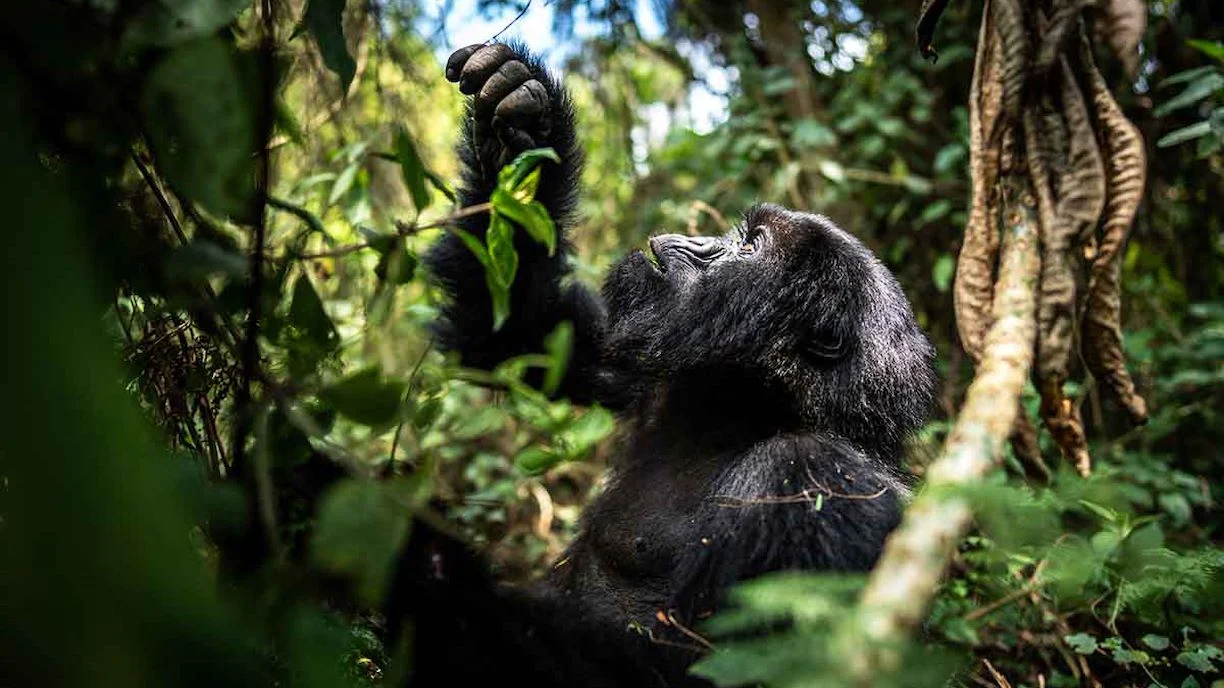

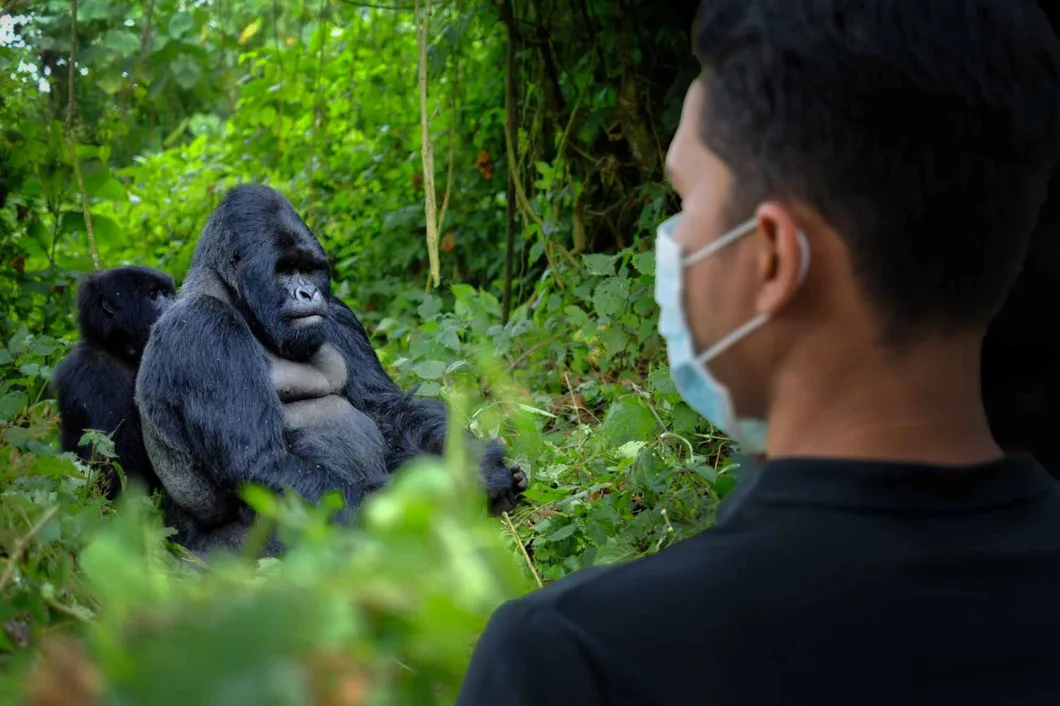
The organization of gorilla trekking in Rwanda is another reason for its popularity. Visitors are accompanied by professional guides and trackers who understand gorilla behaviour, the forest environment, and conservation guidelines.
Before entering the forest, travellers receive a briefing about responsible behaviour, including maintaining a safe distance, avoiding loud noises, and following instructions from guides. These rules are designed to protect both visitors and gorillas.
The trekking experience itself offers much more than simply seeing a rare animal. It provides insight into the complex social lives of mountain gorillas and allows visitors to witness behaviours such as feeding, grooming, playing, and communication within family groups.
The Role of Tourism in Protecting Rwanda’s Mountain Gorillas
Gorilla tourism has become one of the most important tools supporting conservation in Rwanda. The revenue generated from gorilla trekking contributes to maintaining Volcanoes National Park, supporting conservation programs, and improving the livelihoods of communities around the park.
The relationship between tourism and conservation is especially important in Rwanda because protecting mountain gorillas requires significant resources. Rangers must patrol the forests, researchers must monitor populations, and conservation teams must maintain long-term protection programs.
Communities surrounding Volcanoes National Park are also an important part of the conservation story. When local people benefit from tourism through employment, community projects, and economic opportunities, they become stronger partners in protecting wildlife.
This approach has helped create a balance between conservation and human development. The survival of mountain gorillas depends not only on protecting forests but also on ensuring that surrounding communities see value in preserving these incredible animals.
Why Volcanoes National Park Remains Critical for the Future of Mountain Gorillas
The continued protection of Volcanoes National Park is essential for the future of Rwanda’s mountain gorillas. Although their population has improved significantly, mountain gorillas remain endangered and require ongoing conservation efforts.
The park provides a safe environment where gorilla families can continue breeding and raising young generations. Every birth represents progress in conservation, while every surviving gorilla contributes to the long-term survival of the species.
Future conservation success will depend on maintaining strong protection systems, supporting local communities, continuing scientific research, and promoting responsible tourism.
Volcanoes National Park stands as a powerful example of what conservation can achieve. Once facing severe population decline, mountain gorillas in Rwanda now represent one of Africa’s greatest wildlife recovery stories.
For travellers visiting Rwanda, seeing mountain gorillas in Volcanoes National Park is not simply a wildlife encounter. It is an opportunity to witness the results of decades of dedication and to become part of a conservation story that continues to protect one of the world’s most remarkable animals.
The Global Mountain Gorilla Population and Rwanda’s Role
Mountain gorillas are among the most endangered wildlife species on Earth, and their survival represents one of the most important conservation stories in modern history. Unlike many other great apes that occupy large areas across Africa, mountain gorillas survive only within a very limited range in the forests of Central and East Africa. Their restricted habitat, combined with historical threats such as habitat loss, human encroachment, disease, and illegal hunting, placed these magnificent primates at serious risk of extinction.
The survival of mountain gorillas today is the result of decades of dedicated conservation efforts involving national governments, wildlife authorities, local communities, researchers, veterinarians, conservation organizations, and responsible tourism operators. Every mountain gorilla living in the wild today represents years of protection, scientific study, and cooperation between people committed to preserving this endangered species.
The current global mountain gorilla population is found in only two main regions. The first and largest population lives within the Virunga Massif, a unique volcanic ecosystem shared by Rwanda, Uganda, and the Democratic Republic of Congo. This population includes gorillas living in Rwanda’s Volcanoes National Park, Uganda’s Mgahinga Gorilla National Park, and the Democratic Republic of Congo’s Virunga National Park.
The second population lives in Uganda’s Bwindi Impenetrable Forest, a dense tropical rainforest located in southwestern Uganda. Although separated geographically from the Virunga population, the Bwindi mountain gorillas are part of the same species and play an equally important role in the survival of mountain gorillas worldwide.
Together, these two populations represent the entire remaining wild population of mountain gorillas. Their survival depends on protecting these forests, maintaining conservation programs, and ensuring that human activities around their habitats are carefully managed.
The Virunga Massif Mountain Gorilla Population
The Virunga Massif is one of the most important wildlife conservation areas in Africa. This mountainous region contains a chain of volcanic peaks and forests that provide a critical habitat for mountain gorillas. The ecosystem extends across three countries, creating a shared conservation landscape where gorillas can move naturally through their historic range.
Within this ecosystem, Rwanda’s Volcanoes National Park protects the eastern section of the Virunga Mountains. Uganda protects the southern section through Mgahinga Gorilla National Park, while the Democratic Republic of Congo protects the western section through Virunga National Park.
The Virunga Massif mountain gorilla population has experienced significant changes throughout history. During the 1970s and 1980s, conservationists became increasingly concerned about the future of mountain gorillas because their numbers had fallen dramatically. The combination of habitat destruction, political instability, illegal activities, and human pressure created a serious threat to their survival.
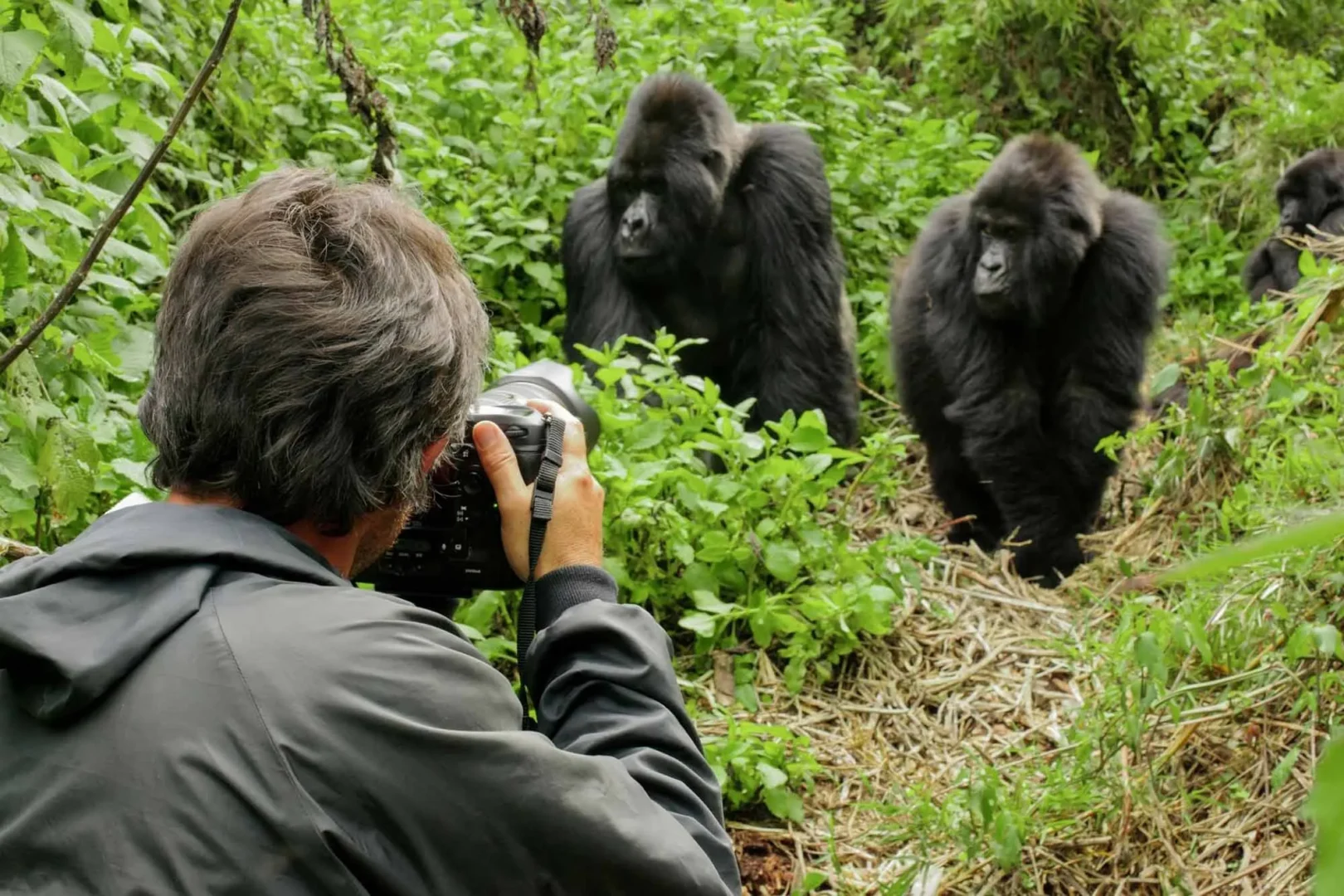
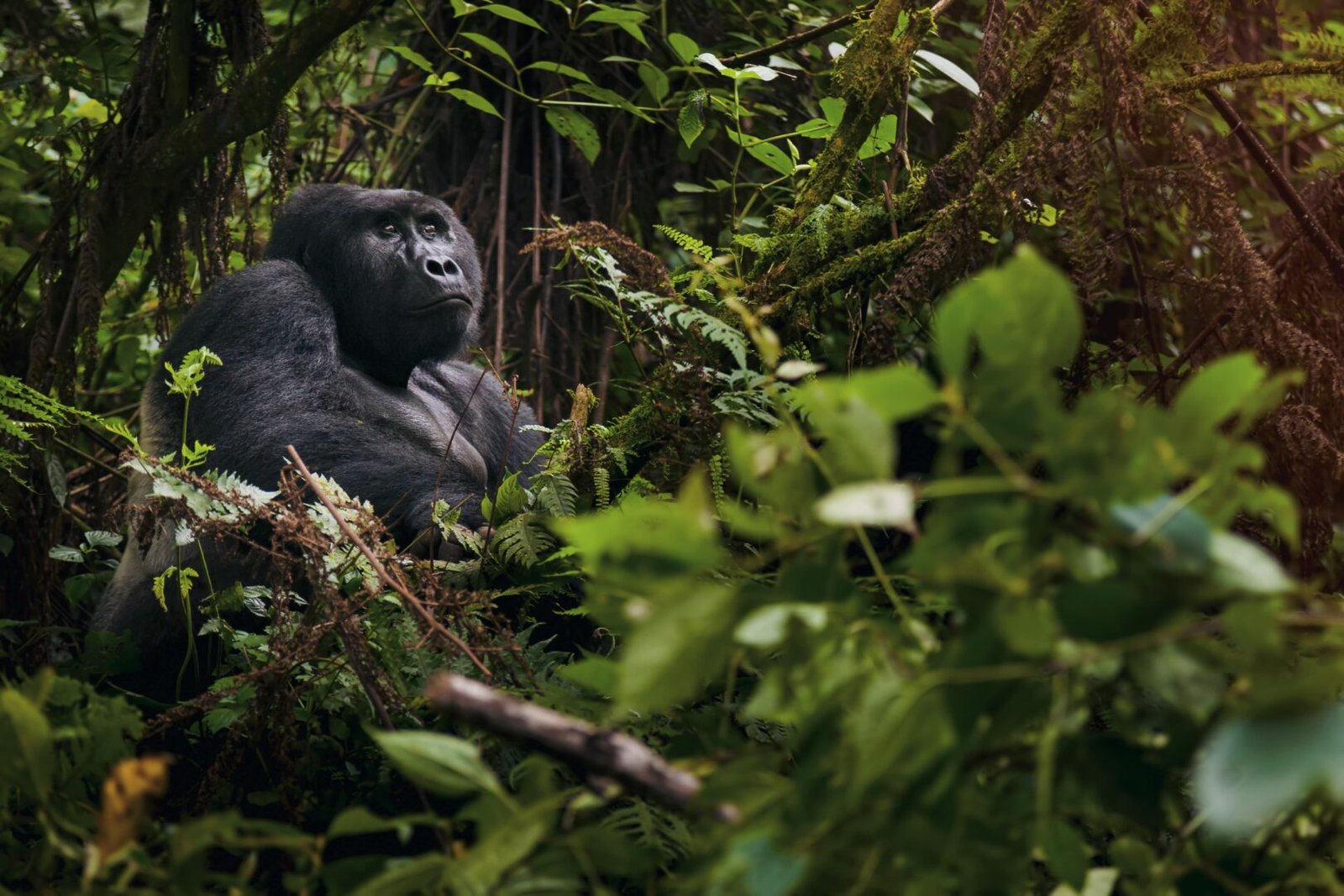
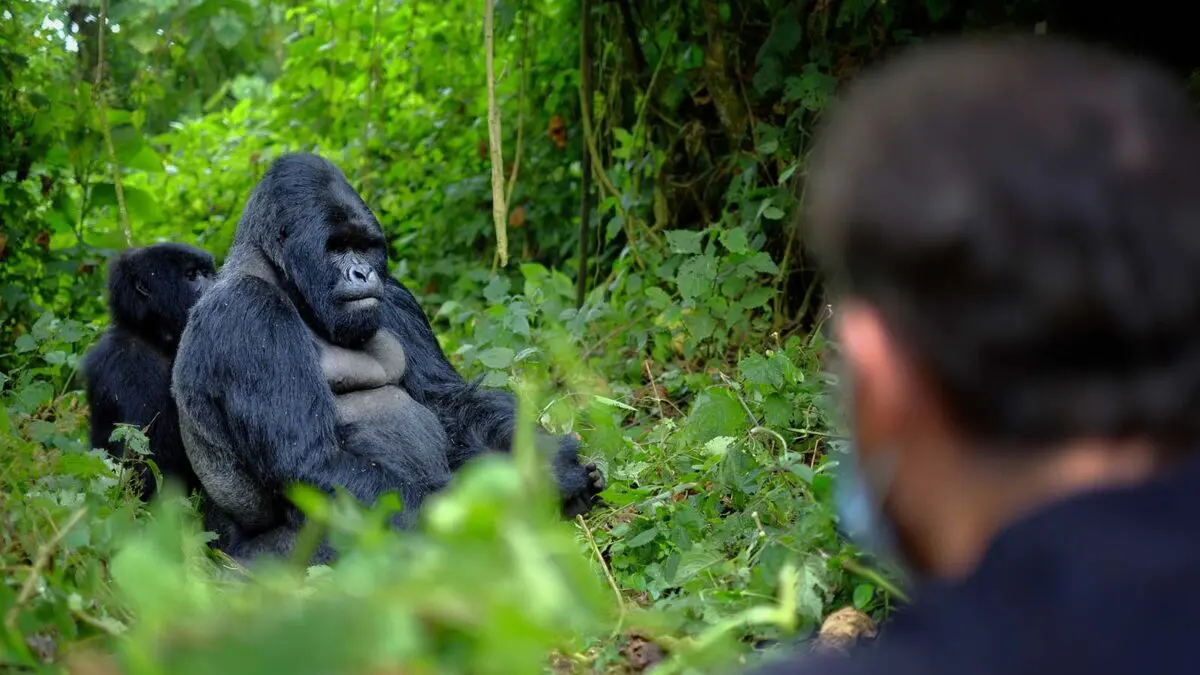
At that time, many experts feared that mountain gorillas could disappear completely if urgent action was not taken. However, conservation efforts increased dramatically, creating a new approach focused on protecting gorilla habitats, monitoring individual animals, supporting local communities, and developing sustainable tourism.
These efforts have produced remarkable results. The Virunga Massif population has grown significantly compared with historical estimates, demonstrating that endangered species can recover when strong conservation systems are established.
The Historical Decline of Mountain Gorillas
Understanding Rwanda’s role in mountain gorilla conservation requires looking at the challenges these animals faced in the past. For much of the 20th century, mountain gorillas experienced increasing pressure from human activities.
Forest areas surrounding gorilla habitats were reduced as human populations expanded and land was converted for agriculture. Because mountain gorillas depend on specific forest environments, habitat loss directly affected their ability to find food, establish territories, and maintain stable family groups.
Illegal hunting also threatened gorilla populations. Although gorillas were not usually targeted for their meat compared with some other wildlife species, they were sometimes captured, killed, or affected indirectly through activities such as trapping in forests.
Disease became another important concern because mountain gorillas are closely related to humans. Their biological similarities mean they can be affected by some illnesses carried by people. As human contact increased, disease prevention became an important part of conservation management.
The political challenges experienced in parts of the region also affected conservation efforts. Periods of instability made it difficult to maintain consistent protection of national parks and wildlife habitats.
Despite these challenges, conservationists continued working to protect mountain gorillas. The dedication of researchers, rangers, and local communities helped create the foundation for the recovery seen today.
Rwanda’s Contribution to Mountain Gorilla Conservation
Rwanda has become one of the leading countries in mountain gorilla conservation because of its commitment to protecting Volcanoes National Park and supporting responsible tourism.
The country’s conservation approach focuses on several key areas, including habitat protection, scientific research, ranger patrols, veterinary support, and community involvement.
Volcanoes National Park is carefully managed to ensure that mountain gorillas have a safe environment where they can feed, reproduce, and maintain their natural social structures. Rangers regularly patrol the forest to monitor wildlife activity, prevent illegal activities, and protect the park from threats.
Scientific monitoring has also played a major role in Rwanda’s conservation success. Researchers and trackers collect detailed information about gorilla families, including population changes, births, social relationships, and health conditions.
Each gorilla is recognized as an individual through unique physical characteristics. This allows researchers to create detailed records and understand how families develop over time. Monitoring also helps conservation teams identify potential problems before they become serious threats.
Rwanda’s investment in conservation has allowed mountain gorilla families to increase in number and stability. The country has demonstrated that protecting endangered wildlife can succeed when conservation is combined with strong management and community participation.
The Importance of Gorilla Tourism in Protecting the Species
Responsible gorilla tourism has become a powerful conservation tool in Rwanda. The opportunity to observe mountain gorillas in their natural habitat attracts visitors from around the world, creating financial support for conservation programs.
Gorilla trekking permits provide important funding that contributes to protecting Volcanoes National Park, supporting ranger operations, conducting research, and maintaining conservation programs.
However, tourism is carefully controlled to ensure that it does not negatively affect gorilla behaviour. Only limited numbers of visitors are allowed to visit gorilla families each day, and strict guidelines are followed during trekking experiences.
Visitors are required to maintain a safe distance from gorillas, avoid disturbing their natural activities, and follow instructions from guides and trackers. These measures help reduce stress on gorillas and minimize the risk of disease transmission.
Tourism also provides economic benefits to communities living around Volcanoes National Park. Through employment opportunities, local projects, and conservation partnerships, communities are encouraged to support wildlife protection.
This connection between tourism and conservation has become one of Rwanda’s greatest strengths. The survival of mountain gorillas is no longer viewed separately from human development but as part of a shared future where both wildlife and communities can benefit.
Rwanda’s Role in the Future of Mountain Gorillas
The future of mountain gorillas depends heavily on continued protection of their remaining habitats. Rwanda’s role in this future is significant because Volcanoes National Park remains one of the most important places for mountain gorilla conservation worldwide.
Although mountain gorilla numbers have improved, the species remains vulnerable. Their population is still small compared with many other wildlife species, and any major threat could have serious consequences.
Continued conservation efforts will require maintaining strong protection systems, expanding scientific research, supporting communities, and ensuring that tourism remains sustainable.
Rwanda’s experience demonstrates that conservation can succeed when there is cooperation between governments, conservation organizations, scientists, local people, and travellers. The recovery of mountain gorillas from the edge of extinction provides hope for other endangered species facing similar challenges.
Today, Rwanda is recognized globally as a leader in mountain gorilla conservation. Through the protection of Volcanoes National Park, the country continues to contribute to the survival of one of the world’s most extraordinary animals and ensures that future generations will have the opportunity to experience mountain gorillas in the wild.
Why Rwanda Has Been Successful in Protecting Mountain Gorillas
The increase in Rwanda’s mountain gorilla population is the result of decades of consistent conservation efforts rather than a single action or program. Protecting an endangered species such as the mountain gorilla requires long-term commitment, scientific understanding, financial investment, and cooperation between many different groups. Rwanda’s success has come from combining wildlife protection with research, responsible tourism, community participation, and strong management of Volcanoes National Park.
Mountain gorillas face many challenges that can threaten their survival. Their habitat is naturally limited because they depend on high-altitude forests found only within a small region of Central and East Africa. Human population growth around protected areas creates pressure on available land, while diseases, environmental changes, and human activities can affect their health and wellbeing.
Rwanda’s approach has focused on addressing these challenges through a comprehensive conservation system. Instead of protecting gorillas only within the boundaries of the national park, conservation efforts consider the entire ecosystem, including the forests, wildlife, and communities that surround Volcanoes National Park.
The success of Rwanda’s mountain gorilla conservation demonstrates that endangered species can recover when protection efforts are carefully planned and maintained over many years.
Continuous Monitoring and Scientific Research
One of the most important reasons behind Rwanda’s success in protecting mountain gorillas is the continuous monitoring of gorilla families. Every habituated gorilla group in Volcanoes National Park is carefully observed by trained trackers, researchers, and conservation specialists who follow their movements every day.
Mountain gorilla monitoring is a highly detailed process. Trackers enter the forest each morning to locate specific gorilla families and record important information about their behaviour, health, and social interactions. They document where gorillas feed, where they rest, how groups move through the forest, and how individuals interact with one another.
This information helps scientists understand the needs of each gorilla family and identify changes that may require attention. For example, researchers can notice when a gorilla shows unusual behaviour, loses weight, becomes separated from the group, or displays signs of illness.
Every mountain gorilla has unique physical characteristics that allow researchers to identify individuals. Features such as nose patterns, facial structures, scars, and body markings help conservation teams maintain detailed records of each gorilla.
Through this identification system, researchers can monitor population changes over time. They can record new births, follow the growth of young gorillas, understand family relationships, and track the movement of individuals between groups.
Scientific research has also helped conservationists understand gorilla behaviour and develop better protection strategies. Studies on feeding habits, social structures, reproduction, and health have provided valuable knowledge that supports effective conservation management.
Veterinary Care and Gorilla Health Protection
Another major factor contributing to Rwanda’s mountain gorilla conservation success is the availability of specialized veterinary support. Because mountain gorillas are closely related to humans, they are vulnerable to some diseases that can be transmitted between people and primates.
Wildlife veterinarians regularly monitor the health of gorilla families and respond when medical assistance is required. Although intervention is carefully controlled to avoid disturbing natural behaviour, veterinary support can be critical in saving the lives of individual gorillas.
Injuries can occur naturally within gorilla groups, especially during interactions between males competing for dominance or defending family territories. Young gorillas may also experience health challenges as they develop. Having trained veterinary teams available ensures that serious problems can be addressed quickly.
Disease prevention is also a major focus of Rwanda’s conservation approach. Visitors and researchers are required to follow strict health guidelines before entering the forest because even common human illnesses can potentially affect gorilla populations.
Gorilla trekking regulations, including maintaining distance from animals and limiting visitor numbers, are designed not only to protect the visitor experience but also to reduce health risks for the gorillas.
Strong Protection of Volcanoes National Park
The protection of Volcanoes National Park has been central to Rwanda’s mountain gorilla conservation success. The park provides a secure environment where gorilla families can live, feed, and reproduce without many of the threats that affected them in the past.
Rangers play a crucial role in protecting the park. They patrol the forest regularly, monitor wildlife activity, remove illegal traps, and respond to potential threats. Their daily work helps maintain a safe environment for mountain gorillas and other species living within the ecosystem.
Protecting mountain gorillas requires more than simply creating a national park. Conservation teams must actively manage the environment, understand wildlife behaviour, and respond to changing conditions.
The success of Volcanoes National Park is based on active conservation rather than passive protection. Continuous monitoring, ranger patrols, scientific research, and tourism management all work together to ensure the survival of mountain gorillas.
The Role of Responsible Gorilla Tourism
Gorilla tourism has become one of the strongest pillars supporting Rwanda’s conservation efforts. The opportunity to see mountain gorillas in their natural habitat attracts travellers from around the world, generating important funding for wildlife protection.
The revenue generated from gorilla trekking permits contributes to maintaining Volcanoes National Park, supporting ranger operations, funding research, and improving conservation infrastructure.
Unlike traditional wildlife tourism where large numbers of visitors can enter protected areas, gorilla tourism is carefully controlled. Only a limited number of visitors are allowed to visit each gorilla family daily, ensuring that human presence does not overwhelm or negatively affect the animals.
Visitors are guided by experienced trackers and conservation experts who understand gorilla behaviour. They provide instructions on how to interact responsibly with gorillas, including maintaining appropriate distances, avoiding sudden movements, and respecting the animals’ natural activities.
This carefully managed approach allows people to experience mountain gorillas while ensuring that tourism remains a positive force for conservation.
Community Involvement Around Volcanoes National Park
One of the most important lessons from Rwanda’s conservation success is that protecting wildlife requires cooperation with local communities. Conservation cannot succeed if people living near protected areas do not see benefits from wildlife protection.
Communities around Volcanoes National Park play an essential role in the survival of mountain gorillas. Local people live closest to the forest and are directly affected by conservation decisions, making their involvement extremely important.
Rwanda has developed initiatives that connect tourism revenue with community development. These programs support projects such as schools, healthcare facilities, infrastructure improvements, and livelihood opportunities.
When communities benefit from conservation, wildlife becomes an important resource rather than a competitor for land and resources. This encourages greater support for protecting forests and preventing illegal activities.
Employment opportunities created through conservation and tourism have also strengthened the relationship between local communities and Volcanoes National Park. Many people work as guides, trackers, park staff, hospitality employees, and conservation workers.
This partnership between communities and conservation has become one of the strongest foundations of Rwanda’s mountain gorilla protection strategy.
Collaboration Between Conservation Organizations and Government Agencies
Rwanda’s mountain gorilla conservation success has also been supported by cooperation between government institutions, conservation organizations, researchers, and international partners.
Conservation requires expertise from different fields, including wildlife biology, veterinary science, environmental management, tourism, and community development. Collaboration allows these different areas of knowledge to work together toward a common goal.
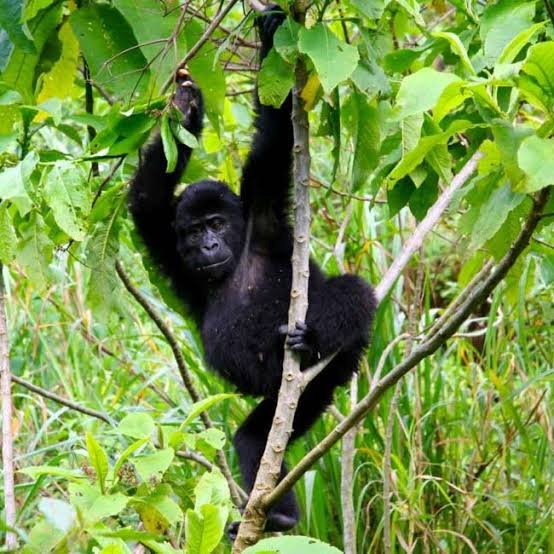
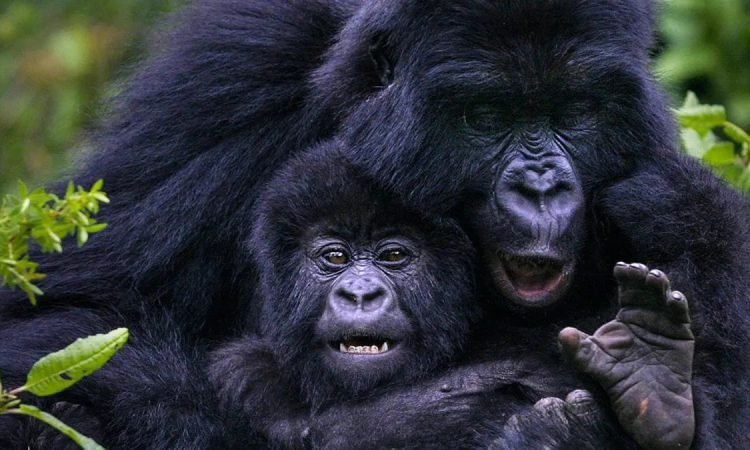
Government support has been essential in maintaining protected areas, enforcing conservation regulations, and creating policies that support sustainable wildlife tourism.
Conservation organizations have contributed through research, funding, training, and technical expertise. Their involvement has helped improve monitoring systems, strengthen veterinary programs, and support community conservation initiatives.
The combined efforts of these groups have created a conservation model that is now recognized internationally.
Rwanda’s Conservation Success as a Global Example
Rwanda’s success in protecting mountain gorillas demonstrates the importance of long-term commitment and cooperation. The recovery of mountain gorilla populations shows that endangered species do not have to follow a path toward extinction when effective conservation measures are introduced.
The story of Rwanda’s mountain gorillas is not only about increasing numbers. It is about creating a system where wildlife protection, scientific research, tourism, and community development work together.
Volcanoes National Park has become a symbol of hope for conservation worldwide. The survival of its mountain gorillas proves that even species facing serious threats can recover when people invest in protecting nature.
Through continued monitoring, responsible tourism, community involvement, and strong conservation leadership, Rwanda continues to provide a safe future for its mountain gorillas and remains one of the most important destinations for experiencing these remarkable animals in the wild.
Mountain Gorilla Families in Rwanda
The mountain gorillas of Rwanda live in highly organized social groups known as gorilla families. These families form the foundation of mountain gorilla society and play a crucial role in their survival within the forests of Volcanoes National Park. Unlike many other wildlife species that live independently or in temporary groups, mountain gorillas have strong social bonds that can last for many years.
Each gorilla family has its own unique structure, history, personality, and social relationships. Some families are large and may contain many individuals, while others are smaller groups with only a few members. The composition of each family depends on natural events such as births, deaths, movement of individuals, and changes in leadership.
A typical mountain gorilla family consists of a dominant silverback, adult females, blackback males, juveniles, and infants. Each member has an important role within the group, and their daily lives are shaped by cooperation, communication, and strong family connections.
The silverback is the central figure within a gorilla family. He is a mature male recognized by the distinctive silver hair that develops across his back as he reaches adulthood. The silverback provides leadership, protection, and stability for the entire group.
Although the silverback is the leader, he is not simply a powerful protector. He also plays an important social role by maintaining relationships within the family, encouraging group movements, resolving conflicts, and creating a sense of security among other members.
During daily activities, the silverback decides where the family will move, where they will feed, and where they will build their nests for the night. He carefully monitors the environment and responds to possible threats, including encounters with other gorilla groups or unfamiliar situations.
The relationship between the silverback and other family members is based on trust and social bonding. Females and young gorillas often remain close to him, especially when they feel threatened or during periods of change within the group.
The Social Structure of Rwanda’s Gorilla Families
Mountain gorilla families have complex social systems that are built around cooperation and strong relationships. Members communicate through vocalizations, facial expressions, body movements, and physical contact.
Gorillas spend a large part of their day feeding because their diet consists mainly of vegetation that provides the energy needed to maintain their large bodies. They move through the forest together, searching for leaves, shoots, roots, bamboo, and other plant materials.
While feeding, family members remain connected. Young gorillas often play near adults, learning important survival skills through observation and interaction. These early experiences help juveniles understand social behaviour and prepare them for adulthood.
Grooming is another important part of gorilla family life. Individuals clean each other’s fur and strengthen social bonds through physical contact. These interactions help maintain relationships and reduce tension within the group.
Infants are especially dependent on their mothers during their early years. Mother gorillas provide protection, carry their young, and teach them essential behaviours. The bond between mother and infant is one of the strongest relationships within a gorilla family.
As young gorillas grow older, they gradually become more independent. Juveniles spend time playing, exploring, and learning from older members of the group. These experiences prepare them for future roles within gorilla society.
The Role of Silverbacks in Gorilla Family Protection
The silverback is the foundation of stability within a gorilla family. His responsibilities extend beyond physical protection and include maintaining order and guiding the group through daily life.
One of the most important roles of the silverback is defending the family from external threats. Although mountain gorillas are generally peaceful animals, conflicts can occur when different groups encounter each other or when another male attempts to challenge leadership.
A silverback may display impressive behaviours when protecting his family. These can include chest beating, vocalizations, standing upright, charging, or other displays intended to communicate strength and discourage threats.
However, most of a silverback’s daily life is peaceful. Much of his time is spent feeding, resting, moving with the family, and maintaining relationships with other members.
Leadership within gorilla families can also change naturally. When an older silverback becomes weaker or dies, another male may take over leadership. These transitions are part of the natural social development of gorilla groups.
In some cases, younger males may remain within their birth family for several years before leaving to establish their own group or compete for leadership. These changes contribute to the natural growth and development of mountain gorilla populations.
Changes Within Rwanda’s Gorilla Families
Gorilla families are not fixed groups. They are constantly changing as part of the natural life cycle of mountain gorillas.
New births are one of the most important reasons gorilla families continue to grow. Every infant represents the future of the species and contributes to the long-term survival of mountain gorillas.
When a female gives birth, the entire family is affected. Young gorillas receive protection from the whole group, and older juveniles often show curiosity and interest in the new arrival.
As young males mature, they may leave their birth groups. Some become solitary males known as bachelor gorillas, while others eventually form their own families by attracting females.
Female gorillas may also transfer between families. This movement is a natural part of gorilla social behaviour and helps maintain genetic diversity within the population.
Because of these continuous changes, the number of gorillas within Rwanda’s Volcanoes National Park is always changing. Conservation teams therefore monitor individual gorillas carefully rather than relying only on general population estimates.
Habituated Gorilla Families in Rwanda
Rwanda is internationally famous for its habituated mountain gorilla families, which allow visitors to experience gorilla trekking in Volcanoes National Park.
Habituation is a careful process where gorillas gradually become accustomed to the presence of humans without losing their natural behaviours. This process takes several years and requires patience, scientific knowledge, and careful monitoring.
The goal of habituation is not to make gorillas dependent on humans. Instead, it allows researchers, conservationists, and limited groups of visitors to observe them safely while ensuring that the animals continue living naturally in the forest.
During habituation, trackers gradually spend time near gorilla groups while studying their behaviour and ensuring that the animals remain comfortable. Only after extensive monitoring are families considered suitable for tourism visits.
Rwanda has several habituated gorilla families available for trekking experiences. Each family offers a different experience because every group has its own size, history, location, and personality.
Some families are known for having many individuals, while others provide unique encounters because of their social dynamics or the personalities of specific gorillas within the group.
Gorilla Families Reserved for Research and Conservation
Not all mountain gorilla families in Rwanda are available for tourism. Some groups remain reserved primarily for scientific research and conservation monitoring.
These families provide valuable information that helps researchers understand mountain gorilla behaviour, reproduction, health, and population changes.
Research groups allow scientists to study gorillas without the additional presence of regular tourism activities. The information collected from these groups contributes to improving conservation strategies throughout the Virunga Massif.

Keeping some gorilla families away from tourism also ensures that there are protected spaces where gorillas can live with minimal human disturbance.
This balance between tourism and research is an important part of Rwanda’s conservation approach. While tourism provides financial support for protection efforts, research provides the knowledge required to manage and safeguard gorilla populations effectively.
The Importance of Gorilla Families for Conservation
Gorilla families are more than just groups of animals living together. They represent the survival structure of mountain gorilla populations.
Protecting individual families means protecting the future of the entire species. Every family contains generations of gorillas, from experienced silverbacks that provide leadership to young infants that represent future populations.
Conservation teams in Rwanda understand that protecting mountain gorillas requires protecting their social systems, not just individual animals. Maintaining stable families helps ensure successful reproduction, healthy relationships, and natural behaviours.
The study of gorilla families has also provided important insights into animal intelligence and social relationships. Mountain gorillas demonstrate emotions, cooperation, learning abilities, and strong family bonds that are remarkably similar to those found in humans.
Experiencing Rwanda’s Gorilla Families Through Trekking
For travellers visiting Rwanda, encountering a mountain gorilla family in Volcanoes National Park is one of the most unforgettable wildlife experiences in the world.
A gorilla trekking experience provides the rare opportunity to observe these incredible animals as they interact naturally within their family groups. Visitors may witness a silverback resting peacefully, mothers caring for infants, juveniles playing, or family members feeding together in the forest.
Each gorilla family encounter is unique because no two groups behave exactly the same way. Their personalities, locations, and daily activities create different experiences for every visitor.
Beyond the excitement of seeing gorillas, trekking provides a deeper understanding of conservation. Visitors witness the results of decades of protection and contribute directly to the continued survival of these endangered animals.
The mountain gorilla families of Rwanda represent a remarkable conservation achievement. Through careful protection, scientific monitoring, and responsible tourism, these families continue to thrive in the forests of Volcanoes National Park, offering hope for the future of one of the world’s most extraordinary species.
How Gorilla Population Counts Are Conducted in Rwanda
Counting mountain gorillas in Rwanda is a highly specialized scientific process that requires careful planning, advanced research methods, and cooperation between conservation teams across the region. Unlike wildlife species found in open savannah environments where large numbers of animals can sometimes be counted from vehicles or aerial surveys, mountain gorillas live in dense mountainous forests where direct observation is challenging.
The forests of Volcanoes National Park are covered with thick vegetation, steep slopes, bamboo areas, and rugged volcanic landscapes. These conditions make it impossible to simply count every gorilla by walking through the forest. Instead, researchers use a combination of scientific techniques to estimate population numbers, monitor individual gorillas, and understand changes within gorilla communities.
Accurate population counts are essential for mountain gorilla conservation. Knowing how many gorillas exist, where they live, how family groups are changing, and whether populations are increasing or declining allows conservation authorities to make better decisions about habitat protection, tourism management, and long-term survival strategies.
The process involves collaboration between wildlife authorities, researchers, veterinarians, trackers, and conservation organizations working together to collect detailed information about Rwanda’s mountain gorilla population.
Direct Observation of Habituated Gorilla Families
One of the most important methods used to monitor mountain gorilla populations in Rwanda is the direct observation of habituated gorilla families. These are gorilla groups that have undergone a careful habituation process, allowing researchers and conservation teams to observe them closely without causing significant disturbance.
Experienced trackers follow these gorilla families every day in Volcanoes National Park. They record the number of individuals within each group, identify specific gorillas, and document important events such as births, deaths, changes in leadership, and movement between families.
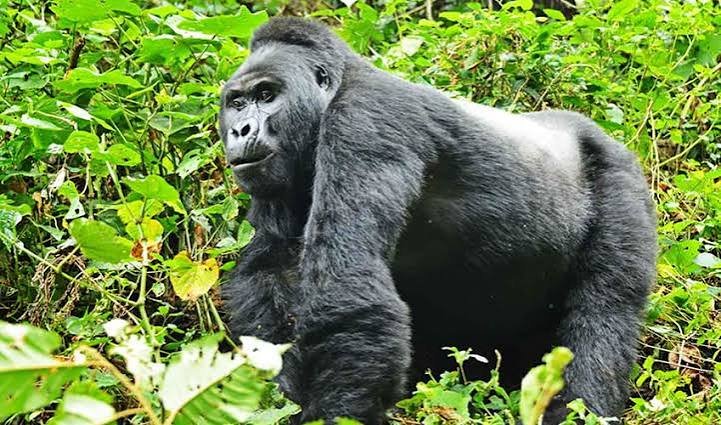
Because researchers spend many years observing these groups, they develop detailed knowledge of individual gorillas. They understand their personalities, physical characteristics, social relationships, and normal behaviours.
For example, trackers can recognize when a particular female gives birth, when a juvenile becomes independent, or when a young male leaves the group to establish a new social position. These observations create long-term records that help scientists understand population trends.
Direct monitoring is especially valuable because habituated gorilla families represent known individuals rather than estimated numbers. Researchers can follow the same gorillas over many years, providing accurate information about survival rates, reproduction, and family development.
Identifying Individual Gorillas Through Unique Features
A major part of gorilla population monitoring involves identifying individual gorillas. Just like humans have different fingerprints, mountain gorillas have unique physical characteristics that allow researchers to distinguish one individual from another.
One of the most important identification features is the gorilla’s nose pattern. Every mountain gorilla has a unique nose shape and pattern of wrinkles, folds, and markings. Researchers use these differences as a primary method of identification.
Other features are also used, including facial structure, scars, body size, hair patterns, and physical characteristics developed throughout an individual’s life.
Silverbacks are often easier to identify because they are larger and have distinctive features such as silver hair across their backs. Researchers can recognize dominant males based on their appearance, behaviour, and role within the family.
Detailed identification records allow conservation teams to maintain accurate population databases. Instead of simply recording that “a gorilla family contains ten individuals,” researchers can document each gorilla by name or identification code, track its life history, and understand how the population changes over time.
Nest Counting and Tracking Gorilla Movements
Another important method used in mountain gorilla population surveys involves studying gorilla nests. Mountain gorillas build temporary nests every night using vegetation from the forest floor.
Because gorillas move through different areas of the forest and leave behind evidence of their presence, researchers can use nest sites to estimate numbers of individuals that may not be directly observed.
When researchers find a group’s nesting area, they can count the number of nests to estimate how many gorillas were present. This method is particularly useful for monitoring gorilla groups that are not habituated to human presence.
Researchers also examine other signs of gorilla activity, including feeding areas, footprints, vegetation disturbance, and movement patterns. These clues help scientists understand where gorillas are located and how they use their habitat.
Nest surveys are especially important because not all gorilla groups are available for tourism or daily observation. They provide additional information about the wider population beyond the habituated families.
Genetic Analysis and DNA Research
Modern conservation science has introduced genetic methods that provide additional information about mountain gorilla populations. Genetic analysis allows researchers to study gorillas through DNA samples collected from the forest.
Samples can be obtained from natural sources such as discarded hair or fecal material. These samples contain genetic information that helps scientists identify individual gorillas and understand relationships between different groups.
Genetic research helps answer important conservation questions, including how closely related different gorilla families are, how individuals move between populations, and whether there is enough genetic diversity for long-term survival.
Maintaining genetic diversity is essential for endangered species because small populations can become vulnerable if individuals are too closely related. Genetic studies help conservationists understand population health and develop strategies to maintain strong and sustainable gorilla communities.
Regional Population Surveys Across the Virunga Massif
Because mountain gorillas move naturally across the Virunga ecosystem, population surveys cannot focus only on Rwanda. Conservation teams from Rwanda, Uganda, and the Democratic Republic of Congo work together to understand the complete population.
The Virunga Massif is a shared ecosystem that extends across three countries. Gorillas historically moved between these areas depending on food availability, social changes, and environmental conditions.
This means that protecting mountain gorillas requires international cooperation. Researchers must share information, coordinate surveys, and develop conservation strategies that consider the entire ecosystem.
Regional population surveys combine information from different areas to provide a more accurate understanding of mountain gorilla numbers. These surveys help identify population growth, potential threats, and conservation priorities.
The cooperation between countries is one of the reasons mountain gorilla conservation has achieved such significant success. Protecting a species that moves across national borders requires collaboration beyond individual parks.
The Role of Conservation Trackers in Population Monitoring
Conservation trackers are among the most important people involved in monitoring Rwanda’s mountain gorillas. Their knowledge of the forest and understanding of gorilla behaviour make them essential contributors to population research.
Trackers often spend years following the same gorilla families. They learn the routes used by different groups, recognize individual animals, and notice even small changes in behaviour.
Their daily observations provide valuable information that may not be captured through occasional scientific surveys. Because they are in the forest every day, trackers can quickly identify changes that require attention.
For example, if a normally active gorilla appears weak or a family member disappears unexpectedly, trackers can alert conservation teams immediately. This allows veterinarians and researchers to investigate possible problems.
The knowledge and dedication of trackers have played a major role in Rwanda’s ability to protect and monitor its mountain gorilla population.
Challenges in Counting Mountain Gorillas
Although Rwanda has developed advanced monitoring systems, counting mountain gorillas remains challenging. The natural environment where gorillas live creates several difficulties.
The mountainous terrain of Volcanoes National Park can make access physically demanding. Researchers often work in steep areas, dense vegetation, and unpredictable weather conditions.
Gorilla behaviour also creates challenges. Groups may move long distances through the forest, making them difficult to locate. Some gorillas live in areas where regular monitoring is not possible, requiring researchers to rely on indirect methods.
Population estimates must also consider natural changes within gorilla communities. Births, deaths, family splits, and individual movements constantly affect population numbers.
Because of these factors, mountain gorilla population counts are not simple one-time events. They require continuous monitoring and regular surveys to maintain accurate information.
Why Accurate Gorilla Counts Matter for Conservation
Knowing how many mountain gorillas exist in Rwanda is essential for protecting the species. Accurate population information helps conservation authorities understand whether protection efforts are working and where additional action may be needed.
Population data helps determine how many gorilla families can safely participate in tourism, how habitats should be managed, and where conservation resources should be focused.
It also allows scientists to measure the success of conservation programs. The increase in mountain gorilla numbers over recent decades is evidence that protection strategies, responsible tourism, and community involvement are producing positive results.
Every individual gorilla counted represents an important contribution to the survival of the species. Accurate monitoring ensures that conservation decisions are based on scientific evidence rather than assumptions.
A Scientific Approach Protecting Rwanda’s Mountain Gorillas
The process of counting mountain gorillas in Rwanda reflects the dedication and sophistication of modern conservation. Through direct observation, individual identification, genetic research, nest monitoring, and international cooperation, researchers continue to build a detailed understanding of these endangered animals.
The careful monitoring of gorilla populations has helped Rwanda become one of the world’s leading examples of successful wildlife conservation. The information collected from these surveys supports the protection of Volcanoes National Park and ensures that mountain gorillas continue to survive in their natural environment.
Every population survey is more than a simple count. It represents a commitment to understanding, protecting, and preserving one of the planet’s most remarkable species for future generations.
The Importance of Gorilla Trekking Tourism in Rwanda
Gorilla trekking has become one of Rwanda’s most important tourism experiences and one of the strongest conservation tools supporting the survival of mountain gorillas. Every year, travellers from different parts of the world visit Volcanoes National Park in northern Rwanda to experience the rare opportunity of entering the misty mountain forests and observing endangered mountain gorillas in their natural habitat.
Unlike traditional wildlife viewing where visitors observe animals from vehicles across open landscapes, gorilla trekking in Rwanda offers a deeply personal forest experience. Travellers walk through the natural habitat of mountain gorillas, guided by experienced trackers and conservation experts who understand gorilla behaviour, forest conditions, and the importance of protecting these endangered primates.
The experience provides much more than simply seeing a rare animal. It creates a connection between people and conservation by allowing visitors to witness the daily lives of mountain gorillas, including how families interact, how silverbacks protect their groups, how mothers care for infants, and how young gorillas learn through play and social interaction.
For many travellers, spending time near a mountain gorilla family is a life-changing experience. Seeing these intelligent animals living peacefully in their forest environment creates a deeper understanding of why their protection is so important and why conservation efforts must continue.
Gorilla Trekking as a Conservation Tool
The importance of gorilla trekking tourism in Rwanda extends far beyond the visitor experience. The revenue generated from gorilla tourism has become a major source of funding for protecting mountain gorillas and maintaining Volcanoes National Park.
Mountain gorilla conservation requires significant resources. Protecting these endangered animals involves daily ranger patrols, scientific research, veterinary support, habitat management, and community conservation programs.
The income generated through gorilla trekking permits contributes directly to these efforts. These funds help support the infrastructure and human resources needed to protect gorillas and their environment.
Without sustainable tourism revenue, maintaining long-term conservation programs would be much more challenging. Gorilla trekking has therefore created a system where visitors contribute directly to the survival of one of the world’s most endangered species.
Every traveller who participates in a gorilla trekking experience becomes part of the conservation story. Their visit helps support the continued protection of mountain gorillas and the forests where they live.
Supporting the Protection of Volcanoes National Park
Volcanoes National Park is a fragile ecosystem that requires continuous protection. The park’s mountainous forests provide a home for mountain gorillas, golden monkeys, birds, and many other species.
Maintaining this protected area requires constant management. Rangers patrol the forest to prevent illegal activities, monitor wildlife movements, and ensure that gorilla habitats remain secure.
Gorilla tourism provides important financial support that allows conservation authorities to maintain these protection systems. The presence of tourism also increases international attention toward the park and strengthens commitment to preserving the ecosystem.
The success of Volcanoes National Park demonstrates how carefully managed tourism can become a positive force for conservation. Instead of creating pressure on wildlife, responsible tourism provides the resources needed to protect it.
Controlled Tourism to Protect Mountain Gorillas
Although gorilla trekking provides many benefits, Rwanda carefully controls tourism activities to ensure that visitors do not negatively affect gorilla behaviour or health.
Mountain gorillas are highly intelligent and socially complex animals. Excessive human presence could create stress, disturb natural behaviours, or increase the risk of disease transmission.
To prevent these problems, Rwanda has established strict gorilla trekking regulations. Only a limited number of visitors are allowed to visit each gorilla family per day. This ensures that encounters remain respectful and that gorillas are not overwhelmed by human activity.
Visitors are also required to follow important guidelines during trekking. These include maintaining a safe distance from gorillas, avoiding unnecessary noise, following instructions from guides, and avoiding visits when feeling unwell.
These measures protect both gorillas and visitors while allowing people to experience one of the most extraordinary wildlife encounters in the world.
Reducing Disease Risks Through Responsible Tourism
Disease prevention is one of the most important reasons why gorilla tourism is carefully managed. Because mountain gorillas share a large percentage of their genetic similarities with humans, they can be vulnerable to illnesses that affect people.
Even common human diseases such as respiratory infections can potentially affect gorilla populations. Since mountain gorillas live in small populations, the impact of disease outbreaks could be serious.
For this reason, Rwanda has strict health guidelines for gorilla trekking. Visitors are briefed before entering the forest and must follow rules designed to reduce risks.
Guides and trackers also play an important role by ensuring visitors behave responsibly during encounters. Their knowledge helps maintain a balance between providing an unforgettable experience and protecting the wellbeing of the gorillas.
Responsible tourism ensures that future generations will continue to have the opportunity to experience mountain gorillas in the wild.
Benefits to Local Communities Around Volcanoes National Park
One of the most important aspects of Rwanda’s gorilla tourism model is the involvement of local communities. Conservation cannot succeed if communities living around protected areas do not benefit from wildlife protection.
For many years, communities around national parks across Africa faced challenges because protected areas sometimes limited access to land and resources. Rwanda has worked to create stronger relationships between conservation and community development.
Revenue generated from tourism contributes to community programs that support local livelihoods, education, infrastructure, and social development.
Tourism also creates employment opportunities for people living near Volcanoes National Park. Local residents work as trackers, guides, hospitality staff, conservation workers, and service providers supporting visitors.
When communities benefit from gorilla tourism, they become important partners in protecting wildlife. Conservation becomes a shared responsibility rather than something managed only by government authorities.
Creating Global Awareness About Mountain Gorilla Conservation
Gorilla trekking tourism has helped transform mountain gorillas into one of the world’s most recognized conservation success stories. Visitors who experience gorilla trekking often return home with a stronger understanding of endangered species protection.
The experience creates ambassadors for conservation because travellers share their experiences, support wildlife organizations, and encourage others to appreciate the importance of protecting natural habitats.
Before visiting Rwanda, many people may know mountain gorillas only through documentaries or photographs. Seeing them in their natural environment creates a much deeper emotional connection.
This global awareness has helped increase support for mountain gorilla conservation and strengthened international interest in protecting endangered wildlife.
The Role of Guides and Trackers in Gorilla Tourism
Professional guides and trackers are essential to the success of Rwanda’s gorilla trekking experience. Their knowledge ensures that visitors have meaningful encounters while respecting the needs of the gorillas.
Trackers begin their work early each morning by locating gorilla families before visitors arrive. They understand the behaviour of individual groups and know the forest routes used by different families.
Guides then lead visitors through the forest, explaining gorilla behaviour, conservation history, and the importance of protecting these animals.
Their work also contributes to scientific monitoring because daily observations provide valuable information about gorilla health and family changes.
The dedication of Rwanda’s guides and trackers has played a major role in creating a tourism model that benefits both visitors and wildlife.
Gorilla Trekking Tourism and the Future of Conservation in Rwanda
The future of Rwanda’s mountain gorillas is closely connected to the continuation of responsible tourism. As long as tourism is carefully managed, it can continue providing essential support for conservation programs.
Gorilla trekking demonstrates that wildlife conservation and tourism can work together. Visitors gain a memorable experience while contributing financially to the protection of endangered animals.
The continued success of this model depends on maintaining high conservation standards, protecting gorilla habitats, involving local communities, and ensuring tourism remains sustainable.
Rwanda’s gorilla trekking experience represents more than a journey into the forest. It represents decades of conservation achievement and a commitment to protecting one of the world’s most extraordinary species.
Through responsible tourism, Rwanda has created a powerful example of how travel can contribute to wildlife protection. The funds, awareness, and international support generated through gorilla trekking continue to play a vital role in ensuring that mountain gorillas survive for future generations.
Challenges Facing Mountain Gorillas in Rwanda
Although mountain gorilla numbers in Rwanda have improved significantly over recent decades, these remarkable animals remain classified as endangered and require continuous protection. The recovery of Rwanda’s mountain gorilla population is one of the greatest conservation achievements in Africa, but the survival of these animals is not guaranteed.
Mountain gorillas continue to face a range of challenges linked to their limited habitat, close relationship with humans, changing environmental conditions, and the pressures created by increasing populations around protected areas. Protecting these animals requires constant monitoring, scientific research, responsible tourism, and cooperation between conservation authorities and local communities.
The success achieved in Volcanoes National Park demonstrates that conservation can work, but it also highlights the importance of maintaining strong protection systems. Mountain gorillas have recovered because of decades of dedicated conservation efforts, and continued commitment is necessary to ensure that future generations can experience these incredible animals in the wild.
Habitat Protection and Limited Forest Space
One of the greatest challenges facing mountain gorillas in Rwanda is the protection of their natural habitat. Mountain gorillas depend entirely on forest ecosystems for survival, using these environments for feeding, shelter, movement, and social activities.
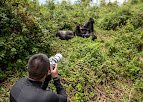
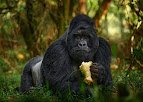
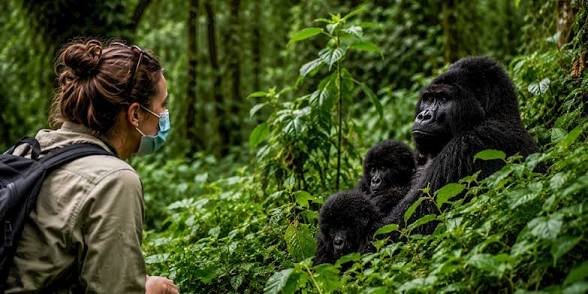
The forests of Volcanoes National Park provide essential habitat for Rwanda’s mountain gorillas, but this habitat is naturally limited. Mountain gorillas live only within a small geographical area of Central and East Africa, meaning that any loss or degradation of forest can have a significant impact on their survival.
Rwanda is one of the most densely populated countries in Africa, and land around protected areas is extremely valuable. Communities surrounding Volcanoes National Park depend on land for agriculture, housing, and other livelihood activities. This creates a delicate balance between protecting wildlife habitat and meeting the needs of growing human populations.
Expanding agricultural activities near protected areas can increase pressure on forest boundaries. If forests become smaller or fragmented, gorilla families may have fewer areas available for feeding and movement.
Conservation authorities must therefore carefully manage the relationship between human development and wildlife protection. Maintaining the integrity of Volcanoes National Park while supporting surrounding communities is one of Rwanda’s most important conservation priorities.
Human-Wildlife Conflict Around Protected Areas
The relationship between people and wildlife can sometimes create challenges around national parks. Communities living near Volcanoes National Park are directly connected to the conservation environment because their daily lives take place close to gorilla habitats.
When wildlife areas and human settlements exist near each other, conflicts can occur. People may require land for farming, while conservation efforts require protection of forests and wildlife movement areas.
Rwanda has worked to reduce these challenges by involving local communities in conservation and ensuring that people living near protected areas benefit from tourism and conservation programs.
Community involvement is essential because conservation cannot succeed through strict protection alone. People living around Volcanoes National Park must see value in preserving mountain gorillas and their habitat.
Through employment opportunities, community projects, education programs, and tourism benefits, Rwanda has created stronger relationships between conservation and local development.
Disease Transmission and Health Risks
Disease remains one of the most serious concerns for mountain gorilla conservation. Because mountain gorillas are closely related to humans, they can be affected by many of the same illnesses that affect people.
Respiratory infections are particularly concerning because gorillas live in close family groups where diseases can spread quickly. A serious outbreak could have devastating consequences for a population that remains relatively small.
This is why Rwanda maintains strict guidelines for gorilla trekking experiences. Visitors are required to follow health precautions designed to reduce the risk of transmitting diseases to gorillas.
Travellers who are feeling unwell are discouraged from visiting gorilla groups, and visitors must maintain a safe distance during encounters. These rules are not only designed to protect the animals but also to ensure that tourism remains sustainable.
Researchers and veterinarians continue monitoring gorilla health to identify potential threats early. Regular observation allows conservation teams to respond quickly when individuals show signs of illness or unusual behaviour.
The Impact of Climate Change on Mountain Gorilla Habitats
Climate change represents another emerging challenge for mountain gorilla conservation. Although mountain gorillas live in high-altitude forests that provide relatively stable conditions, changes in climate patterns could affect their environment.
Changes in rainfall, temperature, and vegetation growth may influence the availability of food resources within the forest. Mountain gorillas depend on a variety of plants, and changes in vegetation patterns could affect where and how they feed.
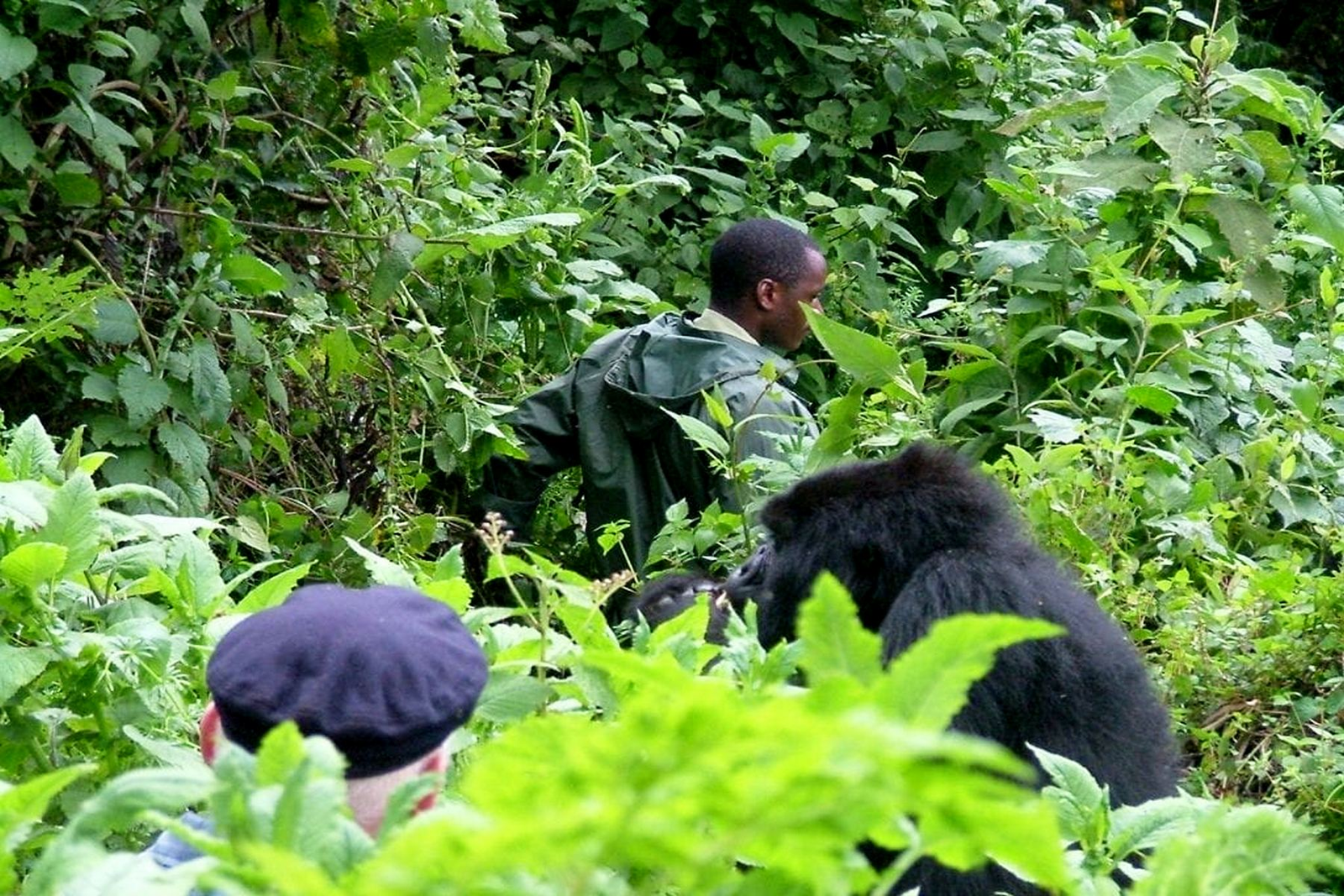
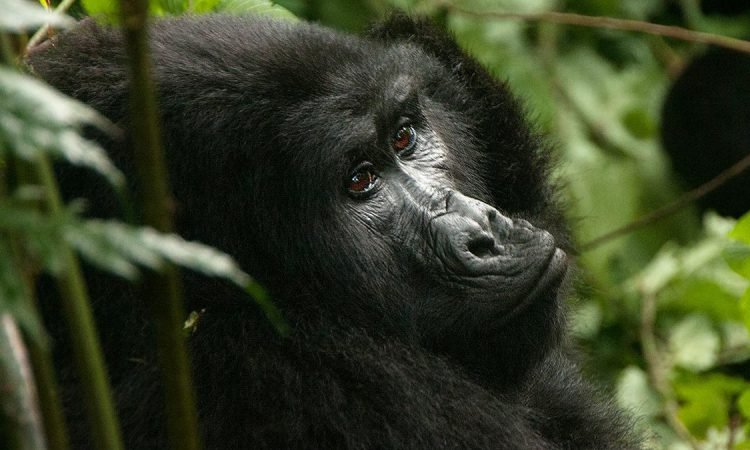
Climate change may also influence forest ecosystems by altering plant distribution, increasing the risk of habitat changes, and affecting other species that share the same environment.
Because mountain gorillas already occupy a very restricted habitat range, their ability to adapt to major environmental changes is limited compared with species that can move across larger areas.
Conservation researchers continue studying climate impacts on the Virunga ecosystem to understand possible risks and develop strategies that can help protect mountain gorilla habitats in the future.
Maintaining Genetic Diversity in a Small Population
Another important conservation challenge is maintaining healthy genetic diversity among mountain gorilla populations. Since mountain gorillas exist in relatively small numbers and occupy limited areas, maintaining genetic variation is essential for their long-term survival.
Genetic diversity helps populations remain stronger and more adaptable to environmental changes and diseases. When populations become too small or isolated, there can be increased risks associated with limited genetic variation.
Conservation teams monitor gorilla populations carefully to understand family relationships, movement between groups, and genetic connections.
The natural movement of gorillas within the Virunga Massif plays an important role in maintaining diversity. Cooperation between Rwanda, Uganda, and the Democratic Republic of Congo is therefore essential because conservation must consider the entire ecosystem rather than individual national parks.
Balancing Tourism Growth and Gorilla Protection
Gorilla trekking tourism has provided enormous benefits for conservation in Rwanda, but managing tourism growth remains an important challenge.
The popularity of mountain gorilla trekking means that many travellers want to experience these animals. However, too much human activity could create stress for gorillas or increase health risks.
For this reason, Rwanda carefully regulates the number of visitors allowed to visit gorilla families each day. Strict trekking rules ensure that tourism remains compatible with conservation.
The challenge is maintaining the financial benefits of tourism while ensuring that gorillas are not negatively affected by increased human presence.
Responsible tourism requires continuous evaluation and adaptation. Conservation authorities must balance visitor demand with the need to protect gorilla wellbeing.
Protecting Gorillas from Illegal Activities
Although Rwanda has strong conservation systems, preventing illegal activities remains an ongoing responsibility. Historically, activities such as poaching and illegal forest use contributed to declines in wildlife populations across Africa.
Today, Rwanda maintains strong protection measures within Volcanoes National Park. Rangers regularly patrol the forest, monitor wildlife activity, and work to prevent threats before they affect gorilla populations.
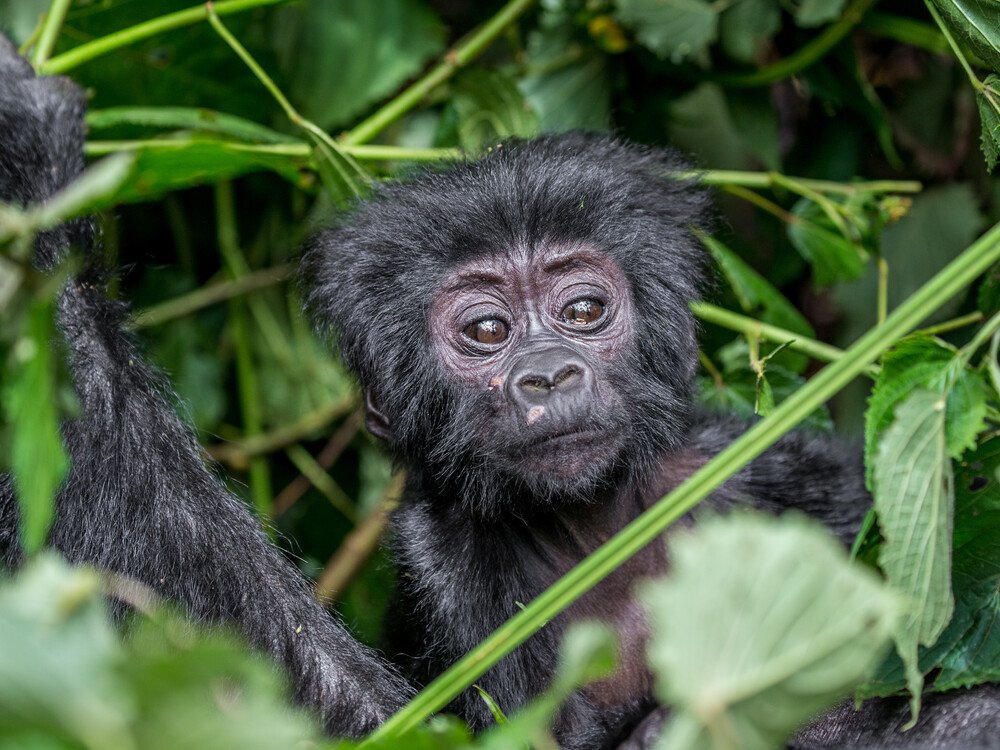
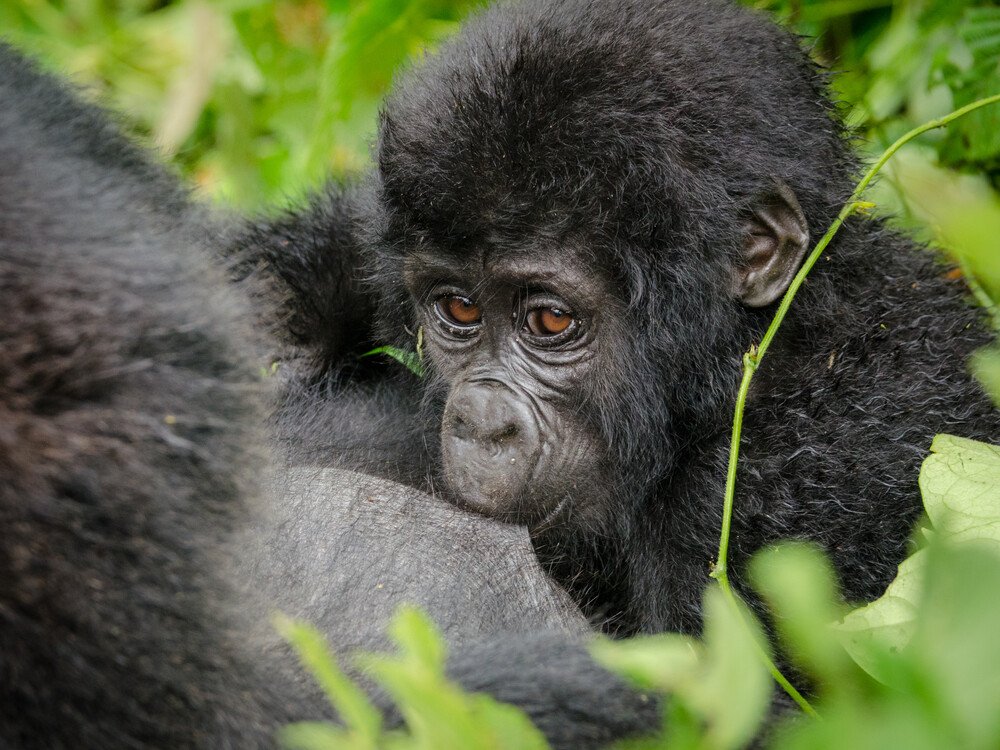
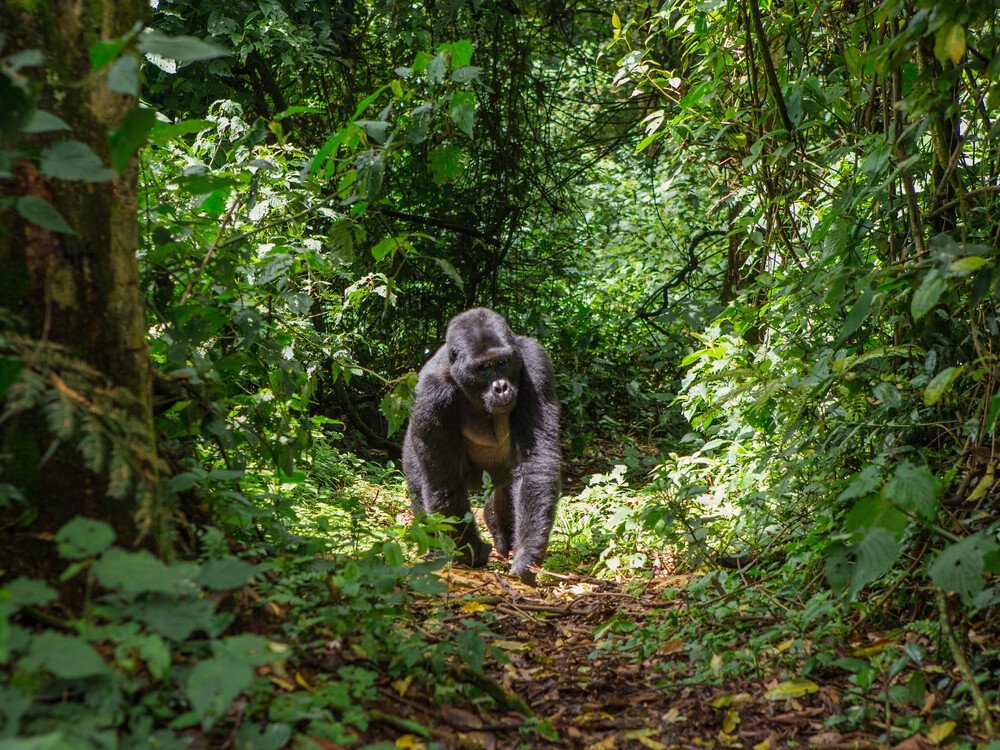
The involvement of local communities has also strengthened protection efforts. When communities support conservation, they become additional partners in protecting forests and wildlife.
Maintaining effective law enforcement and ranger operations remains essential for ensuring that mountain gorillas continue living safely in their natural environment.
Continued Conservation Investment
The progress made in protecting Rwanda’s mountain gorillas has required significant investment in research, park management, veterinary care, and community programs.
The challenge now is ensuring that these efforts continue into the future. Conservation success cannot be achieved through short-term projects because mountain gorilla protection requires decades of commitment.
Continued funding is necessary to support rangers, researchers, conservation programs, and community initiatives. Sustainable tourism remains one of the most important sources of financial support for these efforts.
The survival of mountain gorillas depends on maintaining the systems that have allowed their population to recover.
Rwanda’s Conservation Model Provides Hope
Despite the challenges facing mountain gorillas, Rwanda’s conservation achievements provide hope for the future. The recovery of mountain gorilla populations demonstrates that endangered species can recover when strong protection measures are established.
The challenges facing mountain gorillas are significant, but Rwanda has shown that conservation success is possible through cooperation, scientific research, responsible tourism, and community involvement.
Volcanoes National Park stands as an example of how wildlife protection can work alongside human development. The continued survival of mountain gorillas depends on maintaining this balance and ensuring that conservation remains a priority.
The story of Rwanda’s mountain gorillas is therefore not only about the challenges they face but also about the possibilities created when people work together to protect one of the world’s most extraordinary animals.
The Future of Rwanda’s Mountain Gorillas
The future of Rwanda’s mountain gorillas depends on maintaining the strong conservation commitment that has allowed these endangered primates to recover over the past decades. Although the increase in mountain gorilla numbers represents one of the greatest wildlife conservation successes in the world, their survival still requires continuous protection, scientific research, and cooperation between governments, conservation organizations, local communities, and responsible tourism operators.
The progress achieved in Volcanoes National Park provides hope that mountain gorillas can continue increasing in number and remain protected for future generations. However, conservation success is not a final achievement; it is an ongoing process that requires constant attention. Mountain gorillas continue to face challenges related to habitat protection, disease risks, climate change, and the need to balance human development with wildlife conservation.
Rwanda’s conservation approach has created a model that combines several important elements, including scientific monitoring, strong wildlife protection, community participation, and sustainable tourism. Together, these efforts have transformed mountain gorilla conservation from a story of decline and uncertainty into a story of recovery and hope.
Continuing Scientific Research and Monitoring
Scientific research will remain one of the most important parts of protecting Rwanda’s mountain gorillas in the future. Understanding how gorilla populations change, how families develop, and how environmental conditions affect their survival allows conservation teams to make informed decisions.
Researchers will continue monitoring gorilla families in Volcanoes National Park, recording births, deaths, movements, social relationships, and health conditions. This information provides essential knowledge about whether conservation strategies are achieving their goals.
Future research will also focus on understanding new challenges facing mountain gorillas. Scientists are studying how climate change, changing vegetation patterns, and human activities may influence gorilla habitats and behaviour.
Advances in conservation science, including genetic research and improved monitoring techniques, will continue helping researchers understand the health and long-term sustainability of mountain gorilla populations.
The detailed information collected over many years has already helped Rwanda develop one of the most successful mountain gorilla conservation programs in the world. Continued research will ensure that future decisions are based on accurate scientific knowledge.
Protecting Volcanoes National Park for Future Generations
The continued protection of Volcanoes National Park will be essential for the survival of Rwanda’s mountain gorillas. The park provides a safe environment where gorilla families can feed, reproduce, and maintain their natural social structures.
Protecting the park requires ongoing investment in ranger patrols, habitat management, conservation infrastructure, and scientific programs. The forests of Volcanoes National Park are not only important for mountain gorillas but also support many other species and maintain important ecological processes.
Future conservation efforts will focus on maintaining the quality of the gorillas’ habitat while ensuring that surrounding communities can continue to develop sustainably.
As Rwanda continues to grow, finding a balance between human needs and wildlife protection will remain one of the most important priorities. Protecting forests while supporting local livelihoods will determine whether mountain gorilla populations can continue thriving.
Expanding Community Conservation Partnerships
The future of mountain gorilla conservation depends greatly on the continued involvement of communities surrounding Volcanoes National Park. Conservation is strongest when local people become active partners in protecting wildlife.
Communities living near protected areas play a direct role in conservation because their decisions and activities can influence the health of surrounding ecosystems. When people benefit from wildlife protection, they are more likely to support conservation efforts.
Rwanda’s approach has focused on creating stronger connections between tourism, conservation, and community development. Revenue generated from gorilla tourism supports projects that improve livelihoods and strengthen relationships between communities and protected areas.
In the future, expanding these partnerships will remain important. Education programs, employment opportunities, and community conservation initiatives can help ensure that local people continue viewing mountain gorillas as valuable natural resources worth protecting.
The survival of mountain gorillas is not only the responsibility of conservation authorities. It depends on cooperation between everyone connected to the ecosystem.
Sustainable Gorilla Tourism and Conservation Funding
Gorilla trekking tourism will continue playing a major role in the future protection of Rwanda’s mountain gorillas. The experience has become one of Rwanda’s most important tourism attractions and a significant source of conservation funding.
However, the future of gorilla tourism depends on maintaining a careful balance between visitor experiences and gorilla protection. Tourism must remain sustainable to ensure that increased interest does not create unnecessary pressure on gorilla families.
Strict visitor limits, responsible trekking guidelines, and health regulations will continue to be essential. These measures ensure that tourism provides financial benefits while protecting the wellbeing of the animals.
Future tourism strategies will likely continue focusing on quality experiences rather than mass tourism. The goal is to allow visitors to appreciate mountain gorillas while ensuring that conservation remains the highest priority.
For travellers, participating in gorilla trekking is more than a wildlife adventure. It is a direct contribution to protecting one of the world’s most endangered species and supporting the communities that help conserve them.
Protecting Mountain Gorillas Against Future Threats
Although Rwanda’s mountain gorilla population has increased, future conservation efforts must continue addressing potential threats.
Disease prevention will remain a major priority because mountain gorillas are vulnerable to illnesses that can spread between humans and wildlife. Continued research, veterinary monitoring, and responsible tourism practices will help reduce these risks.
Climate change will also require increased attention. Changes in temperature, rainfall, and vegetation patterns could affect the forests that mountain gorillas depend on. Conservation teams will need to continue studying these impacts and developing strategies to protect the ecosystem.
Habitat protection will remain equally important. As human populations grow, maintaining enough space for wildlife while supporting community needs will require careful planning and cooperation.
The future of mountain gorillas will depend on the ability to anticipate these challenges and continue adapting conservation strategies.
Rwanda’s Mountain Gorillas as a Symbol of Conservation Success
Every mountain gorilla living today represents decades of dedication from conservationists, researchers, rangers, veterinarians, and communities. Their survival is proof that endangered species can recover when strong protection systems are established.
The story of Rwanda’s mountain gorillas demonstrates that conservation is not only about protecting animals; it is about protecting ecosystems, supporting communities, and creating a sustainable relationship between humans and nature.
From a time when extinction was considered a serious possibility, mountain gorillas have become a symbol of hope. Their recovery shows that even species facing severe threats can survive when people work together toward a common goal.
The continued protection of mountain gorillas in Rwanda serves as an inspiration for conservation efforts around the world. It demonstrates that commitment, collaboration, and responsible management can create meaningful change.
The Meaning Behind Rwanda’s Mountain Gorilla Numbers
For travellers asking how many mountain gorillas are in Rwanda, the answer represents much more than a population figure. Behind every number is an individual animal with its own story, family relationships, and role within the wider ecosystem.
The gorillas living in Volcanoes National Park represent generations of conservation success. Each infant born, each family protected, and each forest preserved contributes to the future survival of the species.
The number of mountain gorillas in Rwanda is therefore a reflection of decades of effort and a reminder that conservation requires continued dedication.
The future goal is not only to increase gorilla numbers but also to ensure that they live in a healthy ecosystem where they can continue behaving naturally and maintaining their complex social structures.
Rwanda’s Continued Leadership in Mountain Gorilla Conservation
Rwanda remains one of the world’s leading destinations for mountain gorilla conservation and wildlife experiences. Through the protection of Volcanoes National Park, the country continues demonstrating how tourism and conservation can work together.
For visitors, encountering mountain gorillas in Rwanda offers a rare opportunity to enter the forest world of these magnificent primates and witness their lives firsthand. The experience creates a connection between people and conservation that extends beyond the trekking experience itself.
As long as Rwanda continues investing in research, community partnerships, habitat protection, and responsible tourism, mountain gorillas will have a stronger future.
The journey of Rwanda’s mountain gorillas is a story of resilience, cooperation, and hope. Their survival proves that when people commit to protecting nature, even the most endangered species can overcome incredible challenges and continue thriving for generations to come.