Gorilla Families in Volcanoes National Park – Incredible Mountain Gorilla Groups of Rwanda
The Gorilla Families in Volcanoes National Park are among Rwanda’s most extraordinary wildlife treasures and are one of the main reasons travellers from around the world visit the country. Hidden within the mist-covered bamboo forests and volcanic slopes of northwestern Rwanda, these mountain gorilla families live in complex social groups led by powerful silverbacks and surrounded by adult females, blackbacks, juveniles, and playful infants. Spending time with one of these families during a gorilla trekking experience offers travellers an unusually intimate opportunity to observe the behaviour, relationships, communication, and daily life of one of humanity’s closest living relatives.
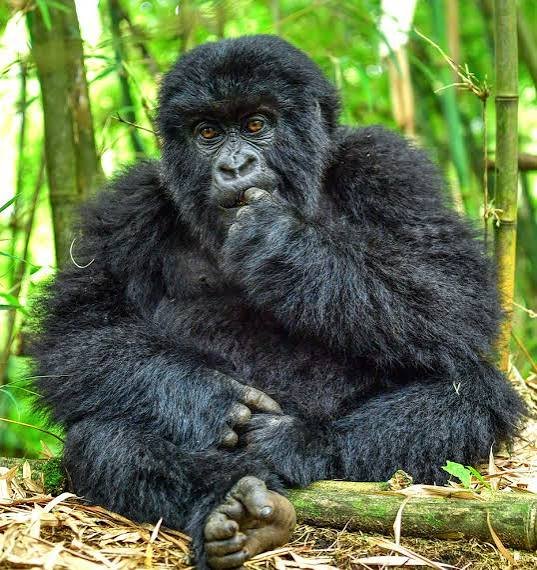
Volcanoes National Park forms part of the wider Virunga mountain ecosystem, an extraordinary chain of volcanic landscapes stretching across Rwanda, Uganda, and the Democratic Republic of Congo. Within Rwanda, the park protects important mountain gorilla habitat consisting of bamboo zones, montane forest, Hagenia woodland, open clearings, and higher-altitude vegetation. Mountain gorillas move throughout this landscape according to food availability, family dynamics, weather conditions, and interactions with neighbouring gorilla groups. Their movements mean that every gorilla trekking experience is different, even for travellers who visit the park several times.
The Gorilla Families in Volcanoes National Park are not simply groups of animals living together. Each family has its own history, dominant silverback, social relationships, character, territory, and internal hierarchy. Some families are known for energetic juveniles, others for particularly impressive silverbacks, while some have histories connected with decades of scientific research and conservation. Family composition can change naturally as gorillas grow older, females transfer between groups, young males become independent, infants are born, and leadership changes occur.
Understanding these gorilla families before trekking gives travellers a deeper appreciation of what they may encounter inside Volcanoes National Park. Instead of simply seeing individual gorillas, visitors begin to recognise an organised society in which protection, communication, parenting, leadership, play, conflict resolution, and cooperation are constantly taking place.
Here is a much more detailed version of that section, keeping the same SEO focus and paragraph-based style.
Understanding Gorilla Families in Volcanoes National Park
A mountain gorilla family is a highly organised social group made up of individuals of different ages, sexes, and social positions. These groups normally revolve around one dominant silverback, although some families can contain more than one mature silverback. The dominant silverback usually occupies the highest position within the family and carries much of the responsibility for leadership, protection, movement, and maintaining stability among group members. His role is not based only on physical strength. Experience, confidence, social relationships, and the ability to keep the group together are also important parts of leadership.

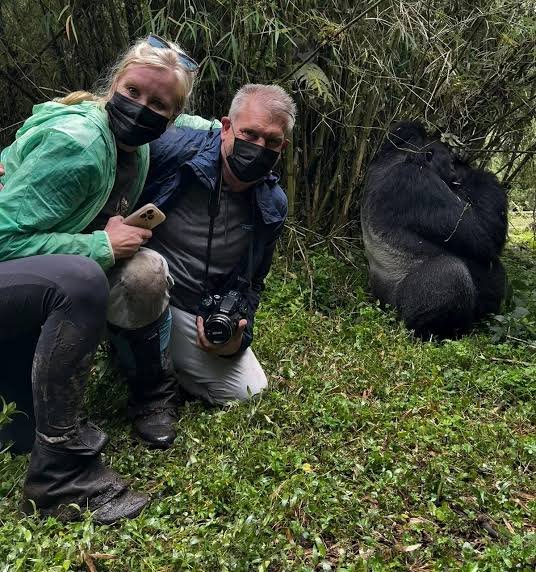
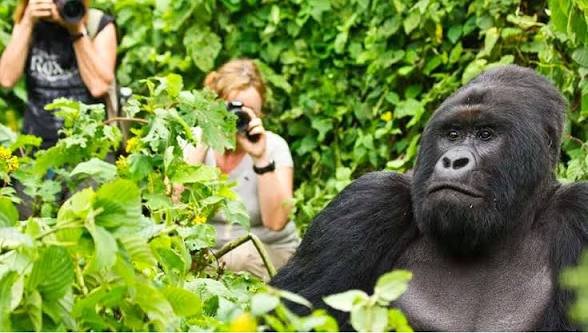
Within the Gorilla Families in Volcanoes National Park, the dominant silverback often influences where the family travels, where it feeds, and when members stop to rest. Mountain gorillas spend much of their day moving gradually through the forest in search of vegetation, and the silverback can play an important role in determining the general direction taken by the group. When the family encounters a possible threat, he may position himself between the danger and more vulnerable members. His presence can provide security for adult females, juveniles, and infants.
Although the silverback is the most visually impressive member of many gorilla families, the social structure extends far beyond the dominant male. Adult females are central to the continuity of each family because they give birth to and raise the next generation. Mothers develop very close relationships with their infants, particularly during the early stages of life. A newborn gorilla depends completely on its mother for warmth, protection, transportation, and nourishment. During the first months, an infant may remain in almost constant physical contact with its mother and gradually begin exploring the surrounding environment as it becomes stronger.
Young gorillas play an equally fascinating role within the family. Juveniles often spend considerable periods playing, climbing vegetation, chasing one another, wrestling, and imitating older gorillas. These activities are not simply entertainment. Play contributes to physical development, coordination, social awareness, and the gradual understanding of boundaries within the group. Through repeated interaction, young gorillas learn how to communicate, how to behave around dominant individuals, and how to establish relationships with other members of their family.
Blackbacks are another important part of some mountain gorilla groups. These are younger males that have passed the juvenile stage but have not yet fully developed the silver-coloured saddle associated with mature silverbacks. As they grow, they may remain in their birth family for a period or eventually separate to pursue greater independence. Some later become solitary males, while others may establish new groups or challenge existing males for leadership. Their development is important because it contributes to the natural formation and restructuring of gorilla families over time.
The size of a gorilla family can vary considerably. Some groups may consist of relatively few members, while others can grow into large social units containing several adult females, young gorillas, infants, blackbacks, and one or more silverbacks. There is no permanently fixed family size because mountain gorilla societies change naturally. Births increase the number of individuals, while deaths, female transfers, male departures, family divisions, and leadership struggles can reduce or reorganise a group.

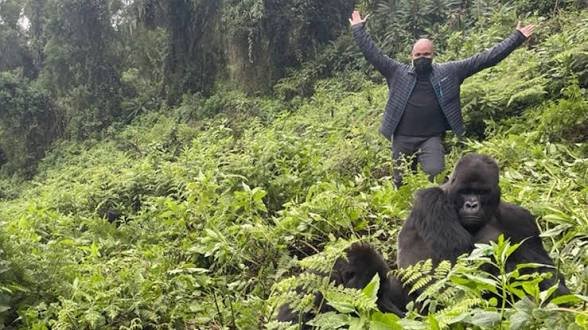
This constantly changing structure is one of the most important characteristics of the Gorilla Families in Volcanoes National Park. A family observed today may look very different several years later. A young infant may grow into a juvenile, then eventually become a mature male or breeding female. A blackback may develop into a silverback and eventually challenge for leadership. A dominant male that has controlled the family for many years may eventually lose his position through age, injury, or competition from a younger individual.
Female movement between gorilla families is also an important part of mountain gorilla society. Adult females do not necessarily remain within the same group throughout their lives. A female may transfer from one family to another, particularly during encounters between groups or following changes in leadership. These movements help maintain genetic diversity within the wider mountain gorilla population and create new social relationships between neighbouring groups.
The individuality of each family is one of the most fascinating aspects of observing mountain gorillas in Volcanoes National Park. Although all mountain gorillas share many behavioural characteristics, each family develops its own social atmosphere based on its members and leadership. One group may contain several energetic juveniles, creating frequent play and movement, while another may be dominated by mature individuals that spend longer periods feeding and resting quietly. A family with several infants may display more visible maternal behaviour, while another with multiple adult males may provide an interesting opportunity to observe relationships between silverbacks.
Individual gorillas also have distinct personalities. Some may appear calm and relaxed, while others are more curious, energetic, cautious, or assertive. Juveniles can differ greatly in confidence, with some remaining close to their mothers while others explore more freely. Adult females may show different levels of tolerance toward younger individuals, and silverbacks can display different leadership styles depending on age, experience, and social circumstances.
Experienced trackers and researchers can identify individual members of the Gorilla Families in Volcanoes National Park through a combination of physical and behavioural characteristics. One of the most reliable methods involves studying unique nose patterns. Just as human fingerprints differ between individuals, the patterns around a mountain gorilla’s nostrils are distinctive enough to help researchers tell animals apart. Facial structure, scars, body size, hair patterns, posture, injuries, and behavioural tendencies can also contribute to identification.
Long-term familiarity is particularly important. Trackers who spend years monitoring the same families often become exceptionally skilled at recognising individual gorillas even from partial views. They may identify a gorilla by the shape of its face, the way it moves, its usual position within the family, or its relationship with nearby individuals. This level of knowledge is extremely valuable for conservation because it allows changes in the family to be noticed quickly.
Regular monitoring enables conservation teams to document births, deaths, injuries, illnesses, transfers, leadership changes, disappearances, and the formation of new groups. When an infant is born, researchers can record the mother, approximate birth date, family composition, and development of the young gorilla. Over time, the infant’s growth can be followed as it becomes increasingly independent and begins interacting with other members.
The same monitoring allows conservationists to understand mortality and changes in family stability. If a gorilla disappears, trackers can investigate whether it has transferred to another family, become solitary, or experienced another outcome. When leadership changes occur, researchers can observe how adult females and younger animals respond to the new social structure.
This detailed record-keeping makes Volcanoes National Park one of the most important landscapes for understanding mountain gorilla social behaviour. Some individuals can be followed through many stages of life, from infancy to adulthood and eventually into senior age. Researchers may therefore understand not only what a gorilla is doing today but also how its behaviour has developed through years of family relationships.
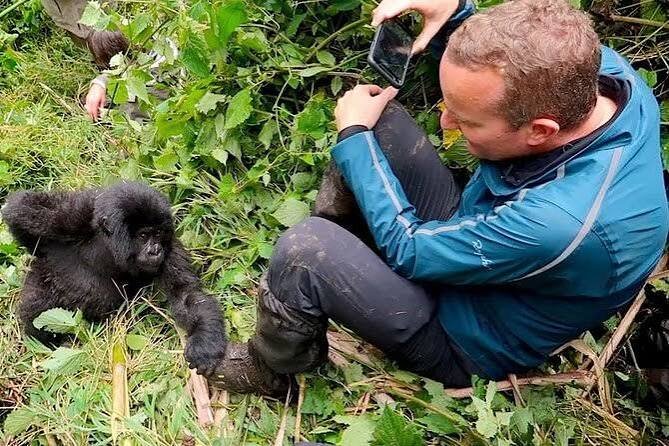
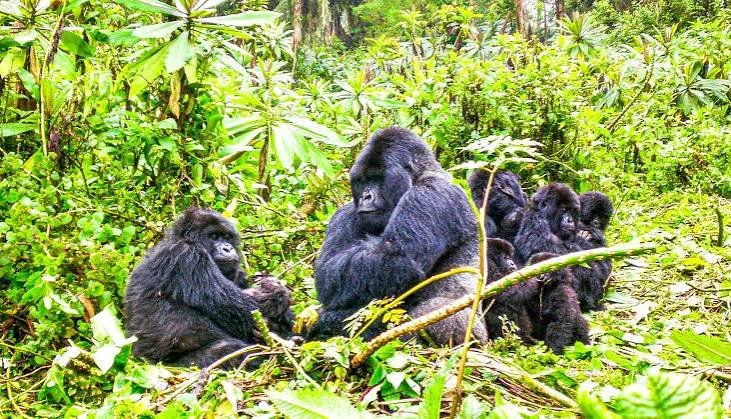
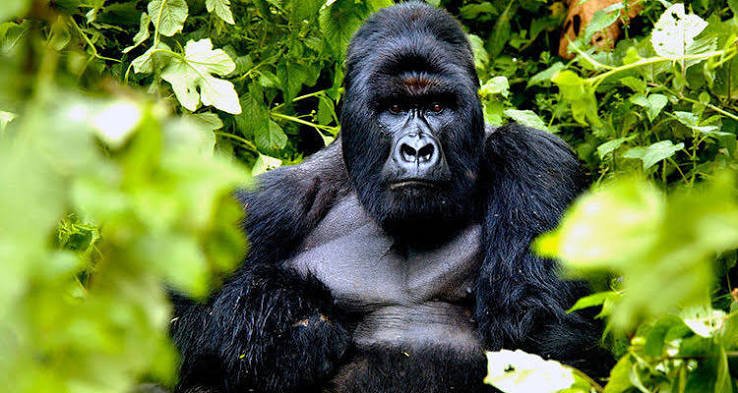
The formation of new gorilla groups is especially valuable for understanding how mountain gorilla societies evolve. A mature male may leave his original family and live independently before eventually attracting females. In other circumstances, an established family may divide after tension develops between mature males. The resulting groups can gradually develop separate territories, leadership structures, and family histories.
These natural divisions demonstrate that the Gorilla Families in Volcanoes National Park are not static tourism units created for visitors. They are authentic wild societies that continue changing according to natural biological and social processes. Tourism activities must adapt to the gorillas rather than expecting the animals to remain in fixed locations or permanent group arrangements.
Family territories themselves are also flexible. Mountain gorilla groups move across areas of suitable habitat depending on vegetation, seasonal food availability, competition, and interactions with neighbouring families. Their ranges can overlap, meaning encounters between groups are possible. When two families meet, the outcome depends on the individuals involved. Some interactions may remain relatively calm, while others can produce strong displays from dominant silverbacks attempting to protect their groups.
These encounters can influence family composition. A female may transfer to a different silverback, or competing males may engage in displays that alter future movement patterns. Such events provide researchers with important insights into reproduction, territorial behaviour, and social organisation.
Another important element in understanding gorilla families is the strong bond between mothers and their offspring. For young mountain gorillas, the mother is the centre of early life. She carries the infant during movement, provides nourishment, offers physical protection, and introduces the young animal to the wider social environment of the group. As the infant grows, it becomes increasingly adventurous but frequently returns to the mother for reassurance.
Other members of the family can also influence infant development. Juveniles may show interest in younger gorillas and sometimes interact with them during play. Older siblings can become part of the infant’s social world, while the dominant silverback may allow young gorillas to rest or play near him. These interactions gradually teach the infant how to function within the wider family.
The silverback’s relationship with young gorillas is particularly interesting. Despite his enormous strength and imposing appearance, a mature male can show remarkable tolerance toward juveniles. Young gorillas may climb around him, touch him, or play nearby while he remains relaxed. At the same time, his presence offers protection from external threats and competing males.
Resting periods reveal another side of gorilla family life. After feeding for extended periods, members may gather in a relatively small area where they rest, groom, or interact quietly. These moments provide an opportunity to observe social closeness within the group. Mothers may lie beside their offspring, juveniles may continue gentle play, and adults may sit only a short distance from one another.
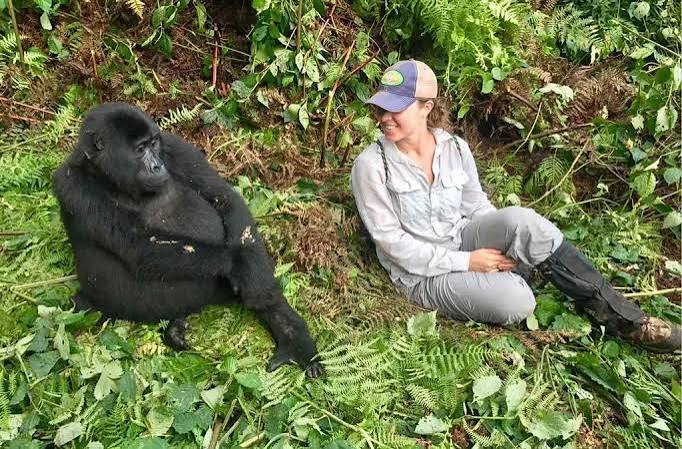
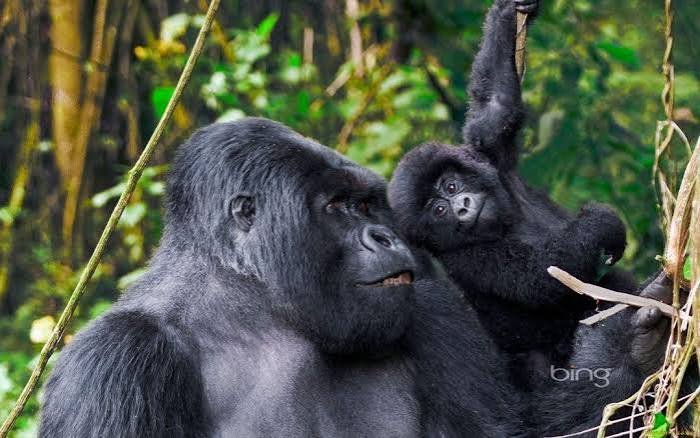
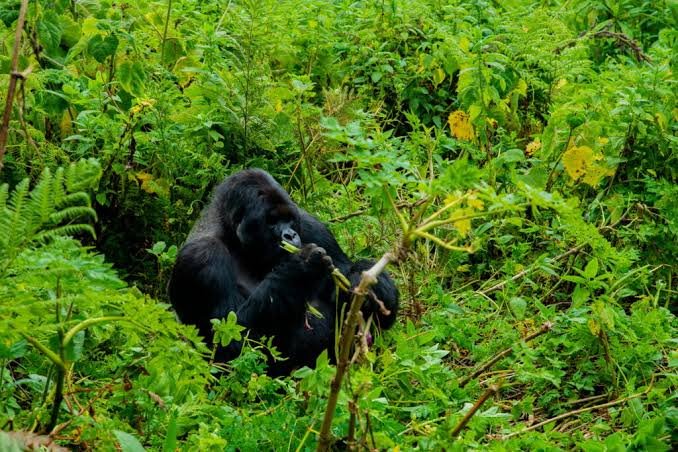
Grooming also has social importance. Although mountain gorillas do not groom as extensively as some other primates, physical contact can still reinforce relationships. Close proximity, touching, resting together, and repeated social interactions contribute to maintaining family bonds.
Communication is central to keeping these complex groups organised. Mountain gorillas use vocalisations, facial expressions, body postures, gestures, and physical displays. Soft grunts may help individuals maintain contact while feeding, while stronger vocalisations can communicate warning or excitement. Chest beating, one of the best-known gorilla behaviours, can be used in different social contexts and does not always indicate aggression.
A dominant silverback may use displays to communicate strength without immediately entering physical conflict. This can help prevent unnecessary fighting, which would carry a significant risk of injury. Within established groups, hierarchy often allows members to understand their respective positions without constant confrontation.
Daily movement also reveals the organisation of a gorilla family. The group generally spends much of the day feeding and resting while gradually travelling through its home range. Mountain gorillas are primarily herbivorous and consume a variety of leaves, shoots, stems, roots, and other plant material. Their movement is therefore closely connected to where preferred vegetation is available.
At the end of the day, gorillas construct nests where they sleep overnight. These nests are usually built using nearby vegetation, and each individual generally makes its own sleeping place, although young infants remain with their mothers. The following morning, the family leaves the nesting area and resumes feeding and travelling.
For trackers, abandoned night nests provide valuable clues about a family’s movements. By locating recent nesting sites and examining feeding signs, broken vegetation, footprints, and other evidence, trackers can establish the direction in which the gorillas travelled. This traditional field knowledge is combined with long-term understanding of each family’s habits.
The detailed knowledge surrounding the Gorilla Families in Volcanoes National Park makes Rwanda’s mountain gorilla conservation programme particularly significant. Many individual gorillas have identities, histories, and family relationships that are well known to the conservation teams monitoring them. Some can be followed through several generations, allowing researchers to understand how family structures change over decades rather than simply observing isolated moments.
This level of monitoring provides valuable information about reproduction. Researchers can study how frequently females give birth, how successfully infants survive, how young gorillas develop, and how different leadership structures affect family stability. They can also observe the reproductive success of individual silverbacks and follow the spread of genetic relationships across multiple families.
Health monitoring is another important benefit. Because trackers know individual gorillas so well, they are more likely to notice unusual behaviour, reduced feeding, abnormal movement, visible injuries, or other signs that an animal may be unwell. Early detection can be extremely important when conservation teams are assessing the health of such a valuable population.
The family system also helps explain why the loss of a single individual can have consequences beyond that one gorilla. The death of a dominant silverback, for example, can influence movement, reproduction, infant protection, and relationships among the remaining members. Similarly, the loss of an experienced adult female can affect dependent offspring and the social stability of the group.
Every birth therefore carries considerable conservation significance. A healthy infant represents potential future reproduction and another continuation of the family line. When that infant survives into juvenile and adult stages, it becomes part of the long-term growth of the mountain gorilla population.
For travellers, understanding these relationships completely changes the meaning of a gorilla trekking experience. Instead of seeing a collection of individual animals, visitors begin to recognise an interconnected social unit. The large silverback sitting quietly in the vegetation may be the father or protector of several young gorillas. The female feeding nearby may have raised multiple offspring. The juvenile climbing through bamboo may eventually become an important adult within the same family or create a completely new group.
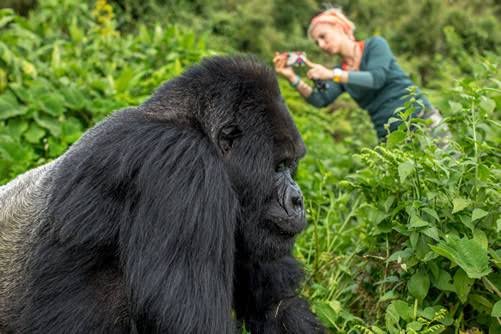
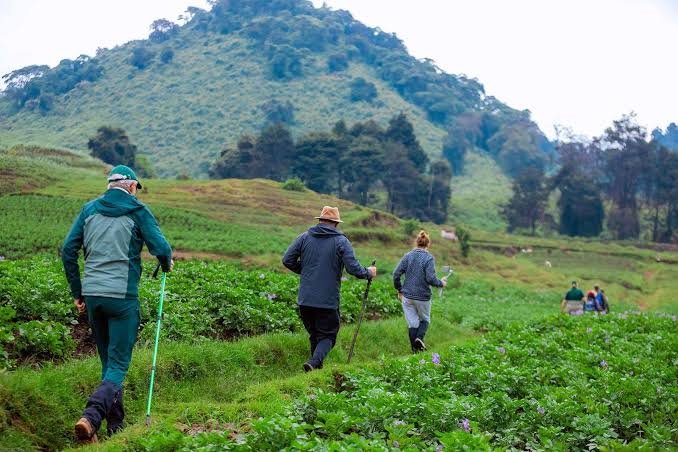
This deeper understanding is one reason the Gorilla Families in Volcanoes National Park remain so compelling. Their lives involve many of the same fundamental themes seen across social species: leadership, protection, motherhood, competition, cooperation, learning, independence, conflict, and survival.
At the same time, every family is part of a much larger conservation story. Individual gorillas depend on their immediate social group, while each family depends on the continued protection of the surrounding forest. The future of the population therefore requires both strong family structures and healthy habitat.
By studying individual gorillas and following their family histories over many years, conservationists are able to understand population trends with remarkable detail. They can identify whether groups are growing, whether enough young gorillas are surviving, how frequently new families are forming, and how individuals move across the wider landscape.
This makes the social organisation of mountain gorillas far more than an interesting subject for visitors. It is one of the foundations of successful conservation. Understanding who belongs to each family, how individuals are related, how leadership changes occur, and how groups move through the forest gives conservation teams the information needed to protect the wider population.
For anyone preparing to trek the Gorilla Families in Volcanoes National Park, learning about this social structure before entering the forest adds considerable depth to the experience. When the gorillas are finally encountered, the visitor is no longer simply looking at impressive wild animals. They are observing a functioning family whose members have individual identities, histories, relationships, and roles within one of the world’s most carefully protected primate populations.
I can make the next section, “Social Structure of Mountain Gorilla Families,” equally detailed while avoiding repetition from this section.
Social Structure of Mountain Gorilla Families
Mountain gorillas are highly social primates. Life within the family provides protection, companionship, reproductive opportunities, learning, and access to important feeding areas. Relationships between individuals can be remarkably strong, particularly between mothers and infants.
A typical family includes a dominant silverback whose physical presence is immediately impressive. Fully mature males develop the distinctive silver-coloured hair across their backs from which the term silverback originates. Although their enormous size often captures visitors’ attention, leadership involves much more than physical strength.
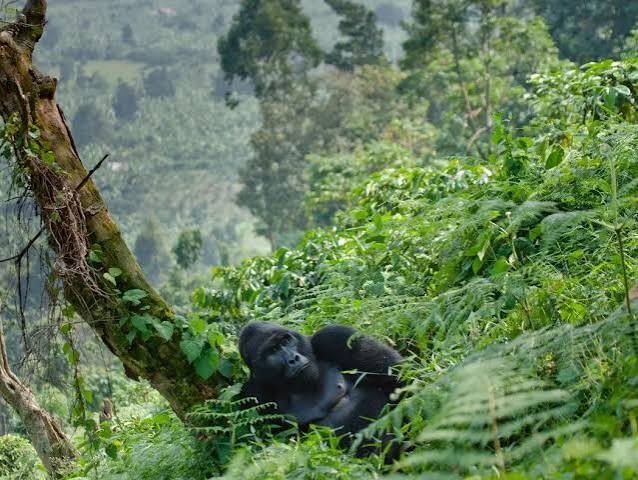
The silverback is frequently responsible for protecting the family from potential threats. He may intervene during disagreements, position himself between danger and the group, determine when the family travels, and choose places where members can rest. When another male approaches the family, the dominant silverback may demonstrate his strength through chest beating, vocalisation, vegetation throwing, charging, or other displays.
Adult females form the reproductive foundation of the group. They develop close relationships with their offspring and usually provide intensive care during the early years of an infant’s life. Young gorillas initially remain physically close to their mothers, travelling on their bodies and gradually becoming more independent as they grow.
Juveniles are often among the most entertaining members of the Gorilla Families in Volcanoes National Park. They wrestle, climb vegetation, chase one another, tumble down slopes, and sometimes approach areas close to visitors. Their behaviour provides important opportunities for physical development and social learning.
Blackbacks are younger adult males that have not yet developed the complete silver saddle associated with fully mature males. Some remain within their birth families for a period while others eventually separate and attempt to establish their own groups.
The Role of the Dominant Silverback
The dominant silverback is perhaps the most recognisable figure within a mountain gorilla family. His body can be extremely powerful, with broad shoulders, muscular arms, and an imposing presence. Yet much of the silverback’s daily life involves calm leadership rather than aggression.
During feeding periods, he may remain close to the family while individuals spread through nearby vegetation. When it is time to move, his actions can influence the direction followed by other members. When the family rests, he may select an appropriate area and position himself where he can maintain awareness of the surroundings.
Leadership can sometimes continue for many years, giving a silverback considerable influence over the development of several generations within the same family. Infants may grow into juveniles and eventually adulthood under his protection.
Competition between mature males is an important part of mountain gorilla social organisation. Leadership changes can occur naturally when another male becomes dominant or when the existing silverback becomes older. Some males may leave their family and live alone before eventually attracting females and forming new families.
These processes are among the reasons why the Gorilla Families in Volcanoes National Park continuously evolve. The family observed during one visit may have changed significantly several years later.
Susa Gorilla Family
The Susa family is one of the most famous names associated with mountain gorillas in Volcanoes National Park. Its historical importance is closely connected with early mountain gorilla research conducted within Rwanda’s volcanic forests. The group has long attracted considerable interest because of its connection with the development of mountain gorilla conservation and scientific understanding.


Over the years, the size and composition of the Susa family have changed naturally. Large gorilla families sometimes divide as social relationships develop and adult males establish their own leadership structures. These changes are a normal part of mountain gorilla society.
Trekking toward areas associated with the Susa gorillas can sometimes involve climbing through higher and more demanding sections of the park. Mountain gorilla movements change daily, however, meaning trekking conditions are never completely predictable. Visitors may travel through bamboo forest, dense vegetation, muddy paths, and volcanic terrain before trackers establish the family’s location.
Encountering gorillas from a family with such a significant conservation history adds another dimension to the trekking experience. Visitors are observing animals whose wider family history has contributed to the world’s understanding of mountain gorilla biology and behaviour.
Karisimbi Gorilla Family
The Karisimbi family is another well-known group associated with Volcanoes National Park. Its name reflects the magnificent volcanic landscape of the region, dominated by Mount Karisimbi, the highest volcano within the Virunga mountain chain.
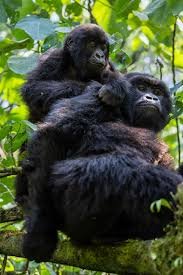
Groups inhabiting higher areas can occasionally require longer and more strenuous trekking. This is not guaranteed, because gorilla families move regularly, but mountain conditions should always be considered when preparing for a trek.
The Karisimbi landscape demonstrates how closely mountain gorillas are connected to their environment. Vegetation changes according to altitude, creating different feeding opportunities throughout the volcanic ecosystem. Gorillas may move between bamboo areas, herbaceous vegetation, and other forest zones according to the availability of preferred plants.
Observing a gorilla family within this dramatic mountain scenery provides an exceptional understanding of why habitat protection is essential. Mountain gorillas depend on large areas of connected forest where they can feed, reproduce, move, and establish territories.
Sabyinyo Gorilla Family
The Sabyinyo family is one of the recognised gorilla groups associated with Rwanda’s Volcanoes National Park. Its name comes from Mount Sabyinyo, one of the distinctive volcanoes forming the spectacular skyline of the Virunga region.

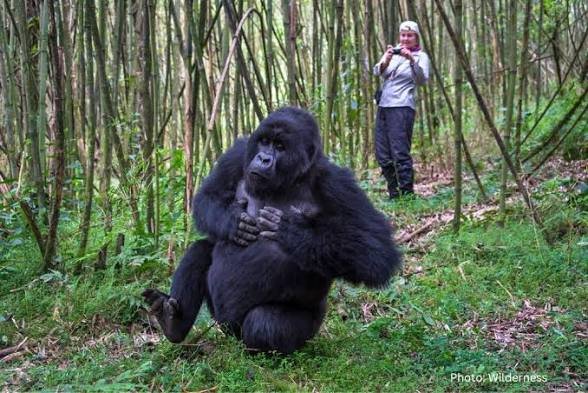
The word Sabyinyo is commonly associated with the mountain’s unusual jagged summit. The volcanic slopes surrounding the park provide important habitats for mountain gorillas as well as numerous other wildlife species.
Like every gorilla family, the Sabyinyo group has experienced natural changes in leadership and composition over time. Family histories provide conservationists with valuable information about reproductive success, social relationships, male competition, female transfers, and infant survival.
For travellers, trekking a family associated with one of the iconic Virunga volcanoes connects the gorilla experience directly with Rwanda’s dramatic geography. The animals and mountains are part of the same ecological story.
Amahoro Gorilla Family
Amahoro is a particularly meaningful name in Rwanda because the word is associated with peace. The Amahoro gorilla family has consequently become memorable for many visitors who learn about the different groups before beginning their trek.
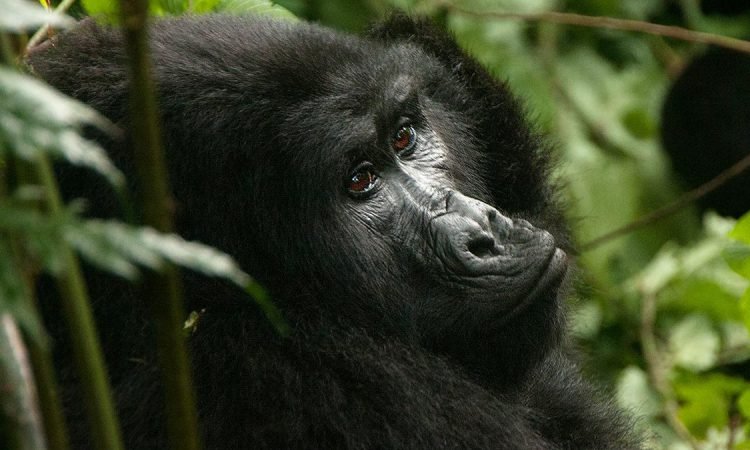
The group’s social organisation reflects the same patterns found across mountain gorilla society. A mature silverback provides leadership while females care for offspring and younger members gradually learn the behaviour necessary for adult life.
Watching an Amahoro family member feeding quietly can reveal how peaceful mountain gorillas can be when they feel secure. Despite their extraordinary strength, much of the average mountain gorilla’s day involves feeding, travelling relatively short distances, resting, grooming, and interacting socially.
These peaceful observations can be among the most memorable moments of a gorilla trek. Visitors sometimes arrive expecting dramatic action but discover that the beauty of the experience often lies in very ordinary behaviour. Watching a mother hold her infant or observing a silverback resting only a short distance away can create a far more powerful connection than constant movement.
Umubano Gorilla Family
The Umubano family is another important name within the story of the Gorilla Families in Volcanoes National Park. The group developed through natural changes in gorilla social structure and provides an excellent example of how new families can emerge over time.
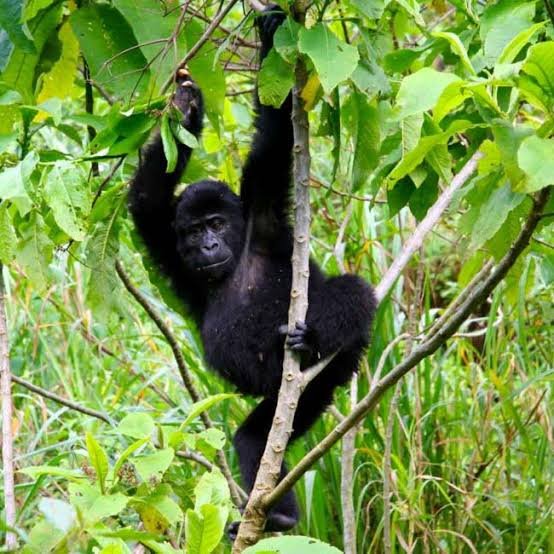
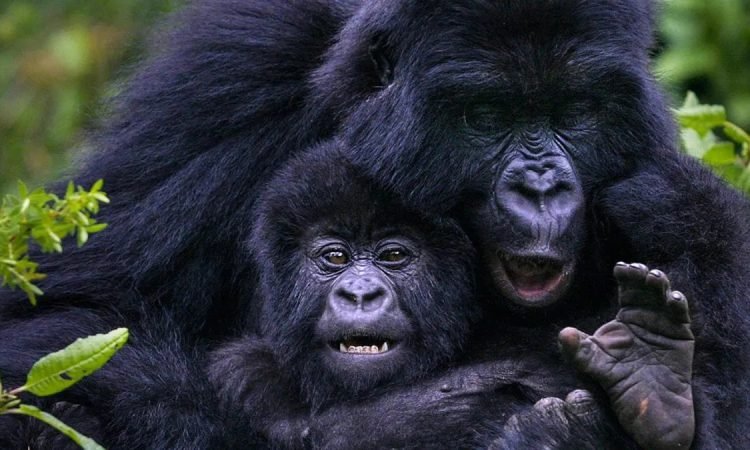
Mountain gorilla groups are not permanent organisations. As males mature, competition can develop within families. One male may eventually establish his own group, attracting females and creating a new social unit.
These divisions are extremely valuable to researchers because they allow scientists to understand how gorilla societies develop and how leadership transitions influence reproduction and family stability.
Travellers encountering groups such as Umubano are therefore witnessing the result of generations of natural social development within the Virunga mountain gorilla population.
Agashya Gorilla Family
The Agashya family is widely recognised among the gorilla groups associated with Volcanoes National Park. Its history demonstrates the important role played by dominant males in establishing and maintaining family groups.
Silverbacks often compete for reproductive opportunities and leadership. A successful male must be physically capable of protecting females and young gorillas while maintaining social stability within the group.
Visitors observing an experienced silverback may notice that leadership does not require constant displays of strength. Often the most dominant animal is surprisingly relaxed, sitting quietly while other family members feed or play nearby.
These moments demonstrate confidence rather than weakness. Because members understand the social hierarchy, there is normally no need for constant aggression.
Kwitonda Gorilla Family
The Kwitonda family is one of the most widely recognised names in Rwanda’s mountain gorilla tourism. The family’s history is particularly interesting because mountain gorillas are not restricted by international political borders. Gorilla groups can move through suitable habitat within the wider Virunga ecosystem.
The mountains connecting Rwanda, Uganda, and the Democratic Republic of Congo form one ecological landscape from the perspective of wildlife. Gorillas follow vegetation, territorial opportunities, and social relationships rather than national boundaries.
The Kwitonda family illustrates why international conservation cooperation is essential for protecting mountain gorillas. Protecting forests in one country alone would not be sufficient if neighbouring habitats were destroyed.
For travellers, this wider perspective helps explain why the survival of mountain gorillas represents one of Africa’s most significant conservation stories.
Hirwa Gorilla Family
Hirwa is another gorilla family name familiar within the history of Volcanoes National Park. The family has attracted interest because its movements and composition illustrate the dynamic character of mountain gorilla populations within the Virunga ecosystem.

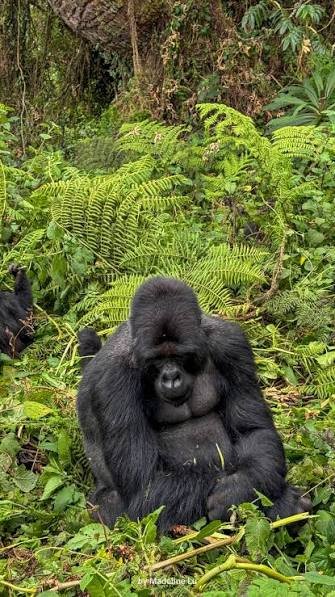
Mountain gorillas can occasionally travel considerable distances depending on feeding conditions and interactions with neighbouring groups. Family territories can overlap, and encounters between different groups may influence future movements.
Conservation teams closely monitor these movements because understanding where gorillas travel is essential for habitat management and tourism planning.
Visitors should therefore understand that being allocated a particular family does not guarantee a trek of a particular distance. Even experienced trackers cannot completely control how far a gorilla family chooses to move.
Muhoza Gorilla Family
The Muhoza family is another group connected with Rwanda’s mountain gorilla trekking experience. Like other families, it demonstrates how gorilla societies develop as individuals mature and establish new social relationships.
Younger silverbacks may eventually become capable of attracting females and creating independent families. Over time, these groups may grow through births and additional transfers.
The presence of multiple gorilla families within Volcanoes National Park provides important genetic and social diversity within the population. Maintaining this diversity requires protection of sufficient habitat so different groups can move without excessive competition.
The development of families such as Muhoza is therefore not simply interesting for tourists. It represents a fundamental aspect of mountain gorilla population growth and long-term conservation.
Other Gorilla Families in Volcanoes National Park
The number, names, composition, and trekking status of gorilla families can change over time. This is important for travellers to understand before visiting Volcanoes National Park.
Some groups may divide while new families emerge. A dominant silverback may lose leadership. Females may transfer between groups. A previously independent male may successfully establish a family. Conservation authorities may also determine which families are appropriate for tourism and which should remain focused on research and monitoring.


For this reason, travellers should avoid assuming that historical lists of gorilla families will remain unchanged indefinitely. Mountain gorillas are wild animals living within naturally changing societies.
This evolving family structure is one of the most fascinating aspects of gorilla conservation. Every birth, leadership transition, family division, and social transfer contributes to the continuing story of Rwanda’s mountain gorilla population.
Gorilla Habituation in Volcanoes National Park
Before a gorilla family can regularly receive tourists, it undergoes a gradual habituation process. Habituation allows wild gorillas to become familiar with the controlled presence of humans without fundamentally changing their natural behaviour.
The process requires experienced researchers, trackers, conservationists, and veterinary professionals working carefully over an extended period. Teams approach the gorillas repeatedly while observing their reactions and gradually allowing them to become accustomed to predictable human presence.
Habituation does not mean gorillas become domesticated. They remain completely wild animals and can move wherever they choose within their habitat.
The process makes regulated tourism possible while also allowing conservation teams to monitor the health and development of individual families.
Without habituation, close gorilla trekking experiences would carry much greater stress for the animals and potentially greater risk for visitors.
How Gorilla Families Are Located During Trekking
Finding the Gorilla Families in Volcanoes National Park requires exceptional tracking knowledge. Trackers spend considerable time studying each group’s movements, feeding signs, nesting locations, vocalisations, and previous positions.
Gorillas construct fresh nests for sleeping, and these locations can provide valuable clues about where a family began moving the following morning. Broken vegetation, feeding remains, footprints, dung, and pathways through dense forest can all help experienced trackers follow the group’s direction.
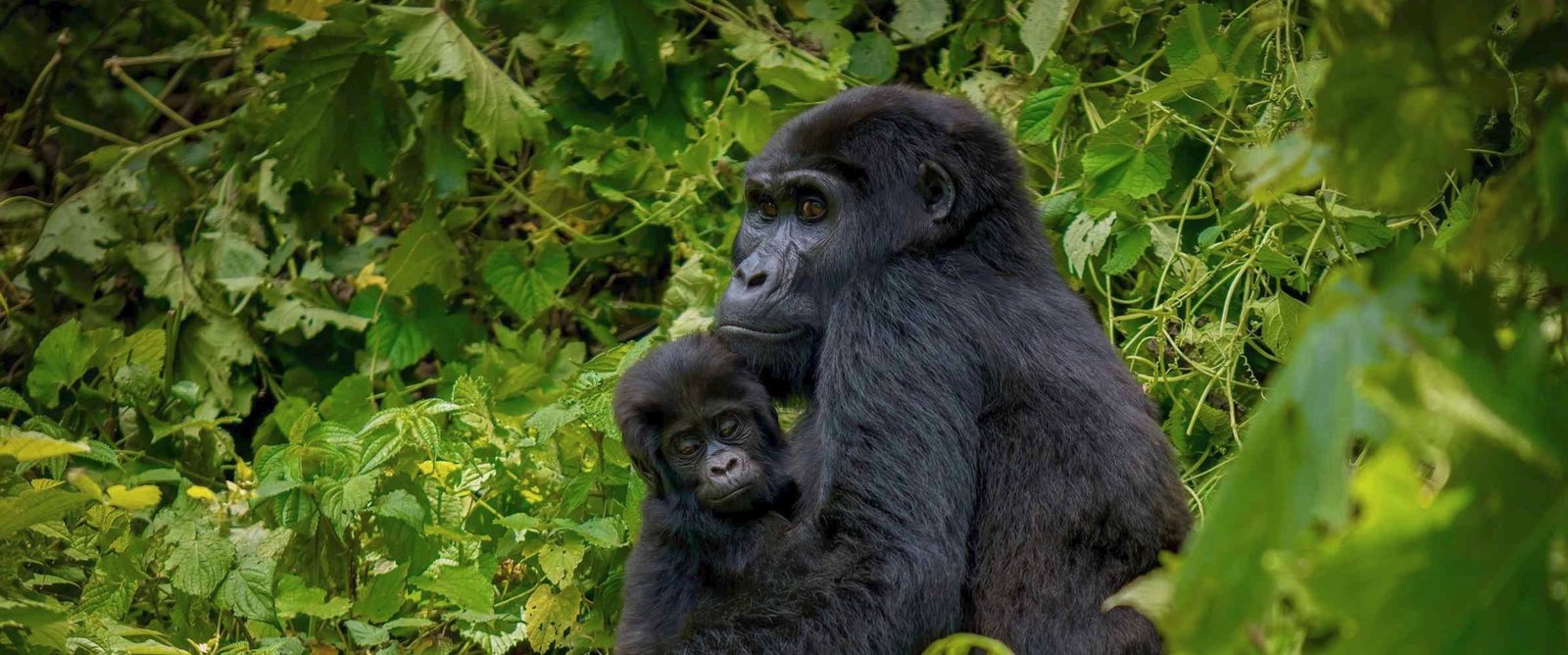
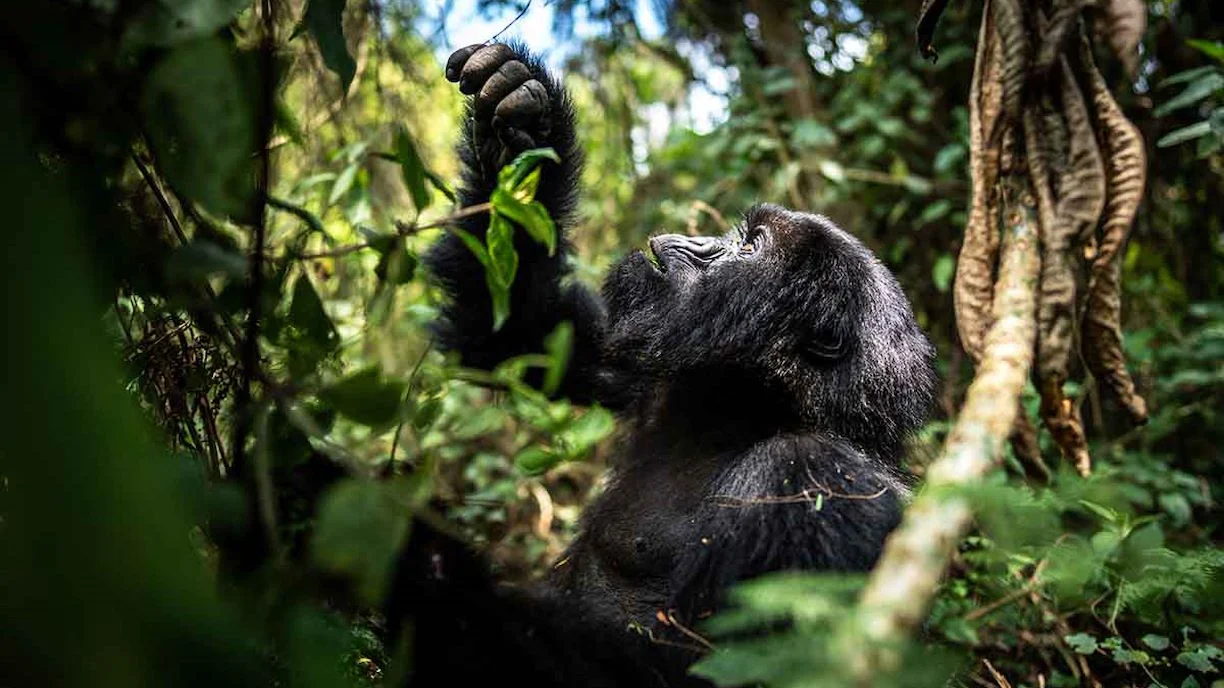
Communication between tracking teams and trekking guides often helps identify the approximate location before visitors reach the gorillas.
The process itself contributes considerably to the adventure. Trekking through the forest allows visitors to understand the scale and complexity of gorilla habitat before finally encountering the family.
What Happens When You Meet a Gorilla Family?
The first sight of a mountain gorilla can be extraordinary. Sometimes visitors initially see movement through vegetation before recognising the shape of a gorilla. On other occasions, the group may be resting in a relatively open section of forest.
Once the family is located, guides manage visitor positioning carefully. The experience focuses on quiet observation while allowing the gorillas to continue their natural activities.
A silverback may sit almost motionless while feeding. Juveniles may climb trees or wrestle nearby. Mothers may carry infants against their bodies. Young gorillas occasionally approach closer than expected because of curiosity.
Visitors should always follow the instructions provided by guides. Mountain gorillas are accustomed to controlled human presence, but they remain powerful wild animals.
The objective is never to interact directly with the gorillas. The purpose is to observe their natural behaviour respectfully while minimising disturbance.
Mountain Gorilla Communication
Communication within the Gorilla Families in Volcanoes National Park occurs through vocalisations, facial expressions, body positions, gestures, physical contact, and displays.
Gorillas can produce different sounds according to the situation. Soft vocalisations may occur while feeding or maintaining contact between family members. Young gorillas may make sounds during play, while adults can use stronger vocalisations when disturbed.
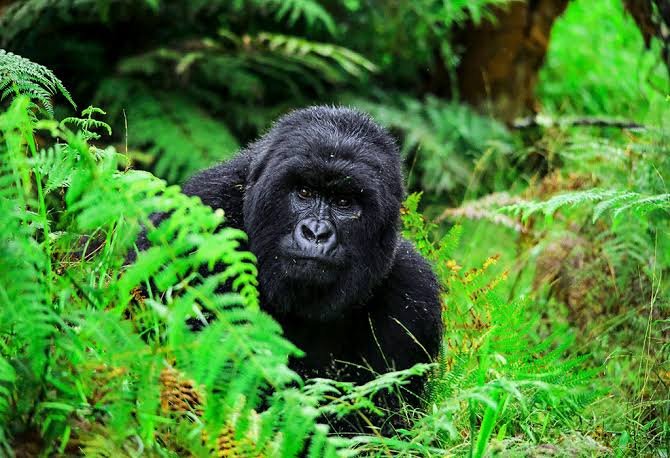
Chest beating is among the most famous gorilla displays. Although commonly associated with aggression, chest beating can serve several purposes, including communication of presence, status, excitement, or intimidation.
Silverbacks may also use vegetation displays, charging, or powerful body postures during confrontational situations.
Much gorilla communication, however, is subtle. Family members understand social relationships through repeated interactions over many years.
Mothers and Infants Within Gorilla Families
Few experiences during gorilla trekking are more memorable than observing a mother caring for a young infant.
Newborn mountain gorillas are completely dependent on their mothers. During the first months of life, infants remain in close physical contact and are carried while the mother travels and feeds.
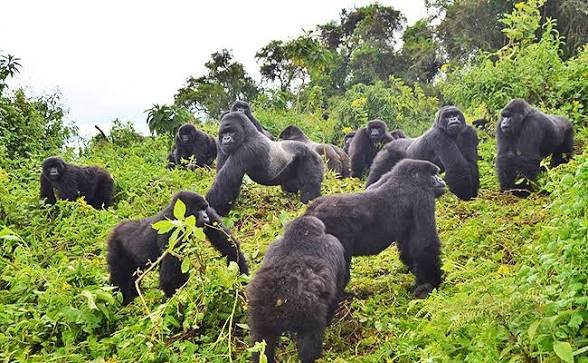
As the infant becomes stronger, it begins exploring the surroundings while remaining close to its mother. Play gradually becomes an important part of development.
Watching these early stages of life provides visitors with a powerful sense of how closely gorilla behaviour resembles aspects of human family relationships.
Mothers may groom infants, protect them during movement, and allow them increasing independence as they grow.
The survival of infants is particularly important for mountain gorilla conservation because every successful birth contributes to the future of this endangered population.
Juvenile Gorillas and Play
Juveniles frequently bring remarkable energy to a gorilla encounter. They may chase each other, swing from vegetation, wrestle, roll across the forest floor, or attempt exaggerated displays.
Play is not simply entertainment. It helps young gorillas develop physical coordination, strength, confidence, and social understanding.
Through interaction with siblings and other juveniles, they learn how strongly they can behave without creating serious conflict.
Young gorillas also observe adults constantly, gradually learning feeding techniques and social rules.
Because every family has a different combination of infants and juveniles, the atmosphere during trekking can vary considerably between groups.
What Mountain Gorillas Eat
Mountain gorillas survive largely on vegetation. Their diet includes leaves, shoots, stems, roots, bark, and other plant material available within the forest.
Bamboo shoots can become particularly important during periods when they are abundant. Gorillas may spend extended periods feeding in areas where preferred vegetation is readily available.
Adult gorillas require large quantities of food, which explains why feeding occupies much of their day.
Their movements across Volcanoes National Park are strongly influenced by the seasonal availability and distribution of vegetation.
Understanding these feeding patterns also helps trackers predict where different families might travel.
Where Gorilla Families Live in Volcanoes National Park
Volcanoes National Park contains a dramatic range of habitats associated with the Virunga volcanic landscape. Elevation changes create different vegetation communities, from lower montane environments to bamboo forests and higher-altitude plant zones.
Mountain gorillas use these habitats according to food availability, weather conditions, social pressure, and territory.
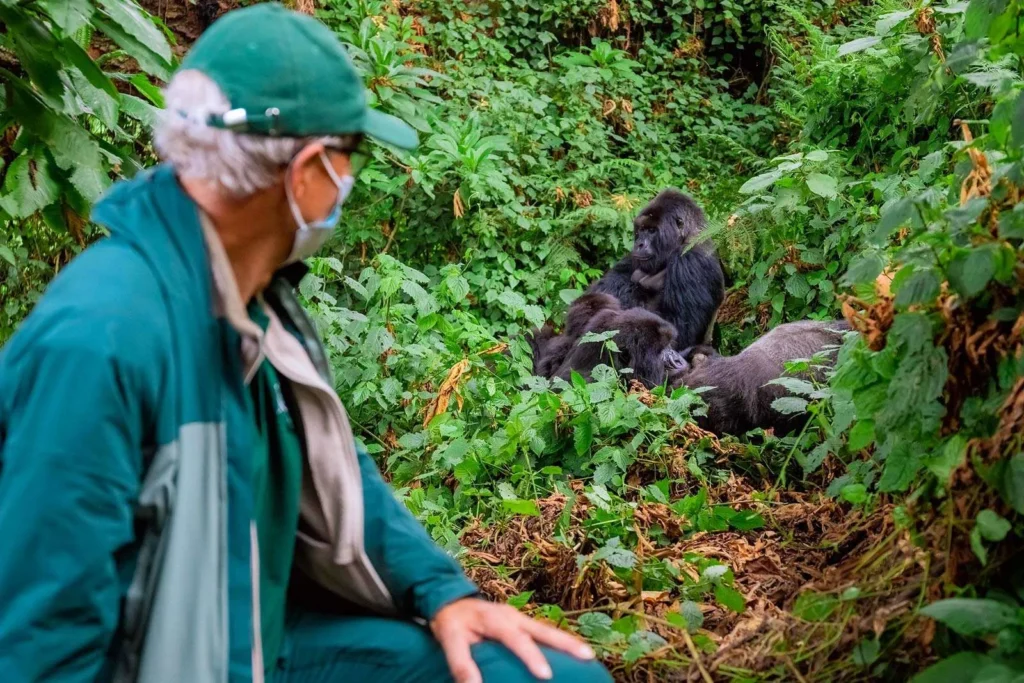
They do not live inside permanent caves, constructed shelters, or fixed territories with clearly defined boundaries.
Instead, families move through the forest and construct nests each evening.
This mobile lifestyle means the trekking route followed today may be completely different from the route used the following day.
Why Gorilla Families Sometimes Split
Large gorilla families can divide as relationships between mature males change.
A younger silverback may become increasingly independent and eventually separate from the dominant male. Females may decide to follow one male or transfer between groups.
These events can produce completely new gorilla families.
Family divisions are particularly important for conservationists because they demonstrate natural population development.
Although visitors may become emotionally attached to particular group names, changing family structures are part of healthy gorilla society.
How Female Gorillas Move Between Families
Female mountain gorillas may transfer between different groups during their lives.
These transfers help maintain genetic diversity and influence the size and composition of neighbouring families.
A female may leave one family and join another silverback, sometimes during encounters between groups.
Such movement means individual gorilla histories can become connected with several different families over many years.
Researchers following these transfers gain valuable understanding of reproductive behaviour and population genetics.
How Gorilla Families Protect Their Young
Infants and juveniles benefit greatly from living within a protected family group.
When danger appears, adult gorillas may position themselves strategically while the silverback responds to the threat.
The dominant male’s physical power can discourage predators or competing gorillas from approaching vulnerable family members.
Mountain gorillas have relatively few natural predators capable of challenging healthy adults, but protection remains an essential part of family organisation.
The emotional bonds within families are also clearly visible when members remain close during stressful situations.
Gorilla Family Leadership Changes
Silverbacks do not remain leaders forever.
Age, injury, competition, and the development of younger males can eventually change the balance of power within a family.
Sometimes leadership may transfer gradually while other situations involve direct confrontation.
A new dominant male may reshape family relationships and influence future reproduction.
These leadership changes are closely monitored because they can significantly affect the stability of the entire group.
For long-term conservation research, leadership transitions provide important information about mountain gorilla social evolution.
Gorilla Families and Scientific Research
Volcanoes National Park has played an exceptional role in the scientific study of mountain gorillas.
Long-term observation has helped researchers understand reproduction, diet, communication, social hierarchy, infant development, disease risks, family formation, and population movement.
This information has shaped modern mountain gorilla conservation strategies.
Research also helps conservation teams identify unusual behaviour that may indicate illness or injury.
Because individual gorillas can often be recognised and monitored continuously, conservation professionals have an unusually detailed understanding of population health compared with many other wild mammals.
Dian Fossey and the History of Gorilla Research
The history of mountain gorilla conservation in Rwanda cannot be discussed without recognising the importance of long-term scientific research in the Virunga Mountains.
Research conducted during the twentieth century dramatically increased international awareness of mountain gorillas and demonstrated the complexity of their social relationships.
The work helped transform public perceptions of gorillas, which had often been presented incorrectly as aggressive and dangerous creatures.
Scientific observation revealed sophisticated social structures, strong family bonds, communication systems, maternal care, individual personalities, and peaceful everyday behaviour.
Modern conservation has developed significantly since those early research years, but the fundamental principle remains the same: protecting mountain gorillas requires understanding their lives.
Conservation of Gorilla Families in Volcanoes National Park
The survival of the Gorilla Families in Volcanoes National Park depends on intensive conservation.
Protection involves park management, anti-poaching activities, veterinary monitoring, scientific research, tourism regulation, habitat conservation, and cooperation with communities surrounding the protected area.
Mountain gorillas live within a relatively limited habitat, making protection of every section of suitable forest extremely important.
Illegal activities, habitat pressure, disease transmission, and regional environmental challenges can affect the population.
Continuous monitoring allows conservation teams to identify threats before they become more serious.
Tourism contributes to this conservation model by creating economic value around protecting living gorillas and their forest habitat.
Gorilla Veterinary Care
Mountain gorillas remain wild animals, but conservation programmes sometimes allow veterinary intervention when human-related threats or life-threatening medical conditions require attention.
Veterinary teams may monitor injured or sick gorillas while determining whether intervention is justified.
Disease prevention is particularly important because humans and gorillas share many biological similarities.
Respiratory illnesses that may be relatively mild in people can potentially create serious problems within gorilla populations.
This is one reason health guidelines during gorilla trekking must be treated seriously.
Visitors who are unwell should respect the procedures established to protect the animals.
Gorilla Trekking and Disease Prevention
Maintaining appropriate distance from gorillas helps reduce the risk of disease transmission.
Visitors should also avoid touching the animals even if a curious juvenile approaches closely.
Coughing and sneezing should be handled according to guide instructions, and trekkers need to follow the health rules provided before entering the forest.
These precautions are not unnecessary restrictions.
Mountain gorilla tourism exists because conservation authorities attempt to balance extraordinary visitor access with protection of a vulnerable species.
Responsible behaviour ensures future travellers can continue experiencing the same families.
Best Time to Visit Gorilla Families in Volcanoes National Park
Gorilla trekking is possible throughout the year because mountain gorillas remain within the forest in every season.
Different months can produce different trekking conditions.
Drier periods may provide firmer trails, while wetter months can make forest paths muddy and vegetation particularly lush.
Rain can occur at almost any time in the Virunga Mountains because of their elevation and tropical environment.
Travellers should therefore prepare for changing conditions regardless of travel month.
The presence of the gorillas is not determined by tourism seasons. Families continue their daily lives throughout the year.
How Difficult Is Trekking to Gorilla Families?
The physical difficulty of gorilla trekking varies enormously.
Some families may be located relatively close to the starting area while others move deep into the forest or toward higher elevations.
The same family can produce an easy trek on one day and a significantly more demanding trek several days later.
Fitness, terrain, weather, altitude, vegetation, and the movement of the gorillas all influence difficulty.
Visitors should therefore arrive prepared for uneven ground, steep sections, mud, roots, dense vegetation, and extended periods of walking.
Porters can be extremely helpful during demanding treks by assisting with bags and providing support on difficult sections.
What to Wear When Trekking Gorilla Families
Practical clothing can make the forest experience significantly more comfortable.
Long trousers and long-sleeved clothing help protect against vegetation and insects. Strong trekking footwear provides better stability on slippery slopes and muddy trails.
Rain protection is valuable because mountain weather can change quickly.
Gardening-style gloves may also provide protection when visitors need to hold vegetation for balance.
The objective is not fashion but comfort, protection, and mobility inside a humid mountain forest.
Photography With Gorilla Families
Photography is an important part of many gorilla trekking experiences, but visitors should ensure that cameras do not distract them from observing the animals directly.
Flash photography should never be used around mountain gorillas.
Forest lighting can change rapidly, and gorillas may move between bright clearings and shaded vegetation.
Photographers should prepare equipment before reaching the group so they can avoid spending most of the encounter adjusting settings.
Sometimes the most memorable moments occur unexpectedly, such as an infant climbing onto its mother’s back or a silverback suddenly emerging from thick vegetation.
Respecting the Gorilla Families
Every visitor entering Volcanoes National Park temporarily becomes part of an important conservation system.
Gorillas should never be treated like animals in an entertainment attraction.
They are wild primates living within their natural environment.
Visitors should remain quiet, follow guide instructions, avoid sudden movements, maintain appropriate behaviour, and respect any decision made by trackers concerning safety.
The quality of gorilla tourism depends on responsible behaviour from everyone involved.
Why Gorilla Trekking Time Is Controlled
The time visitors spend directly observing habituated gorilla families is controlled to limit disturbance.
Even though habituated gorillas accept predictable human presence, repeated exposure still needs careful management.
Restricting observation periods reduces stress while allowing different families to maintain normal feeding, resting, parenting, and social behaviour.
Visitor limits also prevent excessive numbers of people from entering sensitive forest environments.
These restrictions contribute directly to the sustainability of gorilla trekking.
Gorilla Families and the Wider Virunga Ecosystem
Gorilla families cannot be separated from their environment.
Their survival depends on the health of the forests and mountain ecosystems surrounding them.
Volcanoes National Park is part of the wider Virunga landscape, which extends beyond Rwanda.
The mountain ecosystem contains important habitats for numerous species and represents one of the most biologically significant environments in the region.
Protecting gorillas therefore contributes to protecting forests, water resources, vegetation communities, birds, primates, and other wildlife.
Mountain gorillas have become flagship animals whose conservation helps protect an entire ecosystem.
Gorilla Families and Community Conservation
Communities living near Volcanoes National Park are extremely important to the future of mountain gorilla conservation.
Protected areas cannot function successfully without strong relationships between conservation authorities and neighbouring populations.
Tourism creates employment opportunities associated with guiding, hospitality, transport, agriculture, crafts, conservation, and accommodation.
When communities receive meaningful benefits from protected areas, wildlife conservation becomes connected with local economic development.
This relationship remains essential because the long-term survival of gorillas depends not only on activities inside the park but also on how people and wildlife coexist around its boundaries.
Gorilla Families as a Symbol of Conservation Success
The continued protection of Gorilla Families in Volcanoes National Park represents one of Africa’s most inspiring wildlife conservation stories.
Mountain gorillas have experienced serious historical threats, yet dedicated protection, scientific research, habitat management, veterinary monitoring, controlled tourism, government commitment, and international cooperation have contributed to a more hopeful future.
Every gorilla family represents a living part of this conservation story.
The birth of an infant is more than an exciting event for visitors. It represents another potential member of the next generation.
A juvenile developing successfully represents years of maternal care and habitat protection.
A stable silverback protecting his group demonstrates the continuation of natural social behaviour inside a protected ecosystem.
For travellers, encountering these animals transforms conservation from an abstract concept into something visible and emotional.
Instead of simply hearing that mountain gorillas need protection, visitors can sit quietly in a forest clearing and observe the result of decades of conservation through the presence of a thriving family.
Why Every Gorilla Family Experience Is Different
No two gorilla trekking experiences are identical because every family has a different composition and personality.
One group may contain several active juveniles while another may be dominated by quiet adult females and an enormous silverback.
Weather conditions, feeding behaviour, vegetation, family movement, and social interactions can change the atmosphere completely.
Visitors should therefore avoid trying to identify a single “best” gorilla family.
The extraordinary value of the experience lies in meeting whichever group is allocated and observing its natural daily life.
A quiet family can be just as fascinating as an active one.
Can You Choose a Gorilla Family?
Gorilla family allocation is generally influenced by several factors, including the location of groups, trekking conditions, visitor fitness, and operational decisions made by park authorities and guides.
Travellers may sometimes communicate physical concerns before trekking begins, allowing guides to consider suitability when allocations are organised.
However, mountain gorillas remain unpredictable wild animals.
Their movement can change even after an allocation has been made.
Visitors should therefore approach trekking with flexibility rather than expecting a guaranteed family or trekking duration.
Are Some Gorilla Families Easier to Trek Than Others?
Certain families may occasionally be located closer to accessible sections of the park while others may regularly use higher terrain.
However, these patterns are not reliable enough to guarantee an easy trek.
A family that was located relatively close to the trailhead yesterday might travel several kilometres overnight.
Trackers follow the animals rather than directing them toward tourists.
This unpredictability is part of what makes gorilla trekking a genuine wildlife experience.
Are Gorilla Families Dangerous?
Mountain gorillas possess extraordinary physical strength, but habituated families normally remain calm around visitors who follow the established rules.
Silverbacks may occasionally display through chest beating, vocalisation, or short charges.
These displays do not automatically mean an attack is about to occur.
Guides understand gorilla behaviour and instruct visitors how to respond.
Running, screaming, attempting to touch a gorilla, or ignoring guide instructions can create unnecessary risk.
Respectful behaviour is fundamental.
Can Children Trek Gorilla Families in Volcanoes National Park?
Gorilla trekking has an established minimum age requirement, primarily because encounters involve unpredictable wildlife, physical trekking conditions, and strict behavioural expectations.
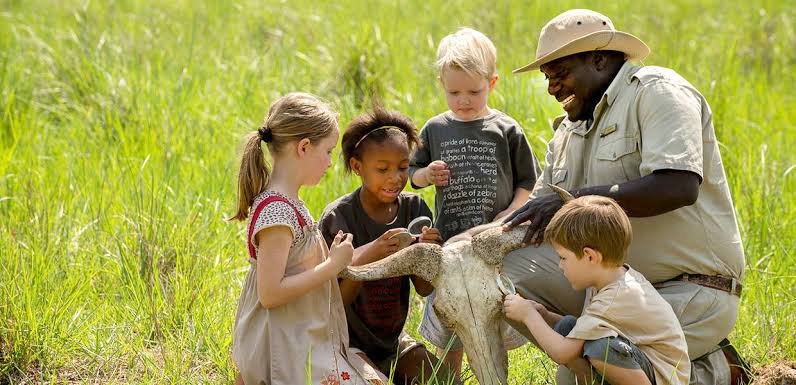
Families travelling with younger children can still explore other attractions around Volcanoes National Park while eligible members participate in the gorilla trek.
Families should consider age, fitness, maturity, and travel style when planning the wider Rwanda itinerary.
How Long Do Mountain Gorillas Live?
Mountain gorillas can survive for several decades in natural conditions.
As gorillas age, researchers may observe changes in strength, movement, social status, and reproductive activity.
Because many individuals are monitored over long periods, conservation teams can follow their development from infancy through adulthood.
These long life histories make individual gorillas exceptionally important to researchers studying social behaviour across generations.
How Often Are Gorilla Babies Born?
Female mountain gorillas reproduce relatively slowly compared with many other mammals.
Infants require prolonged maternal care, meaning females usually do not reproduce every year.
Slow reproductive rates increase the importance of protecting every breeding female and surviving infant.
A rapidly reproducing species can sometimes recover quickly after population losses.
Mountain gorillas do not have that advantage, which is why sustained conservation remains essential.
What Happens When a Silverback Dies?
The death of a dominant silverback can create significant changes within a family.
Another mature male within the group may assume leadership if one is present.
In other situations, females may transfer to neighbouring males or the family may reorganise.
The outcome depends on the composition of the group and the social relationships existing at the time.
These transitions can influence the future of the family for many years.
Are Volcanoes National Park Gorilla Families Wild?
Yes. Habituated mountain gorillas remain completely wild.
Habituation simply means they have gradually become familiar with controlled human observation.
They are not fed by guides, trained to perform, or confined within enclosures.
They choose where to travel, what to eat, when to rest, and how to interact with each other.
This freedom is what gives gorilla trekking its exceptional authenticity.
Why Are Gorilla Families Important to Rwanda Tourism?
Mountain gorillas have become one of Rwanda’s most internationally recognised wildlife attractions.
Travellers frequently build entire East African journeys around the opportunity to spend time with a habituated family inside Volcanoes National Park.
Gorilla tourism supports accommodation, guides, transportation, restaurants, conservation activities, cultural experiences, and numerous other parts of the tourism economy.
However, the true long-term value depends on ensuring tourism remains compatible with conservation.
The gorillas must always remain the priority.
Planning a Gorilla Families in Volcanoes National Park Safari
A successful gorilla trekking journey should provide enough time for comfortable arrival, transfer to the Volcanoes National Park region, trekking preparation, the gorilla encounter, and additional exploration.
Travellers may combine gorilla trekking with golden monkey tracking, volcanic scenery, cultural experiences, Lake Kivu, Kigali, Akagera National Park, or destinations elsewhere in East Africa.
The itinerary should be designed around individual interests, available travel days, accommodation preferences, fitness, and overall budget.
Travellers interested primarily in gorillas may prefer a short dedicated itinerary, while those wanting a broader Rwanda experience can combine primates, wildlife, landscapes, and cultural attractions.
Combining Gorilla Families With Golden Monkey Tracking
Golden monkey tracking is a natural complement to gorilla trekking because both experiences take place within the Volcanoes National Park ecosystem.
Golden monkeys live in energetic groups and frequently move rapidly through bamboo vegetation.
Their behaviour contrasts beautifully with the slower, more deliberate movements of mountain gorillas.
Experiencing both primates provides travellers with a broader understanding of the biodiversity protected within Rwanda’s volcanic forests.
Combining Volcanoes National Park With Lake Kivu
After gorilla trekking, Lake Kivu can provide a relaxing continuation of a Rwanda safari.
The lakeside atmosphere creates a strong contrast with the steep volcanic slopes and dense forest of Volcanoes National Park.
Travellers can relax while reflecting on the gorilla experience before continuing toward Kigali or another destination.
This combination works particularly well for visitors who want to balance wildlife adventure with slower travel.
Combining Gorilla Trekking With Akagera National Park
Travellers wanting a more complete Rwanda wildlife experience can combine mountain gorillas with the savannah ecosystems of Akagera National Park.
The contrast is considerable.
Volcanoes National Park offers misty mountain forest, primates, bamboo vegetation, and volcanic scenery, while Akagera offers open landscapes, lakes, wetlands, and traditional safari wildlife.
Combining both destinations demonstrates how geographically diverse Rwanda can be despite its relatively compact size.
Accommodation Near the Gorilla Families in Volcanoes National Park
The area surrounding Volcanoes National Park offers accommodation across different comfort levels.
Properties range from practical safari lodges to sophisticated luxury retreats designed around privacy, personalised service, fine dining, fireplaces, dramatic views, and high levels of comfort.
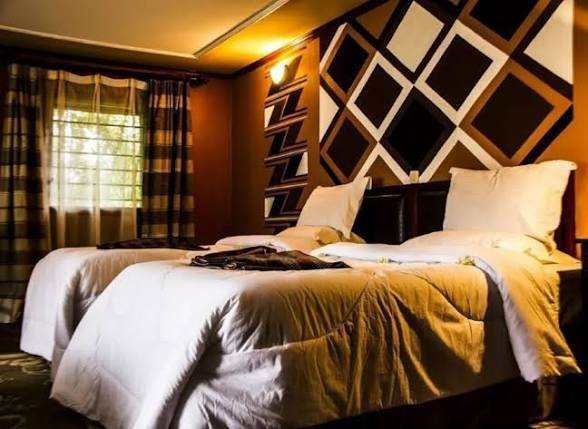
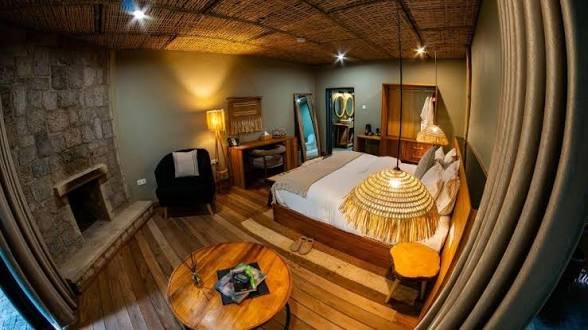
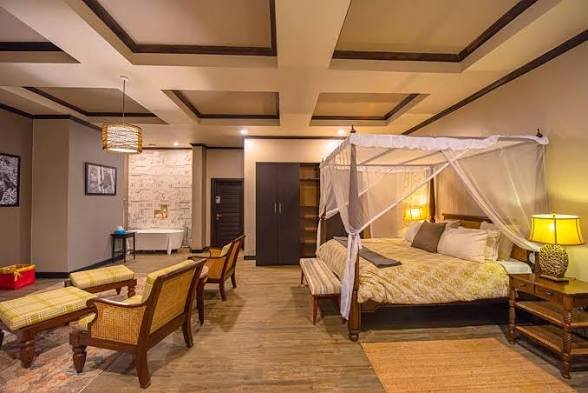
Choosing accommodation should depend on travel style rather than assuming the most expensive property automatically creates the best journey.
Location, service, atmosphere, room quality, dining, views, and access to the trekking starting point can all influence the experience.
For many travellers, returning to a comfortable lodge after several hours of mountain trekking is particularly valuable.
Why Gorilla Families in Volcanoes National Park Are Unforgettable
Meeting mountain gorillas is difficult to compare with conventional wildlife viewing.
A lion encountered during a game drive may be observed from inside a safari vehicle.
A mountain gorilla encounter takes place on foot inside dense forest.
Visitors become physically immersed in the same mountain environment used by the animals.
The biological similarities between gorillas and humans add another emotional dimension.
Their hands, facial expressions, parenting behaviour, curiosity, social relationships, and interactions can feel remarkably familiar.
A silverback may appear overwhelmingly powerful while simultaneously demonstrating extraordinary calm.
An infant may cling to its mother in a way instantly recognisable to human observers.
These similarities explain why travellers frequently describe gorilla trekking as one of the most emotionally powerful wildlife experiences in Africa.
Responsible Gorilla Trekking in Rwanda
Responsible tourism is essential for protecting the future of the Gorilla Families in Volcanoes National Park.
Visitors should approach the experience with conservation awareness rather than viewing gorilla trekking simply as another activity to complete.
Following health guidelines, respecting visitor limits, listening to guides, avoiding unnecessary disturbance, keeping the forest clean, and supporting responsible tourism practices all contribute to conservation.
The objective is to ensure that gorilla tourism benefits both wildlife and people while maintaining the ecological integrity of Volcanoes National Park.
Book a Gorilla Families in Volcanoes National Park Experience
Exploring the Gorilla Families in Volcanoes National Park provides an exceptional opportunity to enter Rwanda’s volcanic forests and witness mountain gorilla society at remarkably close range.
Every trek tells a different story.

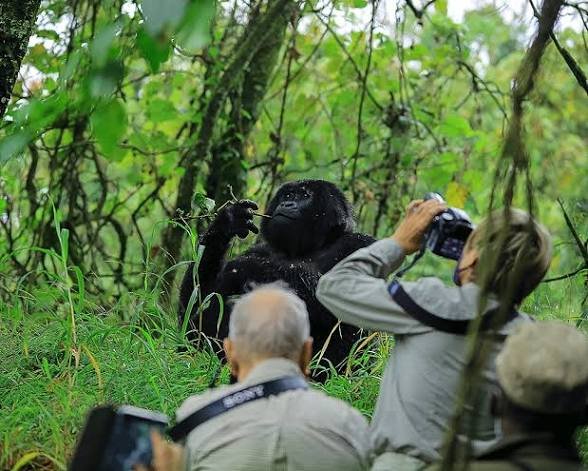
One journey may involve watching a dominant silverback feeding peacefully beneath bamboo. Another may reveal energetic juveniles chasing each other through tangled vegetation. A mother may emerge carrying a tiny infant while several older family members rest quietly nearby.
These moments cannot be staged or guaranteed because they belong to the natural lives of wild mountain gorillas.
A carefully planned Rwanda gorilla safari can include suitable accommodation, private transportation, experienced safari guidance, gorilla trekking arrangements, airport transfers, cultural experiences, and additional wildlife destinations according to the traveller’s interests.
Whether the journey is designed as a short gorilla trekking safari, a luxury Rwanda holiday, a honeymoon experience, a photographic safari, or part of a longer East African adventure, Volcanoes National Park remains one of Africa’s most extraordinary primate destinations.
Frequently Asked Questions About Gorilla Families in Volcanoes National Park
How many gorilla families are found in Volcanoes National Park?
Volcanoes National Park supports several mountain gorilla families that are monitored for conservation, research, and tourism purposes. The exact number and trekking status of families can change because gorilla society is naturally dynamic. Groups sometimes divide, new families form, females move between groups, and silverback leadership changes. Travellers should therefore treat family numbers as changing conservation information rather than a permanently fixed figure.
What are the most famous Gorilla Families in Volcanoes National Park?
Several family names have become widely associated with Rwanda’s gorilla trekking history, including Susa, Karisimbi, Sabyinyo, Amahoro, Umubano, Agashya, Kwitonda, Hirwa, and Muhoza. Different families have unique histories and social structures, and the groups available for trekking can evolve as conservation authorities monitor their behaviour and suitability for tourism.
Which is the best gorilla family to trek in Rwanda?
There is no single best gorilla family. Every group can provide an extraordinary experience because travellers are observing wild animals rather than a scheduled performance. A family with several juveniles may be highly active, while another group may provide a quieter encounter dominated by adult gorillas feeding and resting. The unpredictability of each trek is part of its appeal.
Can I request a specific gorilla family in Volcanoes National Park?
Travellers can sometimes communicate preferences, but specific family allocation cannot normally be guaranteed. Allocation depends on gorilla locations, trekking conditions, physical ability, operational considerations, and conservation requirements. The most important approach is to remain flexible and enjoy whichever family is assigned.
Which gorilla family is easiest to trek?
No gorilla family can permanently be described as the easiest because mountain gorillas move throughout their habitat. A group located close to an accessible area today may travel considerably farther by tomorrow. Guides can sometimes consider visitor fitness when organising trekking groups, but trekking distance remains unpredictable.
Are the gorilla families in Volcanoes National Park safe to visit?
Habituated gorilla families are accustomed to controlled human observation, making properly managed trekking generally safe when visitors follow guide instructions. Mountain gorillas remain extremely powerful wild animals, however, and should always be treated with respect. Visitors must avoid touching the animals, running, making unnecessary noise, or ignoring safety instructions.
Do gorilla family members stay together permanently?
Not always. Family membership changes throughout a gorilla’s life. Females may transfer between groups, young males may leave and become solitary, silverbacks may establish new families, and large groups can divide. These changes are a natural part of mountain gorilla social organisation.
Who leads a gorilla family?
A dominant silverback normally provides leadership and protection. He can influence family movement, respond to threats, mediate disputes, and defend females and young gorillas. Some families may contain several mature males, although one usually holds the dominant leadership position.
Do gorilla families fight each other?
Interactions between families can occasionally produce confrontations, especially involving competing silverbacks. Displays such as chest beating, vocalisation, charging, and vegetation throwing may occur. Serious physical conflicts are possible, although many interactions end without prolonged fighting.
How are individual gorillas identified?
Researchers and trackers learn to recognise individuals through physical characteristics, behaviour, facial features, scars, body structure, and distinctive nose patterns. Continuous monitoring allows detailed life histories to be maintained for many animals.
Can gorilla families cross international borders?
Yes. Mountain gorillas live within ecosystems rather than political boundaries. The Virunga mountain landscape extends across Rwanda, Uganda, and the Democratic Republic of Congo, and suitable habitats are connected across parts of this region. Some gorilla groups have demonstrated movements reflecting this wider ecological landscape.
How close can tourists get to gorilla families?
Visitors are required to maintain the distance recommended by conservation authorities and guides. Gorillas occasionally approach tourists themselves, particularly curious juveniles. When this occurs, travellers should remain calm and follow guide instructions rather than attempting to move closer or touch the animal.
How long can tourists stay with a gorilla family?
Standard gorilla trekking experiences provide a controlled observation period once the assigned family has been located. Limiting visitor time helps reduce disturbance and allows gorillas to continue feeding, resting, travelling, parenting, and interacting naturally.
What happens if gorillas move during the trek?
Trackers follow signs left by the family and continually assess its direction. Gorillas can move while visitors are approaching, meaning trekking may continue until the group is located. This unpredictable movement is one reason trek duration varies significantly between different days.
Why are Gorilla Families in Volcanoes National Park so important?
The Gorilla Families in Volcanoes National Park represent far more than a tourism attraction. They are living evidence of decades of research, conservation, habitat protection, veterinary care, community involvement, and responsible tourism. Each surviving silverback, female, juvenile, and infant contributes to the long-term future of the mountain gorilla population. Protecting these families also helps conserve the wider Virunga ecosystem and creates economic opportunities connected with sustainable tourism.
Final Thoughts on Gorilla Families in Volcanoes National Park
The Gorilla Families in Volcanoes National Park offer one of the most remarkable opportunities anywhere in the world to observe complex primate society in a natural environment.
Behind every family name exists a constantly changing story of leadership, motherhood, competition, cooperation, birth, growth, migration, and survival.
A silverback protecting his family represents strength and responsibility. A mother carrying a newborn demonstrates the importance of the next generation. Juveniles playing in bamboo vegetation reveal how social behaviour develops. Females transferring between groups contribute to the genetic future of the wider population.
Together, these animals form societies that conservationists have spent decades studying and protecting.
For travellers, understanding the families before entering the forest adds enormous meaning to the trek. The experience becomes more than seeing a mountain gorilla for a photograph. It becomes an opportunity to observe one chapter in the continuing story of an entire family and one of Africa’s greatest wildlife conservation achievements.
Volcanoes National Park remains one of the world’s most important mountain gorilla habitats, and every carefully managed visit contributes to maintaining international attention on the protection of these extraordinary primates.
For anyone planning a Rwanda gorilla trekking journey, discovering the Gorilla Families in Volcanoes National Park is not simply one activity within a safari. It is often the defining experience of the entire journey and a wildlife encounter that remains memorable long after leaving the forests of the Virunga Mountains.