Gorilla Trekking in Volcanoes National Park: Ultimate 2026–2030 Guide
Gorilla Trekking in Volcanoes National Park is Rwanda’s most celebrated wildlife experience and one of the most intimate ways to encounter mountain gorillas anywhere in Africa. The experience takes travelers into the cool, misty forests of northwestern Rwanda, where small groups of visitors trek with professional guides and trackers in search of habituated mountain gorilla families living freely within the Virunga mountain ecosystem. Unlike a conventional game drive, where wildlife is usually viewed from a safari vehicle, gorilla trekking is completed on foot and brings visitors directly into the gorillas’ natural forest environment.
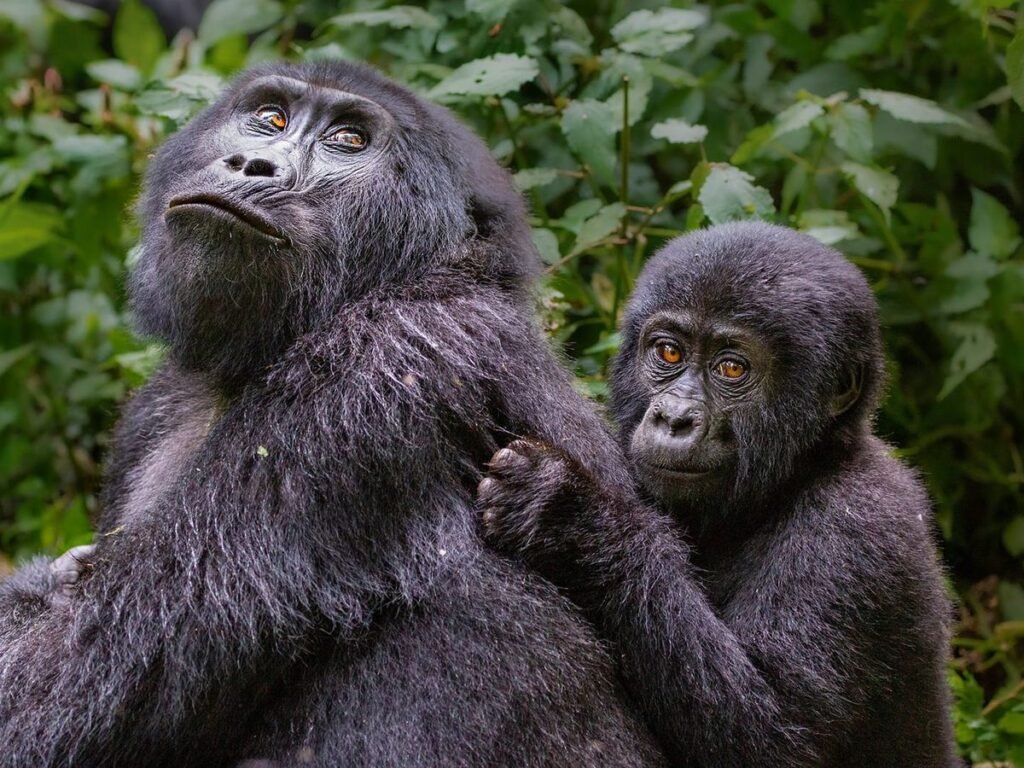
Volcanoes National Park forms Rwanda’s section of the Virunga Massif, the volcanic mountain range shared by Rwanda, Uganda and the Democratic Republic of Congo. The wider landscape consists of steep volcanic slopes, bamboo forest, montane woodland, open clearings and high-altitude vegetation. It is this extraordinary ecosystem that provides habitat for Rwanda’s mountain gorillas as well as golden monkeys, forest mammals and a remarkable variety of birdlife. Volcanoes National Park is therefore much more than a place to spend one hour with gorillas; it is one of Rwanda’s most important conservation landscapes and a central part of the country’s nature-based tourism identity.
The park sits close to Musanze and Kinigi in northern Rwanda and is surrounded by dramatic volcanic peaks. Travelers approaching the region from Kigali gradually leave the capital behind and enter increasingly mountainous countryside, with cultivated hillsides and distant volcanoes creating one of the most scenic road journeys in Rwanda. The concentration of good accommodation around Musanze, Kinigi and the park boundary also makes the destination relatively straightforward to incorporate into a short Rwanda safari or a longer journey combining gorillas with Akagera National Park, Nyungwe, Lake Kivu or neighboring Uganda.
Why Gorilla Trekking in Volcanoes National Park Is So Special
The attraction of Gorilla Trekking in Volcanoes National Park lies in the fact that visitors are not watching captive animals or attending a staged wildlife encounter. Mountain gorillas move freely through the forest, choosing where to feed, rest and travel each day. Professional trackers monitor their movements, but the gorillas themselves determine how long visitors must walk before reaching them.
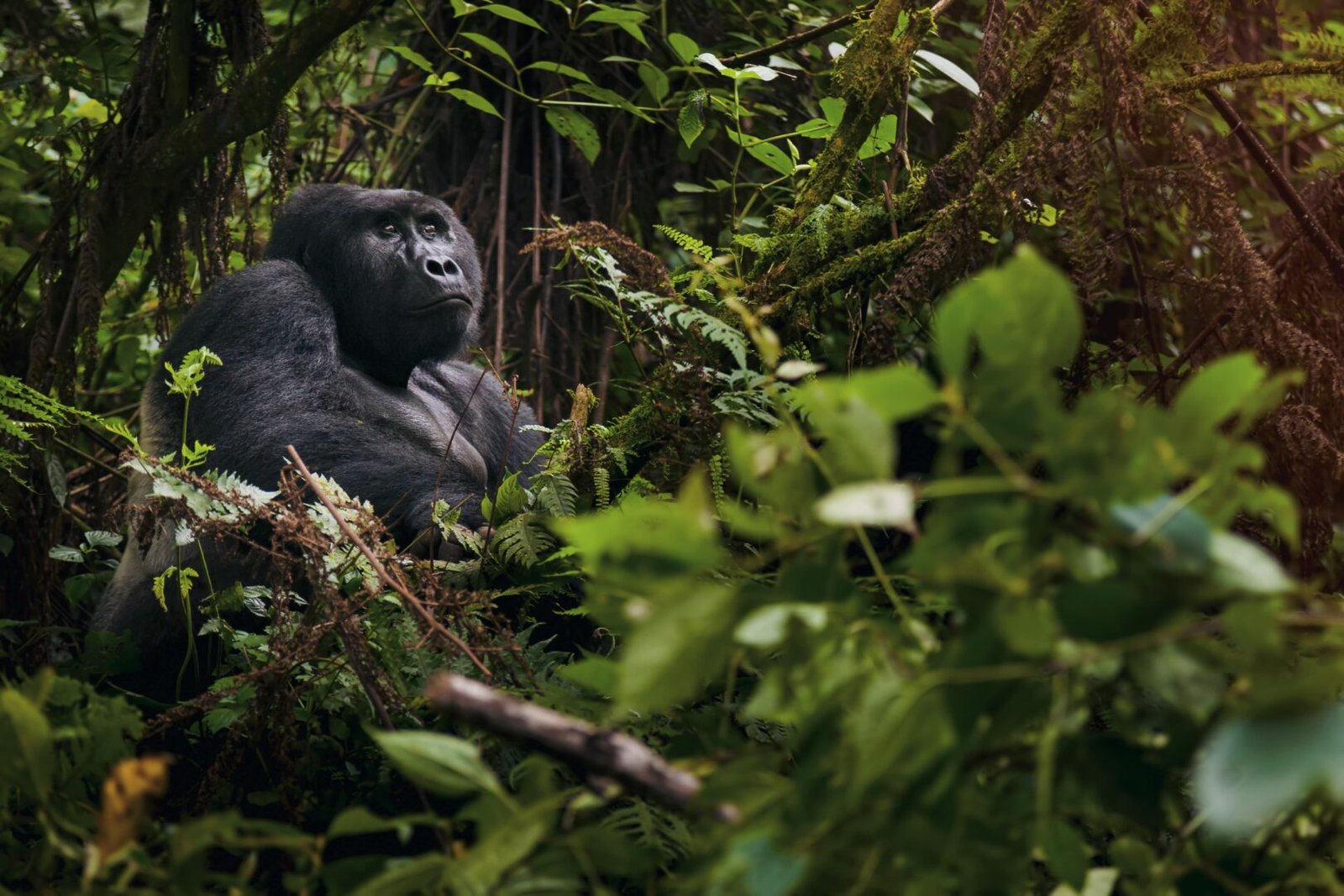
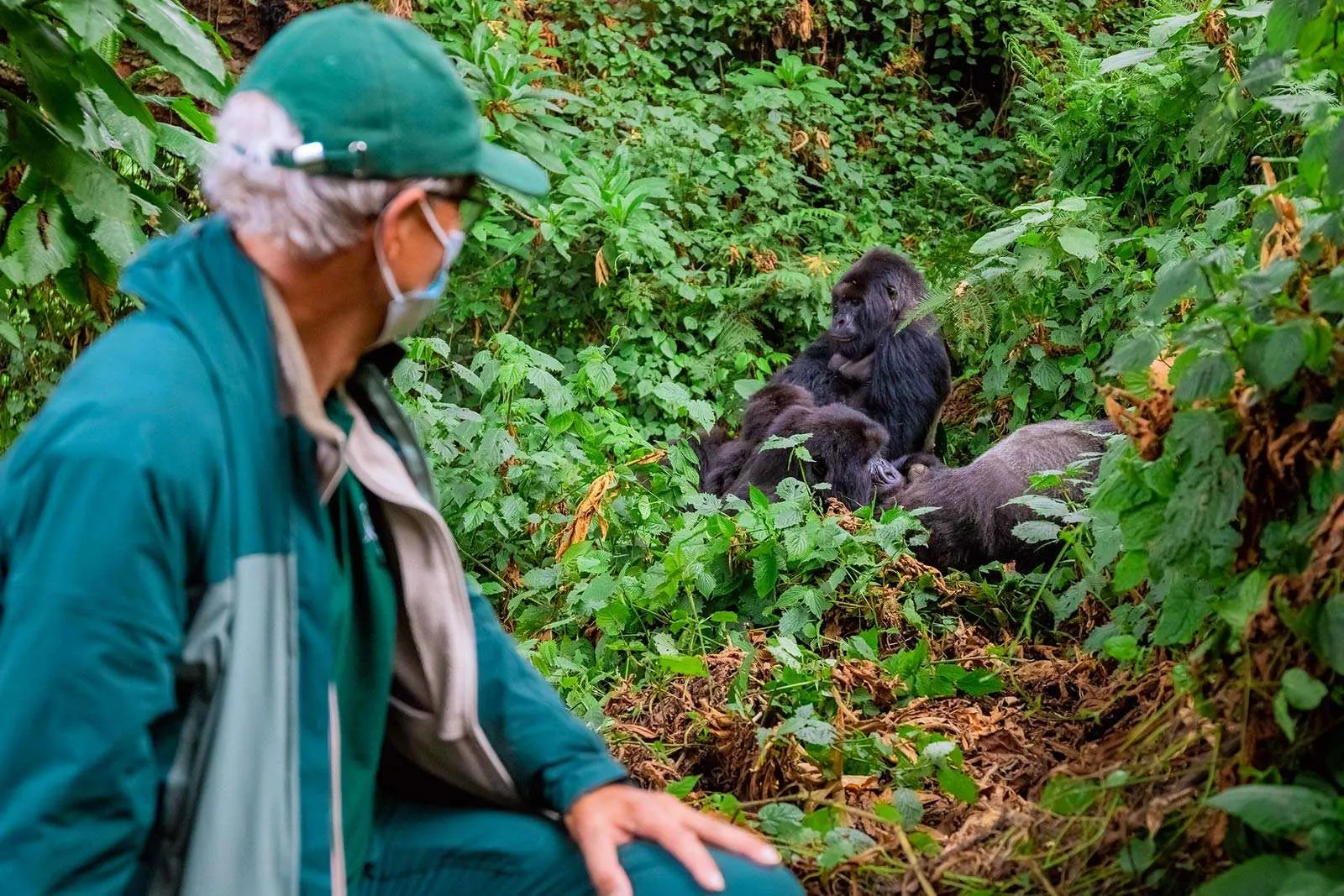
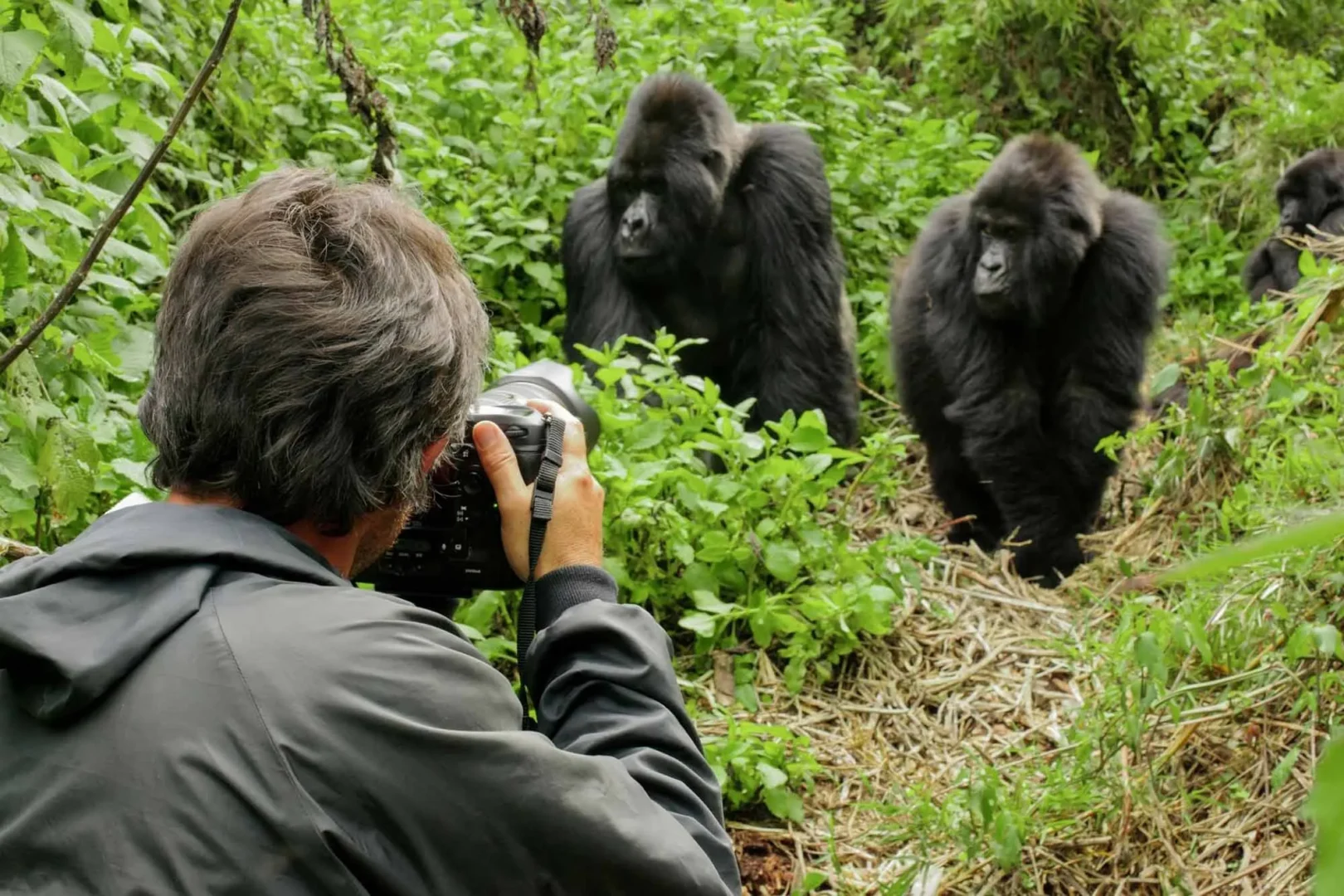
This creates a genuine sense of exploration.
On some mornings, a gorilla family may be relatively close to the accessible areas of the forest. On another day, the same family may have moved considerably farther uphill or deeper into thick vegetation. Visitors may therefore walk through bamboo, cross muddy sections, climb uneven volcanic slopes and negotiate dense vegetation before trackers finally indicate that the gorillas are nearby.
That unpredictability is one of the defining characteristics of the experience. The destination may be highly organized, but the wildlife remains wild.
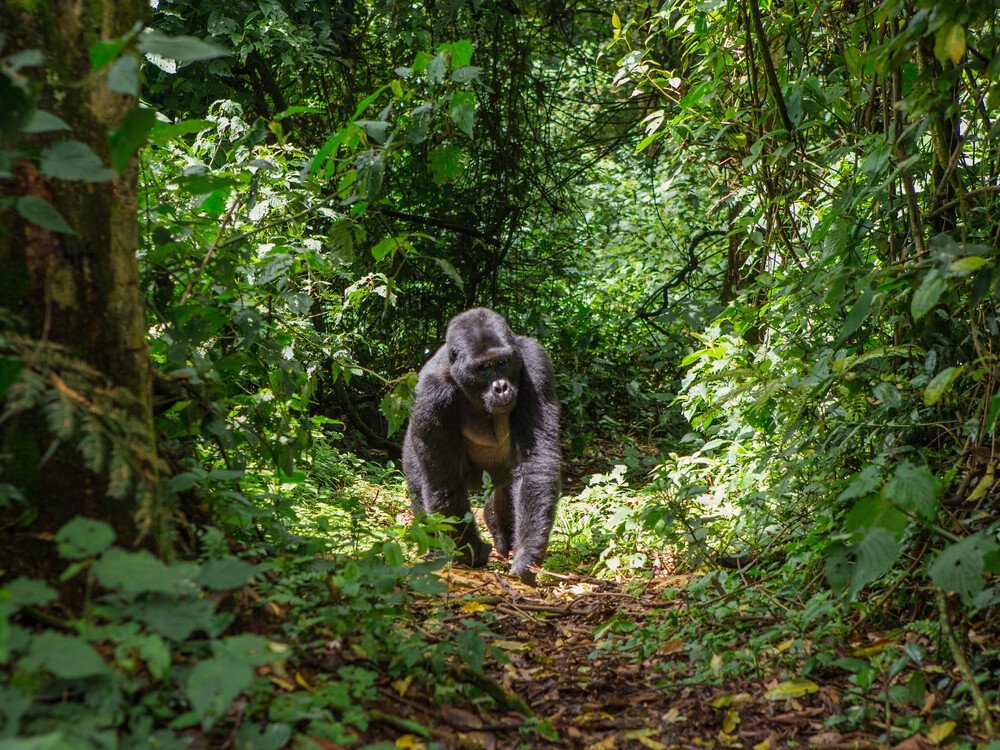
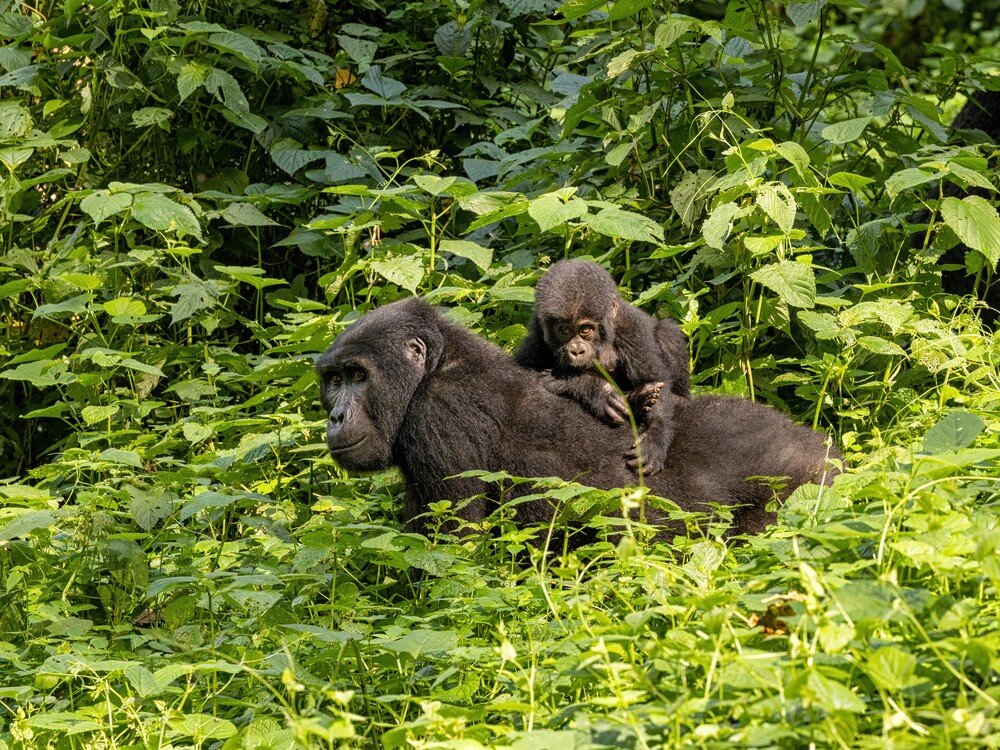
The moment the gorillas are located often changes the entire atmosphere of the trek. Visitors lower their voices, prepare their cameras and follow the guides carefully during the final approach. A large silverback may be resting beneath vegetation, females may be feeding nearby, juveniles may be chasing one another through the forest and mothers may be carrying or grooming young gorillas.
There is no scheduled performance.
The gorillas may sleep for part of the encounter, move through thick vegetation, climb trees, feed continuously or interact with members of their family group. This natural behavior is precisely what makes the experience so powerful.
Habituated Mountain Gorilla Families in Volcanoes National Park
Rwanda currently has 12 mountain gorilla families fully habituated for tourism in Volcanoes National Park. Visit Rwanda also notes that several additional groups are habituated specifically for scientific research rather than normal tourism visits. Each tourism family is carefully monitored by conservation teams, trackers and park rangers.
Habituation does not mean that the gorillas have been domesticated.
They remain completely wild animals.
Habituation is a gradual process through which a particular gorilla family becomes accustomed to the carefully controlled presence of researchers, trackers and ultimately small tourist groups without abandoning its natural behavior. The process makes responsible tourism possible while maintaining strict limits on how long people remain around the gorillas.
Rwanda currently issues eight tracking permits per habituated tourism family per day. With 12 tourism families, the official tourism information therefore places normal daily gorilla tracking capacity at 96 visitors. Each gorilla family is exposed to tourists for a strict maximum of approximately one hour per day.
This limited-access model is one of the most important features of Rwanda gorilla trekking.
Rather than allowing large crowds into the forest, the system deliberately restricts visitor numbers to reduce disturbance and create a more controlled encounter. This is also why permits can become difficult to secure on popular dates and why advance planning is recommended.
How Much Does Gorilla Trekking in Volcanoes National Park Cost?
For a standard foreign international visitor, the current gorilla trekking permit price is:
US$1,500 Per Person Per Trek
This is the official permit fee for participating in one mountain gorilla tracking experience on one confirmed date.
For example:
A solo international traveler requires US$1,500 for one gorilla permit.
A couple requires US$3,000 for two permits.
Three international travelers require US$4,500.
Four international travelers require US$6,000.
A group of eight international visitors requires US$12,000 in permits.
The permit cost should not be confused with the total price of a Rwanda gorilla safari. Transportation from Kigali, private vehicle services, accommodation near Volcanoes National Park, meals, professional safari guiding, airport transfers, porters and additional activities normally have to be added separately unless they are included in an organized safari package.
This distinction is particularly important when comparing quotations.
A traveler may see a US$1,500 gorilla permit and a US$2,500 or US$3,000 complete gorilla safari, but these are not two different prices for the same product. The more expensive figure may include the permit together with transportation, accommodation, meals, guiding and other safari services.
Minimum Age for Gorilla Trekking in Volcanoes National Park
The official minimum age for gorilla trekking in Rwanda is:
15 Years
Rwanda Development Board currently confirms that people must be at least 15 years old to participate in mountain gorilla tracking.
This rule is particularly important for families planning Rwanda safaris.
Parents traveling with children below 15 should not assume that younger children can simply accompany the group into the forest. Instead, a family itinerary should provide another suitable activity or supervised arrangement while eligible family members participate in the trek.
Families with teenagers aged 15 and above can experience the trek together, provided everyone is reasonably prepared for the terrain and physical demands.
What Time Does Gorilla Trekking Begin?
Visitors participating in Gorilla Trekking in Volcanoes National Park are currently required to report at the visitor registration area in Kinigi at approximately 7:00am.
The morning begins with registration and a briefing about gorilla trekking rules, safety and expected behavior in the forest.
Visitors are then allocated to a gorilla family.
Visit Rwanda states that physical fitness can be considered during group allocation, together with the approximate location of the gorilla families on that particular morning.
After the briefing, visitors continue toward the appropriate trailhead before beginning the actual walk into the forest.
Because of the early reporting time, spending the previous night near Volcanoes National Park, Kinigi or Musanze is normally the most comfortable arrangement. Although it is possible to structure very short journeys from Kigali, staying closer to the park reduces the pressure of an extremely early road transfer and allows travelers to begin the trek rested.
How Long Does Gorilla Trekking Take?
There is no fixed duration for a gorilla trek.
The walking time depends largely on where the assigned gorilla family is located that morning.
Mountain gorillas move continuously through their home ranges as they feed and rest. Professional trackers follow signs of their movement and communicate with the guiding teams, but nobody can guarantee exactly how far visitors will need to walk.
Some treks can be comparatively short.
Others may require several hours.
This variation means travelers should avoid planning the experience as though it were a simple one-hour excursion.
The one hour refers primarily to the regulated viewing period after the gorillas have been reached, not the total duration of the activity. Rwanda’s current official rules limit standard viewing time to approximately one hour.
A complete gorilla trekking morning involves registration, briefing, transfer to the trailhead, the search through the forest, the gorilla encounter and the return journey.
Depending on the location of the family, much of the day may therefore be devoted to the experience.
What Is the Terrain Like?
The terrain is one of the reasons Gorilla Trekking in Volcanoes National Park feels genuinely adventurous.
Visitors are walking through a living mountain forest rather than along a manicured tourist path.
The landscape may involve bamboo forest, soft volcanic soil, exposed roots, thick vegetation, uneven slopes and muddy sections. Rain can fall at almost any time because of the mountainous environment, and trail conditions may change rapidly.
Rwanda Development Board advises visitors to wear long trousers and long-sleeved clothing in the forest, while Visit Rwanda recommends solid walking shoes, sturdy clothing, gaiters and lightweight waterproof protection.
A traveler does not need to be an athlete, but reasonable fitness helps tremendously.
Regular walking, moderate hiking and stair climbing before travel can make the experience much more comfortable. Travelers should also be honest about mobility or fitness limitations so these can be taken into consideration when appropriate during the allocation process.
Is Gorilla Trekking in Volcanoes National Park Safe?
Gorilla trekking is carefully managed.
Visitors travel with trained guides and trackers and are required to follow specific behavioral rules while approaching and observing the gorillas.
Rwanda Development Board currently limits groups to eight visitors and instructs tourists to remain quiet, avoid sudden movements, follow guides’ instructions and avoid visiting gorillas when suffering from contagious illnesses such as colds or flu.
These procedures serve two purposes.
They protect visitors, but they are equally important for protecting the gorillas.
Mountain gorillas are genetically close to humans and can be vulnerable to human respiratory illnesses. Responsible trekking therefore requires visitors to treat health and distance rules seriously.
If a gorilla moves unexpectedly close, visitors should not panic, run or attempt to touch it. The correct response is to remain calm and follow the instructions provided by the guide.
The One-Hour Gorilla Encounter
After the assigned family has been located, visitors normally receive approximately one hour with the gorillas.
For many travelers, this hour feels much shorter than expected.
The first few minutes are often spent adjusting to the reality of being so close to wild mountain gorillas. After the initial excitement settles, visitors begin noticing details that photographs cannot fully capture.
The sound of gorillas pulling vegetation.
The movement of young gorillas through the undergrowth.
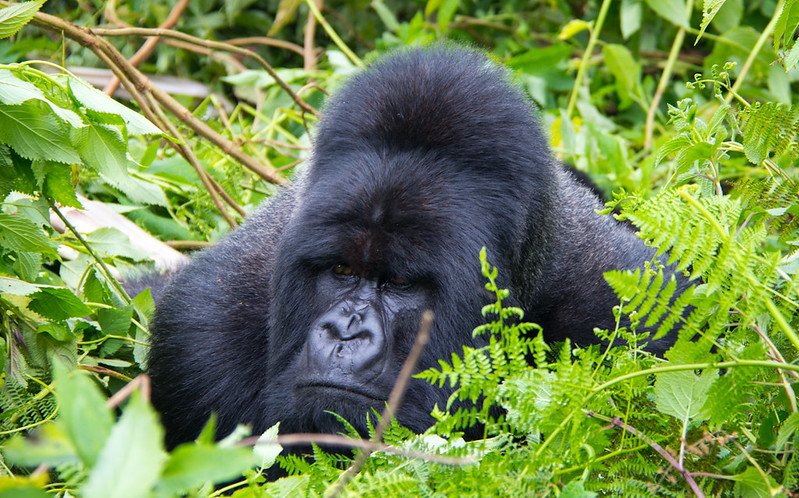
The enormous hands of a mature silverback.
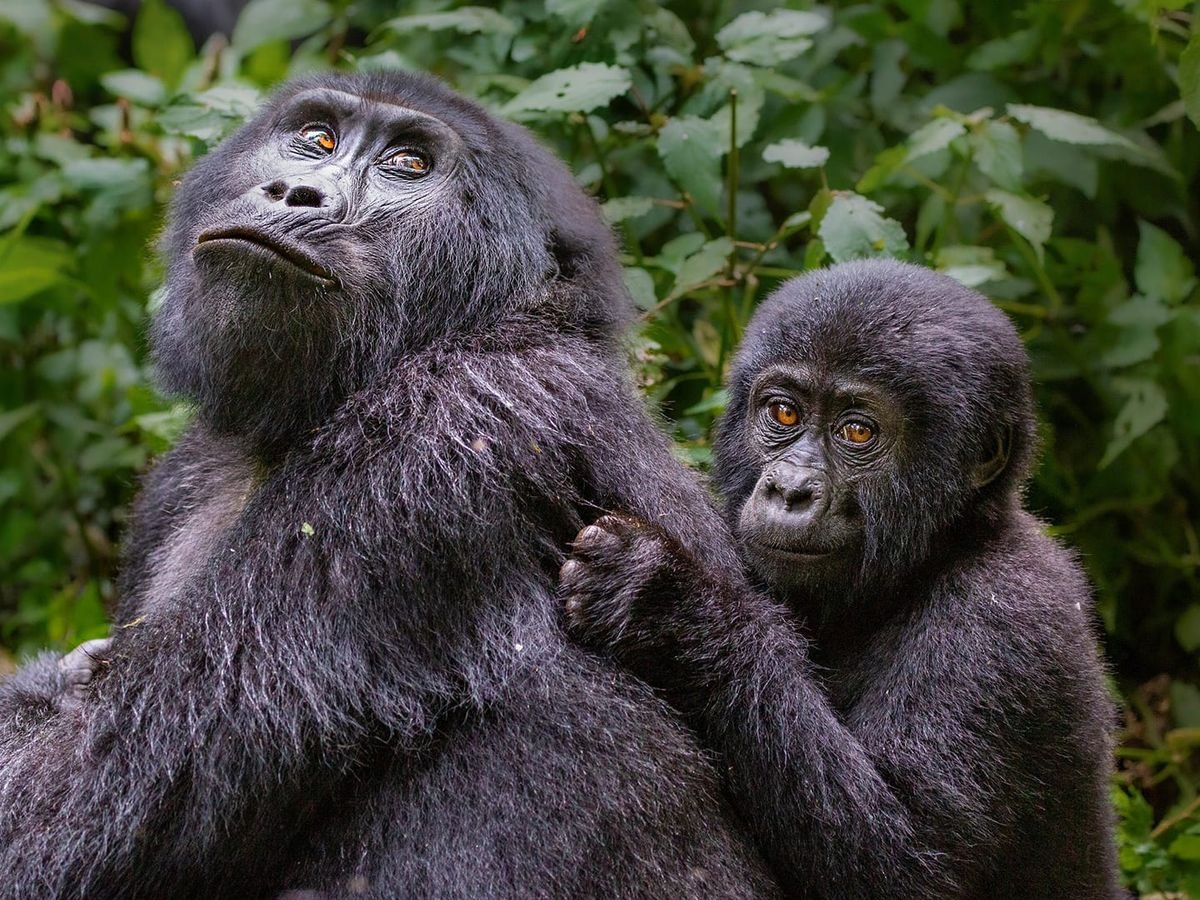
The quiet interaction between a mother and infant.
The way a family appears relaxed despite its physical power.
Photography is an important part of the experience for many visitors, but it is worth resisting the temptation to spend every minute looking through a camera.
Some of the strongest memories come from simply standing quietly and watching.
Gorilla Trekking and Conservation
Gorilla tourism in Rwanda is built around conservation rather than unrestricted wildlife access.
Visitor numbers are limited, gorilla families are monitored and tourist encounters are kept short. Visit Rwanda explains that revenue from gorilla permits supports conservation and community projects, including efforts connected with gorilla habitat.
The tourism system also generates employment around Volcanoes National Park.
Guides, trackers, rangers, porters, drivers, lodge employees, craftspeople, farmers and community tourism initiatives can all benefit from the economic activity created by visitors coming to see gorillas.
This relationship between wildlife protection and tourism economics is one reason the gorilla trekking permit should not be viewed simply as an expensive entrance ticket.
The experience helps place significant economic value on keeping mountain gorillas and their habitat protected.
More Than Just Mountain Gorillas
Although gorillas are the headline attraction, Volcanoes National Park deserves to be understood as a complete destination.
The region is also associated with golden monkey trekking, hiking, volcanic landscapes, Buhanga Eco-Park, Musanze Caves, cultural experiences, mountain biking and other outdoor activities. Visit Rwanda lists hiking, canoeing, biking and village experiences among the wider attractions of the Volcanoes area.
Travelers with sufficient time should therefore consider staying more than one night.
A two- or three-night visit allows you to experience the gorilla trek without rushing while also exploring another aspect of northern Rwanda.
For example, the day after gorilla trekking could be used for golden monkey tracking, a cultural experience, a nature excursion or simply a relaxed morning enjoying views of the Virunga mountains.
Who Should Consider Gorilla Trekking in Volcanoes National Park?
The experience appeals to a remarkably wide range of travelers.
First-time safari travelers often choose Rwanda because the gorilla experience can be combined easily with Kigali and a relatively compact itinerary.
Wildlife enthusiasts value the opportunity to observe one of the world’s most remarkable primates in its natural habitat.
Photographers are drawn to the combination of gorilla behavior, bamboo forest and atmospheric mountain light.
Honeymooners can combine the adventure with luxury accommodation and slower-paced experiences elsewhere in Rwanda.
Senior travelers can also enjoy the trek when fitness, mobility and itinerary pacing are considered carefully.
Families with eligible teenagers can share one of Africa’s most memorable wildlife experiences together.
Repeat African safari travelers often add Rwanda because gorilla trekking provides a completely different style of wildlife encounter from the traditional vehicle-based safaris of the Serengeti, Maasai Mara or Akagera.
Why Volcanoes National Park Works So Well in a Rwanda Safari
One of the greatest advantages of Gorilla Trekking in Volcanoes National Park is how easily it can become the centerpiece of a broader Rwanda itinerary.
A short trip might include Kigali and Volcanoes National Park.
A longer safari can add Akagera National Park for savannah wildlife, Lake Kivu for relaxation and Nyungwe National Park for rainforest and primate experiences.
Travelers with more time can also continue across the border into Uganda and combine Rwanda’s Volcanoes National Park with Bwindi Impenetrable National Park, Queen Elizabeth National Park or other destinations.
This flexibility makes the gorilla trek more than a standalone excursion.
It becomes the central wildlife experience around which an entire East African journey can be designed.
Planning Gorilla Trekking in Volcanoes National Park
For most travelers, the strongest planning sequence is to begin with the gorilla permit.
Choose a preferred travel period and check permit availability first.
Once the trekking date is confirmed, select accommodation close to Volcanoes National Park and arrange transportation from Kigali.
After that, additional activities can be fitted naturally around the permit.
Travelers should also allow enough time to arrive in Rwanda comfortably before trekking rather than scheduling the experience immediately after a potentially delayed international flight.
A relaxed three-day Rwanda gorilla safari works particularly well:
Day 1: Kigali or Kigali International Airport to Volcanoes National Park.
Day 2: Gorilla Trekking in Volcanoes National Park.
Day 3: Optional additional experience and return to Kigali.
Travelers wanting a deeper experience can easily expand this to four or five days.
Ultimately, Gorilla Trekking in Volcanoes National Park is not simply about spending one hour photographing mountain gorillas. It begins with the journey through Rwanda’s highlands, continues through the excitement of the early-morning briefing and the physical adventure of searching the forest, and reaches its emotional high point when visitors finally encounter a wild gorilla family.
The combination of limited visitor numbers, natural mountain habitat, professional tracking, strong conservation controls and the remarkable behavior of the gorillas makes this one of Rwanda’s defining travel experiences.
For travelers planning with Nextgen Safaris, the complete journey can be organized around the confirmed gorilla permit, including airport transfers, a private safari vehicle, professional driver-guide services, accommodation near Volcanoes National Park and extensions elsewhere in Rwanda or East Africa. This allows the trek to become part of a carefully paced safari rather than an isolated one-day activity.
Where Is Volcanoes National Park?
Volcanoes National Park lies in northwestern Rwanda, in the country’s dramatic mountainous region close to the borders with Uganda and the Democratic Republic of Congo. It protects Rwanda’s section of the Virunga Massif, an internationally important chain of volcanic mountains extending across Rwanda, Uganda and the DRC. The wider Virunga ecosystem is one of the world’s most important remaining strongholds for mountain gorillas and provides the extraordinary setting for Gorilla Trekking in Volcanoes National Park.
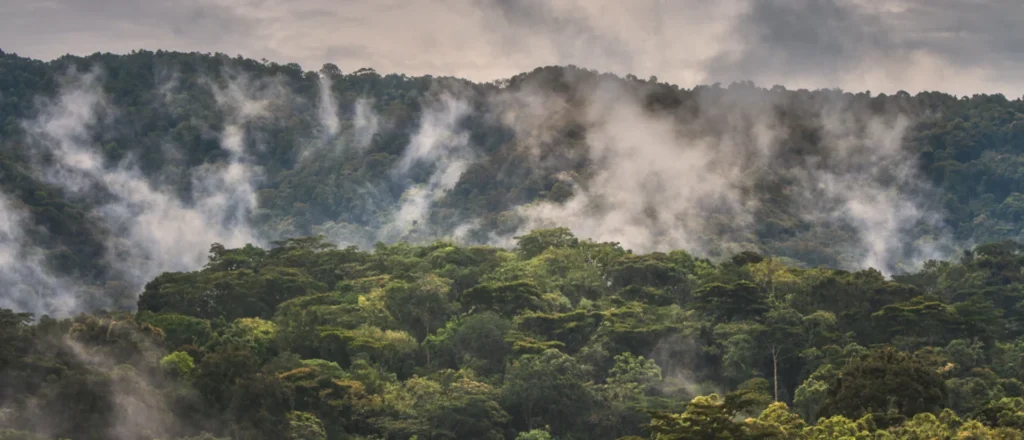
The park is dominated by a spectacular line of volcanic peaks that shape both its scenery and its wildlife habitats. Rwanda’s section of the Virungas includes Mount Karisimbi, Mount Bisoke, Mount Sabyinyo, Mount Gahinga and Mount Muhabura. The high elevation, volcanic soils and regular rainfall have created a rich mosaic of bamboo forest, montane vegetation, open clearings and higher-altitude plant communities. These habitats provide food and shelter for mountain gorillas as well as golden monkeys, forest mammals, birds and numerous smaller species.
For travelers arriving from Kigali, the approach to Volcanoes National Park is part of the experience. The journey moves away from the capital into increasingly mountainous countryside characterized by cultivated hills, small communities and fertile farmland. As the road climbs northward, the Virunga volcanoes begin dominating the horizon, providing a dramatic introduction to one of Rwanda’s most important conservation landscapes.
Musanze: The Main Gateway to Volcanoes National Park
Musanze is the principal town used by travelers visiting Volcanoes National Park. Visit Rwanda places Musanze at approximately 1,850 metres above sea level, with the Kinigi park headquarters about 13 kilometres away. (Visit Rwanda)
Musanze is especially convenient for travelers looking for a wide range of accommodation, restaurants and other services. It has ATMs, markets, restaurants and shops, making it useful for visitors who want an urban base while remaining close to the gorilla trekking area. (Visit Rwanda)
Travelers are not required to stay inside Musanze itself. Numerous lodges and smaller properties are located in the countryside between Musanze, Kinigi and the park boundary. These properties can offer a quieter environment, views toward the Virunga volcanoes and shorter morning transfers to the trekking headquarters.
This gives visitors considerable flexibility when planning accommodation. Budget-conscious travelers can use guesthouses and smaller hotels around Musanze, while mid-range and luxury travelers can choose lodges situated closer to the park and surrounded by rural landscapes.
Kinigi and the Gorilla Trekking Headquarters
Kinigi is especially important because it is the main operational center for gorilla trekking.
Visitors normally travel to the park headquarters in the Kinigi area early on the morning of their trek. The morning program includes registration, briefing, organization of trekking groups and preparation before visitors continue toward the trailhead assigned to their particular gorilla family.
Official Visit Rwanda itineraries commonly schedule the gorilla trekking briefing at approximately 7:00am. (Visit Rwanda)
This early start is one of the strongest reasons to stay around Musanze, Kinigi or the nearby park area on the night before trekking. Travelers who are already close to the headquarters can enjoy breakfast at their lodge and make a short morning transfer instead of beginning the day with a long road journey.
How Far Is Volcanoes National Park From Kigali?
For most international visitors, Kigali is the main gateway to Volcanoes National Park.
Visit Rwanda’s suggested itineraries describe the road journey from Kigali to the Volcanoes region as approximately three hours, passing through Rwanda’s lush northern countryside. (Visit Rwanda)
Actual transfer time can vary according to traffic leaving Kigali, road conditions, stopping points, the location of your lodge and whether sightseeing is included along the way.
Because the journey is comparatively manageable, Volcanoes National Park can be included in a relatively short Rwanda safari. A traveler arriving in Kigali can transfer to the park region, spend the night, trek gorillas the following morning and return to Kigali afterward.
However, although very short itineraries are possible, a two- or three-night stay around Volcanoes National Park is generally more enjoyable. This creates enough time to recover after international travel, prepare properly for trekking and include another experience such as golden monkey trekking, cultural activities or a relaxed exploration of the Musanze region.
Why the Location Makes Rwanda Gorilla Trekking Convenient
One of Rwanda’s major advantages as a gorilla destination is the relatively easy connection between its international gateway and its mountain gorilla habitat.
Travelers can land at Kigali International Airport and reach the Volcanoes region by road without needing an internal flight. This makes Gorilla Trekking in Volcanoes National Park particularly attractive to travelers who have limited holiday time.
A short itinerary might involve:
Day 1: Arrival in Kigali and transfer to Volcanoes National Park.
Day 2: Mountain gorilla trekking.
Day 3: Return to Kigali or continue to another Rwanda destination.
A longer journey can connect Volcanoes National Park with Lake Kivu, Akagera National Park, Nyungwe National Park or Uganda, allowing gorilla trekking to become the centerpiece of a wider East African safari.
The Wider Musanze and Volcanoes Region
The area surrounding Volcanoes National Park offers much more than gorilla trekking.
Visit Rwanda highlights attractions around Musanze including underground caves, bicycle excursions, Buhanga Eco-Park, and the scenic lakes of Burera and Ruhondo. (Visit Rwanda)
This makes the destination particularly worthwhile for visitors who can stay an additional day.
After the physical intensity of gorilla trekking, travelers can spend time exploring the countryside, visiting cultural attractions or simply relaxing at a lodge overlooking the volcanic landscape.
Volcanoes National Park itself is also associated with golden monkey tracking, hiking and the conservation history connected with Dian Fossey. Visit Rwanda notes that Fossey’s tomb lies above 3,000 metres and can be reached through a forest hike after driving from park headquarters. (Visit Rwanda)
The destination should therefore not be viewed simply as a place where travelers arrive, trek gorillas and immediately leave. The broader Virunga region provides enough activities and scenery to justify several nights.
Why Go Gorilla Trekking in Volcanoes National Park?
The obvious reason to go Gorilla Trekking in Volcanoes National Park is the opportunity to encounter wild mountain gorillas. Yet the true appeal of the experience extends far beyond seeing the animals themselves.
The trek combines the anticipation of tracking wildlife, the physical challenge of walking through a mountain forest, the expertise of local trackers and guides, the beauty of the Virunga landscape and the extraordinary emotional experience of finally reaching a gorilla family.
Unlike traditional African wildlife safaris, gorilla trekking does not take place from inside a vehicle.
Visitors must enter the forest on foot.
There is no fixed viewing platform and no guaranteed location where gorillas will be waiting. The animals move naturally through their territory according to food availability, social interactions and their own daily routines.
That uncertainty gives the experience its sense of adventure.
You Encounter Mountain Gorillas in Their Natural Habitat
Perhaps the most important reason to choose Gorilla Trekking in Volcanoes National Park is that the experience occurs within the gorillas’ natural mountain environment.
The gorillas are not confined inside an enclosure.
They are not fed or positioned for tourists.
They decide where to travel, when to feed, when to rest and how to interact with other family members.
Visitors enter their environment rather than bringing the animals into a human-controlled setting.
This creates a fundamentally different wildlife experience.
You may see a silverback resting beneath thick vegetation while younger gorillas play several metres away. A mother may quietly groom an infant. Another gorilla may move through bamboo while feeding continuously.
Sometimes the family remains relatively still.
At other times visitors may have to move carefully with the guides as the gorillas slowly change position.
No two encounters are identical.
The Trek Begins Before You See the Gorillas
A common misconception is that gorilla trekking consists only of the one-hour encounter.
In reality, the search through the forest is a major part of the experience.
After the morning briefing, travelers are transferred toward the trailhead associated with their assigned gorilla family. From there, the trekking group begins walking through the lower landscape toward the forest.
Depending on the particular trailhead, visitors may initially pass agricultural land and rural communities before entering the park.
The environment gradually changes.
Cultivated fields give way to thicker vegetation.
Bamboo becomes increasingly dominant.
The air becomes cooler and more humid.
Sounds from surrounding communities disappear and are replaced by birds, insects and movement within the vegetation.
Trackers look for signs showing where the gorilla family has traveled. They may examine broken vegetation, feeding remains, footprints and other clues while remaining in communication with other tracking teams already monitoring the gorillas.
This process creates anticipation.
The trek is not simply transportation to the attraction. It is part of the attraction itself.
The Moment You Learn the Gorillas Are Close
One of the most memorable moments often occurs before visitors actually see a gorilla.
Eventually, after walking through the forest, trackers indicate that the assigned family is nearby.
The mood changes immediately.
Conversation becomes quieter.
Visitors prepare cameras and listen carefully to their guides.
Depending on the circumstances, heavier bags may be left with porters nearby before the final approach.
The group then moves slowly through the vegetation.
Sometimes the first gorilla becomes visible gradually through leaves and bamboo. At other times, visitors may emerge from thick vegetation and suddenly find a large silverback sitting only a short distance away.
That transition from searching to observing can be extraordinarily powerful.
One Regulated Hour With Mountain Gorillas
Once the assigned family has been located, standard gorilla trekking permits allow approximately one hour with the gorillas.
Visit Rwanda describes the experience as carefully managed, with expert trackers and guides accompanying small visitor groups to spend this regulated period with the animals. (Visit Rwanda)
The one-hour restriction is intentional.
Mountain gorillas are habituated to carefully controlled human presence, but they remain wild animals. Limiting the duration and size of tourist groups reduces disturbance and keeps tourism within a conservation framework.
During the hour, visitors may witness many different behaviors.
A silverback may remain almost motionless for much of the encounter before suddenly moving through the vegetation.
Young gorillas may wrestle or climb.
Females may feed continuously while carrying infants.
Other family members may groom one another or rest together.
Because there is no performance schedule, what happens depends entirely on the family.
This authenticity is one of the greatest reasons the experience is so highly regarded.
Gorilla Trekking Is an Intimate Wildlife Experience
Traditional safari destinations may offer spectacular wildlife viewing, but there is usually significant physical separation between visitors and animals.
Gorilla trekking feels different.
You are standing in the same forest.
You hear vegetation being pulled apart as gorillas feed.
You hear their movements before you necessarily see them.
You notice the size of a silverback’s hands, the expressions of juveniles and the quiet interaction between mothers and infants.
The experience can feel remarkably intimate while still being governed by strict distance and safety rules.
Rwanda’s current guidance asks visitors to follow their guides and maintain appropriate distance from the animals. These rules are fundamental to protecting both gorillas and visitors.
The Gorilla Families Are Closely Monitored
The gorillas visited by tourists belong to habituated groups.
Habituation is a lengthy conservation process through which wild gorillas gradually become accustomed to the controlled presence of researchers, trackers and eventually small tourist groups.
It does not mean domestication.
The gorillas remain wild and continue living naturally within their habitat.
Visit Rwanda currently states that 23 gorilla groups live in and around Volcanoes National Park, with 12 fully habituated for tourism while others are habituated for research purposes. (Visit Rwanda)
These tourism families are monitored continually by conservation teams.
This ongoing monitoring helps researchers understand births, deaths, group changes, injuries, family movements and other important developments within the gorilla population.
Trekking Can Be Easy or Physically Demanding
Another reason Gorilla Trekking in Volcanoes National Park feels authentic is that the difficulty cannot be completely predetermined.
Visit Rwanda explains that hikes to gorilla locations can take from approximately 30 minutes to four hours or longer, reaching elevations of roughly 2,500 to 4,000 metres. (Visit Rwanda)
Another official itinerary notes that tracking may take between roughly 90 minutes and the whole morning, depending on the assigned family. (Visit Rwanda)
A gorilla family located close to the lower forest may require a relatively short walk.
Another may have moved much farther uphill.
Rainfall can turn soft volcanic soil into mud, while bamboo, tree roots and uneven slopes add physical difficulty.
This unpredictability makes reaching the gorillas feel earned rather than manufactured.
Porters Make the Experience Easier
Visitors should strongly consider hiring a porter.
Visit Rwanda confirms that porters are available to carry backpacks and cameras and can also provide assistance during challenging sections of the trek. (Visit Rwanda)
A porter can be especially helpful when climbing slippery terrain.
Photographers carrying cameras and lenses benefit greatly from reducing the weight on their shoulders.
Older travelers may appreciate an additional helping hand.
Even physically fit travelers often find that hiring a porter allows them to enjoy the trek more fully because they can concentrate on walking rather than carrying equipment.
Porter employment also provides an important direct economic benefit from gorilla tourism to surrounding communities.
The Landscape Is Exceptional
Mountain gorillas are the primary attraction, but the setting makes the experience even more memorable.
The Virunga region contains some of East Africa’s most dramatic mountain scenery.
Visitors trek beneath volcanic peaks through forests that can be covered in mist early in the morning.
Bamboo zones create completely different environments from the surrounding farmland.
Higher elevations contain moss-covered vegetation, giant lobelias and other plants adapted to the mountain climate.
An official Visit Rwanda itinerary describes walking through rainforest containing overhanging vines, moss-covered hagenia and giant lobelias before reaching the gorillas. (Visit Rwanda)
Even a day when the gorillas were removed from the equation would still provide an interesting mountain hike.
With the gorillas included, the landscape becomes part of an extraordinary wildlife experience.
It Has an Important Conservation History
Volcanoes National Park is deeply connected with the history of mountain gorilla research and conservation.
The region became internationally famous through the work of primatologist Dian Fossey, who began long-term research on mountain gorillas in the Virunga region during the 1960s.
Her work helped bring global attention to the threats facing the animals.
Travelers can still explore this conservation history today. Visit Rwanda notes that Dian Fossey’s tomb can be reached after a drive from park headquarters followed by approximately two to three hours of forest hiking to an altitude above 3,000 metres. (Visit Rwanda)
This historical connection adds another dimension to Gorilla Trekking in Volcanoes National Park.
Visitors are not simply seeing animals. They are entering a landscape where decades of research, anti-poaching efforts and conservation initiatives have helped shape the future of the mountain gorilla population.
Your Gorilla Permit Contributes to Local Communities
Another important reason to choose responsible gorilla tourism in Rwanda is the connection between permit revenue and communities around protected areas.
Visit Rwanda states that 10% of gorilla permit revenue is channeled toward local communities, supporting projects including schools, health centers and roads. It also notes that compensation mechanisms exist for farmers whose crops are damaged by gorillas. (Visit Rwanda)
Gorilla tourism creates employment beyond the park itself.
Trackers and rangers are obvious examples, but tourism also supports porters, drivers, lodge staff, farmers, craftspeople and other businesses around Musanze and Volcanoes National Park.
This means a properly managed gorilla tourism model can make conservation economically valuable to the people who live closest to the protected area.
Gorilla Trekking Can Be Combined With Many Other Rwanda Experiences
Travelers do not need to fly to Rwanda, complete one gorilla trek and immediately leave.
Volcanoes National Park fits naturally into a longer Rwanda safari.
Visitors can combine it with golden monkey trekking, another important primate experience within the Volcanoes ecosystem.
Musanze provides opportunities to explore caves, cycling activities, Buhanga Eco-Park and the nearby lakes of Burera and Ruhondo. (Visit Rwanda)
Travelers can continue west toward Lake Kivu for relaxation.
They can travel east toward Akagera National Park for savannah wildlife and game drives.
A longer itinerary can extend south toward Nyungwe National Park for chimpanzee trekking and other forest experiences.
Travelers wanting an even broader gorilla itinerary can cross into Uganda and combine Rwanda’s Volcanoes National Park with Bwindi Impenetrable National Park or Mgahinga Gorilla National Park.
This makes Gorilla Trekking in Volcanoes National Park an ideal anchor for a much larger East African journey.
Why the Experience Appeals to Different Travelers
Gorilla trekking is not limited to one type of tourist.
Wildlife enthusiasts appreciate observing rare primates at close range in their natural environment.
Photographers are attracted by gorilla behavior, misty vegetation and extraordinary portrait opportunities.
Honeymooners can combine the adventure with Rwanda’s luxury lodges and more relaxed experiences around Lake Kivu.
Families with teenagers aged 15 and above can share the trek together.
Senior travelers can participate when their fitness and mobility are taken into consideration and the itinerary is paced appropriately.
Solo travelers can join the regulated trekking group while still enjoying private transportation and personalized safari arrangements outside the park.
Repeat African safari travelers often find gorilla trekking particularly rewarding because it differs so dramatically from conventional vehicle-based wildlife viewing.
A Wildlife Experience That Cannot Be Completely Predicted
Perhaps the strongest reason to choose Gorilla Trekking in Volcanoes National Park is that the experience cannot be perfectly scripted.
You cannot know which gorilla will sit closest to you.
You cannot predict whether juveniles will spend the hour playing or sleeping.
You cannot know whether a silverback will remain deep in vegetation or move into an open area.
You cannot guarantee how far you will walk before reaching the family.
This uncertainty is part of authentic wildlife travel.
The gorillas determine the encounter.
The forest determines the conditions.
The trackers and guides help visitors experience it responsibly.
For many travelers, that combination of uncertainty, anticipation and genuine wildlife behavior is exactly what makes Gorilla Trekking in Volcanoes National Park one of the most memorable experiences of a Rwanda safari.
Rwanda Gorilla Trekking Permit for Volcanoes National Park
A valid Rwanda gorilla trekking permit is compulsory for every eligible visitor taking part in Gorilla Trekking in Volcanoes National Park. The permit is not simply an entrance ticket to the national park. It is the official authorization that allows one traveler to join a regulated mountain gorilla trek on a specific confirmed date, under the supervision of Rwanda Development Board guides and trackers.
For most international visitors, the permit is also the single largest fixed cost of the gorilla trekking experience. This makes it one of the first items that should be confirmed when planning a Rwanda safari. Once the trekking date has been secured, accommodation, private transportation, Kigali transfers and other activities can be organized around it.
Current Standard Permit Price: US$1,500 Per International Visitor
As of August 2026, Visit Rwanda and the Rwanda Development Board booking system list the standard permit price for a foreign international visitor at:
US$1,500 Per Person Per Gorilla Trek
The price applies to one eligible traveler for one trekking date in Volcanoes National Park. (Visit Rwanda Bookings)
This means that if the same visitor wants to trek mountain gorillas twice, two separate permits are required. An international traveler completing two gorilla treks should therefore budget US$3,000 in permit fees alone.
For couples, families and groups, each eligible participant requires an individual permit.
| Number of International Trekkers | Total Gorilla Permit Cost |
|---|---|
| 1 Traveler | US$1,500 |
| 2 Travelers | US$3,000 |
| 3 Travelers | US$4,500 |
| 4 Travelers | US$6,000 |
| 5 Travelers | US$7,500 |
| 6 Travelers | US$9,000 |
| 7 Travelers | US$10,500 |
| 8 Travelers | US$12,000 |
These figures represent permit fees only. They do not automatically include the other expenses needed to create a complete Rwanda gorilla safari.
Why the Gorilla Permit Should Be Booked Early
The permit should normally be one of the first components confirmed when planning Gorilla Trekking in Volcanoes National Park.
Rwanda Development Board states that bookings are processed on a first-come, first-served basis and that mountain gorilla tracking can be reserved in advance. (Visit Rwanda Bookings)
This is especially important for travelers who have fixed travel dates.
A couple traveling immediately after their wedding may have very little flexibility.
A family may only be able to travel during school holidays.
A group of six or eight travelers may need several permits for exactly the same day.
A photographer may already have flights or additional African destinations booked.
In these circumstances, leaving the gorilla permit until the end of the planning process can create unnecessary problems.
A better sequence is:
Choose your preferred travel period → check permit availability → secure the trekking date → confirm accommodation → organize transportation → add the rest of the safari.
The permit effectively becomes the anchor around which the Volcanoes National Park portion of the itinerary is built.
What Information Is Required to Book a Permit?
The official Rwanda Development Board booking process requires full traveler information.
The current RDB portal says applications are made using the client’s details, including names, passport information, email address and telephone number. Supporting documents must also be supplied where the visitor is applying under a category that requires proof of citizenship or residency. (Visit Rwanda Bookings)
It is important that the information used for the application matches the traveler’s official documentation.
RDB specifically warns travelers that erroneous, incomplete or false applications may lead to denial of park entry even where payment has already been made and a system-generated permit has been issued. Supporting documentation is checked at the park. (Visit Rwanda Bookings)
For international travelers booking through a safari operator, providing a clear copy of the passport information page early in the reservation process can therefore make permit arrangements much easier.
Minimum Age for a Rwanda Gorilla Permit
The minimum age for Gorilla Trekking in Volcanoes National Park is:
15 Years
Rwanda Development Board and Visit Rwanda both confirm the 15-year minimum. (Visit Rwanda Bookings)
This matters particularly for family safaris.
A family should not assume that a child below 15 can simply accompany parents into the forest. The age rule is part of the official trekking requirements.
Families traveling with younger children can still design an excellent Rwanda itinerary, but alternative arrangements should be made for the children while eligible family members participate in the trek.
For example, the family might spend several nights in the Volcanoes region, with the adults and older teenagers trekking gorillas while younger children participate in an appropriate lodge or cultural activity with supervision.
Special Rwanda Gorilla Permit Categories
The live RDB booking portal currently lists several visitor categories in addition to the standard foreign international rate.
These include Rwandan citizens, East African citizens, qualifying foreign residents and African visitors. The current booking portal displays promotional rates of US$200 for some Rwandan and East African categories and US$500 for certain African and resident categories. However, the English-language booking page also still contains a date-specific note referring to restrictions between June and October 2025. (Visit Rwanda Bookings)
Because we are now in 2026, travelers should verify the exact rate and eligibility requirements for their travel dates before payment rather than relying on an old promotional condition.
Visit Rwanda’s current gorilla tracking page continues to state that special offers exist for qualifying Rwandan and East African Community residents. (Visit Rwanda)
For safe trip budgeting, international travelers who do not qualify for a special category should plan around the standard US$1,500 permit price.
Can Rwanda Gorilla Permits Be Discounted?
Rwanda’s official booking platform currently includes a dedicated Low Season Discount – Gorilla Trekking application, and the live form allows eligible visit dates between November and May.
However, discounts can come with specific eligibility, itinerary or booking requirements. They should therefore never be treated as an automatic cheaper permit available to every visitor simply because the trip takes place during the rainy or low season.
For a webpage covering 2026–2030 travel, the strongest wording is:
The standard international permit price is US$1,500 per person per trek. Any discounted or promotional permit should be considered subject to current Rwanda Development Board eligibility and booking conditions.
That keeps the information accurate even if promotional programs are adjusted during future travel seasons.
What Does the Gorilla Permit Include?
The US$1,500 Rwanda gorilla permit gives the holder access to the official regulated mountain gorilla tracking experience in Volcanoes National Park on the confirmed date.
It includes participation in the trek under Rwanda’s official park guiding and tracking system.
Visitors report in the morning, complete registration and receive a pre-trek briefing. Trekking groups are then organized before continuing toward the appropriate trailhead.
Professional trackers help locate the assigned habituated mountain gorilla family, while guides accompany visitors through the forest and explain the rules that govern the experience.
After the gorillas have been located, standard viewing time is limited to approximately:
One Hour With the Gorilla Family
Rwanda Development Board currently specifies a maximum viewing time of one hour. (Visit Rwanda Bookings)
The permit therefore covers much more than the final 60 minutes. It provides access to the entire regulated trekking process, including the forest search that takes place before the family is reached.
Maximum Number of Visitors Per Gorilla Group
Rwanda Development Board currently limits a standard gorilla tracking group to:
A Maximum of 8 Visitors
(Visit Rwanda Bookings)
This limited group size helps control human pressure around the gorillas.
Travelers should understand that booking a private safari does not necessarily mean the gorilla trekking portion itself will be private.
You may have your own private vehicle, professional driver-guide and private accommodation arrangements throughout Rwanda, but at the park you can still be allocated with other permitted visitors up to the regulated maximum group size.
This distinction is worth explaining clearly to honeymooners, private luxury travelers and families who may assume that a private road safari automatically guarantees a private gorilla family visit.
What Time Must Permit Holders Report?
The current Rwanda Development Board system requires visitors to report at the park visitor information and registration center at:
07:00 AM
(Visit Rwanda Bookings)
Travelers should therefore stay close enough to Volcanoes National Park to arrive comfortably before the briefing.
This is why spending the night around Kinigi, Musanze or the nearby Volcanoes National Park area is usually preferable to attempting a long transfer on trekking morning.
Breakfast can be taken early at the lodge before the short drive to registration.
After registration and briefing, visitors proceed toward their allocated trailhead and begin the trek.
What Is Not Included in the US$1,500 Gorilla Permit?
One of the most important points to explain when discussing Gorilla Trekking in Volcanoes National Park is that the permit is not an all-inclusive safari package.
The following services normally need to be arranged separately unless specifically included in a tour quotation.
Private Transportation From Kigali
The gorilla permit does not provide road transportation from Kigali International Airport or your Kigali hotel to Volcanoes National Park.
A professionally organized safari commonly includes a private vehicle, fuel and driver-guide for the journey.
Transportation is also normally required between your lodge, the Kinigi briefing point and, depending on the day’s allocation, the trekking trailhead.
Accommodation
The permit does not include accommodation.
Travelers can choose from relatively affordable hotels and guesthouses around Musanze, comfortable mid-range safari lodges or high-end luxury properties positioned around the Volcanoes region.
Your accommodation choice can dramatically change the total cost of the safari even though the international gorilla permit remains the same.
Meals
Meals are separate unless they are included within your lodge or safari package.
Many organized Rwanda gorilla itineraries are booked on half-board or full-board terms so travelers do not need to search for meals immediately before or after the trek.
Private Safari Driver-Guide
The park’s trackers and ranger guides are part of the regulated trekking operation, but your personal safari driver-guide is a separate service.
A private driver-guide normally handles your airport pickup, road transfers, accommodation movements and wider Rwanda itinerary.
Airport Transfers
Transfers to and from Kigali International Airport are not automatically included in a gorilla permit.
They may, however, form part of a complete tour package.
Porter Services
Porters are available during the trek but are not included automatically within the standard permit.
RDB specifically notes that porters can assist with backpacks and cameras and can also help visitors with footing on difficult sections of the hike. (Visit Rwanda Bookings)
Hiring a porter can be particularly valuable for photographers, seniors and anyone carrying a daypack.
Travel Insurance
Travel insurance is normally purchased separately.
This is particularly important because gorilla permits involve a substantial prepaid cost and standard refund conditions are restrictive when travelers miss the trek for personal travel reasons.
Tips and Personal Expenses
Gratuities, laundry, premium drinks, souvenirs and other personal purchases should generally be budgeted separately unless the safari quotation states otherwise.
Gorilla Permit vs Complete Rwanda Gorilla Safari Price
This is where many travelers become confused when researching Rwanda gorilla trekking costs.
Consider these two prices:
Rwanda Gorilla Permit
US$1,500
Complete Rwanda Gorilla Safari
US$2,500–US$3,000 or more
The second price is not necessarily an overpriced version of the first.
A complete safari quotation could contain:
US$1,500 gorilla permit
plus:
Private 4×4 vehicle.
Fuel.
Professional driver-guide.
Kigali airport pickup.
Accommodation.
Breakfast, lunch and dinner.
Bottled drinking water during transfers.
Transport to the trekking briefing.
Return journey to Kigali.
Other agreed safari services.
A luxury package may add premium accommodation, extra nights, private experiences or other destinations and therefore cost substantially more.
The correct question when comparing prices is therefore not simply:
“Which safari is cheapest?”
Instead ask:
“What exactly does this quotation include?”
Two packages with very different prices may offer very different standards of accommodation, duration, vehicle arrangements and inclusions.
Example Permit and Safari Budget for a Solo Traveler
A solo international traveler requires:
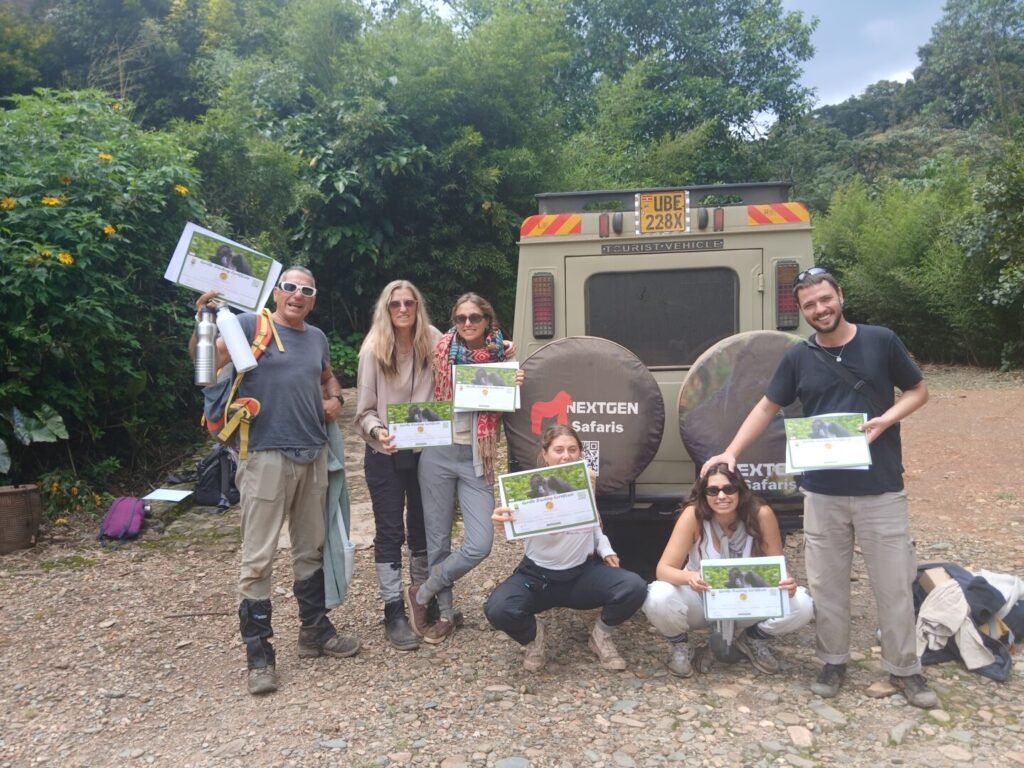
US$1,500 for one gorilla permit
However, solo travel can be relatively expensive on a per-person basis because the traveler may carry the entire cost of a private safari vehicle, fuel and professional driver-guide.
Accommodation may also have a single supplement.
The permit itself does not become more expensive simply because the traveler is alone.
Therefore, the total might be calculated as:
Gorilla permit + private vehicle + fuel + driver-guide + accommodation + meals + airport transfers + porter + personal expenses.
Budget-conscious solo travelers should therefore focus on controlling the flexible safari costs rather than expecting a reduction in the standard permit fee.
Gorilla Permit Cost for Couples
Two international travelers require:
US$3,000 in gorilla permits
Couples usually benefit from sharing the cost of the vehicle, driver-guide and accommodation.
This is why a private two- or three-day gorilla safari can often offer better per-person value for couples than for a solo traveler.
For honeymooners, the overall cost can be increased by choosing luxury lodges, additional nights or private experiences, but the standard permit calculation remains US$1,500 for each traveler.
Gorilla Permit Cost for Families
A family of four eligible international trekkers requires:
US$6,000 in gorilla permits
However, all participants must meet the minimum trekking age of 15.
If a family consists of two adults and two children younger than 15, the permit requirement would apply only to the eligible trekkers, while suitable arrangements would need to be made for the younger children.
This makes age an important factor when preparing family safari quotations.
Gorilla Permit Cost for Groups
Groups can often save money on the broader safari logistics because transport and guide costs are divided among several travelers.
The gorilla permit itself, however, remains individually priced.
Six foreign international visitors require US$9,000 in permits.
Eight require US$12,000.
Because RDB limits standard trekking groups to eight visitors, a group approaching that size should secure permits early if everyone wants to trek on the same date. (Visit Rwanda Bookings)
Can You Trek Gorillas Twice?
Yes.
Travelers can participate in Gorilla Trekking in Volcanoes National Park on more than one day, provided a separate valid permit is obtained for each trek.
An international traveler completing two treks therefore pays:
US$1,500 × 2 = US$3,000
Multiple treks can be particularly rewarding for wildlife photographers and serious primate enthusiasts.
The second experience may involve a different gorilla family, different terrain, different weather and completely different gorilla behavior.
Even when the same general park is visited, the experience rarely feels identical.
Permit Health Requirements
Holding a valid permit does not mean a traveler can automatically enter the gorilla habitat regardless of health.
Rwanda Development Board states that visitors suffering from a cold, flu or another contagious illness may be denied access. (Visit Rwanda Bookings)
This requirement is important because mountain gorillas can be vulnerable to diseases transmitted by humans.
Visitors are also instructed to maintain approximately seven metres from the gorillas where possible, keep their voices low and follow their guides’ instructions. (Visit Rwanda Bookings)
Travelers should therefore protect their health in the days leading up to the trek and take the park’s disease-prevention requirements seriously.
Are Gorilla Permits Refundable?
Rwanda’s permit rules are strict.
The current RDB terms state that no refund is normally made for late arrival, flight delay, absence or cancellation of the trip for other personal reasons. (Visit Rwanda Bookings)
There are special provisions when visitors fail to complete the experience because of the movement of the gorillas. RDB states that visitors who cannot track because of gorilla-group movement may be given another opportunity or a full refund, while those who trek for the whole day but fail to make contact can qualify for a 75% refund of the tracking fee. (Visit Rwanda Bookings)
These are specific circumstances and should not be confused with ordinary travel cancellation.
This is another reason comprehensive travel insurance is strongly recommended.
Why the US$1,500 Permit Is Important for Conservation
The Rwanda gorilla permit should not be viewed purely as an admission fee.
Visit Rwanda states that gorilla permit revenue supports conservation and community projects, including work associated with protecting and expanding gorilla habitat. (Visit Rwanda)
The permit system also limits how many tourists enter the forest and how long they remain with the gorillas.
This controlled tourism model helps balance the economic benefits of gorilla tourism with the need to protect a sensitive wild population.
The experience also creates employment for park rangers, trackers, porters, drivers, lodge workers and many other people connected with tourism around Volcanoes National Park.
What Does the Gorilla Permit Include? Quick Summary
| Permit Component | Included? |
|---|---|
| Official Gorilla Trekking Access | Yes |
| Assigned Trekking Date | Yes |
| Park Ranger / Guide Trekking System | Yes |
| Tracking of a Habituated Gorilla Family | Yes |
| Approximately One Hour With Gorillas | Yes |
| Private Transport From Kigali | No |
| Accommodation | No |
| Meals | No |
| Private Safari Driver-Guide | No |
| Airport Transfers | No |
| Porter | No |
| International Flights | No |
| Travel Insurance | No |
| Tips and Personal Expenses | No |
The Best Way to Plan Your Gorilla Permit
For international visitors planning Gorilla Trekking in Volcanoes National Park, the safest starting budget is:
US$1,500 per person for each gorilla trek
After that, calculate the rest of the safari according to your preferred travel style.
A budget traveler may choose simpler accommodation and a short itinerary.
A mid-range visitor may select a comfortable lodge, private vehicle and three-day safari.
A luxury traveler might spend several nights near Volcanoes National Park, use premium accommodation and combine the trek with additional private experiences.
The central permit remains the same standard price for the international visitor, but the surrounding safari can be designed at very different comfort levels.
For travelers planning through Nextgen Safaris, the most practical approach is to check the preferred trekking date first and then coordinate the permit with accommodation, private transportation from Kigali, professional driver-guide services and any additional Rwanda experiences.
This ensures the US$1,500 gorilla permit becomes the foundation of a properly organized Gorilla Trekking in Volcanoes National Park safari rather than an isolated booking with the rest of the logistics left unresolved.
How to Book Gorilla Trekking in Volcanoes National Park
Booking Gorilla Trekking in Volcanoes National Park should begin with the gorilla permit rather than the lodge or transport. The reason is simple: your permit is issued for a specific trekking date, and once that date is confirmed, the rest of the Rwanda safari can be organized logically around it. Accommodation near Volcanoes National Park, private transportation from Kigali, airport transfers and additional activities should ideally follow the confirmed permit rather than the other way around.
Rwanda Development Board currently allows mountain gorilla tracking permits to be booked through its official online tourism booking system, while travelers can also have the permit incorporated into a complete safari arranged by a tour operator. The official platform confirms that bookings and reservations are handled on a first-come, first-served basis and that mountain gorilla tracking can be booked in advance. (Visit Rwanda Bookings)
For most travelers, the strongest planning sequence is:
Check permit availability → choose the trekking date → secure the permit → reserve accommodation → arrange transportation → add other Rwanda activities → confirm the complete itinerary.
This sequence is particularly important for travelers with fixed dates, including honeymooners, families traveling during school holidays, photographers, larger private groups and visitors connecting Rwanda with Uganda, Kenya, Tanzania or another African destination.
Step 1: Decide When You Want to Trek
Before checking permit availability, establish your preferred travel period.
Gorilla trekking in Volcanoes National Park operates throughout the year, so there is no single annual opening period. However, some dates are naturally more attractive to travelers than others.
June through August is popular because it falls within Rwanda’s comparatively drier middle-of-year period. January and February are also attractive for visitors seeking relatively manageable trekking conditions.
Christmas, New Year, Easter periods and major international holiday seasons can also attract strong demand.
The more specific and inflexible your dates are, the more important early permit planning becomes.
For example, a traveler who can trek on any day between 10 and 16 July has much more flexibility than someone who must trek specifically on 12 July because of flights and onward arrangements.
Where possible, give yourself several acceptable trekking dates before building the remainder of the itinerary.
Step 2: Check Rwanda Gorilla Permit Availability
The next step is confirming whether permits are available for your intended date.
The Rwanda Development Board booking platform allows applicants to select an available slot for mountain gorilla tracking before completing the permit process. The official system states that the application involves choosing an available slot, filling in mandatory information, uploading required supporting documents and paying the applicable permit fee. (Visit Rwanda Bookings)
This means availability should be checked before assuming your preferred trekking date is confirmed.
A lodge reservation near Volcanoes National Park does not automatically reserve a gorilla permit.
Similarly, an international flight reservation does not guarantee trekking availability.
This is why professional safari planning normally checks the permit first.
If your first-choice date is unavailable, consider one or two days either side of it before changing the entire trip.
Step 3: Prepare the Correct Traveler Information
The booking process requires accurate traveler details.
Rwanda Development Board currently states that applications are made using the full details of the client, including names, passport information, email address and telephone number. Supporting documents are required where applicable. (Visit Rwanda Bookings)
The details entered should match the traveler’s official identification.
This is especially important for travelers using resident, regional or special eligibility categories. RDB states that supporting documents are verified at park entry and warns that incomplete, incorrect or false applications can lead to denial of entry even if payment has already been made and a system-generated permit issued. (Visit Rwanda Bookings)
When booking through a safari company, you may therefore be asked to provide a clear passport copy or the relevant identity information needed for the permit.
Providing accurate information early reduces the risk of last-minute problems.
Step 4: Select the Correct Visitor Category
International tourists should normally budget for the standard foreign international permit rate of US$1,500 per person per trek.
The live Rwanda Development Board platform also displays other categories for qualifying Rwandan citizens, East African citizens, African citizens and certain foreign residents. Eligibility requirements differ, and the platform includes specific documentation requirements for some categories. (Visit Rwanda Bookings)
Travelers should never select a cheaper category merely because it appears on the booking page.
For example, foreign residents claiming a resident category may need to demonstrate qualifying residency or work-permit status, while eligible East African travelers may need appropriate identification. (Visit Rwanda Bookings)
For dependable budgeting, use the rate that applies to your actual nationality and residency status.
Step 5: Pay for and Confirm the Gorilla Permit
For ordinary tourist-permit applications, the Rwanda Development Board system states that a tourist permit is automatically issued once the application process is completed. (Visit Rwanda Bookings)
Tour operators also have access to an official advance-booking mechanism. RDB’s current advance-booking service states that eligible travel and tour operators can reserve available permits by paying between 40% and 99% of the visiting fee, with the remaining balance required to confirm the permit at least 30 days before the visit. (Visit Rwanda Bookings)
This deposit-based advance-booking facility applies specifically to travel and tour operators rather than functioning as the standard booking method for every individual traveler.
For travelers, the practical lesson is straightforward: do not consider the gorilla trek fully secured until the booking has been properly confirmed and the required payment process completed.
RDB also states that cash payment at the park is not permitted. (Visit Rwanda Bookings)
You should therefore not travel to Kinigi expecting to purchase your standard permit in cash on the morning of trekking.
Booking Directly Through Rwanda Development Board
Independent travelers can arrange the permit through Rwanda’s official tourism booking system.
This option works particularly well for travelers who are comfortable arranging the rest of the safari themselves.
After obtaining the permit, the traveler remains responsible for organizing:
Accommodation near Volcanoes National Park.
Transportation from Kigali.
Transport between the lodge, Kinigi and the appropriate trekking starting point.
Meals.
Airport transfers.
Any porter arrangements.
Additional Rwanda activities.
The permit gives access to the regulated gorilla trekking experience; it does not automatically create a complete safari itinerary.
Independent booking can therefore be suitable for experienced travelers, but every logistical detail needs to be coordinated carefully.
Booking Through a Safari Operator
The alternative is to arrange Gorilla Trekking in Volcanoes National Park as part of a complete safari.
In this case, the safari operator coordinates permit availability with your overall travel plan.
This is usually more convenient when your journey includes several services, such as:
Kigali International Airport pickup.
Private 4×4 transportation.
Accommodation near Volcanoes National Park.
Professional driver-guide services.
The gorilla permit.
Golden monkey trekking.
Lake Kivu.
Kigali city experiences.
Akagera National Park.
Nyungwe National Park.
Cross-border travel into Uganda.
The advantage is not simply that someone else purchases the permit. The larger benefit is that the permit date, accommodation and transport all match one another.
For example, there is little value in securing a beautiful Volcanoes National Park lodge for 18 July if your gorilla permit is only available on 20 July and the lodge is full that night.
Coordinating the entire journey together avoids these mismatches.
How Far in Advance Should You Book Gorilla Trekking?
There is no single official rule saying every traveler must book exactly three, six or twelve months in advance.
Rwanda Development Board instead states that bookings operate on a first-come, first-served basis and can be made in advance. (Visit Rwanda Bookings)
The practical booking window therefore depends on how flexible you are.
Fixed Travel Dates
If your dates cannot change, it is sensible to plan early.
This applies especially to:
July and August travel.
Christmas and New Year.
Honeymoons.
School-holiday family travel.
Groups requiring several permits on the same date.
Travelers wanting specific luxury lodges.
Visitors combining several countries.
Flexible Travelers
If you can change your itinerary by several days, later planning becomes easier because the safari can be designed around whichever trekking date is still available.
Flexibility can make a significant difference.
Booking Gorilla Trekking in July and August
July and August are popular travel months because they overlap with holidays in Europe and North America and generally offer attractive trekking conditions.
Families, honeymooners and longer East African safari travelers often target these months.
If you want a particular lodge, exact trekking date and specific room category, begin planning earlier rather than assuming everything will remain available.
The same principle applies to groups.
Finding one permit can be easier than finding six or eight permits for the same day.
Booking During Christmas and New Year
December travel deserves special attention.
Although weather conditions can be variable, the Christmas and New Year period is a major international travel season.
Travelers often have fixed flight dates and limited ability to move their holiday.
Accommodation demand can also be high.
A festive-season safari should therefore be organized as one coordinated journey rather than booking each component separately without checking how they fit together.
Booking Gorilla Trekking for a Honeymoon
Honeymoon travel is usually date-sensitive.

The wedding determines the departure period, international flights may already be fixed, and couples may want a particular luxury lodge.
For that reason, check the gorilla permit before committing the entire honeymoon budget to non-refundable accommodation.
A good honeymoon itinerary may include:
Day 1: Kigali arrival.
Day 2: Transfer to Volcanoes National Park.
Day 3: Gorilla trekking.
Day 4: Relaxed morning or another Volcanoes experience.
Day 5: Continue to Lake Kivu, Akagera or another destination.
This provides much more breathing room than designing the entire trip around a rushed one-day gorilla excursion.
Booking for Families
Families must consider both permit availability and the official minimum trekking age of 15 years. RDB confirms that gorilla tracking is available to people aged 15 and above. (Visit Rwanda Bookings)
If four family members are eligible and all want to trek together, four permits need to be available on the same date.
Families with younger children should also arrange suitable supervision or alternative activities for the trekking morning.
These arrangements should be made at the itinerary-design stage, not after permits have already been purchased.
Booking for Large Groups
Permit availability becomes increasingly important as group size increases.
A solo traveler needs only one available permit.
A group of eight needs eight permits for the same date if everyone wants to trek together.
RDB currently limits visitor groups to a maximum of eight people per gorilla group. (Visit Rwanda Bookings)
Large groups should therefore prioritize permit confirmation before making other major bookings.
Even when eight permits are secured, final gorilla-family allocation remains under park management.
Should You Book Accommodation Before the Gorilla Permit?
Ideally, check the permit first.
You can identify preferred lodges beforehand, but avoid assuming that a lodge booking confirms the trekking date.
Once the permit is secured, book accommodation for the correct nights.
For most itineraries, travelers should stay near Volcanoes National Park the night before trekking.
Because current reporting time at the visitor registration centre is 07:00, staying around Musanze, Kinigi or the park area makes the morning considerably easier. (Visit Rwanda Bookings)
Depending on the trip, staying another night after trekking can also be worthwhile.
It allows you to return to the lodge, enjoy lunch, rest and absorb the experience instead of immediately beginning a long road transfer.
Should You Book International Flights Before the Permit?
Where possible, check permit availability before purchasing highly restrictive flights.
If flights must be purchased first, keep enough flexibility inside the Rwanda itinerary to accommodate more than one possible trekking date.
For example, instead of arriving on 15 July and departing on 17 July with only one possible trekking morning, spending four or five nights in Rwanda may provide several permit options.
That flexibility can make the planning process considerably easier.
Can You Book Gorilla Trekking at the Last Minute?
Yes, if permits remain available, but it should not be relied upon.
Because bookings operate on a first-come, first-served basis, last-minute travelers have access only to the spaces that remain. (Visit Rwanda Bookings)
This may work for a solo traveler with flexible dates.
It becomes far riskier for a couple with fixed flights or a group requiring several permits.
Do not travel to Rwanda specifically for gorilla trekking without confirming the permit in advance unless you are genuinely prepared for the possibility that your preferred date may be unavailable.
What Happens After Your Permit Is Confirmed?
Once the permit date is secured, the rest of the safari can be finalized.
Your itinerary should confirm:
The night you arrive in Kigali.
When you travel to Volcanoes National Park.
Where you stay before trekking.
How you reach the Kinigi briefing.
Who provides transportation to the trekking starting point.
Where you stay after the trek.
Whether you return to Kigali or continue elsewhere.
Any golden monkey, hiking or cultural activities.
Airport departure timing.
This is where the permit becomes the anchor of the entire itinerary.
A Practical Booking Example
Imagine a couple arriving in Kigali on 10 August and leaving Rwanda on 14 August.
Instead of immediately booking hotels, the first step should be checking whether two gorilla permits are available on 11, 12 or 13 August.
Suppose two permits are available on 12 August.
The itinerary can then be designed as:
Day 1 – 10 August
Arrival in Kigali and overnight.
Day 2 – 11 August
Transfer from Kigali to Volcanoes National Park.
Day 3 – 12 August
Gorilla Trekking in Volcanoes National Park.
Day 4 – 13 August
Golden monkey trekking, cultural experience or relaxed return to Kigali.
Day 5 – 14 August
Departure.
The safari is now structured around a confirmed trekking date rather than hoping that the permit will somehow fit the accommodation later.
Important Booking Mistakes to Avoid
Do not pay for a complete non-refundable Volcanoes National Park stay before checking the permit.
Do not assume the US$1,500 permit includes your transportation and accommodation.
Do not select a discounted visitor category without having the correct supporting documentation.
Do not enter incorrect passport details during the permit application.
Do not assume a private safari automatically means a private gorilla trekking group.
Do not schedule your international departure too tightly after the trek.
Do not arrive at the park expecting to pay cash for a permit; RDB states that cash payment at the park is not permitted. (Visit Rwanda Bookings)
And most importantly, do not treat an inquiry about permit availability as a confirmed booking. The trek should only be considered secured once the actual booking process has been completed.
Booking Gorilla Trekking in Volcanoes National Park With Nextgen Safaris
For travelers who prefer a fully organized journey, Nextgen Safaris can structure the Rwanda safari around the available gorilla trekking date rather than treating the permit as an isolated purchase.
The planning process can coordinate:
Gorilla permit availability.
Private Kigali airport pickup.
Private 4×4 safari transportation.
Professional driver-guide services.
Accommodation in Musanze, Kinigi or close to Volcanoes National Park.
Meals according to the agreed package.
Golden monkey trekking.
Lake Kivu extensions.
Akagera or Nyungwe additions.
Rwanda–Uganda combination safaris.
The objective is to make every element of the safari fit the permit correctly.
For most travelers planning Gorilla Trekking in Volcanoes National Park, the simplest rule is therefore:
Secure the gorilla trekking date first, then build the safari around it.
Rwanda Development Board’s current system confirms that bookings are handled according to available slots and on a first-come, first-served basis, making early permit planning particularly valuable for travelers with fixed dates. (Visit Rwanda Bookings)
Gorilla Trekking in Volcanoes National Park: Ultimate 2026–2030 Guide
Gorilla Trekking in Volcanoes National Park is Rwanda’s signature wildlife experience and one of the most remarkable primate encounters available anywhere in Africa. Hidden among the bamboo forests and mist-covered volcanic slopes of northwestern Rwanda, habituated mountain gorilla families can be visited on carefully controlled treks led by professional park guides and trackers. The experience combines wildlife, conservation, mountain scenery, physical adventure and an extraordinary hour observing gorillas behaving naturally within their forest home.
Volcanoes National Park forms Rwanda’s section of the wider Virunga Massif. The landscape includes the volcanoes Karisimbi, Bisoke, Sabyinyo, Gahinga and Muhabura, with Mount Karisimbi reaching 4,507 metres. The park protects a rich mosaic of montane ecosystems and is also home to golden monkeys, numerous bird species and other forest wildlife.
For most international visitors, Gorilla Trekking in Volcanoes National Park costs US$1,500 per person for the gorilla permit. The minimum trekking age is 15 years. Visitors report at the park headquarters in Kinigi at approximately 7:00am for registration, briefing and allocation to a gorilla family. Current Visit Rwanda information states that 12 habituated gorilla families are available for tourism, with eight permits issued per family per day, giving a maximum of 96 standard trekking places per day.

4
The trek itself is unpredictable in the best possible way. Mountain gorillas move freely rather than remaining at predetermined viewing points. Depending on where the assigned family has moved, the walk can take from around 30 minutes to four hours or longer before reaching the gorillas. Official Visit Rwanda guidance places trekking elevations roughly between 2,500 and 4,000 metres. After locating the family, visitors normally receive a strictly controlled one hour with the gorillas.
For travelers building a Rwanda safari around one defining wildlife experience, few activities compare with standing quietly in a mountain forest while a silverback rests among the vegetation, juveniles play nearby and mothers care for their young only metres away.
Where Is Volcanoes National Park?
Volcanoes National Park lies in northwestern Rwanda, close to Musanze and Rwanda’s borders with Uganda and the Democratic Republic of Congo. It forms part of the Virunga Massif, a chain of volcanic mountains extending across the three countries. Rwanda protects its portion of this internationally significant mountain ecosystem through Volcanoes National Park.
Musanze is the primary urban gateway to the park. Visit Rwanda places the city at approximately 1,850 metres above sea level and around 13 kilometres from the Kinigi park headquarters. Travelers can stay in Musanze itself or choose one of the lodges positioned closer to the park boundary and surrounding countryside.
The relatively convenient access is one reason Gorilla Trekking in Volcanoes National Park works well even for travelers with limited time. Visit Rwanda’s sample itinerary places the drive from Kigali to the Volcanoes region at approximately three hours, although actual driving time depends on traffic, stopping points and the exact lodge location.
Why Go Gorilla Trekking in Volcanoes National Park?
The principal attraction is obviously the mountain gorillas, but the quality of the experience comes from much more than simply seeing an animal.
The journey begins in Rwanda’s cultivated highlands before gradually approaching the dramatic Virunga volcanoes. On trekking morning, visitors leave the surrounding farmland and enter an increasingly dense environment of bamboo, montane vegetation and misty mountain forest. Trackers follow signs left by the gorillas while guides explain the ecosystem and help visitors navigate changing terrain.
Then comes the moment when the group is told that the gorillas are close.
Conversation becomes quieter. Cameras are prepared. Daypacks are normally left a short distance away with porters or accompanying staff, and the final approach is made carefully under the instructions of the ranger guides.
The gorillas are not performing for visitors. They may be feeding, sleeping, grooming, climbing through vegetation or interacting with one another. This unpredictability gives the experience much of its emotional power.
Visit Rwanda describes the habituated groups as continuously monitored and protected, with each tourism group exposed to visitors for a strict maximum of one hour per day.
Rwanda Gorilla Trekking Permit for Volcanoes National Park
A valid permit is compulsory for Gorilla Trekking in Volcanoes National Park.
Current Standard Permit Price: US$1,500 Per International Visitor
As of August 2026, Rwanda Development Board and Visit Rwanda list the standard foreign international gorilla permit at US$1,500 per adult per trek.
The permit is issued for a specific trekking date. If a visitor wishes to trek gorillas on two separate days, two permits are required.
| Number of International Trekkers | Gorilla Permit Cost |
|---|---|
| 1 Traveler | US$1,500 |
| 2 Travelers | US$3,000 |
| 3 Travelers | US$4,500 |
| 4 Travelers | US$6,000 |
| 5 Travelers | US$7,500 |
| 6 Travelers | US$9,000 |
| 8 Travelers | US$12,000 |
These figures cover the permits only. Accommodation, transportation from Kigali, meals, private safari guiding, airport transfers, porter services and additional activities are separate unless bundled into a complete safari package.
The RDB portal also displays special traveler categories, but some promotional wording on the live platform still references earlier date-specific conditions. Travelers seeking resident, regional or promotional pricing should therefore verify their exact eligibility and current travel-date conditions before payment rather than assuming that an older discounted rate automatically applies.
What Does the Gorilla Permit Include?
The permit grants access to the regulated gorilla tracking experience on the confirmed date.
It covers participation in the official trek with Rwanda’s park guiding and tracking system and allows approximately one hour with the assigned habituated gorilla family after it has been located. The permitted tourism group is limited to a maximum of eight visitors.
The permit does not automatically include your private vehicle, lodge, meals, Kigali hotel, airport pickup, porter, travel insurance or personal expenses.
This distinction matters when comparing prices. A US$1,500 permit and a US$2,500 or US$3,000 complete safari package are not equivalent products. The latter may include the permit together with road transportation, accommodation, meals and professional safari guiding.
How to Book Gorilla Trekking in Volcanoes National Park
Permits can be arranged directly through Rwanda’s official booking system or through a licensed safari operator. Visit Rwanda specifically recommends advance booking because availability is limited. The official system operates on a first-come, first-served basis.
For a complete safari, the most practical planning order is:
Check permit availability → confirm the gorilla trekking date → reserve accommodation → arrange transportation → add other activities.
The permit date should ideally be the anchor of the itinerary because everything else around Volcanoes National Park can then be scheduled accordingly.
Travelers with fixed July, August, Christmas, honeymoon or school-holiday dates should generally plan farther ahead than flexible visitors.
How Many Gorilla Families Can Tourists Visit?
Current Visit Rwanda information lists 12 fully habituated gorilla families available for tourism in Volcanoes National Park. These are Susa, Igisha, Karisimbi, Sabyinyo, Amahoro, Agashya, Kwitonda, Umubano, Hirwa, Bwenge, Ugyenda and Muhoza.
A habituated family is still completely wild. Habituation does not mean domestication or captivity. It means that, through a long and carefully managed process, the gorillas have become accustomed to the controlled presence of conservationists, trackers and small visitor groups.
Gorilla families can change naturally over time. Individuals mature, silverbacks compete, females may transfer groups and new family structures can form. For that reason, travelers should regard current family lists as dynamic rather than permanent.
How Are Gorilla Families Allocated?
Visitors gather at the park headquarters in Kinigi at around 7:00am. After registration, a briefing explains gorilla trekking procedures and conservation rules. Visit Rwanda notes that allocation can consider fitness levels as well as the location of the different families.
However, travelers should never treat a request for an “easy family” as a guaranteed short walk.
Mountain gorillas move constantly.
A family that was relatively close to a trailhead yesterday may have moved considerably farther by the following morning.
Age, mobility and fitness information should nevertheless be communicated honestly during trip planning and again at the briefing so that park staff can make the most appropriate allocation possible within the circumstances of that day.
What Happens on Gorilla Trekking Day?
A typical day of Gorilla Trekking in Volcanoes National Park begins very early.
Most visitors have breakfast at their lodge before driving to Kinigi. Because official reporting is at approximately 7:00am, staying around Musanze, Kinigi or the park area the previous night is much more comfortable than attempting a same-morning journey from a distant destination.
At headquarters, travelers register, meet the guiding teams and receive a detailed briefing. Visitors are then divided into trekking groups.
After allocation, groups drive toward their specific trailheads. These starting points differ according to which gorilla family will be tracked.
The trek may initially cross cultivated land before reaching the park boundary and entering the natural forest. Conditions vary enormously. Some sections may be relatively open, while others involve thick vegetation, roots, mud, bamboo or steep gradients.
Trackers normally know the previous day’s location of the family and continue following signs of their movement.
Eventually, the guide signals that the group is approaching the gorillas.
Visitors prepare cameras, follow instructions and move toward the family.
Once contact is made, the regulated one-hour encounter begins.
How Long Does Gorilla Trekking Take?
There is no fixed trekking duration.
Visit Rwanda states that hikes to different gorilla locations can range from approximately 30 minutes to four hours or more, while another official suggested itinerary describes tracking as lasting from around 90 minutes to the whole morning depending on the family assigned.
The return journey also takes time.
A traveler might therefore finish comparatively early, while another group could return much later in the day.
This unpredictability is why travelers should avoid scheduling a tight same-day international departure immediately after their gorilla trek.
A relaxed itinerary is far better.
How Difficult Is Gorilla Trekking in Volcanoes National Park?
The difficulty ranges from moderate to demanding.
Volcanoes National Park is not a flat lowland forest. Gorilla habitats extend across mountain slopes at substantial elevation, and RDB notes that trekking may reach between roughly 2,500 and 4,000 metres.
The challenge comes from a combination of elevation, uneven terrain, vegetation, mud and the unpredictable distance to the gorillas.
During dry periods, trails can be firmer.
During wet periods, the same slope can become slippery and considerably more tiring.
Visitors do not need to be professional hikers, but reasonable cardiovascular fitness and stability are extremely useful.
Preparing before travel by regularly walking, climbing stairs and completing moderate hikes can make the experience substantially more enjoyable.
Gorilla Trekking for Seniors
Age alone does not determine whether someone can enjoy Gorilla Trekking in Volcanoes National Park.
Many older travelers participate successfully.
The most important considerations are mobility, balance, cardiovascular fitness and comfort walking on uneven ground.
Senior travelers should ideally allow a relaxed arrival schedule, sleep near the park before trekking, use a porter and avoid carrying unnecessary weight.
Visiting during comparatively drier months may also reduce the additional difficulty caused by saturated trails.
Travelers with mobility concerns should discuss them before permits and accommodation are finalized so that the itinerary can be structured realistically.
Should You Hire a Porter?
For most travelers, the answer is yes.
RDB confirms that porters are available to help carry backpacks and cameras and can assist trekkers along difficult parts of the route.
A porter is particularly valuable for photographers, seniors and visitors carrying water, rainwear and camera equipment.
Even if you are fit enough to carry your own bag, using a porter means you can concentrate more fully on your footing and the experience.
Porter work also creates direct local employment connected with gorilla tourism.
Best Time for Gorilla Trekking in Volcanoes National Park
Gorilla trekking operates throughout the year.
For travelers prioritizing comparatively drier trekking conditions, the strongest periods are generally June through August and the shorter relatively dry period around January and February.
Rwanda Meteorology Agency identifies the country’s main rainfall periods as approximately March to May and September to December, although rainfall varies considerably by location and year. The northwestern highlands can receive rain even during periods considered relatively dry.
June to August
This is one of the most popular periods for Gorilla Trekking in Volcanoes National Park. Trails are generally less saturated, which can make steep sections easier.
January and February
These months provide another attractive relatively drier window and work particularly well for couples, seniors, photographers and first-time trekkers.
March to May
This is Rwanda’s principal long-rain period. The forest becomes intensely green, but trekkers should expect more mud and potentially difficult footing.
September to December
This is another wetter part of the year. The landscape can be spectacularly lush, while cloud and mist can create beautiful photographic atmosphere.
Gorilla Trekking During the Rainy Season
Rainy-season gorilla trekking should not automatically be avoided.
The forest is beautiful when wet.
Bamboo and montane vegetation become saturated with color, mist hangs between volcanic slopes and diffused light can provide excellent photography.
The disadvantage is primarily underfoot.
Mud makes steep terrain more physically demanding, and equipment must be protected against rain.
Proper boots, gaiters, waterproof clothing and a porter make a large difference.
Because rainfall can occur at any time in this high-altitude ecosystem, even dry-season visitors should arrive prepared for wet weather.
What to Wear for Gorilla Trekking
Visit Rwanda recommends solid walking shoes, gaiters, sturdy protective clothing, gloves and a lightweight waterproof jacket.
Good hiking boots with strong grip are far preferable to ordinary trainers.
Long trousers help protect against nettles and vegetation.
A lightweight long-sleeved shirt protects your arms.
Gardening or trekking gloves are useful because visitors occasionally need to steady themselves using vegetation.
A waterproof outer layer should remain within easy reach.
Dress in layers because mornings can feel cool while hiking generates substantial body heat.
What to Pack for Gorilla Trekking
Keep the daypack relatively light.
Carry drinking water, rain protection, camera equipment, spare batteries, personal medication and a small snack for use away from the gorillas. RDB notes that eating, drinking and smoking are not allowed near the gorillas.
A waterproof liner or dry bag is strongly recommended for cameras and electronics.
Photographers carrying several lenses should consider whether every piece of equipment is genuinely necessary. Dense forest and changing terrain make overly heavy camera bags inconvenient.
Photography During Gorilla Trekking
Photography is one of the great attractions of Gorilla Trekking in Volcanoes National Park, but conditions can be challenging.
Mountain gorillas have dark fur and live beneath a forest canopy where light levels vary dramatically.
Fast lenses and cameras capable of performing well at higher ISO settings are helpful.
A medium telephoto zoom can provide flexibility when individuals are positioned at varying distances, while wider lenses can capture gorillas within their forest environment.
RDB permits photography but flash photography is prohibited.
Because visitors have only approximately one hour once the family is located, prepare your camera settings before the encounter begins.
And importantly, spend some of that hour simply watching.
The strongest memory may not be the photograph.
Gorilla Trekking Rules in Volcanoes National Park
The rules are designed primarily to protect the gorillas and preserve the quality of the experience.
RDB currently requires visitors to maintain approximately seven metres from gorillas where possible. Viewing time is limited to one hour, group size is capped at eight tourists, voices should remain low, littering is prohibited and visitors should avoid rapid movements.
If a gorilla approaches, visitors should not attempt to touch it. Follow the guide’s instructions.
If you need to cough, turn away and cover your mouth.
Visitors should never feed gorillas.
Eating and drinking should not take place close to them.
Flash photography is prohibited.
These rules may feel strict, but they are fundamental to responsible gorilla tourism.
Can You Trek Gorillas When Sick?
Visitors with colds, flu or other contagious illnesses may be denied access.
RDB specifically warns visitors not to track gorillas when suffering from contagious illness.
Mountain gorillas are susceptible to human diseases.
Travelers should therefore take their health seriously in the days immediately before trekking.
Travel insurance is also advisable because permit cancellation and refund conditions are restrictive when a traveler cannot participate for personal reasons.
Minimum Age for Gorilla Trekking in Volcanoes National Park
The minimum age is:
15 Years
This rule is confirmed by both Visit Rwanda and Rwanda Development Board.
Families traveling with children below 15 should arrange alternative activities for them while eligible family members trek.
Rwanda still works extremely well as a family destination because a wider itinerary can include Akagera National Park, Kigali, Lake Kivu and suitable cultural or nature experiences.
Gorilla Trekking From Kigali
One advantage of Rwanda is the relatively convenient connection between the capital and the gorilla region.
Visit Rwanda’s suggested itinerary describes the drive from Kigali to Volcanoes National Park as roughly three hours through Rwanda’s scenic countryside.
Although very compressed one-day itineraries are technically possible, spending the previous night near Volcanoes National Park creates a much better experience.
You avoid an extremely early drive.
You arrive at registration rested.
You have more time to enjoy the Virunga scenery.
And there is less risk that traffic or another delay affects your morning trek.
Where to Stay for Gorilla Trekking
Accommodation around Volcanoes National Park ranges from practical guesthouses to some of Africa’s most exclusive safari lodges.
Musanze is a convenient option for travelers seeking restaurants, shops, ATMs and broader accommodation choice. Kinigi and the surrounding park fringes are better suited to visitors who want to wake up close to the trekking area and enjoy mountain views. Visit Rwanda confirms that Musanze lies about 13 km from the Kinigi headquarters and that additional boutique accommodation is available closer to the park.
Your lodge category does not change the gorilla encounter itself.
A budget traveler and an ultra-luxury traveler may participate in the same regulated trekking system.
What changes is the comfort before and after the trek.
Budget Gorilla Trekking in Volcanoes National Park
Rwanda’s US$1,500 standard international permit creates a relatively high minimum cost, but the rest of the safari can still be controlled.
Budget-conscious travelers can reduce expenditure by choosing simpler accommodation around Musanze, limiting unnecessary nights and keeping the itinerary focused.
The permit should not be compromised because it is the core regulated expense.
Instead, adjust flexible components such as accommodation standard and trip duration.
Travelers should also compare complete quotations carefully. The lowest price is not automatically the strongest value if important services such as transportation, meals or airport transfers are missing.
Luxury Gorilla Trekking in Volcanoes National Park
Volcanoes National Park has developed into one of Africa’s most prominent luxury primate destinations.
Luxury travelers can combine gorilla trekking with high-end accommodation, private transportation, personalized guiding, spa treatments, carefully planned dining and extensions across Rwanda.
The essential gorilla experience remains controlled by the same national park rules, but the surrounding journey can be highly personalized.
Luxury is therefore less about changing the hour with the gorillas and more about creating exceptional comfort before and after it.
Gorilla Trekking for Honeymooners
Few honeymoon experiences are comparable to sharing a mountain gorilla encounter.
A honeymoon itinerary can combine Volcanoes National Park with Kigali, Lake Kivu or a wildlife safari in Akagera.
Couples seeking maximum comfort may prefer a three- or four-day Volcanoes stay rather than rushing into the park and leaving immediately afterward.
A relaxed afternoon following the trek allows time to absorb the experience rather than immediately beginning another long transfer.
Gorilla Trekking for Photographers
Photographers should consider more than weather.
A second gorilla trek can be extremely valuable.
During the first encounter, much of the hour may be spent adjusting to the pace, forest light and excitement of being close to gorillas.
A second permit provides another opportunity with potentially different behavior, lighting and possibly a different family.
Each trekking day requires a separate permit.
Professional photographers should also communicate equipment requirements early so transportation and porter arrangements can be planned appropriately.
Gorilla Trekking for Solo Travelers
Solo travelers are welcome and participate in the same park allocation system as couples and groups.
The standard international permit remains US$1,500.
What generally makes a solo safari more expensive per person is the surrounding logistics. A single traveler bears the cost of a private safari vehicle, fuel and driver-guide rather than dividing those expenses among several people.
Accommodation may also involve single-room supplements.
The gorilla permit itself, however, remains an individual fixed charge.
Other Things to Do in Volcanoes National Park
Gorilla trekking may be the headline experience, but the Volcanoes region deserves more than one morning.
Golden Monkey Trekking
Golden monkeys provide a faster-moving and very different primate encounter. Visit Rwanda highlights golden monkey tracking as another major activity within Volcanoes National Park.
They are particularly worthwhile for travelers spending at least two activity days in the region.
Volcano Hiking
The Virunga landscape offers outstanding hiking.
Visit Rwanda identifies a range of volcanic trails and notes that the massif reaches from around 2,400 metres to 4,507 metres at Karisimbi.
Mount Bisoke is particularly known for its crater lake, while Karisimbi provides a substantially more demanding mountain adventure.
Dian Fossey Experience
Travelers interested in the history of mountain gorilla research can explore the conservation legacy associated with Dian Fossey.
Visit Rwanda notes that Fossey’s tomb can be reached after driving from park headquarters and hiking through the forest to above 3,000 metres.
Musanze Caves and Buhanga Eco-Park
Visit Rwanda lists both Musanze Caves and Buhanga Eco-Park among attractions associated with the Volcanoes area.
Twin Lakes of Burera and Ruhondo
The lakes around the Virunga foothills provide beautiful scenery and work particularly well as a relaxed extension after a physically demanding gorilla trek.
Combining Volcanoes National Park With Akagera
A Rwanda itinerary becomes particularly diverse when gorillas are combined with a conventional savannah safari.
After trekking in Volcanoes National Park, travelers can continue to Akagera National Park for game drives and wildlife viewing.
This creates a strong contrast between misty montane rainforest and Rwanda’s eastern savannah landscapes.
A longer trip allows the journey to remain comfortable rather than turning every day into a transfer.
Combining Gorilla Trekking With Lake Kivu
Lake Kivu is an excellent addition after the trek.
After several hours of mountain walking, time beside the lake provides a slower pace.
Depending on the itinerary, travelers may continue toward areas such as Gisenyi/Rubavu before returning to Kigali or traveling farther through western Rwanda.
This combination works particularly well for honeymooners and travelers who want to balance wildlife with relaxation.
Combining Rwanda and Uganda Gorilla Trekking
Travelers seeking two different gorilla experiences can combine Volcanoes National Park with Uganda’s Bwindi Impenetrable National Park or Mgahinga Gorilla National Park.
A cross-border itinerary can create a fascinating comparison between Rwanda and Uganda’s gorilla trekking environments.
However, each country issues its own permit and those dates must be coordinated carefully.
The itinerary should also allow adequate transfer time around the border rather than treating the two gorilla areas as interchangeable.
Gorilla Trekking and Conservation
Gorilla tourism in Rwanda has an important conservation and community dimension.
Visit Rwanda states that 10% of revenue from gorilla permits is directed toward local communities, supporting projects such as schools, health centres and roads. Gorilla tourism also supports employment for trackers, rangers, porters, drivers and lodge staff.
Rwanda’s broader tourism revenue-sharing program is designed to ensure communities surrounding national parks benefit economically from conservation.
This connection matters.
Successful gorilla conservation depends not only on protecting animals inside park boundaries but also on ensuring that neighboring communities see tangible value in preserving the ecosystem.
A Recommended 3-Day Gorilla Trekking Itinerary
Day 1: Kigali to Volcanoes National Park
Meet your professional driver-guide in Kigali and travel north through Rwanda’s mountainous countryside toward Musanze and Volcanoes National Park. The journey takes approximately three hours under normal planning conditions. Check into your lodge, enjoy lunch or dinner depending on arrival time and spend the evening preparing for the trek.
Day 2: Gorilla Trekking in Volcanoes National Park
After an early breakfast, drive to Kinigi for the 7:00am registration and briefing. Meet the park guides, receive your gorilla-family allocation and continue to the appropriate trailhead. Trek into the forest until the family is located and enjoy the regulated one-hour encounter. Return to the lodge afterward for lunch, relaxation and an overnight stay.
Day 3: Optional Activity and Return to Kigali
Spend the morning golden monkey trekking, visiting a cultural attraction or simply enjoying the Virunga landscape before driving back to Kigali.
This three-day structure is significantly more comfortable than attempting to compress the entire experience into one rushed day.
Practical Gorilla Trekking Planning Guide
| Item | Planning Information |
|---|---|
| Destination | Volcanoes National Park, Rwanda |
| Main Gateway | Kigali |
| Nearest Major Town | Musanze |
| Park Headquarters | Kinigi |
| Standard International Permit | US$1,500 per person |
| Minimum Trekking Age | 15 years |
| Morning Reporting Time | Around 7:00am |
| Maximum Visitors per Gorilla Family | 8 visitors |
| Time With Gorillas | Approximately 1 hour |
| Current Tourism Gorilla Families | 12 habituated families |
| Approximate Daily Standard Capacity | 96 permits |
| Trekking Duration | Variable; approximately 30 minutes to 4+ hours to locate a gorilla family. |
| Best General Dry-Season Period | June–August, with January–February also providing attractive trekking conditions. |
| Recommended Footwear | Waterproof hiking boots with strong grip. |
| Porter | Highly recommended, especially for assistance with bags and difficult terrain. |
| Photography | Allowed, but flash photography is not permitted. |
Permit, group-size, family and reporting information is based on current Visit Rwanda and RDB guidance.
Frequently Asked Questions About Gorilla Trekking in Volcanoes National Park
How much does Gorilla Trekking in Volcanoes National Park cost?
The current standard Rwanda gorilla permit costs US$1,500 per foreign international visitor per trek. Accommodation, transportation, meals and other safari services are additional unless included in a complete package.
Where does gorilla trekking take place in Rwanda?
Mountain gorilla trekking in Rwanda takes place in Volcanoes National Park in the country’s northwest.
How old must you be to trek gorillas in Rwanda?
The minimum age is 15 years.
How long can you stay with the gorillas?
Visitors normally spend one hour with the assigned gorilla family after locating it.
How many people are allowed to visit one gorilla family?
A maximum of eight visitors are permitted in a standard tracking group.
How many gorilla families can tourists visit?
Visit Rwanda currently lists 12 fully habituated tourism families in Volcanoes National Park.
What time does gorilla trekking start?
Visitors should report to the relevant registration centre at approximately 7:00am.
How long does it take to find the gorillas?
It varies considerably. Visit Rwanda states that hikes can range from around 30 minutes to four hours or more depending on gorilla location.
Is Gorilla Trekking in Volcanoes National Park difficult?
It can range from moderate to strenuous. Steep slopes, altitude, mud, vegetation and the distance to the gorillas all affect difficulty.
Do I need to be very fit?
Extreme fitness is not required, but reasonable cardiovascular fitness, balance and the ability to walk on uneven terrain are helpful.
Can seniors go gorilla trekking?
Yes, many do. Fitness and mobility matter more than age alone. Seniors should consider using a porter and choosing a relaxed itinerary.
Should I hire a porter?
A porter is strongly recommended, particularly if carrying photography equipment or if you want assistance on difficult terrain. RDB confirms that porters are available.
Can gorillas approach tourists?
Yes, a gorilla may occasionally move closer than the recommended distance. Visitors should remain still and follow their guide’s instructions rather than deliberately approaching or touching the animal.
Can I touch a mountain gorilla?
No. Visitors should never attempt to touch gorillas.
Can I use flash photography?
No. Photography is permitted, but flash is prohibited.
What happens if I have a cold?
Travelers with colds, flu or another contagious illness may be denied access because of the risk of disease transmission to gorillas.
Can I eat during the trek?
You may carry food for use away from the gorillas, but eating, drinking and smoking near the gorillas are prohibited.
What is the best month for gorilla trekking?
June through August generally provides comparatively drier trekking conditions, while January and February offer another useful relatively dry window. Rwanda’s main rainfall periods are approximately March–May and September–December.
Can I trek gorillas during the rainy season?
Yes. Gorilla trekking operates year-round. Wetter months can produce muddier trails but exceptionally lush scenery.
How far is Volcanoes National Park from Kigali?
Visit Rwanda’s sample itinerary estimates approximately three hours by road, although the actual journey varies with traffic and your exact destination.
Is it better to stay in Kigali or near Volcanoes National Park before trekking?
Staying near the park is generally more comfortable because official registration begins around 7:00am.
Can I trek gorillas twice?
Yes. You need a separate valid permit for every trekking day.
Is a gorilla sighting guaranteed?
Mountain gorillas are wild animals, so an absolute wildlife guarantee is inappropriate. RDB even maintains specific refund provisions for exceptional circumstances in which trekkers fail to make contact with a family.
Can I book my own gorilla permit?
Yes. Permits can be booked through Rwanda’s official system, while travelers may also use a licensed tour operator.
How early should I book?
Advance booking is strongly recommended, particularly when dates are fixed, because permits are limited and reservations operate on a first-come, first-served basis.
What else can I do around Volcanoes National Park?
Popular options include golden monkey trekking, volcano hiking, Dian Fossey-related experiences, Musanze Caves, Buhanga Eco-Park and excursions around the wider Musanze region.
Is Gorilla Trekking in Volcanoes National Park Worth It?
For travelers fascinated by primates, wildlife conservation and exceptional natural environments, Gorilla Trekking in Volcanoes National Park is difficult to compare with an ordinary safari experience.
The cost is substantial. The trek may be physically demanding. Rain is possible. The route cannot be predicted. You may spend hours climbing through vegetation for an encounter lasting only one hour.
Yet those limitations are precisely part of what makes the experience meaningful.
The gorillas remain wild.
Visitor numbers remain limited.
The environment remains natural.
And the encounter cannot be reproduced in a conventional wildlife park or zoo.
You are entering their habitat rather than bringing them into yours.
Plan Gorilla Trekking in Volcanoes National Park With Nextgen Safaris
A successful Rwanda gorilla safari requires more than simply purchasing a permit. The trekking date must coordinate with flights, Kigali transfers, accommodation, the early-morning Kinigi briefing and any additional activities included in the journey.
Nextgen Safaris can organize Gorilla Trekking in Volcanoes National Park as a short Rwanda experience or as part of a longer tailor-made East African safari. Your itinerary can include the gorilla permit, private transportation, professional driver-guide services, accommodation around Volcanoes National Park, airport transfers and extensions to Kigali, Lake Kivu, Akagera National Park, Nyungwe National Park or neighboring Uganda.
For international travelers, the essential planning figure remains US$1,500 per person for one standard Rwanda gorilla permit, but the final safari cost depends on how many days you travel, the accommodation category you choose, whether you travel solo or share services, and the additional experiences included.
The strongest approach is to confirm your preferred Gorilla Trekking in Volcanoes National Park date first and then design the rest of the Rwanda safari around that permit.
That creates a journey that is not only unforgettable on the morning you meet the gorillas, but well organized from the moment you arrive in Rwanda until the moment you leave.