Can Mountain Gorillas See You Before You See Them? 12 Fascinating Secrets of Gorilla Awareness in the Wild
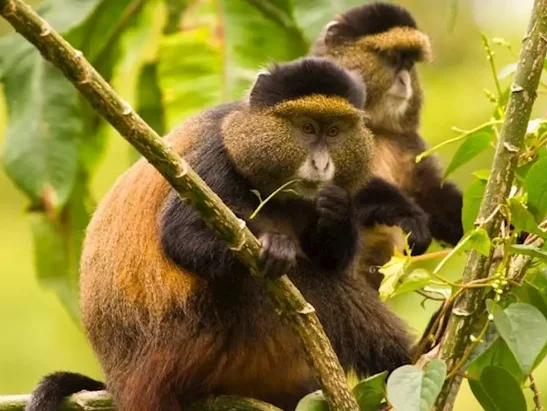
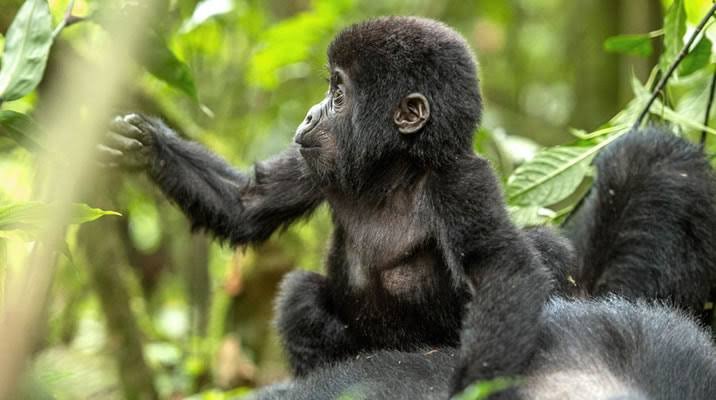
Imagine walking quietly through the mist-covered rainforest of Rwanda’s Volcanoes National Park or Uganda’s Bwindi Impenetrable National Park, surrounded by towering trees, thick bamboo, and dense green vegetation. Your experienced ranger suddenly stops, raises a hand, and asks everyone to remain silent. Somewhere beyond the leaves, a family of mountain gorillas is feeding peacefully. You cannot see a single gorilla, yet something remarkable may already have happened: the animals may have detected your group’s presence. This leads to a fascinating question many travelers ask before their first gorilla trekking experience: Can Mountain Gorillas See You Before You See Them?
Yes, mountain gorillas can sometimes see or otherwise detect people before those people notice the gorillas. Their eyes, ears, and sense of smell help them remain aware of their surroundings, while the dense forest environment can make it difficult for human visitors to locate them visually. A gorilla may notice movement through vegetation, hear footsteps approaching, or become aware of unusual sounds before tourists obtain their first clear view.
What makes mountain gorilla trekking extraordinary is that these magnificent primates are not waiting in prepared viewing areas. They are wild animals living in complex forest habitats, where they feed, travel, rest, communicate, and raise their young. Their movements are not controlled for tourists, and the experience of finding them involves professional trackers, experienced guides, and careful observation.
For travelers planning a mountain gorilla trekking experience in Rwanda or Uganda, understanding how gorillas perceive their surroundings can make the adventure even more fascinating. It also explains why guides ask visitors to move quietly, avoid sudden gestures, maintain appropriate distances, and respect the animals’ natural behavior.
This comprehensive guide explores how mountain gorillas see, hear, smell, and respond to humans, what happens before tourists locate a gorilla family, how silverbacks maintain awareness of their surroundings, and why responsible trekking practices help protect both wildlife and visitors.
Can Mountain Gorillas See You Before You See Them?
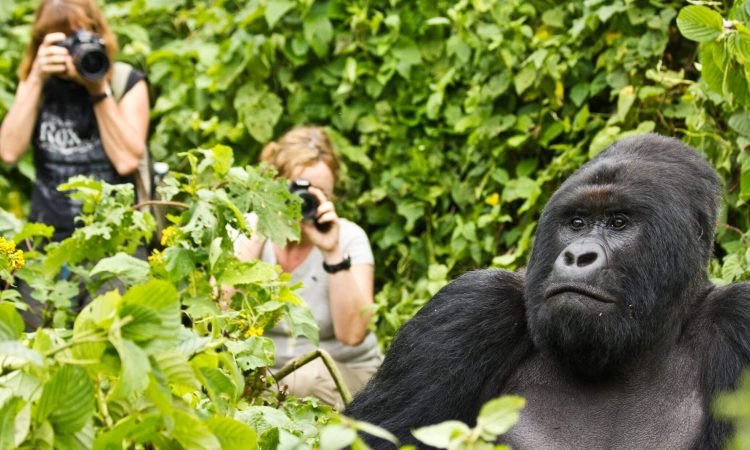
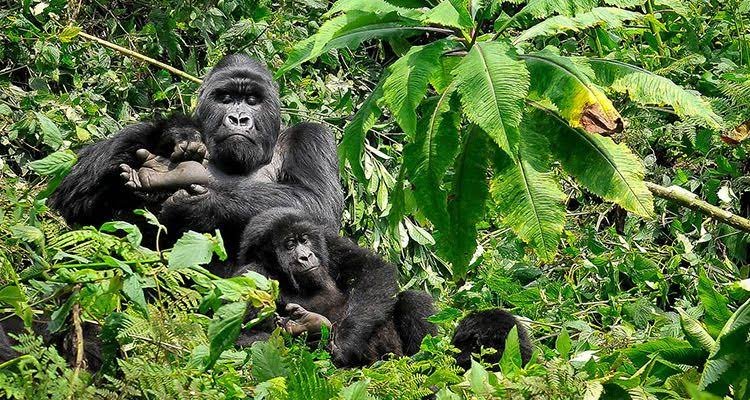
Mountain gorillas can notice people before people notice them, particularly in dense rainforest environments where visibility is restricted by vegetation, uneven terrain, and changing light conditions. Their ability to detect movement, recognize sounds, and respond to environmental changes allows them to remain aware of activity taking place around them.
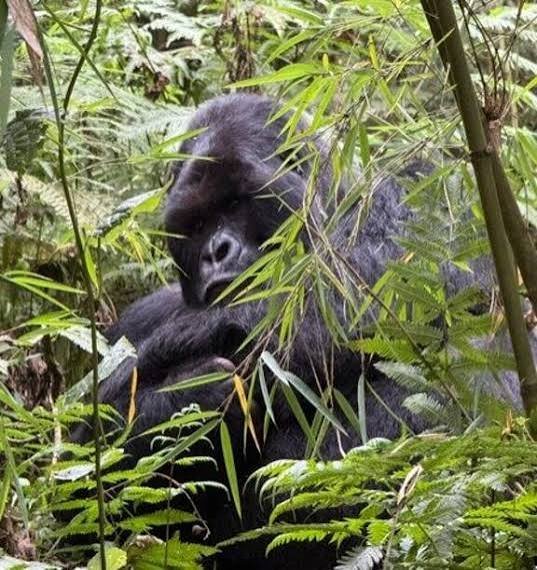
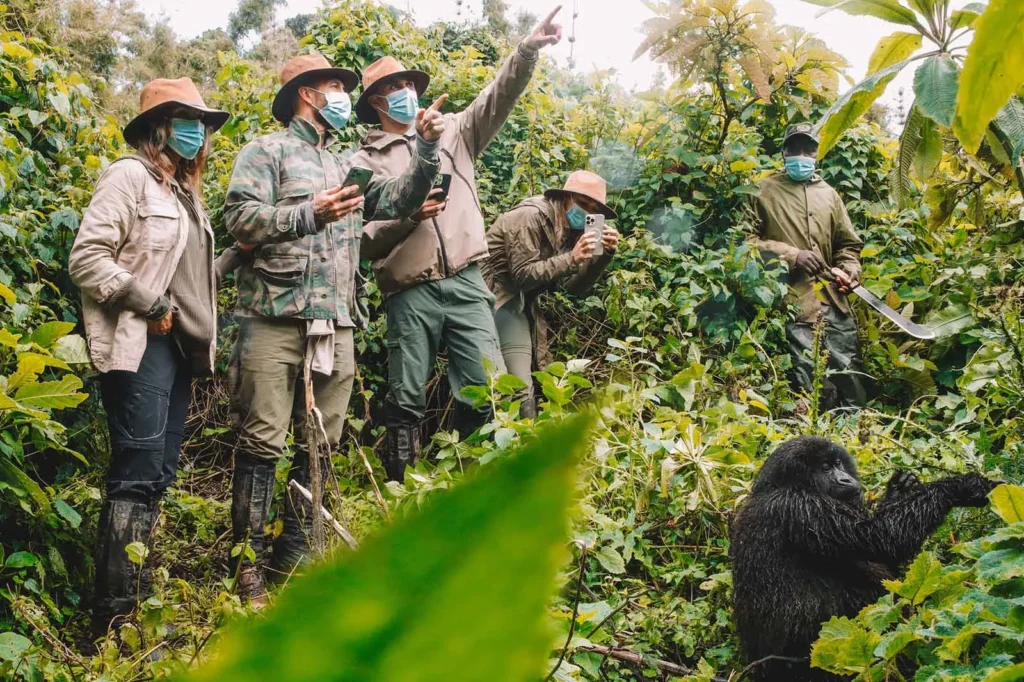
Imagine a gorilla sitting behind a large cluster of bamboo. From your position on a narrow trekking path, the animal may be almost completely hidden by leaves. However, the gorilla might have a clear view through a small opening in the vegetation, allowing it to notice your movements before you recognize its presence.
In another situation, the gorilla may not have a direct view of your group but may hear approaching footsteps, quiet conversation, or branches moving as people walk through the forest.
Mountain gorillas have sensory abilities suited to life in forest environments, but it would be misleading to suggest that they possess supernatural awareness or that their senses automatically exceed human abilities in every respect.
Their awareness is influenced by factors such as distance, vegetation, wind, noise, the gorilla’s attention, and whether it is feeding, resting, or moving.
When your ranger finally identifies the gorilla family and points toward the animals, some individuals may already be aware of your group’s presence. Others may continue feeding or resting without showing any obvious response.
This is one of the fascinating realities of gorilla trekking: you may spend several minutes searching for a gorilla that is already aware of activity around you.
How Do Mountain Gorillas Detect Humans in the Rainforest?
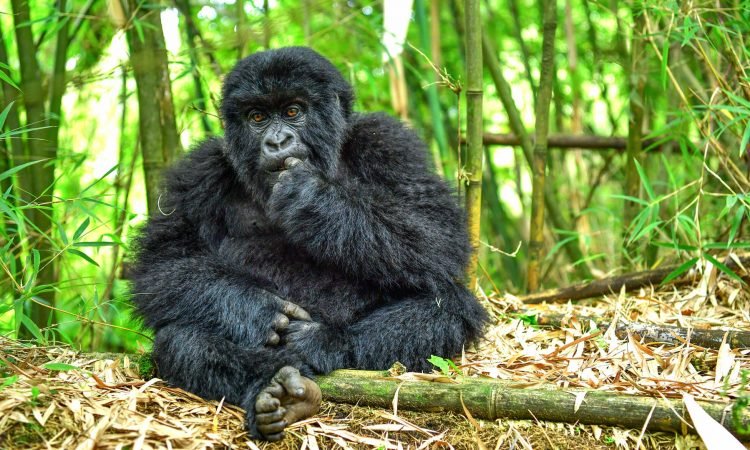
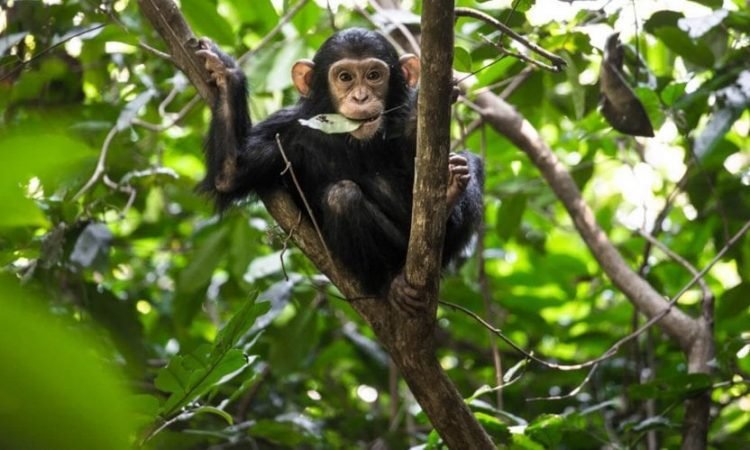
Mountain gorillas use several senses to gather information about their surroundings. Like humans and other great apes, they rely on vision to observe movement and recognize objects, while hearing and smell contribute additional information about the environment.
The rainforest presents a complicated sensory landscape. Dense vegetation can block direct views, while the movement of leaves, animal calls, rainfall, and flowing streams creates a constantly changing background of sounds.
A mountain gorilla may observe movement through a gap in the vegetation or notice a person entering a clearer area of forest. It may also hear footsteps or unusual noises coming from a direction it cannot see directly.
Smell can contribute to environmental awareness, although the precise distance at which a mountain gorilla can identify a human scent under natural trekking conditions is not established by a universal scientific rule.
Gorillas also communicate with other members of their family through vocalizations, posture, facial expressions, and movements. These interactions provide important social information, particularly when the family is traveling or responding to changes around it.
However, visitors should avoid assuming that every glance, sound, or movement is a response to human presence. A gorilla may be looking toward another family member, listening to forest activity, or simply changing its resting position.
Understanding these possibilities helps travelers appreciate the animals without inventing dramatic explanations for their behavior.
1. Mountain Gorillas Have Eyes Adapted for Observing Their Surroundings
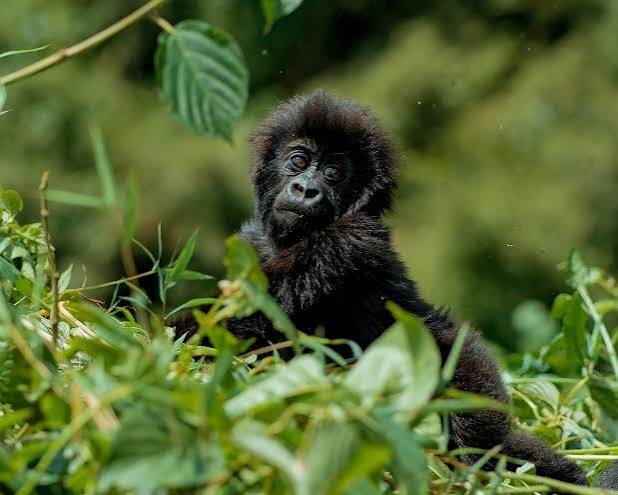
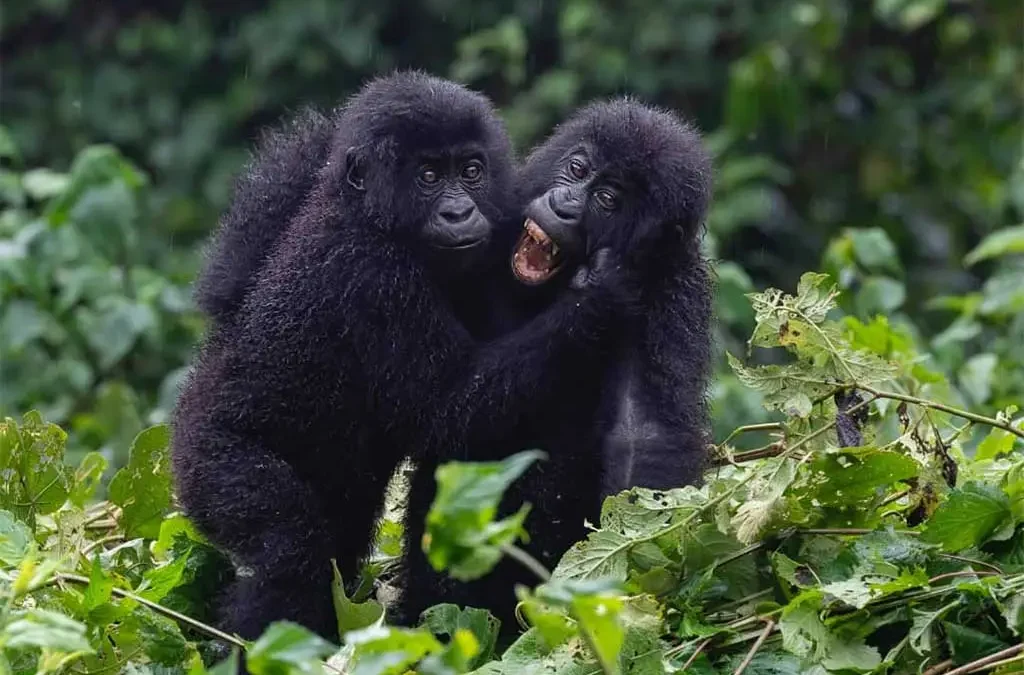
Mountain gorillas have forward-facing eyes that provide overlapping fields of vision, helping them judge distances and observe objects within their surroundings. As great apes, they share important aspects of their visual biology with humans, including color vision.
Their eyes are useful for navigating vegetation, identifying food, watching family members, and interpreting social interactions. Vision also helps them notice changes in their environment, including the movement of people.
However, gorillas do not have unrestricted visibility through dense rainforest vegetation. Leaves, branches, slopes, and other obstacles can block their view just as they can block yours.
The advantage in a particular encounter may come from position rather than superior eyesight. A gorilla sitting quietly in an opening within the vegetation may have a clear view of an approaching person who has not yet recognized the animal’s dark shape.
Lighting also influences visibility. A gorilla resting in shade may be difficult for visitors to identify against the forest background, particularly when sunlight creates contrasting bright and dark areas.
When trekking, you may notice that a gorilla appears suddenly even though it has been sitting in the same location for several minutes.
The experience demonstrates how challenging wildlife observation can be in a complex natural environment.
2. Mountain Gorillas Can Hear People Approaching
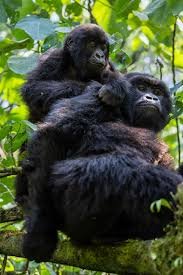
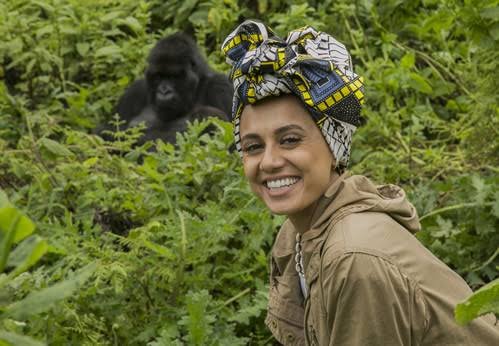
Hearing is another important sense that may allow mountain gorillas to become aware of tourists before visual contact occurs.
Walking through a rainforest produces sounds, even when visitors attempt to remain quiet. Boots move across the ground, leaves brush against clothing, branches bend, and occasional footsteps disturb loose vegetation.
A trekking group may also produce conversation, camera noises, or the movement of equipment inside backpacks.
Some of these sounds can travel beyond the distance at which a gorilla is visible, particularly when the forest is relatively quiet.
However, dense vegetation, rain, wind, waterfalls, and other environmental conditions can influence how clearly sounds travel. It is therefore impossible to specify one reliable distance at which every mountain gorilla can hear an approaching person.
The gorillas may respond by looking toward the sound, changing their posture, or simply continuing their previous activity.
Habituated gorilla families may be familiar with certain sounds associated with professional trackers and regulated tourism visits, but their individual responses still vary.
Keeping your voice low is therefore important not because it guarantees that gorillas will never detect you, but because it helps reduce unnecessary disturbance.
3. Can Mountain Gorillas Smell Humans Before Seeing Them?
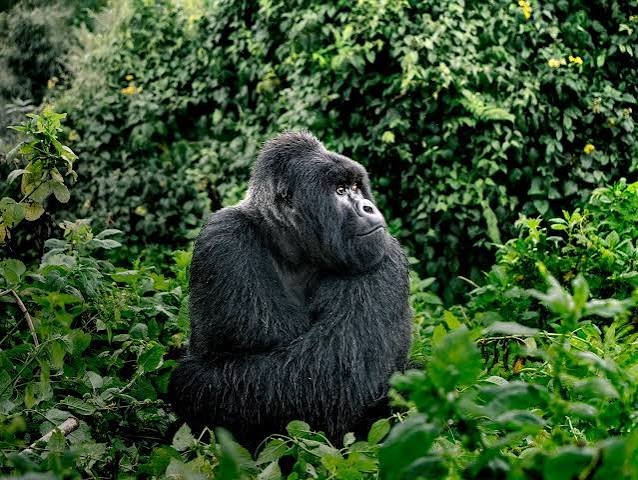
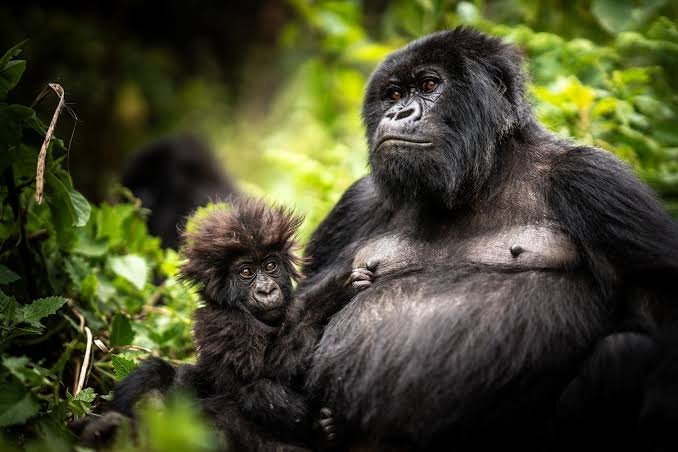
Mountain gorillas possess a sense of smell and can use olfactory information as part of their awareness of the environment. However, claims that they can detect tourists from several kilometres away by scent alone are not supported by a reliable universal rule for gorilla trekking.
The usefulness of scent depends on environmental conditions, including airflow, vegetation, humidity, and the distance between the source and the animal.
A gorilla may encounter human-associated odors while moving through an area used by park staff or tourists. Nevertheless, it is usually impossible for a visitor to determine whether a particular gorilla noticed them through smell rather than sound or sight.
The idea that gorillas can instantly identify every person through perfume, clothing, or personal scent should therefore be treated cautiously.
For visitors, the practical recommendation is to avoid strong fragrances or scented products that could unnecessarily affect the wildlife experience, while following the park’s actual visitor regulations.
Most importantly, never use food, fragrances, or other substances to attract a gorilla’s attention.
Responsible trekking is based on allowing animals to behave naturally rather than attempting to manipulate their sensory responses.
4. Dense Rainforest Vegetation Can Hide Gorillas From Tourists
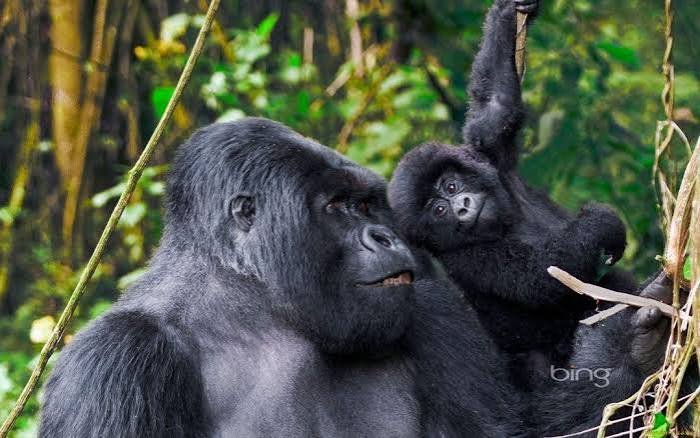
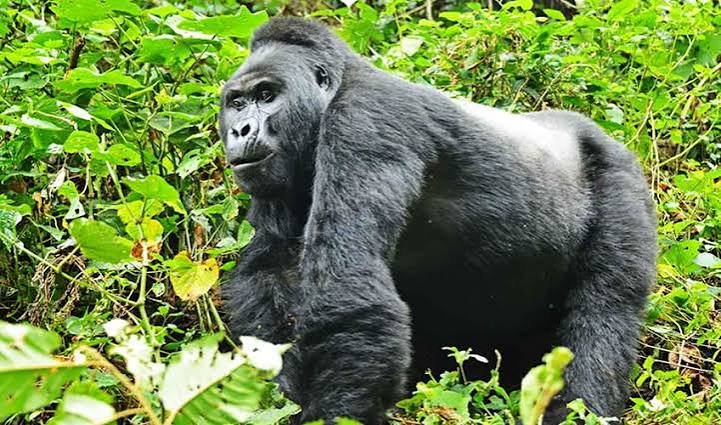
One of the main reasons mountain gorillas may notice visitors first is the extraordinary density of their natural forest habitat.
Bwindi Impenetrable National Park is especially known for its thick mountain rainforest, with overlapping vegetation, vines, ferns, trees, and steep slopes that make visibility challenging.
Rwanda’s Volcanoes National Park includes bamboo forest, montane vegetation, and other habitats within the Virunga Mountains. Visibility can change dramatically depending on which vegetation zone you are walking through.
An adult gorilla may be sitting only a short distance away but remain almost invisible because of leaves and shadows.
The gorilla’s dark fur can blend with shaded vegetation, while partial views of its head or shoulder may resemble surrounding branches and tree trunks.
Experienced trackers develop an ability to recognize subtle signs of gorilla presence, including movement, feeding sounds, and evidence left along their routes.
When the guide finally points out the gorillas, tourists sometimes realize they were looking toward the same location without identifying the animals.
This moment adds excitement to the trek because it highlights how naturally mountain gorillas belong within their forest surroundings.
5. Do Silverback Gorillas Notice Humans Before Other Family Members?
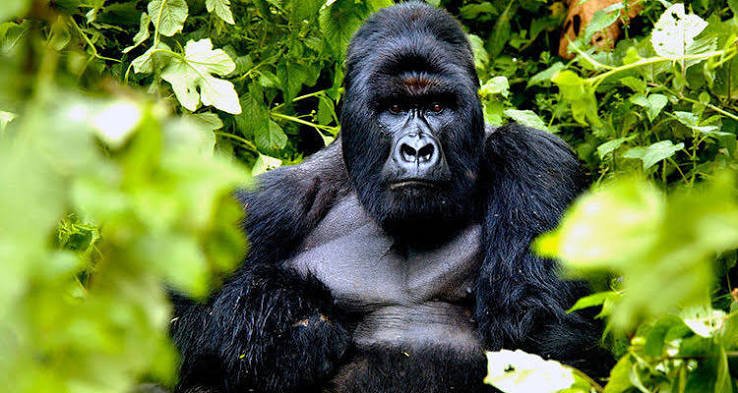
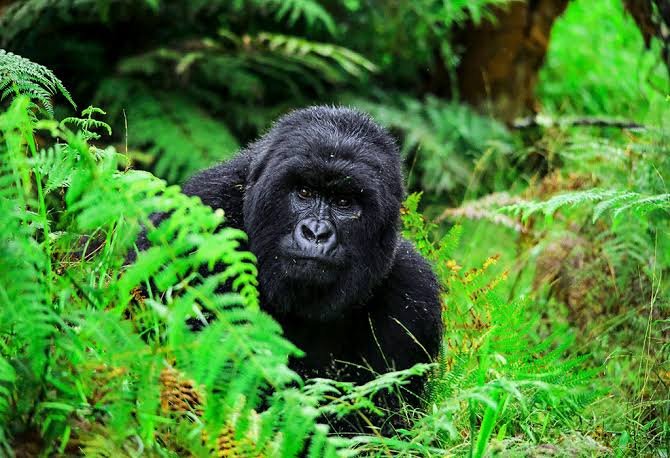
Silverbacks play important leadership and protective roles within mountain gorilla family groups. An adult male may monitor activity around the family, respond to social interactions, and behave defensively when he perceives a potential threat.
However, there is no rule that a silverback must always be the first gorilla to detect approaching tourists. Another adult or juvenile may notice a sound or movement first, depending on where each animal is positioned and what it is doing.
A silverback feeding in thick vegetation may be focused on food while a younger gorilla looks toward a nearby trail. Conversely, a silverback resting in an open area may observe a trekking group before the other family members react.
A particularly memorable experience occurs when visitors first notice a silverback quietly watching their direction. His size and facial expression can create the impression that he has been carefully observing the group for some time.
Although this is possible, a single glance does not establish exactly when he first became aware of their presence.
The guide’s responsibility is to monitor the whole family rather than focus exclusively on the dominant male. Gorilla trekking safety depends on understanding the positions and behavior of all nearby animals.
What Happens if a Gorilla Makes Eye Contact With You?
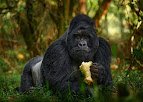
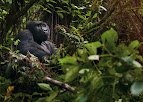
Eye contact can be one of the most powerful moments during gorilla trekking. Mountain gorillas have expressive faces, and seeing one look briefly in your direction can create a strong feeling of connection.
However, visitors should avoid prolonged, challenging staring, particularly when a gorilla appears agitated.
A brief glance does not automatically indicate aggression, curiosity, recognition, or any other specific intention.
If a gorilla looks toward you, remain calm and continue following your guide’s instructions.
Rwanda’s official gorilla trekking guidance advises visitors to remain still, look away, and follow their guide if a gorilla vocalizes or charges toward them.
Do not deliberately stare at a silverback to obtain a dramatic photograph or attempt to attract his attention.
The most rewarding approach is quiet observation that allows the animals to continue their normal routines.
Can Mountain Gorillas See Better Than Humans in the Dark?

Mountain gorillas are primarily active during daylight and do not possess the specialized nocturnal adaptations associated with animals such as owls or certain night-active mammals.
Their visual system shares important characteristics with that of other great apes, including humans.
Although gorillas can function in shaded forest conditions, it would be inaccurate to claim that they have exceptional night vision or can see perfectly in darkness.
During trekking, the main difficulty for visitors is often the contrast between sunlit vegetation and darker sections of the forest.
A gorilla sitting in deep shade may be difficult to recognize, especially when the animal remains still.
This does not mean it has superior night vision or that it is deliberately concealing itself from tourists.
Can Mountain Gorillas Hear Your Voice Before You Reach Them?

Yes, it is possible for a gorilla to hear human voices before people have a direct view of the animal, depending on the distance, background noise, and surrounding terrain.
A loud conversation may travel through the forest, while quiet speech or footsteps may be less noticeable amid wind, rain, and other environmental sounds.
Gorilla trekking guides ask visitors to keep their voices low because unnecessary noise can disturb wildlife and interfere with the quality of the encounter.
Speaking softly also allows the group to hear instructions clearly and appreciate natural forest sounds.
However, complete silence does not guarantee that gorillas will remain unaware of your presence.
The goal is to minimize disturbance, not to sneak up on the animals.
Can Mountain Gorillas See You Before You See Them in Rwanda?
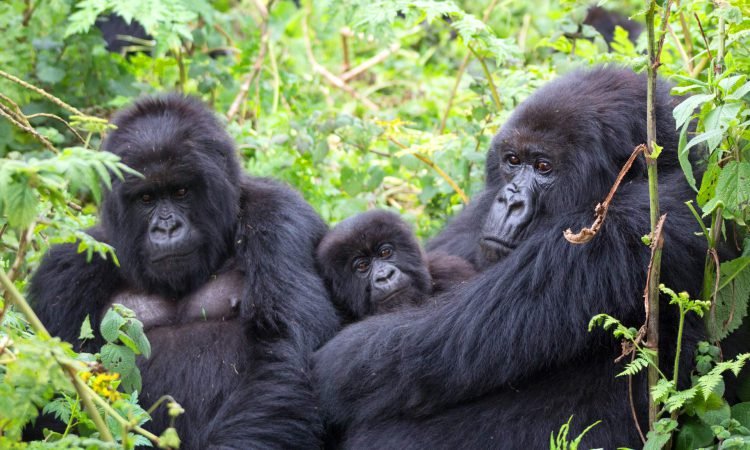
Rwanda’s Volcanoes National Park provides extraordinary opportunities to observe mountain gorillas within the dramatic Virunga mountain landscape.
The park contains bamboo forest, montane vegetation, and high-altitude habitats where visibility can change considerably over short distances.
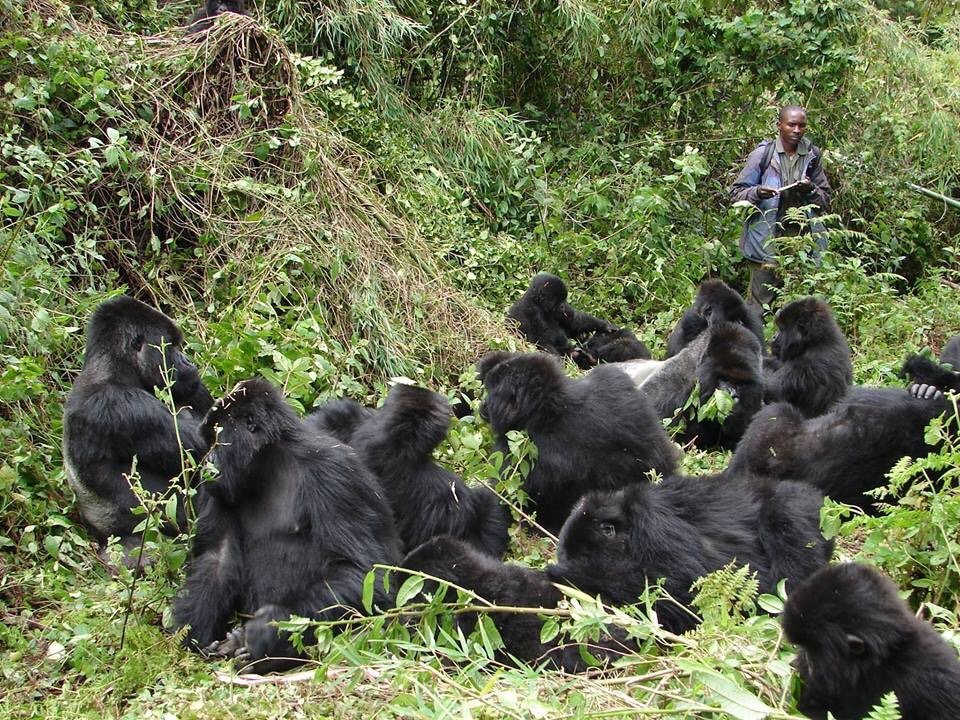
During a trek, you may walk through vegetation so dense that only a few metres of forest are clearly visible. A gorilla sitting in a more open position may notice movement along the trail before you recognize the animal.
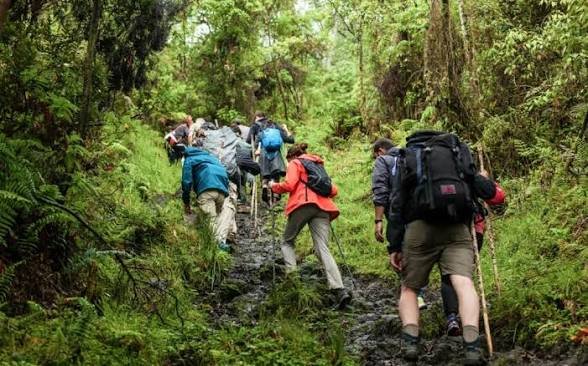
Your trekking experience begins with an early briefing at Kinigi, followed by a guided walk toward an assigned habituated gorilla family.
Once your group locates the gorillas, you are permitted up to one hour observing them, subject to conservation regulations.
Rwanda Development Board confirms that the minimum age for trekking is 15 years, visitor groups are limited to eight people, and the authorized viewing period is one hour.
Travelers can combine Volcanoes National Park experiences with golden monkey trekking, cultural activities, and accommodation near Musanze or Kinigi.
Can Mountain Gorillas See You Before You See Them in Uganda?
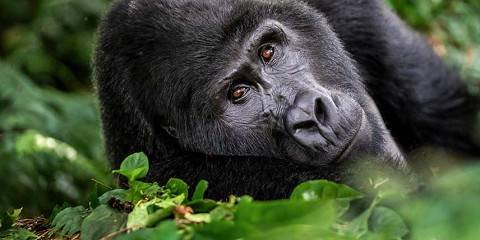
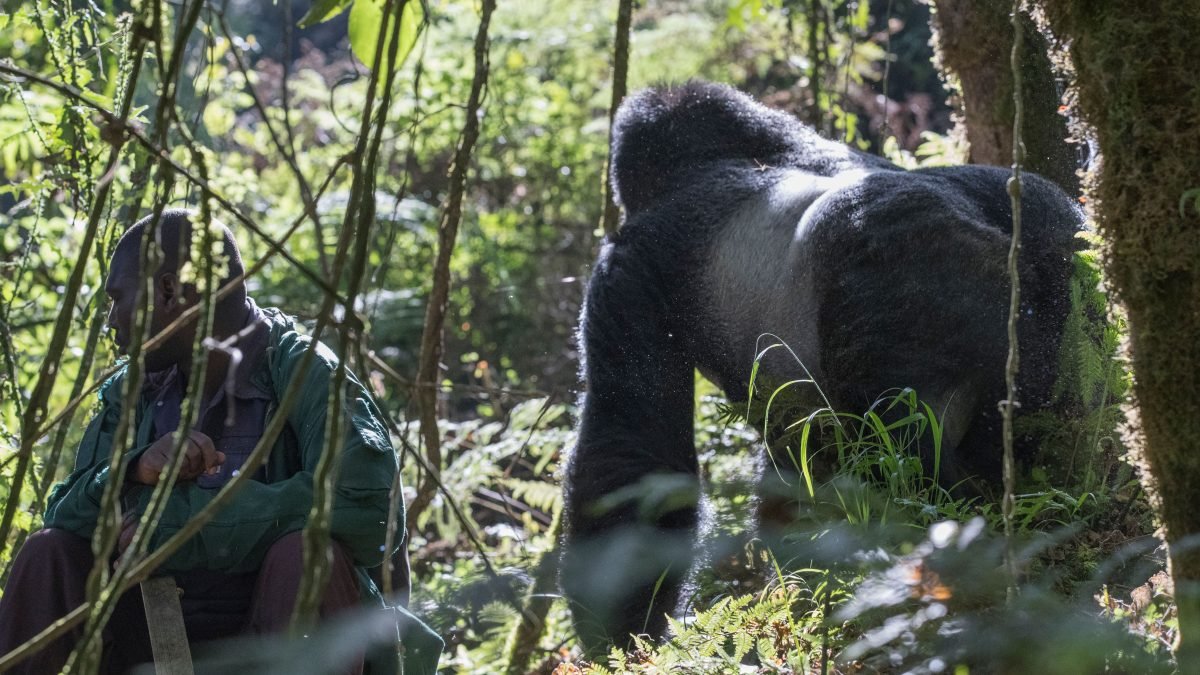
Uganda offers mountain gorilla trekking in Bwindi Impenetrable National Park and Mgahinga Gorilla National Park.
Bwindi is especially known for its dense forest vegetation, steep slopes, and complex terrain. These conditions can make gorillas difficult to locate visually until your group approaches their feeding or resting area.
A gorilla may detect sounds or observe movements through the vegetation before visitors obtain a clear sighting.
Mgahinga offers a different habitat experience within the Virunga volcanic landscape, where bamboo forest and mountain vegetation create similarly fascinating wildlife encounters.
Uganda’s guided gorilla trekking experiences follow conservation regulations designed to protect both animals and visitors.
The physical trekking experience and visibility conditions vary, but the principle remains the same: follow your ranger’s instructions and never attempt to approach gorillas independently.
What Should You Do When You Realize a Gorilla Is Watching You?
If you notice a mountain gorilla looking in your direction, remain calm and avoid sudden gestures. You do not need to hide, run, stare back, or attempt to communicate with the animal.
Listen to your guide and maintain the required viewing distance. Do not approach the gorilla merely because it appears relaxed.
If the animal changes position or begins moving toward the group, follow the ranger’s immediate instructions.
Gorillas sometimes look toward people without showing obvious signs of distress. Nevertheless, their behavior should be interpreted cautiously rather than assumed to represent affection, curiosity, or aggression.
The encounter should remain a respectful opportunity to observe a wild animal without influencing its natural activities.
Why Gorilla Awareness Makes Trekking Even More Fascinating
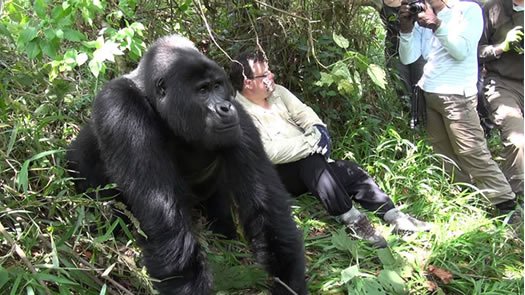

The possibility that mountain gorillas may detect you before you see them adds an extraordinary dimension to gorilla trekking.
You are entering a living rainforest where wildlife responds to sounds, movement, vegetation, and social activity in ways that are not always immediately visible to people.
A silverback may be resting behind bamboo, a mother may be feeding with her infant, and juveniles may be playing among the undergrowth long before your group obtains a clear view.
Understanding their sensory awareness encourages patience and respect.
Rather than rushing toward every movement in the forest, you learn to appreciate the knowledge of experienced trackers and the importance of observing wildlife without disturbance.
This is one of the qualities that makes mountain gorilla trekking so different from ordinary sightseeing.
Frequently Asked Questions About Mountain Gorillas Detecting Humans
Can Mountain Gorillas See You Before You See Them?
Yes. Mountain gorillas may notice your movement or otherwise detect your presence before you see them, particularly in dense rainforest vegetation.
Do Mountain Gorillas Have Good Eyesight?
Yes. Mountain gorillas have forward-facing eyes and visual abilities suited to observing their environment, recognizing objects, and interacting socially.
Can Gorillas Hear Tourists Approaching?
Yes. Gorillas may hear footsteps, voices, or vegetation moving before tourists reach a position where they can see the animals.
Can Mountain Gorillas Smell Humans?
Yes. Mountain gorillas possess a sense of smell, although there is no universal distance at which they can reliably identify approaching humans by scent.
Book Your Mountain Gorilla Trekking Safari With Nextgen Safaris
Imagine walking through a beautiful African rainforest, following experienced guides toward a family of mountain gorillas that may already be aware of activity around them. The anticipation builds as you hear rustling vegetation, glimpse movement among the leaves, and finally encounter a magnificent silverback resting in his natural habitat.
Nextgen Safaris organizes personalized mountain gorilla trekking experiences in Uganda and Rwanda, with carefully planned itineraries designed around your preferred travel dates, accommodation standard, available time, and wildlife interests.
Whether you dream of trekking in Rwanda’s Volcanoes National Park, exploring Bwindi Impenetrable National Park in Uganda, or combining gorilla encounters with chimpanzee tracking and traditional wildlife safaris, your journey can be arranged to balance comfort, adventure, and responsible tourism.
A personalized safari quotation can cover private transportation, professional driver-guide services, accommodation, meals according to your chosen itinerary, and the required gorilla trekking permit arrangements.Request Your Gorilla Safari Quote Explore Nextgen Safaris Gorilla trekking permits and accommodation are subject to availability. Wildlife viewing is conducted under the applicable national park regulations.
Understanding Can Mountain Gorillas See You Before You See Them? reveals a fascinating aspect of mountain gorilla behavior and the natural environment in which these extraordinary primates live.
Mountain gorillas can sometimes notice people through sight, hearing, or other sensory information before visitors become aware of their presence. Thick rainforest vegetation, changing light, and the animals’ position within their habitat can make gorillas difficult for tourists to identify even when they are relatively nearby.
Whether you are trekking in Uganda’s Bwindi Impenetrable National Park or Rwanda’s Volcanoes National Park, the experience offers a rare opportunity to observe intelligent, social primates living freely in magnificent mountain forests.
The real magic of mountain gorilla trekking is not discovering whether the gorillas saw you first. It is the extraordinary privilege of entering their world and observing them peacefully in the rainforest they call home.